The truth about air pollution in Delhi

Contrary to the claims made by the Delhi government, air pollution in the city has deteriorated significantly since 2012.

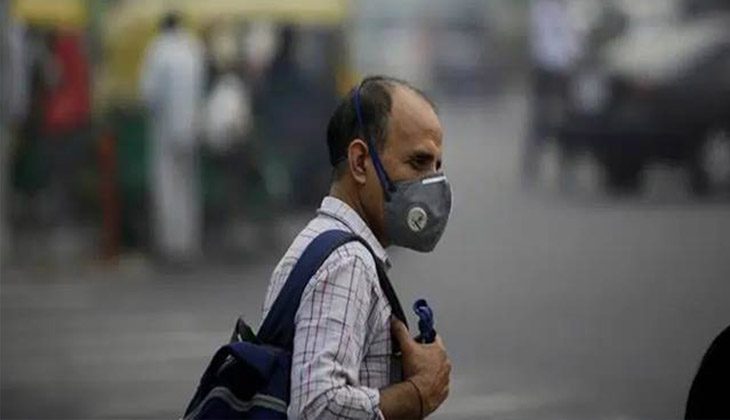
There is an irony being played out in Delhi. While the national capital is reeling under one of its worst spells of air pollution, the Delhi government is bringing out a series of advertisements claiming that the pollution levels are down by 25%.

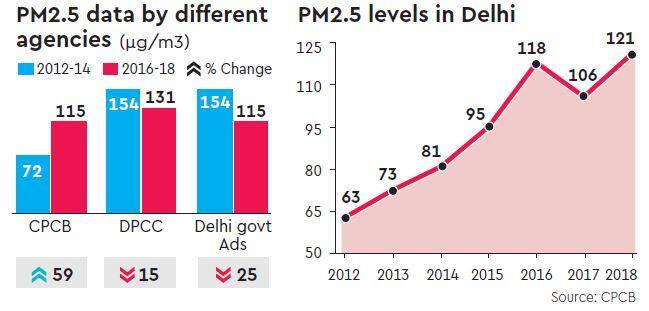
The advertisements mention that the levels of PM 2.5—particulate matter of size less than 2.5 microns—have reduced from 154 microgrammes per cubic meter (µg/m3) during 2012-2014 to 115 µg/m3 during 2016-2018. If this claim is valid, then we are on the right path, and we should continue with the current action plan to control air pollution. If it is not, then we should seriously change track and develop a new blueprint.

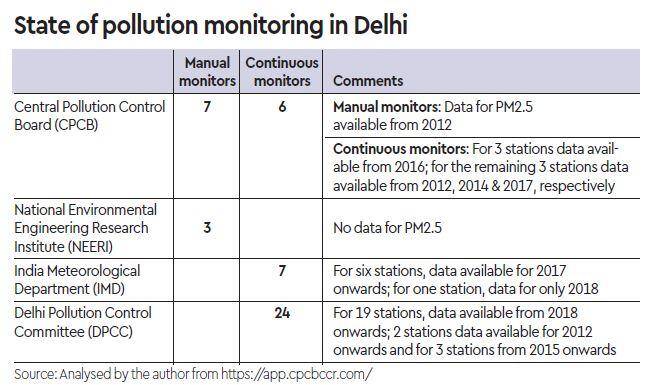
To understand the exact situation of pollution in the city, one has to understand the status of air pollution monitoring. Delhi has the largest number of air quality monitors in the country—47 monitoring stations, to be precise. Out of these, 10 are manual monitors, and 37 are continuous monitors. Four agencies own these monitors—the Central Pollution Control Board (CPCB) has 13 monitors, Delhi Pollution Control Committee (DPCC) has 24, India Meteorological Department (IMD) has 7 monitors, and the National Environmental Engineering Research Institute (NEERI) has 3.

Continuous monitors give pollution readings every 15 minutes, and these are used for calculating the Air Quality Index (AQI). CPCB has developed data validation criteria for these monitors. For example, continuous monitors must be operational for 16 hours in a day for estimating daily pollution levels. Similarly, they must be operational for 80% of the time in a year for determining the annual pollution levels.

In manual monitors, the monitoring is carried out for 24 hours, with a frequency of twice a week. There must be a minimum of 104 readings in a year for estimating annual pollution levels. In India, data from manual monitors are still used to make country-wide comparisons on the status of air pollution. The reason is simple: we have 573 manual stations in 240 cities/towns compared to just 202 continuous monitors in 112 cities/towns. Manual monitors, therefore, are sentinel monitors as they have comparable data for the longest time-frame.

As one can see in the accompanying graphic, continuous monitoring is a recent phenomenon in Delhi. Twenty continuous monitors were installed in 2018, and seven were introduced in 2017. We have data from only four monitors for 2012 onwards. But, there are significant data gaps from these four monitors. For instance, the Dilshad Garden monitoring station had correct data for only 32 days for 2013; the ITO station has data for less than 50% of the time for 2012, 2014, and 2016; and RK Puram has no data for 2013, and 2014. Most researchers have concluded that using data from the continuous monitors to estimate annual pollution levels for the years 2012 to 2016 is statistically wrong. Therefore, one has to rely on manual monitors to establish whether the pollution status has improved or deteriorated since 2012.

The data from manual monitors, published by CPCB, shows that the amount of PM 2.5 has almost doubled between 2012 and 2018—from 63 µg/m3 in 2012 to 121 µg/m3 in 2018. The average PM 2.5 level during 2012-2014 was 72 µg/m3, and during 2016-18, it was 115 µg/m3—an increase of 59%. So, air pollution levels in Delhi have increased significantly, and not reduced. From where, then, has the Delhi government put together data to show a reduction of 25%? Interestingly, there is another set of data put out by DPCC, which is less publicised. This DPCC data shows that the average level of PM 2.5 was 154 µg/m3 during 2012-14, which reduced to 131 µg/m3 during 2016-2018—a reduction of 15%. DPCC data, however, comes with a disclaimer. It clearly states that for the period 2012-2017, the data is based on four continuous monitors, and the 2018 information is based on 26 monitors. As explained above, the data from the four continuous monitors are incomplete. They cannot be the basis for estimating pollution levels during the 2012-2017 period. Even if we had complete data from the four continuous monitors, comparing data of four monitors with that from 26 monitors is highly spurious. It will not stand even the basic statistical scrutiny.

Nevertheless, let’s take the DPCC data with a pinch of salt, and put it together with the CPCB data. We can see, in the accompanying graphic, where the mistake has happened. The Delhi government has taken continuous monitoring data of DPCC for the period 2012-2014 and manual monitoring data of CPCB for the period 2016-2018 to claim that air pollution reduced by 25%. This is cherry-picking, and completely wrong. These types of analyses cannot be the basis for decision-making.

Let me end by saying that I support CM Arvind Kejriwal on stubble burning. He is absolutely right that the spike in pollution post-Diwali is because of stubble burning. One can smell biomass burning in the air, and we need to do something about this urgently. But, he is wrong to claim that his actions have led to a 25% reduction in pollution levels. Instead of putting out wrong information, it is important that his government goes back to the drawing board and develops a new blueprint for saving this historical city from Airpocalypse.

Environment needs technology and innovation

This article originally appeared on Civil Society.

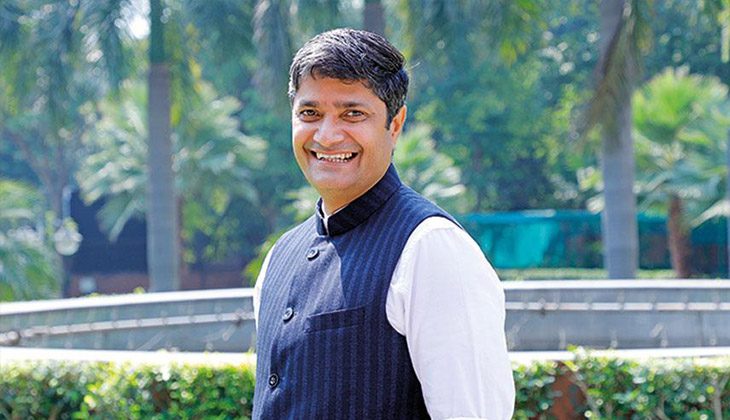
It is not common to find a hard-nosed environmentalist with a fan following in the boardrooms of corporations. Chandra Bhushan is one such.

As the leader of the Green Rating Project at the Centre for Science and Environment (CSE), Bhushan held an unwavering mirror to the standards of industries such as paper, cement, automobiles and mining.

Company after company was persuaded to improve technologies and processes. A space was created for engagement with senior management, which learnt to abandon stealth for a willingness to talk openly about where their factories were falling short.

Bhushan has now set up iFOREST or the International Forum for Environment Sustainability and Technology. An engineer by training, he believes modern technologies and innovation can bring quantum improvements in the environment. Dr R.A. Mashelkar heads the iFOREST board.

Bhushan was with CSE for 22 years. He was handpicked by the late Anil Agarwal and was a disciple who learnt from him how to be combative and collaborative at the same time. After Agarwal died, Bhushan worked closely with Sunita Narain on several impactful campaigns. He led many of CSE’s research programmes. 

We spoke to Bhushan on his plans for iFOREST and how he sees the path ahead through the maze of India’s environmental problems.

You are leaving CSE after 22 years. After having worked closely on so many frontline issues what will you be doing now?

I had a wonderful journey at CSE. As an institution we achieved many milestones especially at a time when environmentalism in India was at a very nascent stage and people didn’t have information. That’s when Anil (Agarwal) came in with the State of India’s Environment report, Down to Earth began as an environmental magazine and research teams were set up at CSE. Some basic environment laws and regulations were put in place. CSE was at the right place at the right time, poised to become one of the leaders of the environment movement in India.

Today the language of environment has been mainstreamed. Everyone talks of environmentalism and every government has a paper on the environment. The challenge is how do you scale up implementation.

I have been thinking about this for quite some time. The era of top-down policy is over. The question is, how do you convert policy into a scaled-up model for implementation?

That is the real challenge the country faces today and that is what motivated me to embark on my next journey where I could look at policy design and, more importantly, at innovation. I think we are in an era where technology is available for large-scale innovation and scaled-up work in the field of environment.

So, policy design, innovation and scaled-up implementation — these are the three core pillars we will be building on.

You have worked closely and fruitfully with industry. Based on this kind of experience what are the areas you would focus on?

Absolutely. I was fortunate perhaps to lead the only programme in the environmental movement in India which engaged fruitfully with industry on the same platform, at the same level. When I was releasing the Green Rating report on the cement industry I was speaking to industry leaders and Anupam Mishraji was sitting in the front. Post the report’s release he came up to me, took my hand and said, ‘This is Gandhism at its best’. 

At that time I didn’t understand what he meant. Later, I realised he was essentially saying that speaking truth to power is what Gandhi did. The Green Rating project did exactly that.

We spoke truth to the most powerful industrialists in India. Initially, they were resistant. But once they understood the unbiased nature of the rating and the foundation of goodwill it had for industry and the environment, they all came out to support us — from Gautam Thapar to Harsh Pati Singhania to Yogi Deveshwar…

In fact, Deveshwar was a big fan of the Green Rating project. Recently, after his passing away, I met some of his colleagues from ITC. They narrated a story which really warmed my heart.

In our first paper industry rating we had given the worst rating to ITC. Deveshwar called a board meeting in which he said, Who the hell is this Chandra Bhushan who says we are the worst paper plant in India. The next time he rates us, make sure we are the best. And that is exactly what happened. Four years later, when I rated ITC again, the company had the best paper plant in India.

This tells me that without engagement with industry and businesses you cannot improve environment in India. Environment cannot be solved by government alone. In fact, I always say environment is too important to be left to the government. We need industry engagement, financial sector engagement and public participation. Only then will we be able to resolve environmental issues.

One of the pillars of our work will be green economics. How do we green, not only industry, but the financial sector so that there is market support for the environmentalism that we want.

To take it to spaces where strife happens?

I would say to take it to uncomfortable spaces for environmentalists like me.

Like?

See, one of the problems in the environment movement is that we do not know how to engage with businesses. It’s very easy for other environmentalists to accuse you of being on the side of business even if you are engaging at the same level, even if there is no financial transaction. So it’s a very uncomfortable space to be in.

But the Green Rating project taught me that the way to navigate that uncomfortable space is to be open and transparent. So for the Green Rating project, every letter I wrote to industry or received from industry, every report that we published, I would get put up on the website. Then there was no scope for any kind of negative publicity to happen.

When you talk of NGOs and activists being adversarial for a long time, actually industry, even now to some extent, is adversarial in its own way. Despite that, in 22 years you have seen a change.

Absolutely. I have seen change. I have seen a time when no industry had an environment policy, when in the corporate boardroom, environment was not discussed. Today, every industry I go to has a subcommittee on environment and sustainability.

That’s a big change.

It is. People are discussing environment in their boardrooms which is a tremendous change. That discussion has to also become more real and more implementable. I am quite hopeful in an era of climate change, industry is realising that their businesses are at stake. One episode of extreme weather can wipe out a plant. Think about what happened in Pune, Patna and other cities. There were plants that were wiped out. So I think industry is realising that climate change and other environment issues are a threat to business.

Will climate change be one of the key areas you will be taking up?

Yes. We will be very engaged in the climate change movement because the solutions to climate change are going to be extremely challenging. We have to change the energy system.

But that’s a big issue.

Actually, changing the energy system is the easy part. We have the technology. We have wind and solar and we already live in a battery world. I mean, can you live without your mobile and laptop? So we are living in a battery world except that it has to be enlarged. The question is: how do you produce steel and cement? How do you produce food? How do you transform the transportation sector and the aviation sector? These are the big challenges we face and these are also core industries.

So what will you be working on, initially?

We have decided to work on four pillars in an integrated way. The first is livable and sustainable cities. Globally, more people live in cities already. I’m quite sure that when the 2020 census results come in 2022, you will find 40 to 50 percent of India’s population living in cities. So cities are going to define the sustainability of the nation. Not rural areas. 

The second pillar, which I am very excited about, is an integrated programme on agriculture, land, forests and water. See, most environmental problems focus only on land management. Everything is about land. We will discuss climate change adaptation and other issues.

The third is energy and climate change. We will be discussing transition. It is an irony that climate change will lead to huge transfer of wealth. The poorest part of India is where the coal is and the richest part of India is where renewable energy is located. If you close down coal mines, what happens to the Jharkhands and Jharias? They are polluted, it is true, but there is economic activity happening there. How do you make the transition from coal to renewables without disrupting livelihoods in poor regions?  

What do we do about coal?

I think we have 30 years to close down coal. Whenever someone says close down coal I give them a perspective. I tell them to think about 30 years ago. We had floppy discs, then. Today, we have more computing power than Apollo 11 in our hands. Thirty years is a long time for the world to change. There is also pressure for change to happen.

My sense is you have to build an alternative economy and industries in those areas. Coal will not end because we have renewable technology. Coal will end if there is political support and grassroots support to say, yes, we are now ready to transition from coal.

The fourth area is green economics where we will work very closely with the financial sector and industry.

In terms of coal, and this is so important to the nation, what do we do in the interim? Obviously, it makes sense to use our coal but at the same time you live in a warming world.

It isn’t just about India closing coal. It’s about the world moving away from coal. What should be the principle on which this should happen? And the principle I have arrived at is based on depreciation. If a plant has depreciated — covered its capital, interest, benefits… then it should be closed down.

If you draw a map of the world and place all the coal plants according to depreciation, you will find the oldest plants, whose average age is 40 years, are in the US. So it is immediately possible to start closing down US plants. There is Europe which also has old plants. If we use this principle then India should perhaps start closing its plants from 2030 and complete this process by 2050.

But during this interim period what should we do?

I think we should promote clean coal, high-efficiency utilisation of coal, reduce our T&D losses — we lose 30 percent of our electricity — and improve energy efficiency so for every unit of coal we get more economic and social output. This is what the roadmap should be and we have 30 years for this transition to take place.

Who do you think will fund iFOREST?

It will remain a publicly funded organisation. I do not see the colour of money.  I see its quality. So even if it is less money it should allow you to do good work. We need money with patience. Right now the money that comes to the NGO sector doesn’t have patience. The funders want a report the very next month. In this field, if you want to do good work you need money with quality and patience. My board is very keen that we raise as much Indian money as possible. 

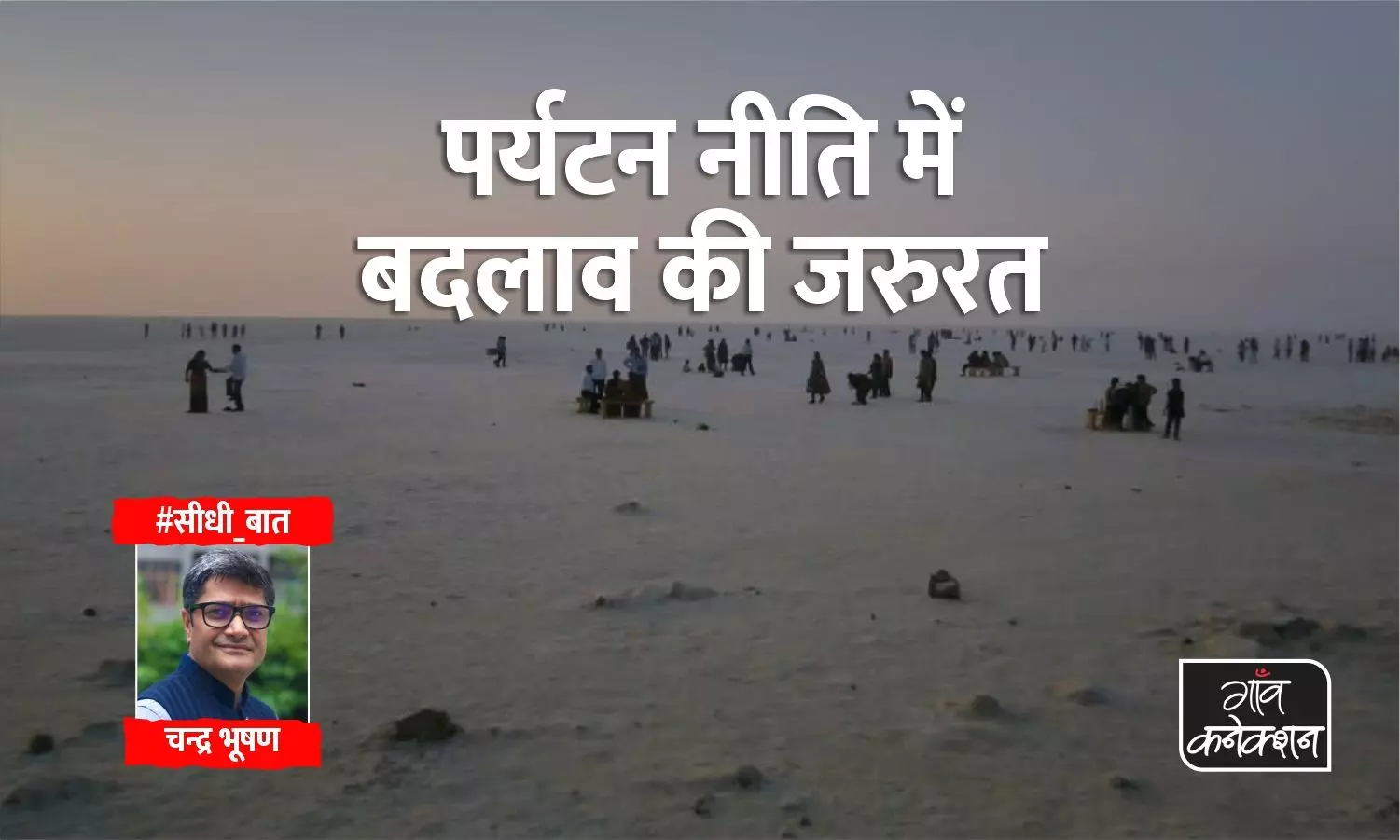
पर्यावरण को बर्बाद कर रही भारत की पर्यटन संस्कृति

भारतीय पर्यटन उद्योग से हर साल लगभग 250 मिलियन टन से अधिक कार्बन डाई ऑक्साइड का उत्सर्जन होता है, जो कि भारत के कुल CO2 उत्सर्जन का लगभग 10% है। चिंताजनक बात यह है कि यह आंकड़ा साल दर साल तेजी से बढ़ता जा रहा है।

क्या होगा यदि मैं आपसे कहूं कि हमें अमरनाथ और वैष्णो देवी जैसे धार्मिक स्थलों पर तीर्थयात्रियों की संख्या को सीमित करने की आवश्यकता है? क्या होगा अगर मैं आपको बताऊं कि शिमला, महाबलेश्वर और गंगटोक जैसे हिल स्टेशनों पर उनकी क्षमता से अधिक मात्रा में पर्यटक आ रहे हैं और उन्हें रोकने की जरुरत है? कई लोग इसे संविधान में उल्लिखित स्वतंत्रता के अधिकार और धार्मिक स्वतंत्रता के अधिकारों के उल्लंघन के रुप में देखने लगेंगे। लेकिन सच्चाई यही है कि ऐसी जगहें अपने अस्तित्व को बचाने की लड़ाई लड़ रही हैं और इसके लिए हमें पर्यटकों की संख्या को सीमित करने की जरुरत है।

इस साल जून में, मनाली में पर्यटकों की संख्या इतनी अधिक हो गई थी कि हजारों वाहनों ने इस हिल स्टेशन के सभी छोटे और बड़े रास्तों को जाम कर दिया था। इस जाम की वजह से कुल्लू से रोहतांग पास जाने वाले रास्ते पर हजारों पर्यटक पूरी रात फंसे रहे। लोग खुले में शौच करने को मजबूर हो गए थे और वायु प्रदूषण का स्तर भी काफी बढ़ गया था।

इस तरह की स्थिति सभी प्रमुख पर्यटन केंद्रों पर होने की संभावना है। कारण बहुत साफ है- जैसे-जैसे भारत का निम्न-मध्यम वर्ग अमीर हो रहा है और लोगों के पास खर्च करने के लिए अतिरिक्त पैसे भी बढ़ रहे हैं। पर्यटन उनको आकर्षित कर रहा है। यही कारण है कि भारत में यात्रा और पर्यटन से जुड़ा क्षेत्र सबसे तेजी से विकसित होने वाले उद्योगों में से एक है। 2018 की जीडीपी में इसका योगदान लगभग 9% यानी लगभग 17.5 लाख करोड़ रुपये था।

लेकिन यह विकास पर्यावरण और पारिस्थितिकी से समझौते के बदले हो रहा है। दुनिया भर में तेजी से हो रहे पर्यावरण परिवर्तन में पर्यटन क्षेत्र पर बढ़ रहे दबाव का भी अहम योगदान है। भारतीय पर्यटन उद्योग से हर साल लगभग 250 मिलियन टन से अधिक कार्बन डाई ऑक्साइड का उत्सर्जन होता है, जो कि भारत के कुल CO2 उत्सर्जन का लगभग 10% है। चिंताजनक बात यह है कि यह आंकड़ा साल दर साल तेजी से बढ़ता जा रहा है।

हालांकि कई पर्यटक स्थल ऐसे भी हैं जो कि अपने आप को प्रदूषण से बचाए रखे हैं, लेकिन अधिकतर पर्यटक स्थलों की हालत बहुत खराब है और वे लगातार प्रदूषित हो रहे हैं। खासकर भारत का हिमालयी क्षेत्र ऐसे पर्यटन का केंद्र बन चुका है।

अगर हम लद्दाख का ही उदाहरण लें। ठंडा रेगिस्तान कहे जाने वाले इस इलाके में जल संसाधनों की सीमित उपस्थिति है। यहां के स्थानीय लोग इस बात को समझते भी हैं और प्रतिदिन 25 लीटर से कम पानी का ही उपयोग करते हैं। लेकिन यहां आने वाले पर्यटक दिन भर में करीब 75 से 100 लीटर पानी का उपभोग करते हैं।

लद्दाख में लगभग 700 होटल हैं। हर साल यहां लगभग 2.5 लाख पर्यटक आते हैं, जो कि क्षेत्र की आबादी के बराबर है। इससे क्षेत्र के जल संसाधनों पर दबाव पड़ता है। लद्दाख के प्रमुख शहर लेह में पानी का प्रमुख स्त्रोत सिंधु नदी है। सिंधु नदी की वजह से यहां का जलस्तर ठीक-ठाक है और लोग बोरवेल की मदद से जमीन से पानी निकालते हैं।

लेकिन लेह में बोरवेल की संख्या दिन प्रतिदिन बढ़ती जा रही है, जिसका प्रभाव लेह के गिरते जलस्तर पर दिख रहा है। इसका सीधा प्रभाव लेह के स्थानीय लोगों पर पड़ेगा जो पेयजल और कृषि उपयोग के लिए इस पानी का प्रयोग करते हैं। लद्दाख लंबे समय तक ऐसे पर्यटन दबाव को सह नहीं पाएगा।

लद्दाख की तरह ही कई और पर्यटन केंद्र भी कुछ इसी तरह के पर्यावरणीय दबाव से गुजर रहे हैं। उदाहरण के तौर पर, तमिलनाडु के पर्यटन पर्वतीय क्षेत्र कोडाइकनाल में पर्यटकों की संख्या पिछले दस वर्षों में चार गुना बढ़ गई है। पर्यटकों की इस बढ़ती संख्या कारण इस इलाके को पानी की कमी का सामना करना पड़ रहा है। इसके अलावा यहां का सीवेज सिस्टम प्रभावित हुआ है, वायु प्रदूषण में वृद्धि हुई है और अधिक सड़कें बनाने के लिए जंगलों का कटान भी हुआ है।

पर्यटकों द्वारा प्लेट, चम्मच, स्ट्रॉ और बोतलों के अतिशय उपयोग के कारण इस क्षेत्र के प्लास्टिक प्रदूषण में भी वृद्धि हुई है। पर्यावरण विज्ञान के अनुसार हर क्षेत्र की अपनी एक वहन क्षमता होती है, जो संसाधनों की उपलब्धता और उनके उपयोग पर निर्भर करती है।

एक बार भी हम उस क्षमता को पार करते हैं, उसी वक्त पर्यावरण और पारिस्थितिकी को नुकसान पहुंचने लगता है। भारत में कई ऐसे पर्यटन स्थल, विशेष रूप से हिल स्टेशन, तीर्थ स्थल और वन्यजीव अभयारण्य हैं, जो अपनी वहन क्षमता को पार कर गए हैं। कई जगहों पर यह वहन करने की क्षमता क्षेत्र की भौतिक सीमाओं के कारण नहीं बल्कि संसाधनों के कुप्रबंधन की वजह से अधिक सीमित हो गई है।

कश्मीर विश्वविद्यालय में भूगोल विकास विभाग के प्रमुख मोहम्मद सुल्तान भट द्वारा किए गए एक अध्य्यन के अनुसार लिद्दर घाटी, जहां पर अमरनाथ मंदिर स्थित है, की वहन क्षमता महज 4,300 तीर्थयात्री प्रतिदिन की है। लेकिन अमरनाथ यात्रा के दिनों में यहां हर दिन औसतन 12,000 से अधिक तीर्थयात्री गुफा में जाते हैं।

ग्लोबल वार्मिंग की वजह से पहले से ही मंदिर के आसपास के ग्लेशियरों प्रभावित हो रहे हैं और मानवीय दबाव इस दुष्प्रभाव को और बढ़ा रहा है। इसका परिणाम यह है कि अमरनाथ गुफा में स्थित प्राकृतिक शिवलिंग हर साल आकार में लगातार कम होता जा रहा है और कई बार तो यात्रा समाप्त होने से पहले ही पूरी तरह से पिघल जा रहा है।

अगर स्थिति ऐसी ही बनी रही तो कुछ दशकों में ही ऐसा मौका आएगा जब श्रद्धालुओं के पास जाने और प्रार्थना करने के लिए शिवलिंग नहीं होगा। इसलिए, ऐसी जगहों पर पर्यटकों की संख्या को सीमित करने और स्थानीय प्रशासन में सुधार करने की तत्काल जरुरत है।

हम अपने पड़ोसी देश भूटान से इस मामले में सबक सीख सकते हैं। भूटान ने पर्यटन शुल्क को बढ़ाकर पर्यटकों की संख्या को नियंत्रित किया है। भूटान में प्रत्येक पर्यटक को हर दिन एक न्यूनतम पर्यटन शुल्क का भुगतान करना पड़ता है, जो कि सीजन के अनुसार प्रति दिन 14,000 से 17,500 रुपये तक होता है। इस शुल्क का एक हिस्सा हम भूटान से भी बेहतर कर सकते हैं। धार्मिक स्वतंत्रता और समानता को सुनिश्चित करने के लिए हम आर्थिक रूप से कमजोर वर्ग के लोगों की एक निश्चित संख्या को धार्मिक पर्यटन के लिए आरक्षण दे सकते हैं। बाकी के लोगों के लिए किसी भी पर्यटक स्थल की यात्रा करने के लिए एक निश्चित शुल्क लगना चाहिए।

कहने का लब्बोलुआब यह है कि भारत की वर्तमान पर्यटन संस्कृति से कार्बन का उत्पादन बढ़ रहा है और यह पर्यावरण के लिए बिल्कुल भी उचित नहीं है। यदि हमें इन स्थानों को लंबे समय तक बनाए रखना है, तो पर्यटकों की संख्या को सीमित करने के साथ-साथ कई कठोर कदम उठाने होंगे।

पर्यटन महत्वपूर्ण है और लोगों को अपने धार्मिक और पसंदीदा स्थानों पर जाने का विकल्प होना चाहिए। लेकिन हम इससे होने वाले पर्यावरण परिवर्तन के प्रति आंख नहीं मूंद सकते। इसके अलावा पर्यटन उद्योग, पर्यटकों को आकर्षित करने के लिए एक सुखद वातावरण देने पर निर्भर करता है। कोई भी गंदी और प्रदूषित जगह पर नहीं जाना चाहता।

लेकिन भारत की वर्तमान पर्यटन संस्कृति पर्यावरण को बर्बाद करने वाली है। अगर हमें पर्यटन का आनंद लेना है तो हम सभी को और अधिक जिम्मेदार बनना होगा। इसके लिए हमें ‘वास्तविक टिकाऊ पर्यटन’ को बढ़ावा देने की जरुरत है।

Social media & sharing icons powered by UltimatelySocial