

Sorry, but you do not have permission to view this content.
Category: Op-ed
Time for a heat pump mission
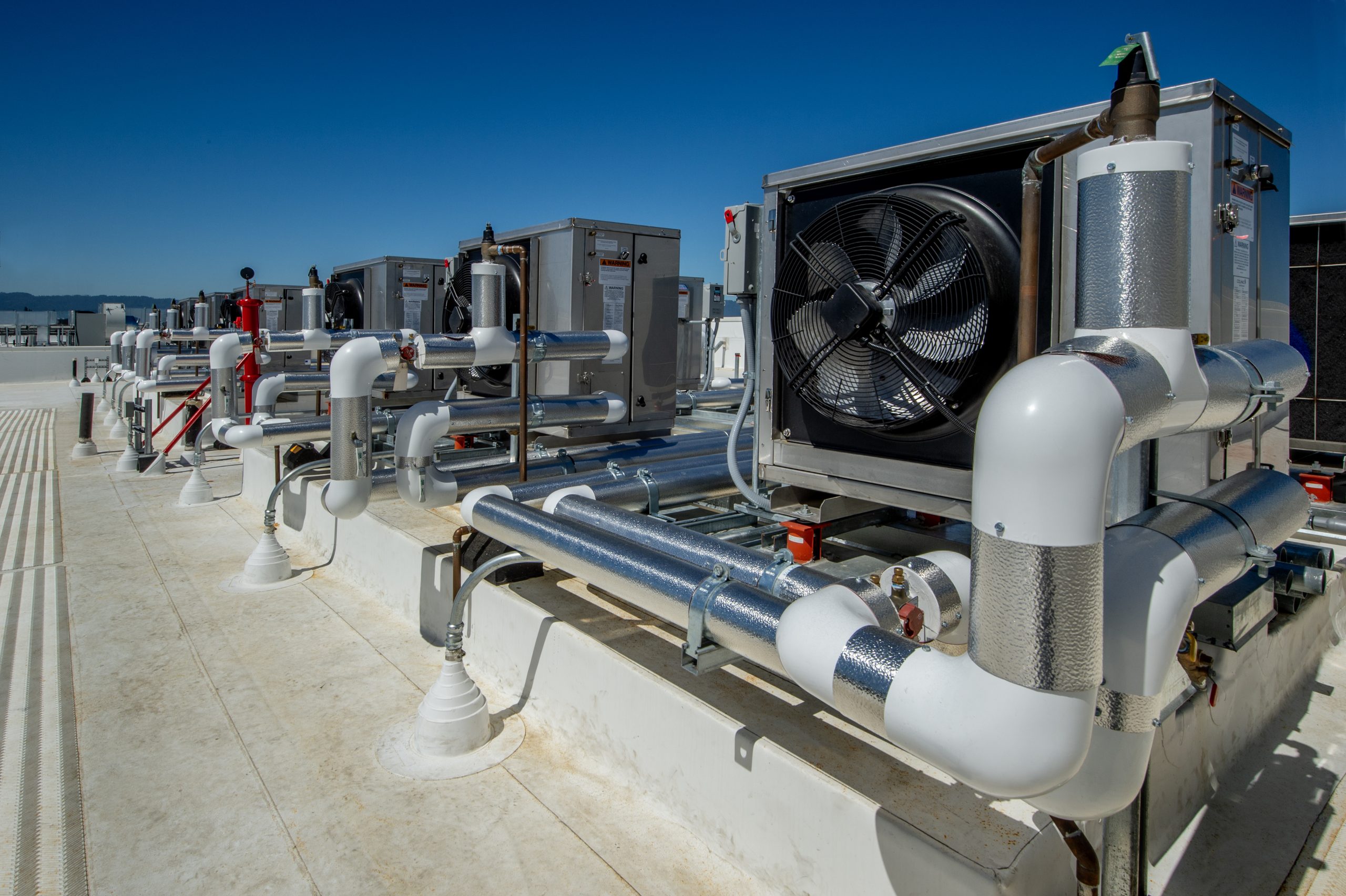
India spends billions on oil and gas imports, facing economic and geopolitical risks. Heat pumps offer a cost-effective, energy-efficient solution to reduce import dependence and boost energy security.
Every year, India spends hundreds of billions of dollars to import crude oil and natural gas. In the last financial year, the net oil and gas import bill was $117.5 billion, roughly equal to the gross state domestic product of Punjab. Oil and gas imports, therefore, do not merely drain foreign exchange; they also expose the Indian economy to global price shocks and geopolitical risks, which we have experienced vividly in the last few months because of the US-Iran conflict.
There is now a broad consensus on the need to reduce this import dependence and make India more self-sufficient in energy. However, the policy conversation on reducing this dependence largely revolves around the visible frontiers of the energy transition — electric vehicles, green hydrogen, ethanol, and solar parks. But a large and largely ignored share of imported fuel is burnt for something far more mundane: heat. Diesel and furnace-oil boilers generating steam in factories, LPG and piped gas heating water in hotels and hospitals, and gas-fired ovens and dryers in automobile plants are all part of this hidden energy economy. In fact, about 40% of the energy used in Indian industry goes into generating heat — hot water, steam, and hot air.
For all this heat, a proven and commercially available technology can slash fuel use starting today. This technology is the heat pump — and it is perhaps the lowest-hanging fruit in India’s energy transition.
A heat pump does not generate heat; it moves it. It extracts warmth from the air, ground, or industrial waste heat and delivers it at useful temperatures. For every unit of electricity it consumes, it delivers two to four units of heat. No boiler or burner can match this efficiency arithmetic. And this is not a laboratory promise; these are commercially available technologies.
Largely Indian-made heat pumps are already running on factory floors across the country — at automotive facilities in Pune, pharmaceutical factories in Bengaluru, textile plants near Bhubaneswar, and electronics plants near Chennai — reliably delivering hot water and steam at temperatures up to 120°C under real operating conditions. Heat pumps that can deliver even higher temperatures are also available, but they remain expensive and are not yet widely deployed.
Studies conducted by my colleagues and me show that wherever heat pumps displace diesel, furnace oil, LPG, or piped natural gas, heating costs fall by 50 to 75%. A motorcycle plant that replaced its diesel boiler saw its cost of heat drop from `8.6 to `3 per unit. An electronics manufacturer replaced LPG-fired heating at `10 per unit with heat-pump heat at `3.5 per unit. In industries requiring low- to medium-temperature heat, heat pumps typically pay for themselves in under three years. In large hotels, hospitals, and hostels using electric heaters or LPG boilers, payback periods often fall below two years.
Our assessment shows that the easiest and most economic case for heat pumps today is precisely where they replace an oil or gas boiler or an electric resistance heater. Coal- and biomass-fired heat is harder to displace on cost today. But the imported-fuel segment — the one that matters most for India’s trade balance — is bankable right now
Consider what this means at a national scale. In industrial sectors dominated by MSMEs — dairy, textiles, pharmaceuticals, food processing, paper, and others — which require low- and medium-temperature process heat, heat pumps can easily meet one-fourth of the current energy demand at half the cost. This means higher profits for a highly stretched MSME sector and a lower import bill for the country.
In large hotels, hospitals, and hostels requiring hot water, heat pumps can eliminate almost all LPG, PNG, and diesel use. In colder regions, where the demand for hot water is high, the economics of replacing oil and gas boilers with heat pumps is even more attractive.
If we put all these demands together, India has a ready market to install 50 gigawatts (Gw) of heat-pump capacity over the next 15 years, significantly reducing the use of oil and gas in MSMEs and the commercial sector. It will also reduce carbon dioxide emissions by 54 million tonnes every year by 2040. This is why heat pumps sit at the strategic intersection of energy security and climate action.
So why is India’s installed heat-pump base still less than 1 Gw, with an annual market of only a few hundred crore rupees? The answer is not technology. Indian manufacturers already offer systems that can deliver heat up to 120°C. The barriers are upfront capital costs, low awareness, dependence on imported compressors, and the absence of any dedicated policy. India has national missions for solar, hydrogen, and electric mobility. It has none for the technology with arguably the fastest payback of them all.
But this policy gap can be fixed easily. Cutting GST on heat-pump water heaters from 18% to 5%, similar to solar water heaters, would reduce upfront costs. Interest subvention for commercial and MSME installations, similar to existing schemes run by the Bureau of Energy Efficiency to improve energy efficiency, would make heat pumps more attractive to small businesses. A production-linked incentive for high-temperature heat-pump manufacturing would help build a domestic compressor supply chain and make India self-sufficient in high-temperature heat-pump manufacturing. Similarly, minimum performance standards and star labels would allow buyers and lenders to trust the product.
None of this requires a technological breakthrough or a fiscal blowout. It requires recognising that the cheapest barrel of oil is the one we never import. India’s factories, hotels, and homes are already proving that heat pumps work here — in Indian conditions and at Indian tariffs. The gap between today’s less than 1 Gw and tomorrow’s 50 Gw is not a technology gap. It is a policy gap, and it is ours to close.
On World Ozone Day, Why We Aren’t Cheering Loudly
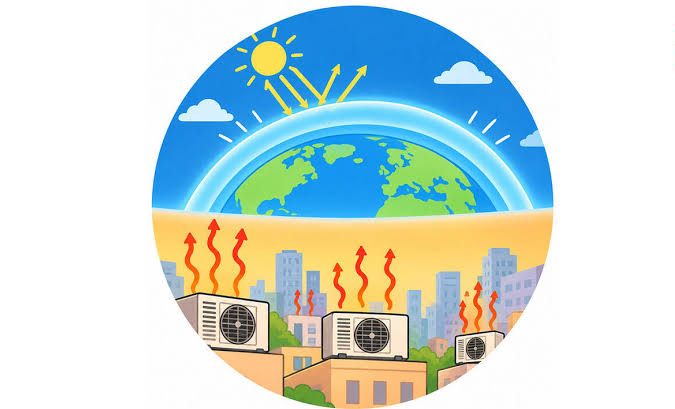
The Montreal Protocol has delivered, but it must transform to deal with new threats to the planet.
Four decades ago, the world did something remarkable. It discovered that refrigerants once celebrated as technological miracles were destroying the ozone layer, and it responded by negotiating a global treaty to phase them out. Crucially, the agreement recognised differentiated responsibilities: developed countries committed to funding the transition in developing countries.
The result has been extraordinary. The universally ratified Montreal Protocol has eliminated about 99% of controlled ozone-depleting substances (ODS). The ozone layer is healing and is expected to return to 1980 levels by around 2040 across most of the world.
Its climate benefits have been equally significant. Because many ODS are also potent greenhouse gases (GHGs), their phase-out has already spared the planet roughly 0.5°C of warming. The Kigali Amendment to the Montreal Protocol, adopted ten years ago to phase down another family of refrigerants, hydrofluorocarbons (HFCs), could avoid another 0.3–0.5°C of warming by 2100. In other words, without the Montreal Protocol, the world could be 0.8–1°C warmer by the end of this century.
On World Ozone Day, this success deserves celebration. But the best way to honour the Montreal Protocol is not to freeze it in time. It is to ask what the treaty must become over the next 40 years.
The fact is that the Protocol now faces challenges that could undermine its hard-won gains. New threats to the ozone layer are emerging. At the same time, the refrigerants and cooling technologies being promoted are creating new risks for the environment and the climate. The Montreal Protocol must therefore be transformed to deal with these emerging realities.
New threats to ozone
The refrigerants targeted by the Montreal Protocol are declining, but other major ODS remain uncontrolled. Nitrous oxide (N₂O), released mainly from nitrogen fertilisers and industrial processes, is now the single most important ODS emitted by human activities. Yet it is not controlled by the Protocol.
There is also the problem of ozone-depleting chemicals used as feedstocks for manufacturing other chemicals. These are exempt because they are assumed to be consumed during production. But a 2026 study found that actual ODS emissions from feedstocks are seven times higher than previously assumed. Continued emissions at these levels could delay ozone-layer recovery by close to a decade.
Then there is geoengineering. Proposals to inject sulphur particles into the stratosphere to reflect sunlight and cool the planet could alter stratospheric chemistry and damage ozone. The Montreal Protocol’s scientific bodies have already recognised this risk, but countries have not yet chosen to act.
To deal with these threats, the Protocol must become a treaty that governs any activity capable of damaging the ozone layer, whether or not the offending substance or activity is on its control list.
Threats to the environment
The Protocol has run on a chemical treadmill: replacing one refrigerant because of an environmental problem, only to discover another problem with its replacement.
First came chlorofluorocarbons (CFCs), which were phased out because they destroyed the ozone layer. They were replaced by hydrochlorofluorocarbons (HCFCs), which still damaged ozone, but less so.
HCFCs were therefore replaced by HFCs, which do not damage the ozone layer but are hundreds to thousands of times more potent than carbon dioxide in warming the planet. Now HFCs are being replaced by hydrofluoroolefins (HFOs), which damage neither ozone nor the climate.
But another problem is emerging. HFOs break down quickly into trifluoroacetic acid (TFA), one of the so-called “forever chemicals”, which no water treatment plant can remove. TFA is now in rainwater, rivers, groundwater and drinking water.
It is time to break this treadmill. The long-term direction should be towards technologies that avoid refrigerants wherever possible, and towards natural refrigerants, such as ammonia, carbon dioxide, propane and other hydrocarbons, that are safe across their full environmental life cycle.
Threats to the climate
The Montreal Protocol has focused on the gas that goes inside the cooling appliance. But the appliance itself matters just as much. Conventional air conditioners (ACs) and refrigerators are built on vapour-compression technology, which consumes large amounts of electricity. Over the lifetime of an AC, roughly 70% of its climate impact can come from the electricity it consumes, while only about 20–25% comes from the refrigerant.
With extreme heat contributing to half a million deaths every year globally, cooling is no longer a luxury but a matter of survival. That is why AC sales are soaring worldwide.
The International Energy Agency projects that the world’s stock of ACs will more than triple by 2050 and that cooling electricity demand will triple as well, putting electricity grids under severe strain. UNEP estimates that cooling-related GHG emissions could rise from 4.1 billion tonnes in 2022 to 7.2 billion tonnes by 2050. These numbers tell us that we cannot solve the climate challenge simply by putting a better gas into billions of highly energy-intensive machines.
We need low-energy solutions that already exist but are not being promoted. Buildings can be designed for passive cooling, and low-energy technologies such as evaporative and hybrid cooling can meet a significant share of demand. Similarly, centralised cooling can serve apartment and commercial complexes far more efficiently than millions of individual ACs.
This is where the Montreal Protocol must evolve: from a refrigerant-transition treaty into a sustainable-cooling treaty.
That does not mean abandoning its core mandate. It means extending the principles that made it successful: follow the science, help developing countries finance the transition, and strengthen the regime as knowledge evolves.
The Montreal Protocol saved the ozone layer because it was willing to change as the science changed. Its next test is whether it can change again. The bottom-line is that the ozone story should not end with a repaired sky, but polluted water and an overheated planet.
A Deficient Monsoon, a Devastating Flood
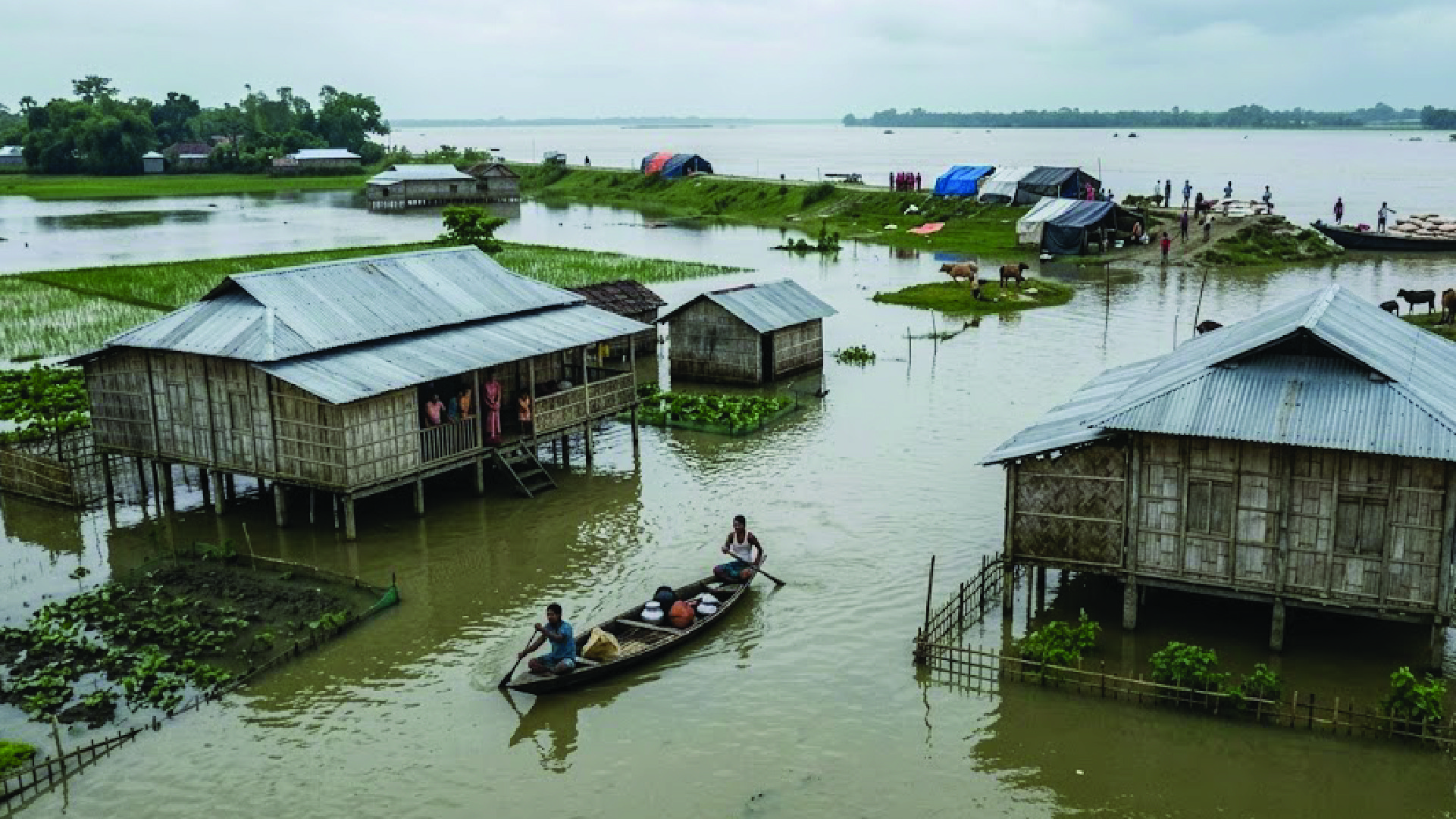
Global warming is changing the character of Assam’s floods. The state must prepare for it.
Assam received less rain than normal this July, yet parts of the state suffered their worst flooding in six decades. This paradox should worry us.
By the last week of July, Assam had received nearly a third less rainfall than normal, placing the monsoon in the “deficient” category. Yet Sivasagar, Charaideo, Jorhat and Golaghat -districts where most families had never experienced severe flooding in living memory -went under water.
The water also came with frightening speed. In parts of Sivasagar, families had at most an hour to pick up what they could carry before the flood entered their homes.
The flood was not caused by extraordinary rainfall over Sivasagar or Jorhat but was triggered by extreme rainfall in neighbouring Nagaland. On 19 July, parts of Nagaland received exceptionally heavy rain; in Mokokchung, rainfall was close to 500% above normal. Water rushed down the hills, entered the southern tributaries of the Brahmaputra and reached the plains of Assam within hours.
The new normal
It is tempting to describe this as a once-in-sixty-years event and move on. The evidence suggests otherwise.
Between 1980 and 2000, an average of 32,000 km² of Assam was at risk of flooding. Our assessment, based on multiple models, suggests that by mid-century, the area at risk could expand to 50,000–60,000 km². That is well over half of Assam.
Floods will also become deeper, and this matters more than it may appear. Assam has always lived with shallow flooding, and communities know how to cope with it. Deep flooding is different. It does not merely disrupt life; it destroys homes, crops, infrastructure and livelihoods.
Our analysis shows that the share of Assam exposed to deep flooding could rise from about 36% historically to between 50% and 60% in the coming decades. That is precisely what Upper Assam experienced in July: not the familiar, gradual rise of water, but a sudden and violent surge driven by extreme rainfall upstream.
Our assessment also reveals something even more uncomfortable. Over the next two decades, it makes surprisingly little difference to Assam’s flood risk whether the world cuts emissions quickly or slowly. Flood projections until around 2050 remain broadly similar across different IPCC emissions scenarios. The global warming that has already occurred is shaping Assam’s flood risk over the next quarter-century.
This does not mean that cutting greenhouse-gas emissions is unimportant. On the contrary, emissions reductions today will determine how severe climate impacts become after mid-century. But Assam’s immediate challenge is to live with increasing floods while drastically reducing the loss of lives, livelihoods and infrastructure.
Investing in resilience
This may sound daunting, but there are practical ways to adapt and build resilience. Consider what Assam has already lost. Between 2015 and 2024, floods and landslides caused officially recorded damage worth ₹27,925 crore. This figure mainly captures what can be counted – roads, bridges, embankments and other infrastructure. It does not fully capture the private economic and social costs, which are likely to be considerably higher.
Now consider the opportunity. Our modelling shows that if Assam plans according to climate risk, builds infrastructure to withstand floods and reduces the exposure of its poorest households, expected future losses could be reduced by nearly 70%, even as flood risk increases. Every rupee spent on flood resilience could save an estimated four to ten rupees in avoided damage.
The next ten to fifteen years therefore offer Assam a critical window to invest in resilience. Five things need to happen – and Assam already knows how to do all of them.
First, decide where people can build. Maps identifying areas exposed to deep flooding and erosion must be officially notified and made binding on town planning authorities, panchayats, public works departments and municipal bodies. New construction must be restricted in the highest-risk zones. Many such maps already exist. What is missing is a rule requiring everyone to follow them.
Second, change how Assam builds homes. The state needs a clear building code designed for a wetter, more flood-prone and hotter climate: raised plinths, heat-resistant roofs and materials that can withstand prolonged exposure to water. Compliance must be enforced through a robust building-permission system.
Assam does not need to look far for ideas on constructing flood-resilient houses. The traditional saang ghar is a powerful example of living with floods. Modern materials and engineering can adapt these traditional principles to create homes that are resilient to changing climatic conditions.
Third, build resilient infrastructure. Roads, power lines, airports, schools, hospitals and other critical infrastructure must be designed for future climate conditions rather than historical averages. Nearly half of Assam’s major road network passes through highly flood-prone areas. Every new road, substation or health centre should have to answer one simple question before it is sanctioned: what happens to this when the water rises?
Fourth, warn people earlier and provide relief faster. Warnings must reach people in local languages through radio, television, mobile phones and automated calls. Every panchayat and urban ward should have trained volunteer groups capable of supporting evacuation, rescue and relief. Systems must also ensure that compensation reaches affected families quickly so that they can rebuild their lives without falling into debt.
Fifth, and most importantly, work with neighbouring states. Assam cannot manage its floods alone because much of the water that floods the state originates outside its borders. The state needs a permanent working arrangement with neighbouring states. Rainfall and river-level data should be shared in real time, supported by a basin-wide warning system and coordinated management of upstream catchments.
This must also include an honest conversation about forest loss, hill cutting, roads and construction upstream. A rain gauge in the Nagaland hills that gives Sivasagar three additional hours of warning could save more lives than several kilometres of embankment. Such cooperation requires an institution with adequate funds, technical capacity and authority.
Beyond these five measures lies perhaps the cheapest flood protection Assam already possesses. Its wetlands, beels and catchment forests absorb, store and slow down water naturally. Restoring them can cost a fraction of providing equivalent protection through concrete infrastructure, while delivering ecological benefits that engineered structures cannot.
July has shown Assam that the character of flooding is changing. Places that believed they were safe are no longer safe, and floods that once developed slowly can now arrive within hours. In a warming climate, Assam can face devastating floods even in a deficient monsoon year.
The question is whether the floods of Sivasagar, Golaghat, Jorhat and Charaideo will be remembered merely as another tragedy – or recognised as a clear and present danger.
When The Rich World Sweats

If even FIFA World Cup was forced to pause for heat, the myth that developed nations can manage climate change is over. They should recommit to deep emission cuts, transfer finances & tech to developing world.
William Nordhaus was the poster child of the “global warming isn’t so bad” camp in the 1990s — precisely when the world was negotiating the UN Framework Convention on Climate Change (UNFCCC) and the Kyoto Protocol. His much-cited 1991 paper, ‘To Slow or Not to Slow’, projected that a 3°C rise in global temperature would shave barely 0.25% off US income. His later work went further, predicting gains for cold developed regions — lower heating bills, longer growing seasons, better farming in the US, Canada, Russia and Europe — while poor tropical countries bore the losses.
His DICE model, the first to link economy and climate, produced cost-benefit arithmetic under which letting substantial warming happen looked economically rational, because cutting emissions cost more than the discounted future damages. He was awarded the 2018 Nobel Prize in Economics for climate-economy work.
But Nordhaus was not alone. Thomas Gale Moore, a senior fellow at the Hoover Institution and a member of Ronald Reagan’s Council of Economic Advisers, argued that a warmer climate would bring net gains to cold northern countries. Nigel Lawson, a former Chancellor of the Exchequer of the UK, wrote An Appeal to Reason: A Cool Look at Global Warming, contending that warming’s costs were modest relative to expected economic growth and that carbon-reduction policies were politically unrealistic and economically damaging. Bjorn Lomborg, author of The Skeptical Environmentalist, still insists that global warming should not be a priority, because money spent cutting emissions hurts the poor.
While such voices are few compared with the pro-climate constituencies of the developed world, they have been disproportionately influential. They persuaded a critical mass of political and business leaders that global warming was essentially a problem of hot and humid developing countries; that colder developed countries might even benefit from modest warming; and that, in any case, the rich world had the money and tech to adapt to whatever came.
This school of thought has led to a slow breakdown of the international climate compact. Developed countries have reneged on their promises on emission cuts, finance and technology, while developing countries have struggled to move to a low-carbon trajectory.
Today, under the celebrated Paris Agreement, everything is voluntary and every country is on its own. Relations between developed and developing countries have soured to the point that, when last year’s climate conference in Belém could not agree on a roadmap away from fossil fuels, willing countries chose to pursue it outside the UN convention altogether.
But how wrong the likes of Nordhaus have proved to be. Global average temperature has risen by only about 1.5°C, and that has been enough to transform summers in the Northern Hemisphere. Temperatures once considered exceptional — near 40°C — are becoming the norm. Prolonged droughts, destructive wildfires and shrinking rivers are no longer freak events but recurring features of the European summer. Last year — the most destructive fire season in its recorded history — the European Union lost over one million hectares to wildfires, an area the size of Tripura and nearly double the historical average. And 2026 is tracking worse: over 450,000 hectares had already burned by end-July, well ahead of last year’s pace, including the largest fire Spain has ever recorded.
North America tells the same story. Canada has lost some 3.7 mn hectares this year — nearly the size of Kerala — and the United States about 2.4 mn hectares, larger than Mizoram, with the season’s peak still ahead.
The northern summer has changed so much that the two football World Cups hosted by the US, 32 years apart, were played under effectively different rules. In 1994, teams played two 45-minute halves. At the 2026 World Cup, every match carried two mandatory three-minute cooling breaks, one in each half — converting the game into four quarters — for fear of heat exhaustion. Project that trend 30 years forward: will outdoor sport in summer be possible at all in the US?
Yet the perception that “we can manage” — or even profit — still shapes the rich world’s diplomacy. The negotiations among Arctic Circle countries — scrambling to carve up the melting region’s oil, natural gas and rare minerals — are a clear example of this mindset.
But the economics that justified this complacency is now collapsing. Recent research by economists Adrien Bilal and Diego Kanzig finds that every additional 1°C of warming lowers world GDP by over 20% in the long run — damages many times larger than earlier estimates and borne by rich temperate countries as much as poor tropical ones. Against this, the cost of decarbonising the global economy is a small fraction of GDP. The bill the developed world will pay for solving the crisis is far smaller than the bill it will pay for an unchecked one — a truth its burning forests and drying rivers are already delivering.
So, it is still not too late. What is required is for developed countries to shed the short-sightedness that has shaped three decades of climate diplomacy and accept that greater capability means greater responsibility. That means deep emission cuts and serious adaptation investment at home — and finance and technology for developing countries, so that they too can pole-vault to greener technologies instead of repeating the fossil-fuelled path. Lives, economies and ecosystems everywhere are now in the line of fire; no one is safe from this planetary crisis.
The developed world would do well to remember an old village truth: when the whole village is on fire, wisdom lies in everyone coming together to save the village, rather than each person trying to save only their own house.
मोदी ने पर्यावरण संरक्षण को भारतीय मूल्यों से जोड़ा
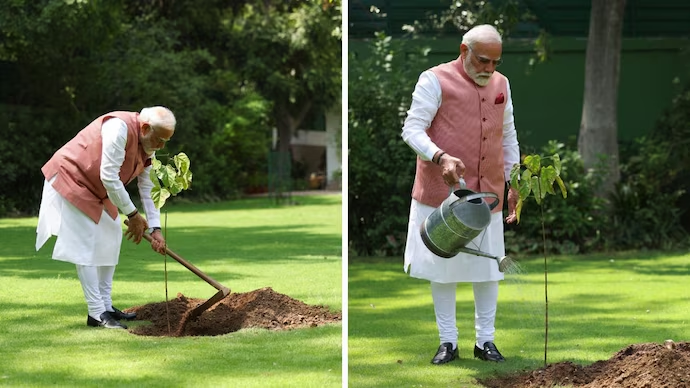
नरेंद्र मोदी अब लगातार सबसे लंबे समय तक पद पर बने रहने वाले भारत के निर्वाचित प्रधानमंत्री बन गए हैं। इस मौके पर एक स्वाभाविक सवाल उठता है — आखिर पीएम मोदी का पर्यावरण-दर्शन क्या है? यह सवाल तब और महत्वपूर्ण हो जाता है जब हम उन्हें स्वच्छता, जल संरक्षण, जलवायु परिवर्तन और पर्यावरण संरक्षण जैसे विषयों पर लगातार बोलते सुनते हैं। शायद वे पहले ऐसे प्रधानमंत्री हैं जिन्होंने लाल किले की प्राचीर से बार-बार पर्यावरण को बेहतर बनाने की जरूरत पर जोर दिया है।
स्वच्छ भारत मिशन की शुरुआत
2014 में अपने पहले कार्यकाल में, पहले स्वतंत्रता दिवस भाषण में ही मोदी ने स्वच्छता और खुले में शौच को खत्म करने पर बल दिया था। स्वच्छ भारत मिशन को उन्होंने सिर्फ एक योजना नहीं, बल्कि एक राष्ट्रीय आंदोलन का रूप दिया। शुरुआती सालों में साफ-सफाई, पानी की किल्लत और मिट्टी की गुणवत्ता जैसे स्थानीय मुद्दों पर फोकस रहा।
2015 में घरेलू वायु प्रदूषण और साफ रसोई ईंधन का मुद्दा उठा, जो 2016 में प्रधानमंत्री उज्ज्वला योजना के रूप में सामने आया। इसके साथ ही ‘पानी बचाओ, ऊर्जा बचाओ, खाद बचाओ’ का नारा देते हुए प्रधानमंत्री कृषि सिंचाई योजना भी शुरू की गई। बाद के वर्षों में एकल-उपयोग प्लास्टिक के खिलाफ अभियान चलाया गया, जिसे कानूनी रूप भी दिया गया।
पिछले कुछ वर्षों में मोदी जलवायु परिवर्तन, नवीकरणीय ऊर्जा और टिकाऊ उपभोग जैसे वैश्विक मुद्दों पर अधिक सक्रिय नजर आए हैं। 2020 के बाद से उनके भाषणों में ऊर्जा और जलवायु परिवर्तन की चर्चा प्रमुखता से होने लगी। हालांकि इसकी जड़ें पुरानी हैं — 2009 में गुजरात के मुख्यमंत्री रहते हुए उन्होंने देश का पहला जलवायु परिवर्तन विभाग बनाया था और सौर ऊर्जा के शुरुआती समर्थकों में से रहे।
चार सूत्रों पर टिका पर्यावरण नजरिया
मोदी की पर्यावरण संबंधी सोच के पीछे चार प्रमुख सूत्र दिखते हैं:
पहला — जन-भागीदारी: सरकारी योजना से ज्यादा यह जनता की भागीदारी से बदलाव लाने पर जोर देता है। रसोई गैस सब्सिडी छोड़ने का गिव-इट-अप अभियान इसी का उदाहरण है। स्वच्छ भारत की कामयाबी का श्रेय भी टीम इंडिया और जन-भागीदारी को दिया जाता है।
दूसरा — सह-लाभ की अवधारणा: ऐसे काम जो अर्थव्यवस्था, पर्यावरण, जन-स्वास्थ्य को एक साथ फायदा पहुंचाएं। स्वच्छता, जल संरक्षण, रसोई गैस और बिजली पहुंचाने वाली योजनाओं से पर्यावरणीय सुधार के साथ लोगों का जीवन स्तर और स्वास्थ्य भी बेहतर हुआ है। हरित ऊर्जा की महत्वाकांक्षा के पीछे भी यही भरोसा है कि यह भविष्य के विकास और नौकरियों का जरिया बनेगी।
तीसरा — महिला-केंद्रित दृष्टिकोण: जल जीवन मिशन, उज्ज्वला योजना और स्वच्छ भारत अभियान जैसी पहलों में महिलाओं की सेहत, सुरक्षा, गरिमा और सुविधा को खास तौर पर ध्यान में रखा गया है।
चौथा — परंपरा और आधुनिक विज्ञान का मेल: पंच तत्व और हरित हाइड्रोजन की बात एक साथ करना इसी सोच की मिसाल है। संयुक्त राष्ट्र संघ की जलवायु वार्ताओं में भी उनकी पहल — पर्यावरण के लिए जीवनशैली, और भारत की संयमित उपभोग की परंपरा से जुड़ी रही है।
पंडित उपाध्याय के विचारों से जुड़ाव
इन चार सूत्रों को समझने के लिए पंडित दीनदयाल उपाध्याय के एकात्म मानववाद को समझना जरूरी है। इस विचारधारा में विकास का केंद्र मनुष्य होता है, और प्रकृति के साथ संतुलन बनाए रखने पर जोर रहता है। बेलगाम उपभोगवाद को इस सोच में भारतीय सभ्यता से बाहर का माना गया है। 1965 में बंबई में दिए गए अपने व्याख्यानों में पंडित उपाध्याय ने प्रकृति की रक्षा, टिकाऊ खेती और भारत के पारंपरिक ज्ञान को निखारते हुए आधुनिक विज्ञान अपनाने की बात कही थी।
विचार से जन-आंदोलन तक
मोदी के पर्यावरणवाद को एकात्म मानववाद का व्यावहारिक रूप कहना गलत नहीं होगा। उन्होंने पंडित उपाध्याय के विचारों को नया आयाम देकर इन्हें नीति, कार्यक्रमों और जन-आंदोलन में बदल दिया है। इस तरह उन्होंने भारत के पारंपरिक पर्यावरण एजेंडे को एक ऐसी पहचान दी है जो परंपरा और आधुनिकता के संगम पर खड़ी है — जन-भागीदारी, महिलाओं की गरिमा, जन-स्वास्थ्य, ऊर्जा सुरक्षा और आधुनिक तकनीक, सभी इसमें शामिल हैं।
Decoding Modi’s environmentalism
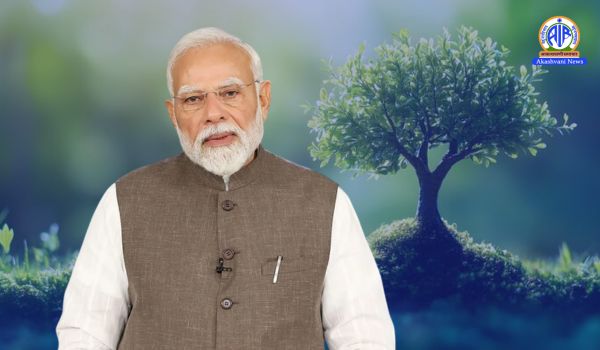
From Swachh Bharat to LiFE, the PM has given environmental agenda a distinctly Indian vocabulary rooted in Deendayal Upadhyaya’s integral humanism.
As Narendra Modi becomes India’s longest continuously serving elected Prime Minister, it is worth asking: What is his environmental philosophy, and what drives his environmentalism?
This question has often engaged me when I have heard him speak on cleanliness, water conservation, green energy, climate change, and ecological protection. He is perhaps the only PM who has spoken so consistently from the Red Fort about changing behaviour, practices, and policies to improve India’s environment.
In his first Independence Day speech in 2014, he spoke about cleanliness and the need to eliminate open defecation. He returned to the theme year after year, launched the Swachh Bharat Mission (SBM), and converted a subject of revulsion into a national movement.
In the early years, his focus was on local and traditional environmental problems — sanitation, indoor air pollution, water stress, waste, and soil health. More recently, he has engaged increasingly with globally relevant issues such as climate change, renewable energy (RE), and sustainable consumption.
Consider the local agenda first. In 2015, he highlighted indoor air pollution and the need for clean cooking fuel, which became the Pradhan Mantri Ujjwala Yojana (PMUY) in 2016. He also launched the Pradhan Mantri Krishi Sinchai Yojana with the slogan “save water, save energy, save fertilisers”. He has urged farmers to reduce fertiliser and pesticide use to protect soil, health, and nature, calling in 2021 for agriculture to be taken “out of the lab of chemistry” and connected to the lab of nature. On waste, after the SBM, he launched a campaign against single-use plastic, which was later backed by a ban on several such items.
Transitioning Local Activism
Energy and climate change have featured more prominently in his speeches since 2020, though the origins go back earlier. In 2009, as Gujarat’s chief minister, he set up India’s first climate change department. A votary of solar power since his Gujarat days, he expanded India’s solar and RE targets substantially and, in 2021, spoke of energy independence based on clean energy by 2047, including electric mobility, hydrogen, and a clean energy transition road map So, what philosophy explains these environmental actions? Four threads stand out.
The first is people-led change. People-centricity and mass mobilisation are central themes in his environmental policies and programmes. The pattern is clear: first build public consciousness, then follow it with policy.
The “Give It Up” campaign preceded the PMUY. His natural farming push is farmer-led. The Jal Jeevan Mission is framed as a Jan Andolan. The campaign against plastic began as a people’s movement before it became a legal ban. Swachh Bharat’s success has been credited by him to “Team India” and mass participation. Thus, PM Modi’s idea of the environment is linked to change at the level of individuals, households, and communities.
Socioeconomic Co-Benefits
The second thread is co-benefits. Actions that simultaneously improve the economy, environment, and public health seem to be a core motivation in his environmentalism. Flagship schemes delivering water, sanitation, cooking fuel, and electricity carry large environmental and health gains. For instance, one of India’s biggest air pollution gains in the last decade has come not from reducing vehicular emissions, but from the shift from biomass to LPG for cooking. His green energy ambition is also driven by energy security and the belief that future growth and jobs will come from the green economy.
The third thread is women-centricity. Improving the lives, health, and dignity of women runs through most of his programmes. He has described Jal Jeevan as a women-driven movement, framed the PMUY around women’s health and dignity, and said that women’s safety and dignity were central inspirations for the SBM. In this sense, his environmentalism is also the politics of everyday relief — less drudgery, cleaner homes, safer sanitation, and better health.
The fourth thread is a fusion of tradition and modern science. He invokes the panch tatva and green hydrogen in the same breath. His signature intervention at the UN climate negotiations — Lifestyle for Environment, or LiFE — draws from India’s tradition of restrained consumption.
But this belief in traditional wisdom has not stopped him from embracing modern science and technology. From building a digital economy to investing in electric vehicles and RE, his government has pursued technological modernisation with equal zeal.
Ultimately, to understand PM Modi’s environmentalism, one must understand Pandit Deendayal Upadhyaya’s integral humanism. In integral humanism, human beings are at the centre of development; culture moulds nature without destroying it; and unbridled consumerism is seen as alien to Indian civilisation. In lectures delivered in Bombay in 1965, Upadhyaya spoke about nature protection, sustainable agriculture, and the need to embrace modern science while improving upon India’s traditional knowledge and culture. In one of his lectures, he warned that chemical fertilisers could render land infertile. “How long can this dance of destruction go on?” he had asked. Modi’s passion for natural farming derives directly from that worldview.
PM Modi’s environmentalism, therefore, is best understood as integral humanism in practice. He has updated and expanded the ideas propounded by Upadhyaya. But his major achievement is that he has converted these ideas into policy, programmes, and mass mobilisation. In doing so, he has given India’s environmental agenda a distinctly Indian vocabulary — rooted in people, tradition, women’s dignity, public health, energy security, and modern technology.
From the dhabas of Varanasi, Guwahati and Ludhiana, a tale of the LPG crisis — and a way out
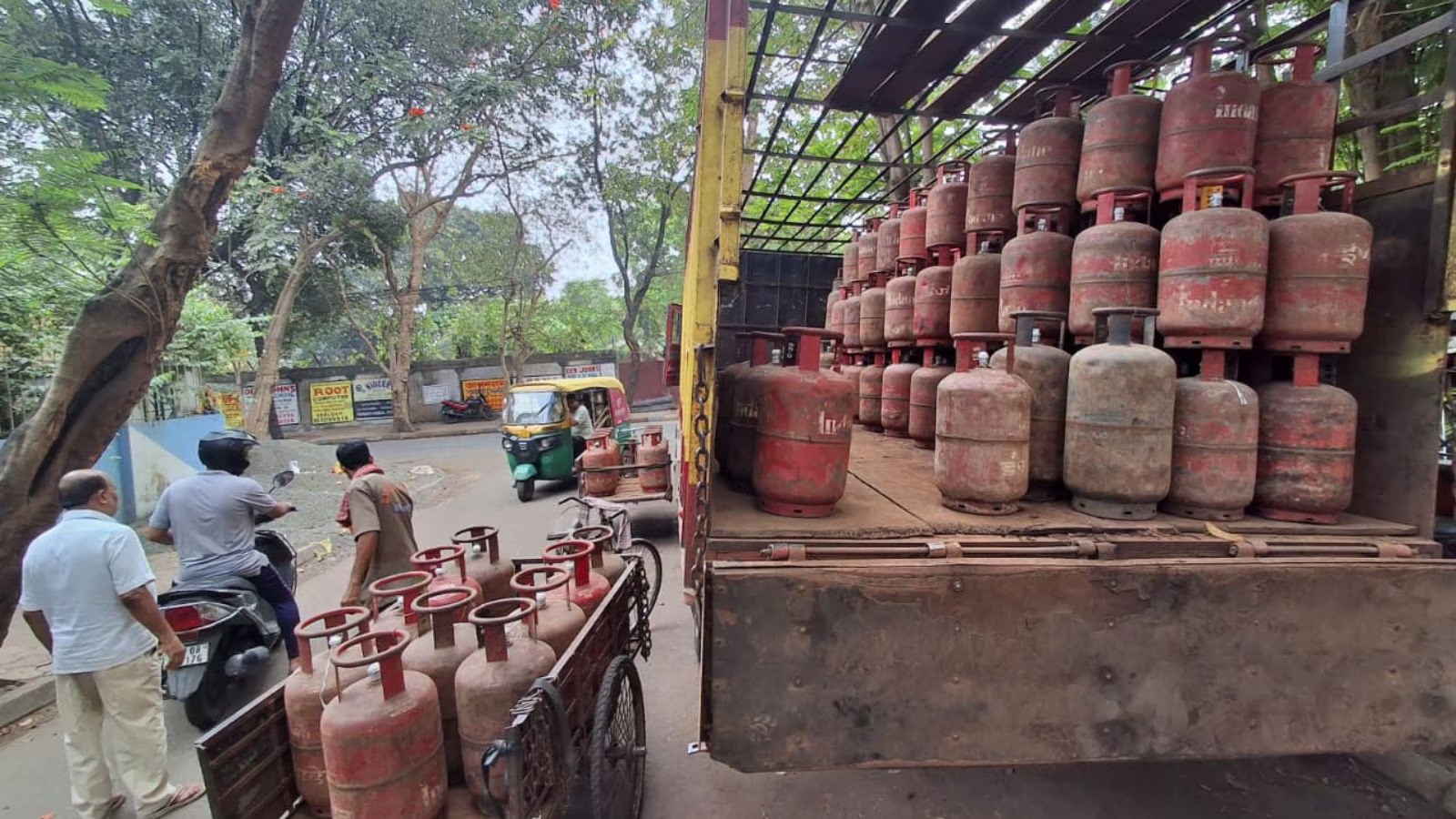
Walk past a roadside eatery in Varanasi at six in the morning and you will see a familiar sight: the kettle on, the chulha glowing, and the first batch of puri-jalebi being prepared. What you may not notice is the smoke above it. Multiply that smoke by the lakhs of small commercial eateries across India’s cities, and you begin to see the scale of a problem my colleagues and I have spent the past year trying to measure.
In Varanasi, Guwahati and Ludhiana — three cities where we have undertaken detailed studies — commercial eateries, including tea shops, dhabas, canteens, sweet shops, restaurants and mid-day meal kitchens, account for roughly 10% of PM2.5 emissions. But their pollution matters disproportionately because it peaks during the morning and evening hours.
Until a few months ago, there was good news to report. These establishments were quietly shifting from coal and biomass to LPG. But this trend is now reversing because of supply constraints and the rising cost of LPG. Owners I have spoken to in recent weeks are talking about going back to coal or biomass. Some already have. If LPG supply remains constrained and prices stay elevated — both of which appear likely through the winter — air quality in northern India could be headed for another ugly season. A sizeable number of poor households and small businesses may be pushed back to dirty fuels.
But this need not happen.
The Arithmetic
LPG is the most expensive fuel to cook a meal in India — whether at home, in a dhaba, or in a restaurant.
Take a 19 kg commercial LPG cylinder, currently priced at about ₹3,100–3,300. It contains roughly 240 kWh of thermal energy. But commercial burners typically deliver only about 55–65% of this heat to the pot. This means that the useful cooking energy from one cylinder is only about 130–160 kWh. At current prices, LPG cooking therefore costs around ₹22.5 per useful kWh.
Now run the same arithmetic for induction cooking. Even at an electricity tariff of ₹15/kWh — a very high commercial tariff — and assuming 85% efficiency, induction cooking costs about ₹17.5 per useful kWh. That makes it around 20% cheaper than LPG.
At a more typical commercial electricity tariff of around ₹9–10/kWh, the economics are even clearer. Induction cooking is nearly 50% cheaper than LPG. For LPG to reach parity with induction cooking at this tariff, the cost of a 19 kg cylinder would need to fall to about ₹1,700 — close to a 50% price cut, which is unlikely.
The striking fact is that this shift in the economics of cooking happened some time ago. Many of India’s eateries have been quietly paying for the country’s most expensive cooking fuel — without realising it.
No Economic Barrier
If electricity is cheaper, cleaner and faster, why is the pot still on a gas burner? The barriers are real, but they are no longer primarily economic. They are about information, habit and infrastructure.
Awareness of electric cooking remains very low. Our survey shows that most eateries have little idea how induction can be introduced into their kitchens. We are also creatures of habit. The comfort of an open flame and a familiar way of cooking slows the transition. Many cooks also believe that switching fuels will change the taste of their food.
Then there is the issue of inadequate sanctioned electrical load. Most small establishments simply do not have enough approved load at the meter to run two induction hobs during peak cooking hours. And, most decisively, there is no credible central or state programme that helps a sweet shop owner in Ludhiana, Guwahati or Varanasi actually make the switch.
This is where policy must come in — not to subsidise the fuel, because electricity is already cheaper, but to support the transition. This means financing support for equipment replacement, fast-tracked load enhancement for small commercial connections, time-of-day commercial tariffs that reward cooking outside peak hours, and a clear deployment target for commercial kitchen electrification.
A New Clean Cooking Mission
India spent the last decade subsidising LPG to displace biomass from the kitchen. That mission was right for its time. It saved lakhs of women from indoor smoke and brought millions of households and eateries into the modern energy system.
But the world has moved on. Electricity is now cheaper than gas at the burner. Renewables are pushing power costs further down. And the geopolitical risks attached to imported LPG — the Strait of Hormuz, dollar volatility and a tightening global gas market — are no longer footnotes.
The next phase of India’s clean cooking mission should not be about LPG. It must be about the plug.
A national programme to electrify commercial and residential cooking — starting with the most stressed segments such as small eateries, mid-day meal kitchens, government canteens, hostel messes and similar establishments — would deliver four gains at once: a developed market for induction cooking, cleaner urban air, lower running costs for small businesses, and greater energy security in the kitchen.
The economics have already chosen. Policy now needs to catch up.
सब्सिडी बोझ और आयात निर्भरता के बीच हरित यूरिया का उभरता विकल्प
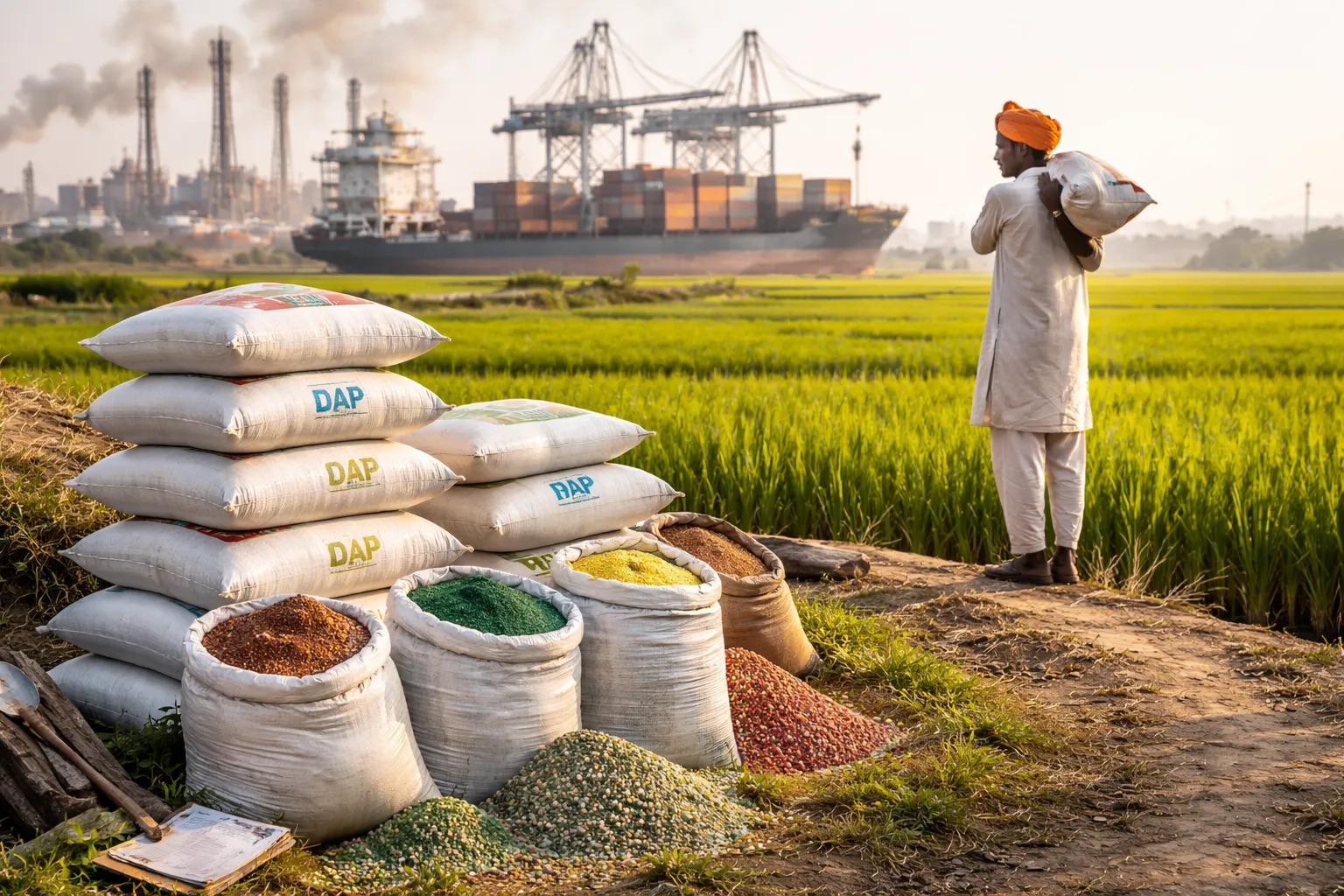
पश्चिम एशिया संघर्ष ने भारत की ऊर्जा निर्भरता को सबके सामने ला दिया है। लेकिन इसका एक और पहलू है जिस पर कम बात होती है — यह हमारी खाद्य सुरक्षा की भी कमर तोड़ता है। हरित कृषि के बारे में भारत फसल उत्पादन बढ़ाने के लिए यूरिया पर निर्भर रहा है।
यूरिया कुल उपयोग की होने वाले उर्वरकों का 56 प्रतिशत और सभी नाइट्रोजन उर्वरकों का लगभग 80 प्रतिशत है। देश में बनाने वाले 80 प्रतिशत से अधिक यूरिया के लिए आयातित प्राकृतिक गैस का इस्तेमाल होता है और कुल खपत का पांचवें हिस्से से अधिक सीधे आयात किया जाता है। कुल मिलाकर भारत में इस्तेमाल होने वाला लगभग 90 प्रतिशत यूरिया किसी न किसी रूप में आयात पर निर्भर है।
इसका वित्तीय बोझ भी बहुत भारी है। यूरिया पर सब्सिडी 1980-81 में 500 करोड़ रुपए से कम थी जो 2022-23 में बढ़कर 1.65 लाख करोड़ रुपए हो गई है। यानी हम एक ऐसी व्यवस्था के बनाए रखने के लिए देश का अरबों रुपया खर्च कर रहे हैं, जो पूरी तरह बाहरी निर्भरता पर टिकी है। जरूरी बात यह है कि इसका विकल्प बनाने के लिए जरूरी तकनीक और सरकारी कार्यक्रम पहले से मौजूद हैं। बस जरूरत है एक ऐसे मिशन की जो इन सबको एक साथ जोड़ सके।
यूरिया बनाने में दो मुख्य प्रक्रियाएं होती हैं — पहले हाइड्रोजन और नाइट्रोजन से अमोनिया बनाना और फिर उसे कार्बन डाई ऑक्साइड के साथ मिलाना। भारतीय कारखाने हाइड्रोजन और कार्बन डाई ऑक्साइड के लिए प्राकृतिक गैस का इस्तेमाल करते हैं, जबकि हाइड्रोजन हवा से ली जाती है। इस तरह बनाई गई यूरिया को ‘ग्रे यूरिया’ कहते हैं। लेकिन हाइड्रोजन को पानी से भी बनाया जा सकता है — इस प्रक्रिया को ‘इलेक्ट्रोलिसिस’ कहते हैं।
1970 के दशक में फर्टिलाइजर कॉर्पोरेशन ऑफ इंडिया के नंगल कारखाने में इसी तरह हाइड्रोजन बनाई जाती थी, फिर भाखड़ा बिजली की कमी के कारण इसे बंद करके प्राकृतिक गैस अपनाना पड़ा। इसके अलावा कार्बन कैप्चर और उपयोग यानी सीसीयू तकनीक भी यूरिया उद्योग में पहले से इस्तेमाल होती है, जिसमें धुएं से कार्बन डाई ऑक्साइड निकाली जाती है।
यानी हमारे पास पहले से ही वो सभी तकनीकें हैं, जिनसे बिजली का इस्तेमाल करके यूरिया बनाई जा सकती है। इलेक्ट्रोलिसिस से हाइड्रोजन, कार्बन कैप्चर से कार्बन डाई ऑक्साइड और हवा से नाइट्रोजन! अगर यह बिजली नवीकरणीय ऊर्जा से आए तो यह बन जाती है ‘हरित यूरिया’।
सबसे बड़ा सवाल लागत का है। एक अध्ययन से पता चलता है कि हरित यूरिया 2028 तक किसी कारखाने के लिए सबसे सस्ता विकल्प बन सकती है। 2030 तक इसकी लागत में यूरिया से 20 प्रतिशत कम होने का अनुमान है और 2050 तक यह फर्क लगभग 100 प्रतिशत तक पहुंच सकता है।
2025 से 2050 के बीच हरित यूरिया की औसत लागत करीब 475 डॉलर प्रति टन होगी, जबकि ये यूरिया के लिए यह 540 डॉलर है। आज वैश्विक बाजार में ये यूरिया 600 डॉलर प्रति टन तक पहुंच रही है। अनिश्चित भू-राजनीति के इस दौर में आर्थिक रूप से हरित यूरिया के पक्ष में जा रहा है।
भारत के पास इस बदलाव को गति देने के लिए कार्यक्रम तो हैं लेकिन इन्हें नई दिशा देने की जरूरत है। राष्ट्रीय हरित हाइड्रोजन मिशन का लक्ष्य हरित यूरिया की ओर मोड़ना होगा। केंद्रीय बजट में कार्बन कैप्चर, उपयोग और भंडारण के लिए पांच वर्षों में 20,000 करोड़ रुपए का प्रावधान किया गया है। इस कार्यक्रम में यूरिया कारखानों को कार्बन डाई ऑक्साइड की आपूर्ति को प्राथमिकता देनी चाहिए।
अगर हम इन सभी कार्यक्रमों को एक साथ लाएं और इन्हें एक नई दिशा दें तो यूरिया उद्योग को हरित बनाया जा सकता है।
साथ ही, यूरिया की खपत को भी कम करना होगा। इसके लिए सरकार को हरित यूरिया मिशन शुरू करना चाहिए जो तीन काम करे — यूरिया उत्पादन को प्राकृतिक गैस से हरित हाइड्रोजन पर लाना, खपत को कम और बेहतर बनाना और उर्वरकों के मिश्रण को संतुलित करना।
अगर 2040 तक 90 प्रतिशत उत्पादन हरित हाइड्रोजन पर आ जाए, तो गैर-नाइट्रोजनी खेती बढ़े और नाइट्रोजन उपयोग दक्षता सुधरे, तो बड़े फायदे हो सकते हैं। यह आयात बंद होगा, सब्सिडी कम होगी और ग्रीनहाउस गैस उत्सर्जन में भारी कमी आएगी। हालांकि यह संभावना आसान नहीं होगी।
यूरिया उद्योग पर सरकारी नियंत्रण अधिक है, जिससे बाजार की गति धीमी है। इस धीरे-धीरे बाजार में इस विकल्पों के लिए खिड़की खुलनी जरूरी होगी। यूरिया को नवीकरणीय ऊर्जा से जोड़ा जा चुका है।
Heatwave crisis needs a vision, not just policy
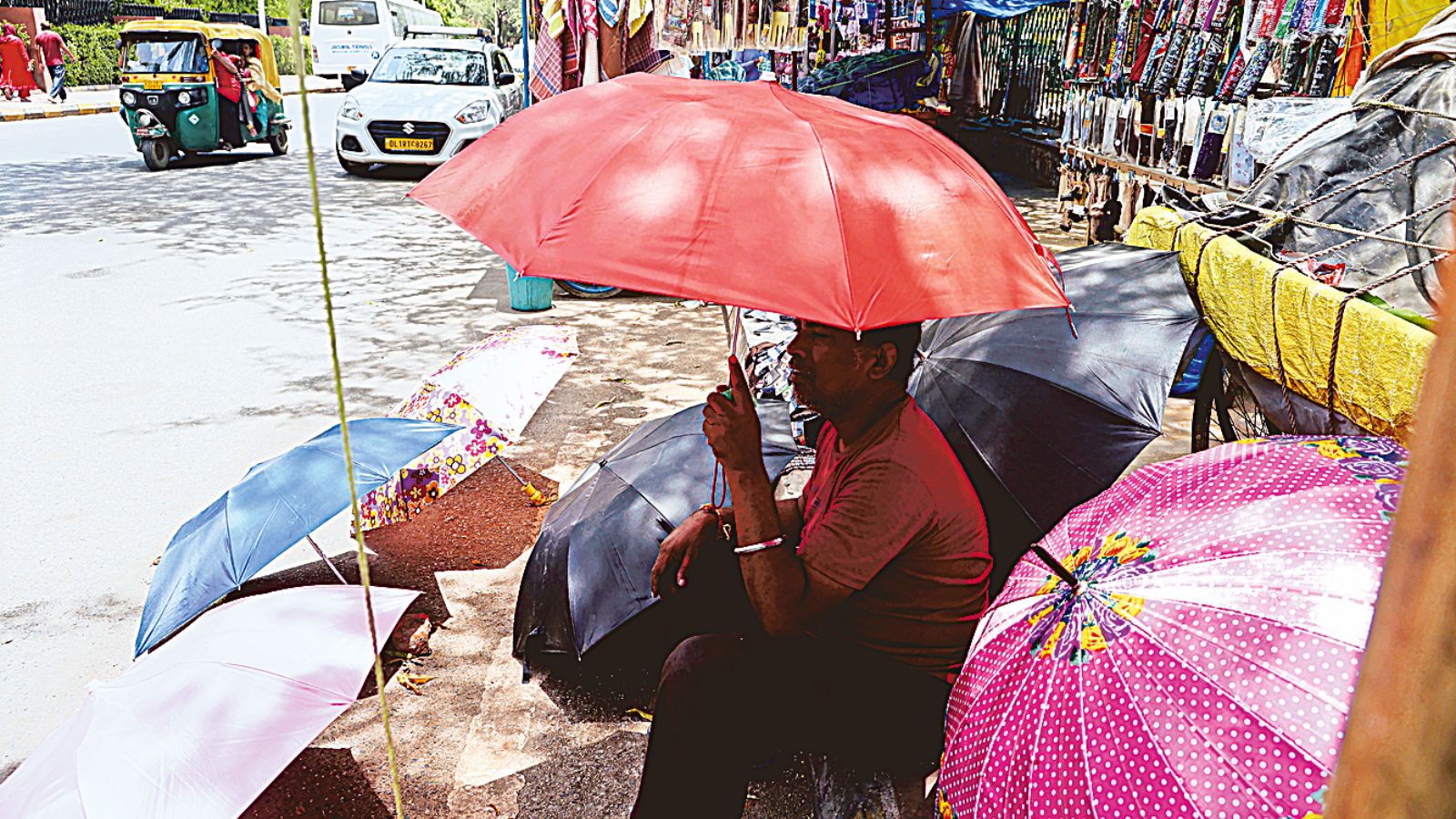
The NDMA must lead the development of comprehensive frameworks that move beyond relief to support investments in heat mitigation and resilience
THE INDIA Meteorological Department has warned that the summer of 2026 could be particularly intense, with many parts of the country likely to experience an above-normal number of heatwave days. Heatwaves are unlike sudden disasters such as cyclones or flash floods. They unfold slowly, often building over days or weeks. This means they require sustained planning rather than only emergency response.
Recognising this, many Indian cities, districts and states have developed Heat action Plans (Haps). These plans play an important role in coordinating responses among government departments through early warning systems, public advisories, and emergency measures. In several cities, they have helped reduce heat-related mortality and illness.
However, as temperatures continue to rise, India now needs to move beyond shortterm responses and begin investing in longterm strategies to cool cities in a sustainable way. In this context, the recent recommendation of the 16th Finance Commission to include heatwaves in the list of nationally notified disasters could be a turning point. By recommending their inclusion, the Commission acknowledges that climate change has fundamentally altered India’s disaster landscape.
This reclassification changes the financial and institutional support available to states. Until now, states could use up to 10 per cent of their State Disaster Response Fund (SDRF) to provide immediate relief for local disasters, including heatwaves, provided they had notified them as state-specific disasters. With heatwaves recommended for inclusion under the Disaster Management act, states would now be able to seek support from the larger National Disaster Risk Management Fund as well as their State Disaster Risk Management Funds (SDRMF). This expands fiscal space not only for relief measures but also for financing longer-term resilience and mitigation initiatives.
While the new classification opens up financial resources, the current policy framework remains limited. This is where the real challenge lies. Most Heat action Plans continue to focus primarily on short-term measures such as alerts, awareness campaigns and emergency response. They do little to address the structural drivers of heat vulnerability — poor urban design, heat-absorbing construction materials, declining green cover, inefficient cooling systems, and unequal access to thermal comfort.
To utilise the available funds effectively, India must strengthen its policy frameworks and provide cities and states with clearer guidance on long-term heat resilience strategies. The National Disaster Management authority must lead the development of comprehensive frameworks that move beyond relief to support investments in heat mitigation and resilience, such as climatesensitive planning, expansion of urban green and blue infrastructure, improved building design, infrastructure resilience and sustainable cooling solutions.
Equally important is building institutional capacity that enables local governments to design and implement projects that reduce heat risks over time. Stronger coordination between urban planning and disaster management institutions, and better technical support for cities, will be critical to ensure that funds are effectively utilised.
The funds are now on the table. What India needs next is a policy vision for cooler, safer and more resilient cities.