

Warming to a false dawn: It is time the world regulates the sector of solar geoengineering

Unfortunately, the Vienna Convention is toothless, and its provisions have been ignored. Therefore, rebooting the Vienna Convention to govern SRM research is essential.

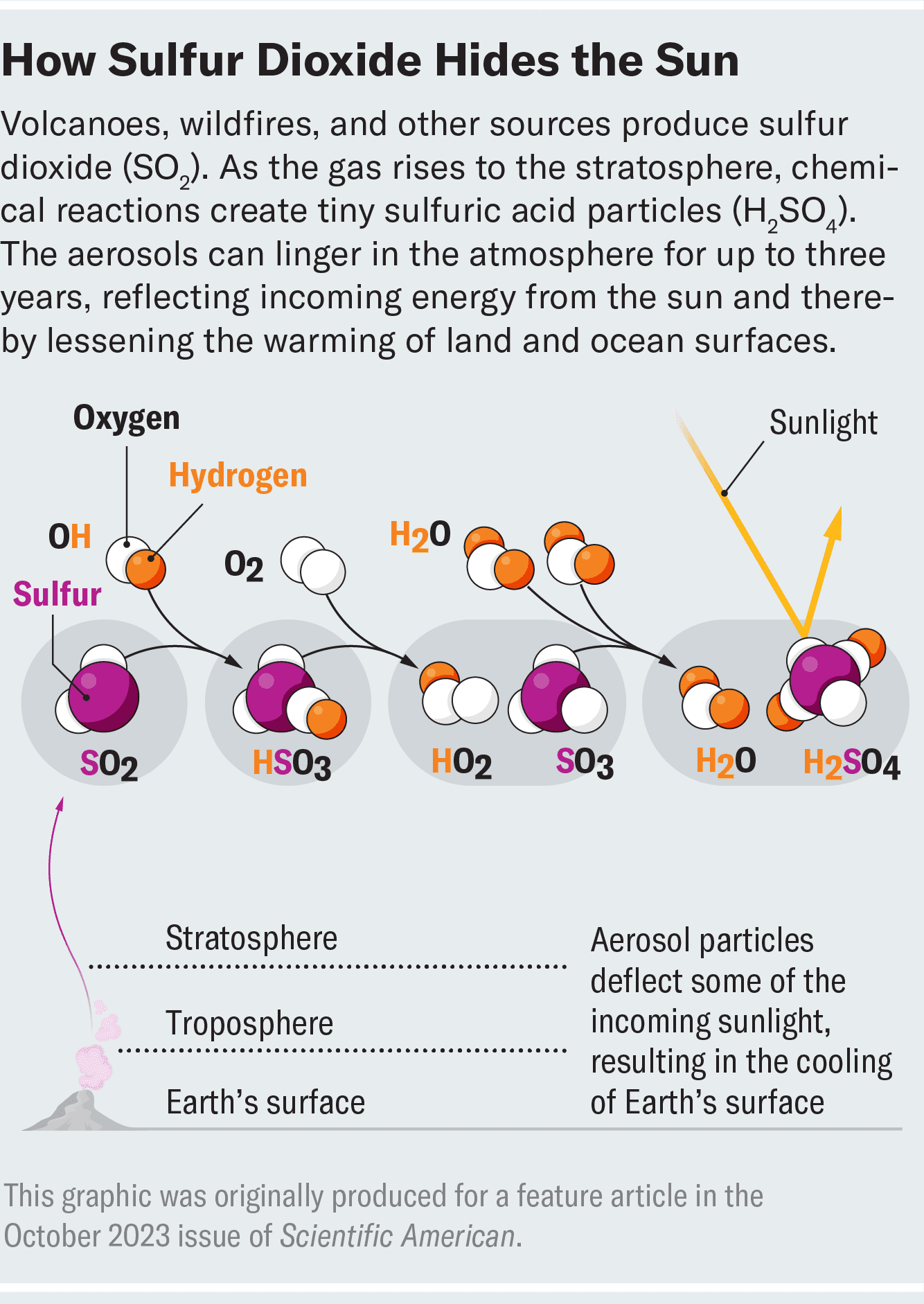
Solar radiation modification (SRM), a group of technologies to deliberately reflect sunlight into space to cool the planet, is now being seriously explored as a solution to the climate crisis. In theory, injecting sulphur droplets into the stratosphere, salty water into clouds, or scattering glass over polar ice could slow global warming by changing the Earth’s energy balance. But as these experiments involve risks at a planetary scale, we should proceed with abundant caution, communication and transparency, regulated by globally agreed standards. Instead, we see ethical and legal boundaries being crossed by unregulated experiments.

Reckless experimentation

Since 2017, a private initiative, initially called Ice911 Research and later the Arctic Ice Project, has scattered tiny glass spheres to reflect sunlight over 17,500 square metres (or three football fields) of Arctic ice, drawing protests from Alaska Native leaders. Full deployment would involve spheres over 100,000 square kilometres of the Arctic, an area the size of Bihar.

Some of the recent experiments are even more reckless. In 2022, an independent researcher in the UK released sulphur dioxide from a high-altitude weather balloon into the stratosphere and named it SATAN (Stratospheric Aerosol Transport and Nucleation). Around the same time, Make Sunsets, a Silicon Valley-backed start-up, launched nearly 50 such balloons from Mexico. This company now plans to sell “cooling credits” for such launches.

The start-up’s response to the question “Is this legal?” is: “Yes, we’ve been in contact with multiple US government agencies (FBI, FAA and NOAA). They are aware of our business and activities.” This non-answer is at the heart of the problem. Here’s why: Experiments that pose planetary risks violate international law if those risks are not clearly assessed, communicated, and consulted on beforehand. This is true even though there is a lack of specific national regulation, which some wrongly believe gives them a free rein. Let me elaborate.

Global warming or ozone hole

Two significant scientific assessments published in 2023 underlined the hazards of SRM. The first, the One Atmosphere report of the UN Environment Programme (UNEP), found that “even as a temporary response option, large-scale SRM deployment is fraught with scientific uncertainties”. To address the evident “critical unresolved issues around equity, ethics and consent” around SRM, it recommended a “robust, equitable and rigorous trans-disciplinary scientific review process” based on a precautionary approach.

The second, the World Meteorological Organization’s 2022 Scientific Assessment of Ozone Depletion, found that while injecting sulphur into the stratosphere “could reduce some of the impacts of global warming, it cannot restore past climatic conditions and would very likely cause unintended consequences, including changes in stratospheric ozone concentrations”. It also found that the certainty of damage to the ozone layer increases with prolonged and more intensive use of these methods. This finding sits uncomfortably with a finding from UNEP’s One Atmosphere report: that SRM would need to be maintained for several decades or centuries to limit warming effectively and that abruptly stopping the intervention would lead to “rapid climate change that would increase risks for humans and ecosystems”. Therefore, SRM poses a binary choice: Short-term use could exacerbate global warming, whereas long-term deployment risks significantly damaging the ozone layer.

International law

These findings on the transboundary impacts of SRM have legal implications. There are many international conventions and agreements that call for regulation of activities threatening large-scale modification of planetary systems such as oceans, the ozone layer, climate, and biodiversity, even if their precise effect is not fully understood.

Take the case of the London Convention on the Prevention of Marine Pollution. In 2008, the Convention prohibited a type of geoengineering known as ocean fertilisation, except for research that undertakes a risk assessment, develops a risk management plan, and commits to sharing and publicising findings through peer review. In 2010, parties to the Convention on Biological Diversity (CBD) agreed to prohibit geoengineering in general, with a narrow exception for research.

The Vienna Convention for the Protection of the Ozone Layer is particularly pertinent to Solar SRM. The Convention, ratified by all countries, obligates countries to cooperate on research on “substances, practices, processes and activities that may affect the ozone layer, and their cumulative effects”. Therefore, unregulated unilateral experiments that affect the ozone layer, such as SRM, violate this obligation.

Unfortunately, the Vienna Convention is toothless, and its provisions have been ignored. Therefore, rebooting the Vienna Convention to govern SRM research is essential. Such regulatory processes are also critical at the national level because government support for SRM research is growing in countries like the US and China. While the scale of experiments is currently small, they will likely grow more ambitious. Without a robust regulatory process, the fuzzy line between researching and carrying out geoengineering will be crossed without warning. The potential impacts—such as ozone layer degradation and sudden shifts in global climate—will affect populations worldwide, most of whom have had no say in whether such experiments should proceed.

This is especially important because many countries already use technologies to modify local weather. China plans to bring about 5.5 million square kilometres of its territory under a weather modification programme by 2025. A team in Australia is injecting saltwater into clouds over the Great Barrier Reef to prevent its disappearance. The leap from weather modification to SRM is close.

The stakes for countries like India in geoengineering cannot be overstated. Computational models indicate that SRM could negatively influence monsoon patterns, affecting agriculture and water availability. Hence, it is crucial for India to spearhead the development of an international regulatory framework for SRM, including outdoor experimentation. This proactive approach is essential, as decisions made today will have implications for generations to come.
Who’s to blame for the world’s most polluted capital?

Delhi’s pollution levels keep rising with rising GRAP restrictions. This plan is only spiking congestion and chaos. Eight years in, it needs replacing with something that actually works.

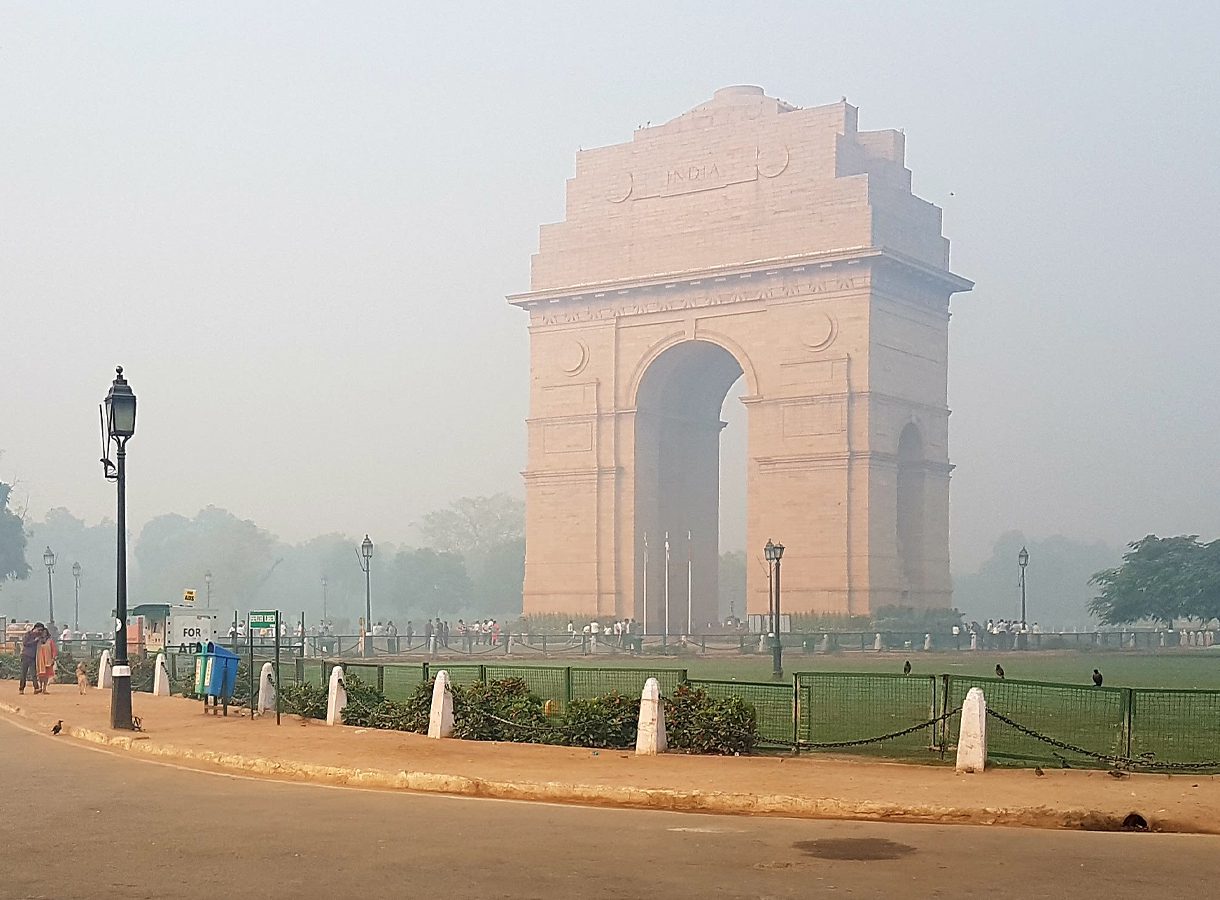
Even as Delhi was enjoying a rare respite with cleaner air and sunny skies, dropped the news of its being the world’s most polluted capital city. What is needed is to discuss air pollution without falling into the trap of unproductive blame games and futile arguments.

To set the context, the air pollution season of 2023-24, stretching from October 1st to February 29th, was one of the worst in recent memory. It’s average Air Quality Index (AQI) was 304, a notable increase from 280 in 2022-23 and 278 in 2021-22.

Alarmingly, the city witnessed 92 days of ‘very poor’ air quality, compared to 73 in 2022-23 and 67 in 2021-22— nearly 40% increase in the last two years. The question we need to ask is why, despite concerted efforts, the needle on pollution levels is moving in the opposite direction?

Usual Suspects

These columns have previously delved into the primary drivers of our national air quality crisis—extensive use of biomass and coal, along with dust from widespread land degradation. Today, we scrutinize the Graded Response Action Plan (GRAP), a key strategy to mitigate the city’s hazardous pollution levels.

GRAP Ambit

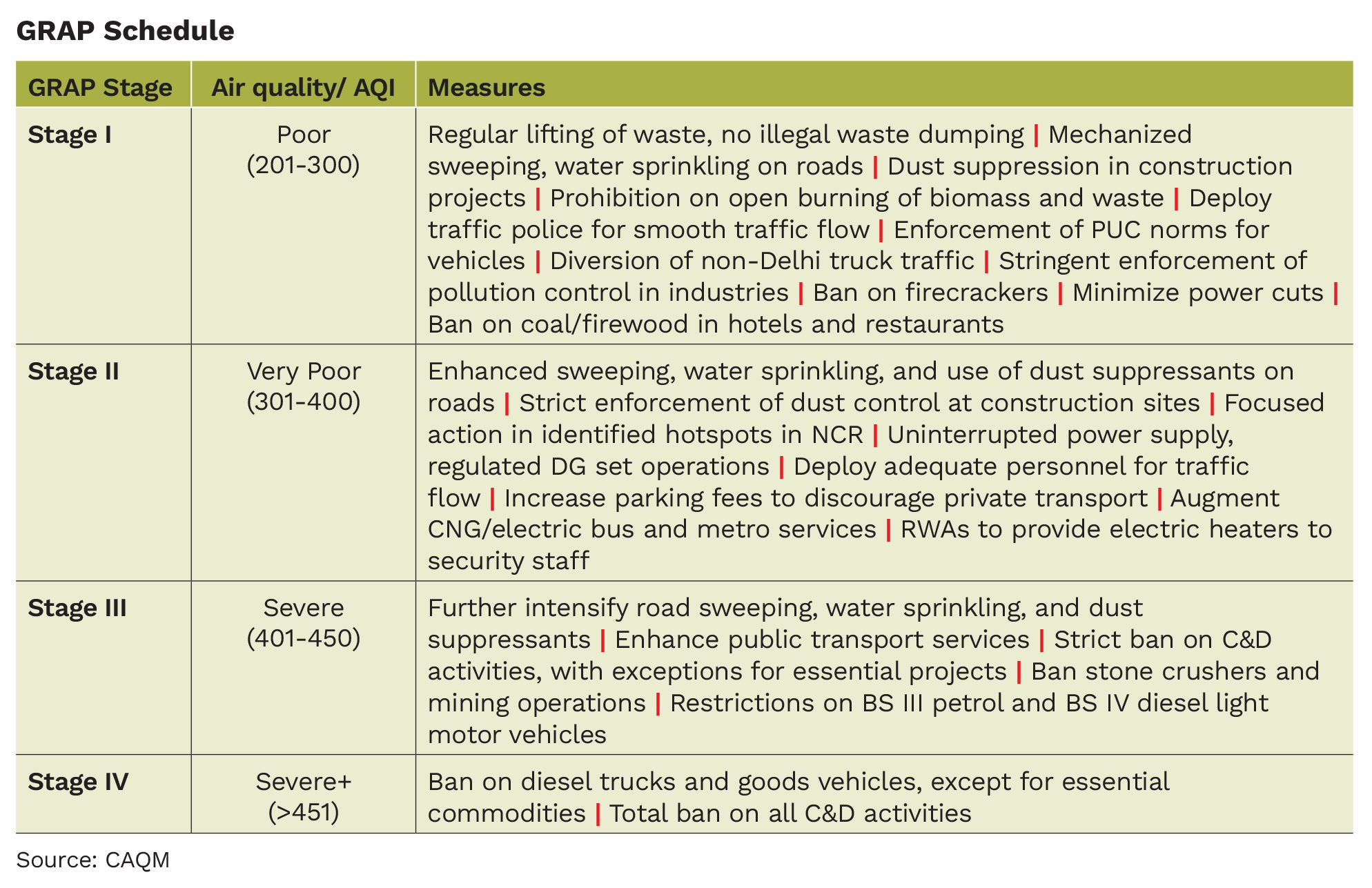
First, let’s understand what GRAP is and whether it even merits being called an “Action Plan”. The GRAP schedule ranges from Stage I to IV and gradually intensifies restrictions on different economic activities. However, as the table below shows, most measures under Stages I to III contain activities a city should do throughout the year, irrespective of air quality. Proper waste management, prohibiting open burning, traffic management, enforcement of pollution laws and dust suppression on roads and construction should be done as routine, not as an emergency response.

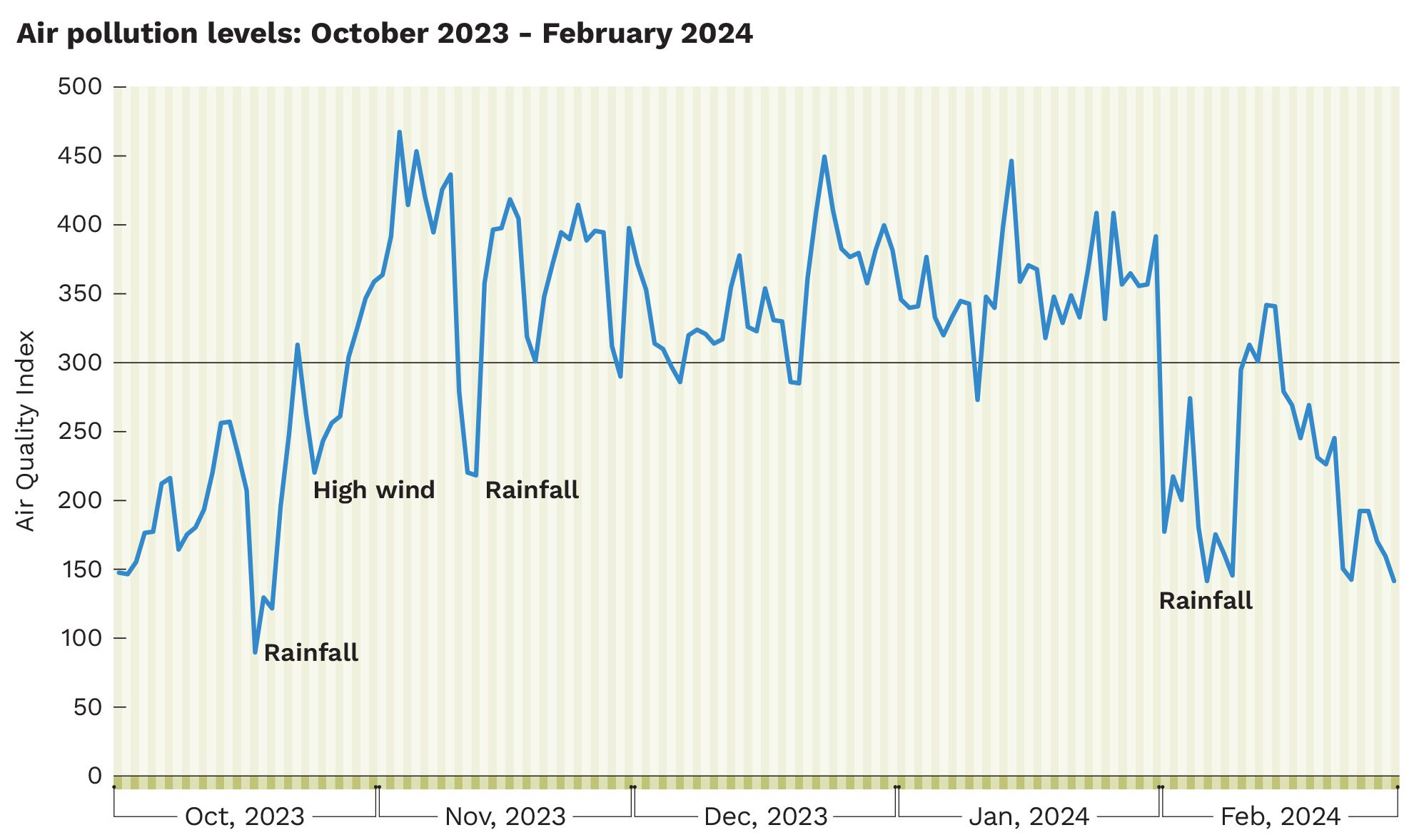
The plan reserves its more draconian measures — construction bans, the ban on mining and vehicle restrictions — for its final stages when air quality plunges into severe categories. Yet, the evidence that these interventions bring about significant air quality improvements is scant. Our analysis suggests that reductions in pollution levels are more closely tied to natural phenomena like rainfall or changes in wind speed rather than the direct impact of GRAP’s stringent measures.

Meteorological Miracle

Consider the sudden dip in pollution levels on 17th-20th October, 2023, 10th-12th November, 2023 and 1st-9th February, 2024. They were caused by rainfall. Likewise, on days when AQI was less than 300, the wind speed was generally above 9 km/hour. So, meteorology decides the air quality in the city, not GRAP measures. Yet, we have continued with GRAP for the last eight years without asking whether it is even working.

Chaos and Pollution

The fact is, the GRAP restrictions, apart from hurting lakhs of jobs, especially for low-income families, are likely causing more pollution and chaos. Take, for instance, the chaos at Delhi airport in January 2024.

Minister of Civil Aviation Jyotirao Scindhia blamed the delays and cancellations on the enforcement of GRAP-IV, which stopped the recarpeting of a runway. While one can argue that the Delhi airport could have done the maintenance before winter, the fact is that because of the GRAP IV-induced construction ban, the number of passengers who faced delays was 4.8 lakh in January 2024 compared to 2.4 lakh in January 2023. Is pollution due to the recarpeting of a runway more than the pollution from thousands of waiting and hovering aircraft and traffic chaos at the airport?

Likewise, the restrictions on commercial vehicles, intended to curb pollution, have had the opposite effect, exacerbating congestion and chaos at the city’s borders.

The GRAP restrictions are counterproductive and impose unjustifiable costs on the city. They also harm by giving the sense that something is being done to stop pollution when the opposite is true. Thus, it is time to rethink mechanisms such as GRAP and find real answers for air pollution in the city.

Skill India Mission: Short Courses, No Employable Skills and a Lack of Jobs

The India Skills Report 2021 argues that nearly half of India’s graduates are unemployable. Open unemployment was barely 2.1% in 2012 and had already nearly tripled to 6.1% in 2018, the highest rate in 45 years of India’s labour force surveys.

Ahead of the Lok Sabha election, the crisis of unemployment unites India as few things do. Why are important sections of India out of work? How do unemployed Indians live? Why is the work available not enough to earn a livelihood? How do Indians secure employment? How long is the wait? With India out of work, The Wire unveils a series that explores one of the most important poll issues of our time.

The Congress announced, as part of its manifesto for the 2024 Parliamentary elections, a Right to Apprenticeship (RA) for all post-secondary certificate/degree/diploma holders. It guarantees all the individuals under 25 years of age, a right to apprenticeship, with firms where they can be trained and work together, based on duality principles of the Germanic skilling model.

India has always had a supply-driven vocational skilling ecosystem, where youth are getting educated but not ‘skilled’ in the true sense. This calls for scrutiny of performance of few flagship schemes of government under skill development (SD) initiatives in India and underlines why reforms like RA are a step in the right direction.

Quantitative evidence related to Skill India Mission

Vocational education and training (VET) has historically been neglected in India for over half a century until the 2000s (just as school education had remained neglected in India’s planning strategy) – the costs of which we continue to pay today. In 1991, during the liberalisation of the economy, 52% or half of India’s population was illiterate and mostly concentrated on agriculture.

Although school education received a newfound emphasis in public spending in the 1990s, VET still continued to be neglected (although that was not the case for technical higher education). The 11th Five Year Plan (2007-12) was the first plan that had a chapter on skill development. As a result of this, India’s manufacturing and services workforce still have individuals with very low levels of education. Worse, hardly any worker has received formal VET.

According to the National Sample Survey Organisation Employment-Unemployment Survey (NSSO EUS) 2011-12, only 2.2% of the workforce in India had received formal VET. As per the Periodic Labour Force Survey (PLFS) data, the percentage of formally vocationally trained individuals decreased from 2.2% (10.43 million) in 2011-12 to 2% (9.14 million) in 2017-18 but rose to 3.7% (21.05 million) in 2022-23. Additionally, as per the National Scholarship Portal (NSP) 2015, only 2.7% of India’s workforce has received formal skill training, compared to 52% in the United States, 80% in Japan, and 96% in South Korea.

In the 2024 budget speech, the Union government claimed that 14 million individuals were trained under the Skill India Mission, which included upskilling and reskilling 5.4 million. But in reality, there appears to be a disconnect between the claims of the government and the ground reality.

There is also a stark disparity between these numbers and targets set in the National Policy on Skill Development and Entrepreneurship 2015, which aimed to skill 400 million workers by 2022 and remains a distant dream. Importantly, 300 million of these workers were to be given Recognition of Prior Learning (RPL) – which was required since over 95% of India’s non-farm workers acquire their skills in the unorganised sector in informal work. But these skills are not certified, hence, not recognised.

Informal learning deserves recognition and certification so that such workers can acquire some dignity in the labour market and certificates could possibly help them make a claim for higher wages. Hence, the National Skill Development Mission (SDM) and National Policy on Skill Development and Entrepreneurship were the government’s response to the very low level of formal vocational training among the Indian workforce. SDM was implemented through schemes such as Pradhan Mantri Kaushal Vikas Yojana (PMKVY), Deen Dayal Upadhyaya Grameen Kaushalya Yojana (DDUGKY) and the National Apprenticeship Promotion Scheme (NAPS), to address employability gaps.

Unit level analysis of 2017-18 PLFS data stated that 22% of the total vocationally trained individuals undertook less than six-month courses, and that share has now risen to 37%. More worrying is that in 2017, 29% individuals used to take two-year or longer courses, which is now reduced to 14.29%. There is a rapid decrease in the duration of SD courses. So, overall more people are getting degrees/certificates or formal education but the duration of these courses is very short – in some cases only 10 days.

Proliferation of short-term training to project large increases in trained workers

What is the logic behind this rise in short term training (STT) in formal vocational education when, according to 2017-18 PLFS data, 96.4% of individuals in India spend less than 15 years in formal education, and that number has now decreased to 95.8%. This anomaly requires a theoretical deep dive into the skilling strategy adopted by the government.

For the flagship PMKVY, the official website data claims that 54% of the trainees are placed through this scheme. Actual data analysis shows that of the total 12,454,858 candidates assessed, 11,041,125 candidates were certified, and only 2,451,517 candidates were placed, i.e. only 22.2% were placed.

In fact, PMKVY has been Skill India Mission’s flagship programme and yet, not only is the training all short term, the placement rate shows no improvement over time: placement rate for PMKVY 1.0 (which started in 2015) is 18.4%, PMKVY 2.0 is 23.4%, and PMKVY 3.0 is 10.1%. However, the programme is still being funded — PMKVY 4 is starting this year with a budget outlay of Rs 1,200 crore approximately.

The sector-wise placement rate showed only 54% for electronics and hardware and 20% for apparel, while the placement rate of the rest of the eight sectors, namely construction, BFSI, beauty and wellness, etc., was lower than 10%. So, how these numbers add up to 54% is anybody’s guess.

Remarkably, ahead of the run up to the Lok Sabha elections the National Democratic Alliance (NDA) government has shut down its dashboards and data sources in the last month – why, we are left to guess.

The rise of these short-term skilling courses only increases the number of individuals who may possess a certificate of being skilled, but in reality, they may lack the skills to carry out a particular task efficiently due to the lack of proper training.

Due to this, there is a desperate need for quality checks of these short-term courses. These courses produce half-trained workers, and the degrees/certificates of these individuals don’t carry much value in the labour market as workers essentially don’t learn required skills through these courses. Thereby, they are not able to secure a job after completion of these training programmes. This skilling system produces half-educated and quarter-trained personnel.

Recognition of prior learning in National Skills Policy – serious issues

There has not been a single government report published analysing the efficiency and quality of STT and RPL courses under PMKVY. For these courses, the total duration can be as short as 24 hours or 3 days of training. On an average, an RPL course is for 15-day duration (usually offered by the NSDC funded private vocational training providers) where the quality of these courses — credentials of the training providers, assessment agencies’ diligence, and assessment by certification authority — is highly questionable along with numerous cases of forgery.

Apprenticeship programmes

Since 1961, India has had an Apprenticeship Act, which requires all registered firms to accept apprentices for at least one year or more. About ten years ago, 2,50,000 apprentices existed in registered non-farm enterprises.

On August 19, 2016, the government of India launched the National Apprenticeship Promotion Scheme (NAPS), which had a budget of Rs 10,000 crore. The main objective of the scheme was to promote apprenticeship training. Though the target was to train 50 lakh apprentices by 2020, only 20 lakh apprentices could be trained by 2022. Out of the envisioned Rs 10,000 crore, only around Rs 650 crore were disbursed to the states between the period of 2017 to 2022. NAPS 2 was launched in 2023, and no figures for the same are currently available.

An ILO study in 2022 concluded that the amendments in the 1961 Act have contributed to some increase in the number of apprentices in India. Out of a workforce of 570 million in 2022-23 (as per PLFS), the apprentices were just over a half million, a rise from 2.5 lakh ten years ago.

Clearly, the amendments have not worked the magic. This is not surprising, given practically the entire private corporate sector has largely ignored the apprenticeship schemes.

Only the central and state public enterprises have tended to fulfil their obligations. MSMEs still continue to ignore the scheme. The result: Germany, with a 46 million workforce has at least 6 million apprentices; India has, by contrast, half a million. The difference arises from the industry/employer involvement in pre-employment training – which makes India’s approach supply-driven, but successful VET programmes around the globe have been demand-driven.

What India’s youth need urgently, as 6 million or more join the labour force each year – and over a 100 million wait in the wings as Not in Education, Employment or Training (NEETs) – is a pathway for education of a general academic nature or vocational or technical manner. That requires the Union government to think seriously and urgently about employers/industry in the skilling process.

The India Skills Report 2021 argues that nearly half of India’s graduates are unemployable. Open unemployment was barely 2.1% in 2012 and had already nearly tripled to 6.1% in 2018, the highest rate in 45 years of India’s labour force surveys. The total number of unemployed was one crore in 2012 before the BJP came to power – but it had tripled by 2018 to three crore.

The youth unemployment rates went through the roof for those: with middle school (class 8) education, rising from 4.5% to 13.7%; with secondary education (class 10) from 5.9% to 14.4%; and with higher secondary (class 12) education from 10.8% to 23.8%. Educated unemployment worsened sharply. For graduates, the unemployment rate rose from 19.2% to 35.8%; and for postgraduates from 21.3% to 36.2% (2022-23).

In the light of educated unemployment, lack of takers of skill programmes, low-quality training and abysmal placement rate, there is an urgent need for a comprehensive overhaul of the skill development landscape.

India, which is already suffering from high educated unemployment, in the future is moving towards the problem of skill underutilisation and over-education (or ‘degree mania’). Mere rhetoric and inflated statistics will no longer suffice.

It is imperative that the government prioritises quality over quantity, ensuring that every individual emerges from these programmes truly equipped to contribute meaningfully to the workforce. Anything less would be a disservice to the aspirations of millions seeking a better future through skill development.

Skill policies and schemes have completely failed and need a big overhaul on the lines of successful skill formation models like Swiss and Germanic skill models which are based on duality principles with youth and industry at centre stage. A Right to Apprenticeship to every youth should be an urgent priority.

Santosh Mehrotra is a Research Fellow in IZA Institute of Labour Economics, Bonn, Germany and Dr. Harshil Sharma is Programme Associate at iForest.

Sunlight-Dimming Climate Schemes Need Worldwide Oversight

As the climate crisis intensifies, experiments to “cool the planet” by reflecting solar radiation proliferate. Without proper global and national regulation, they will worsen the crisis.

Deliberately reflecting sunlight into space to cool the planet—solar radiation modification (SRM)—is now under serious exploration/investigation as a solution to the climate crisis. In theory, firing sulfur droplets into the stratosphere, spraying salty water into clouds, or scattering glass over polar ice could slow global warming. But as these experiments involve risks at a planetary scale, we should proceed with abundant caution, communication and transparency, regulated by globally agreed standards. Instead, we see ethical and legal boundaries being crossed by unregulated experiments.

Over the past decade, influential institutions—Harvard University, the University of Washington and a four-university partnership in the U.K. that includes the University of Oxford—have come close to conducting outdoor SRM experiments. But these initiatives ended up pausing their work following reconsideration of the scientific and political risks and pushback from local activists. Yet some groups involved in solar deflection experiments have recklessly opted to move their projects away from academic oversight.

Since 2017, a private initiative, initially called Ice911 Research and later the Arctic Ice Project, has scattered tiny glass spheres to reflect sunlight over 17,500 square meters (or three football fields) of Arctic ice], drawing protests from Alaskan Native leaders. Full deployment would involve spheres over up to 100,000 square kilometers of the Arctic, an area the size of Kentucky. More recent experiments only exceed this disregard. In 2022, an independent researcher in the U.K. released sulfur dioxide from a high-altitude weather balloon into the stratosphere and named it SATAN (Stratospheric Aerosol Transport and Nucleation). Around the same time, Make Sunsets, a Silicon Valley-backed start-up, began launching similar balloons. This company now plans to sell “cooling credits” for such launches.

The start-up’s response to the question “Is this legal?” is: “Yes, we’ve been in contact with multiple U.S. government agencies (FBI, FAA and NOAA). They are aware of our business and activities.” This non-answer uncovers the heart of the solar radiation modification problem. Here’s why: experiments that pose planetary risks violate international laws such as the 1985 Vienna Convention protecting upper atmosphere ozone, if those risks are not clearly assessed, communicated, and consulted on beforehand, which these startups and individuals have not done. This is true even in the absence of specific national regulation, which some wrongly believe gives them free rein.

Two significant scientific assessments published in 2023 underlined the hazards of such sunlight deflection ventures. The first, the One Atmosphere report of the U.N. Environment Programme (UNEP) found that “even as a temporary response option, large-scale SRM deployment is fraught with scientific uncertainties.” To address the evident “critical unresolved issues around equity, ethics and consent,” around SRM, it recommended a “robust, equitable and rigorous trans-disciplinary scientific review process” based on a precautionary approach.

The second, the World Meteorological Organization’s 2022 Scientific Assessment of Ozone Depletion, found that while injecting sulfur into the stratosphere “could reduce some of the impacts of global warming, it cannot restore past climatic conditions and would very likely cause unintended consequences, including changes in stratospheric ozone concentrations.” It also found that the certainty of damage to the ozone layer increases with more prolonged and more intense use of these methods. This finding sits uncomfortably with a finding from UNEP’s report: that SRM would need to be maintained for several decades to centuries to limit warming effectively and that abruptly stopping the intervention would lead to “rapid climate change that would increase risks for humans and ecosystems.” Therefore SRM poses a binary choice: short-term use could exacerbate global warming, whereas long-term deployment risks significantly damaging the ozone layer.

These findings have legal implications. Solar radiation modification cannot be contained to the air above the country from where it is deployed. The duty to avoid cross-border harm is enshrined in multiple international environmental agreements. These agreements support the precautionary regulation of activities threatening large-scale modification of planetary systems such as oceans, the ozone layer, climate and biodiversity, even if their precise effect is not fully understood.

Consider the London Convention on the Prevention of Marine Pollution. In 2008 its parties agreed to prohibit a type of geoengineering known as ocean fertilization, except for research that undertakes a risk assessment, develops a risk management plan, and commits to sharing and publicizing findings through peer review. In 2010, because of its inherent high risks and potential impacts on biodiversity and people, parties to the Convention on Biological Diversity (CBD) agreed to prohibit geoengineering in general, with a narrow exception for research.

Because the U.S. is not a party to the CBD, and the London Convention only regulates ocean fertilization, there is a perception that spraying sulfur into the stratosphere from U.S. territory is not covered by international law. This is wrong. The U.S. and all other countries are a party to the Vienna Convention on Protection of the Ozone Layer and the Montreal Protocol. A key feature of the convention is that it obligates countries to cooperate on research on “substances, practices, processes and activities that may affect the ozone layer, and their cumulative effects”. Therefore, unregulated unilateral experiments that affect the ozone layer, such as SRM, violate this obligation.

Unfortunately, as the Vienna Convention currently lacks a structured research assessment process similar to the London Convention, its provisions have been ignored. Therefore, rebooting the Vienna Convention to govern SRM research is essential. Such regulatory processes are also critical at the national level because government support for SRM research is growing. While the scale of experiments is currently small, they will likely grow more ambitious. Without a robust regulatory process, the fuzzy line between researching and carrying out geoengineering will be crossed without warning. The potential impacts—such as degradation of the ozone layer and sudden shifts in global climate—will affect populations around the world, most of whom have had no say in whether such experiments should proceed.

This is especially important because many countries already use technologies to modify local weather. China plans to bring about 5.5 million square kilometers of its territory under a weather modification program by 2025. A team in Australia is injecting saltwater into clouds over the Great Barrier Reef to prevent its disappearance. The leap from weather modification to SRM is close. Therefore, the world must start putting in place a multilateral framework to govern geoengineering like SRM. The starting point of this is to regulate outdoor experimentation.

Recent years have seen record deployments in solar and wind power—demonstrated, cost-effective solutions that, unlike SRM, are accessible to developing countries. We desperately need massive investments in carbon-free energy to decarbonize the global economy. This is the moral hazard in solutions like SRM: they draw attention and resources away from what should be a singular focus in a critical decade: decarbonization.

Social media & sharing icons powered by UltimatelySocial