

A balanced consensus: Despite scepticism, UAE has delivered a balanced package on climate action at COP28

These countries have historically drawn a red line, refusing to recognize the necessity of phasing down oil and gas to address the climate crisis.

It was perhaps preordained that an agreement on reducing fossil fuel production and consumption should have happened at the COP28 climate negotiations in Dubai, presided over by the CEO of one of the world’s largest oil companies. 

For three decades, the international community has avoided the direct mention of fossil fuels in climate agreements. The burning of coal, oil, and gas—the primary drivers of global warming—remained a spectre haunting negotiations, unacknowledged due to the staunch resistance from major oil and gas producers. These countries have historically drawn a red line, refusing to recognize the necessity of phasing down oil and gas to address the climate crisis.

However, COP28 shattered this status quo. The decision to transition away from fossil fuels, made in a petrostate and against the preferences of OPEC (Organization of the Petroleum Exporting Countries), marks a significant leap towards acknowledging and addressing the root cause of climate change.

The agreement, aiming for a “just, orderly, and equitable transition away from fossil fuels,” is a nuanced wording to start reducing the production and consumption of fossil fuels. While it might not explicitly call for a phase-down or a phase-out, it sends an unmistakable message to the fossil fuel industry: the era of unchecked fossil fuel consumption is drawing to a close.

Yet, COP28 will be remembered for more than just this ground-breaking agreement. It also will be remembered for operationalising the Loss and Damage Fund on the very first day of the conference to support vulnerable developing countries in dealing with climate disasters. While the initial pledges to the fund remains about $800 million (with the host the United Arab Emirates contributing $100 million and the United States just $17.5 million), which is far less than what is needed, the operationalisation of the fund marks an important milestone in the climate justice movement. Dubai COP also enhanced the mitigation ambition by adopting the decision taken by the G20 under India’s presidency to triple the renewable energy capacity and double the energy efficiency improvements globally by 2030.

Missed opportunity

But not all went well. The shortcomings of the Global Stocktaking (GST) process were glaringly evident. This critical component, designed to evaluate global progress in addressing climate change, acknowledged the stark reality: current efforts are insufficient, steering us towards a worrying 2.7°C rise in global temperatures. However, the GST’s failure to assign clear responsibility and provide actionable guidance for both developed and developing countries to enhance ambition for the 2025 emission reduction pledges was a significant missed opportunity. Especially concerning was its failure in highlighting the unfulfilled commitments of developed nations and its apparent leniency towards China, the world’s largest emitter. This oversight not only undermines the process’s credibility but also stalls the momentum needed for meaningful global climate action.

The fact is that the developed countries have consistently not met any of their commitments on emissions reduction or financial support. They continue to invest in new fossil fuel infrastructure and emit more than their fair share. For instance, the US presently is the largest producer of oil and gas, producing nearly a quarter of global natural gas and 15% of world’s crude oil. The problem is there is no sign that it is phasing down fossil fuels as the Biden administration has recently approved new offshore oil and gas lease. The developed countries have also not met their collective finance obligations of proving $100 billion to the developing countries. Likewise, China’s GHG emissions, which is a quarter of the global emissions, needs to peak and reduce quickly to have any chance of meeting 1.5 OC target. Yet, GST failed to point out this crucial issue. The lessons from the first GST are that global climate action needs more than just pledges; it demands accountability, transparency, and equitable responsibility-sharing.

Business takes centre stage

COP28 marked a significant shift in the narrative of global climate conferences, not just in its scale but also in the composition of its attendees. This year’s conference, hosted in the vast expanses of Dubai’s Expo-City, shattered previous records with its 70,000 attendees and an extravagant half-a-billion-dollar budget. Such figures not only dwarfed the attendance of COP21, where the Paris Agreement was born, but also set a new precedent for the financial scale of climate conferences

What stood out most prominently was the robust presence of the business sector. Industry leaders, CEOs of major oil companies, and financiers were present in significant numbers, each bringing their perspectives to the climate table. This marked departure from the usual attendee list drew mixed reactions. Some critics likened the event to a trade show, voicing concerns over the influence of business interests and lobbyists in climate negotiations. However, this criticism overlooks a crucial aspect of climate action: the indispensable role of businesses.

The significant turnout of the business community reflects a growing recognition within the business world of the dual realities of threat and opportunity presented by the climate crisis. This shift in perception is crucial to realign capital—a move away from climate-damaging activities towards sustainable practices. The presence of businesses at COP28 suggests that this realignment may be starting to take shape.

For years, experts in sustainable development have advocated for a synergy between environmental concerns and business interests. COP28 can be seen as a tangible step towards this goal. It highlighted that the path to a sustainable future is not just the responsibility of governments and environmental activists but also of the corporate world.

Overall, the ‘UAE Consensus’ is a bold step forward. The decisions in it, and the scale at which they were showcased, reflect a growing recognition of the urgency of climate action and the need for substantive policy shifts—even in regions highly reliant on fossil fuels. Central to this shift is the emerging narrative of a just, orderly, and equitable transition away from fossil fuels—a theme that will increasingly dominate global discourse as countries internalise the imperative of shutting down fossil fuel establishments and diversifying their economies.
What pollutes India?: Biomass burning remains the biggest contributor, but its share is falling because of PMUY

About 48% of these emissions come from the use of biomass, such as fuelwood and dung cakes, for cooking and heating.

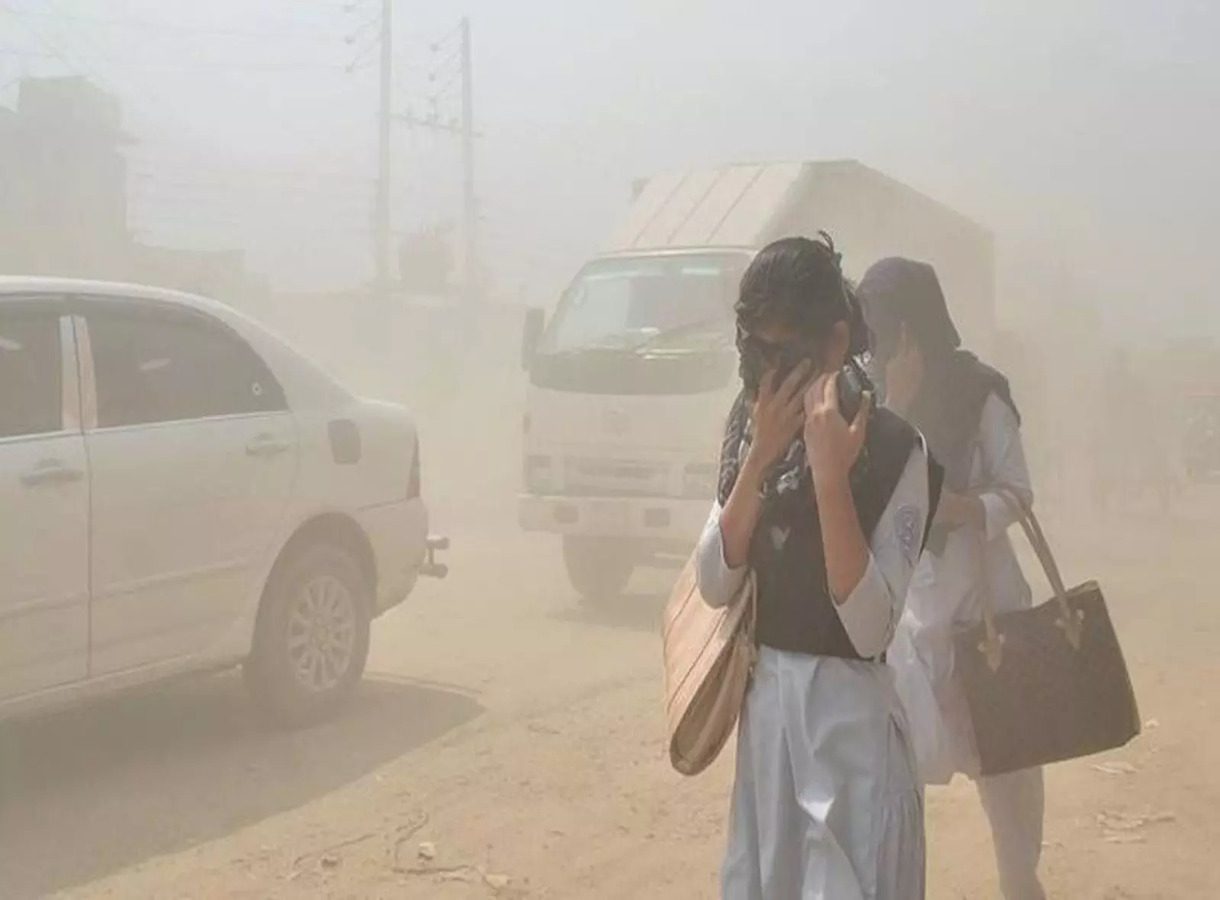
Air pollution is a pan-India problem. In 2022, the average PM2.5 levels across the country were 10.7 times higher than the WHO standard. This means that almost the entire country breathes air considered unsafe by the WHO. The cost of this pollution is around 1.2 million premature deaths and 3% of GDP. Multiple studies show that air pollution in rural areas is as severe as in urban areas, and about 70% of premature deaths from air pollution happen in villages.

The question thus is: Where does all this PM2.5 (particulate matter less than 2.5 microns in size) come from? Recent iFOREST research has attempted to answer this question. Using globally accepted methodology and government data, the research shows that India emits approximately 5.2 million tonnes (MT) of PM2.5 annually, excluding dust from natural and manmade sources.

About 48% of these emissions come from the use of biomass, such as fuelwood and dung cakes, for cooking and heating. Open burning of crop residues contributes an additional 6.5%, making biomass burning responsible for 55% of total PM2.5 emissions. Industry and power plants are the second-largest emitters, contributing about 37%. The transport sector, a major focus of air pollution mitigation, contributes about 7% of the total PM2.5 emissions.

But how could this be? How can emissions from all industries and power plants (India has the world’s second-largest fleet of coal-based power plants) and 300 million plus vehicles plying on roads be less than those from the chullahs of the poor? The answer is simple: unlike automobiles and industries where some pollution control devices are used, biomass cookstoves and open burning in fields emit all of their pollutants unconstrained into the air. Thus, PM2.5 emission per kilogram of biomass in cookstoves is tens to hundreds of times more than those from per kg of coal in power plants or diesel in automobiles. This is precisely why rural areas suffer equally from air pollution.

The Regional Emission Inventory in Asia (REAS), an initiative by researchers from Japan to estimate air pollution from Asian countries, provides data on India’s PM2.5 emissions from 1950 to 2015 for specific sectors. iFOREST research, which follows REAS’s methodology, has estimated the emissions for 2021. The analysis of both datasets indicates that the emissions from the industry sector are on an upward trend, while those from the transport sector and power plants peaked in 2010 and have declined marginally.

The most significant emissions decline has happened from residential cooking. PM2.5 emissions from cooking have dropped by 13% or about 0.3 MT during 2010-2021 due to the shift to LPG. Thus, the 50 million households that have shifted to LPG as their primary cooking fuel between 2010 and 2021, thanks to programs like Pradhan Mantri Ujjwala Yojana (PMUY), have contributed the most to reducing air pollution.

To address air pollution decisively, we must go beyond “optics” like odd-even, banning construction, spraying water, inducing artificial rains, etc. and focus on energy transition.

Energy transition in the residential sector would provide the biggest gains. Thus, shifting households to LPG, biogas, or electricity for cooking and heating would eliminate 48% of India’s PM2.5 emissions. Doing so would also eliminate 800,000 premature deaths directly caused by exposure to PM2.5 inside the household and enable the country to achieve its commitments under Sustainable Development Goal 7 to provide “clean energy to all by 2030”. While this is a herculean task, it can be achieved with focused policy interventions like PMUY.

Similarly, energy transition in industry, especially MSMEs, and rigorous monitoring and enforcement would be necessary to decrease industrial pollution. On the other hand, a shift to EVs in the automobile sector would be necessary to reduce vehicular pollution.

Lastly, eliminating stubble burning is essential to decrease severe and hazardous pollution days in Delhi-NCR. This practice contributes to PM2.5 emissions equal to those from all of India’s vehicles. Both incentives and penalties should be deployed to eliminate this environmentally damaging practice.

These are the steps for controlling air pollution in the country; anything less would not suffice.

Green energy and just transition

Coal-rich states in the country can take a cue from Odisha’s new renewable energy policy, which is geared to ensure a just energy transition for the state.

By Nikunja B Dhal and Chandra Bhushan

Odisha has been playing a central role in meeting the country’s growing energy needs. The state is the largest coal producer, producing about 185 million tonnes of non-coking coal in 2021-22. This is sufficient to fuel about a quarter of the country’s coal-based power generation. But Odisha is also one of the most climate-vulnerable states, with extreme weather events like cyclones, heat waves, floods and droughts taking a significant toll on the livelihoods and the economy every year.

To balance the imperatives of energy and climate change, thegovernment of Odisha has unveiled a new renewable energy (RE) policy during the Make in Odisha Conclave held recently Bhubaneswar, with a clear ambition and objective of ushering in a just energy transition in the state.

Increased adoption of RE has become vital for the state due to multiple reasons:

  • First, the government of India has committed to a net-zero target by 2070. This means that coal production and consumption would have to decline significantly over the next two to three decades, impacting the lives and livelihoods of coal-dependent communities. Therefore, Odisha must plan for the coming energy transition to safeguard the interests of vast numbers of people in its coal and industrial districts
  • Second, Odisha is among the country’s leading industrialized states, and a continuous increase in energy demand from all sectors is expected in the coming years. There is an apparent demand for RE from electricity distribution companies (discoms) and industries due to Renewable Purchase Obligations (RPOs). But the state currently accounts for just 0.55% of the country’s RE capacity (excluding hydropower) and imports renewable power to meet most of the existing RPO requirements. Without a rapid RE scale-up within the state, RE imports will increase several times in the coming years as RPO targets reach closer to 45% by 2030
  • Third, it is highly dependent on the mining and metal sector for growth and jobs. Currently, 39.5% of the state’s gross value addition comes from the industry sector, the highest in the country. Moreover, the global mining and metal sector is transitioning to renewable energy and green hydrogen to reduce its carbon footprint and meet net-zero targets. Odisha, therefore, has an opportunity to become the hub of the green mining and metal sector by encouraging its industries to install captive RE plants within the state
  • Lastly, sectors like green hydrogen, green ammonia and energy storage are developing rapidly. Given the strong manufacturing base, Odisha has the opportunity to grow these green sectors to support the next phase of industrialization, creating new employment opportunities as well as boosting economic activity and income. But, so far, the RE sector has not taken off in the state due to certain policy challenges and perceptions. For instance, there is a misconception that the state has low solar and wind potential. This misconception has been created due to gaps in potential estimation, which the Odisha Renewable Energy Policy, 2022 (OREP-2022) is addressing on an urgent basis. Likewise, the policy challenges have also been addressed in the new policy

Overall, a combination of factors has led to a scenario that it is cheaper for discoms and industries to buy renewable power from states like Gujarat and Rajasthan than to install RE projects within Odisha. Therefore, one of the key aims of OREP-2022 is to bridge the cost delta by providing best-in-class incentives to attract investors to develop the vast untapped RE potential of the state.

The policy includes several exemptions on duties, charges and surcharges for 15-20 years duration, along with investment facilitation and single window clearances. In addition, several measures have been introduced to ease land allocation for RE project development, including priority allocation under the state’s land bank scheme, provisions for aggregation of private land, and exemptions from the land ceiling.

The policy pays special attention to certain high-potential technologies, such as pumped-storage hydro and small-hydro, for which the requirement of free power supply to the state has been waived for projects contributing to the state’s RPO. In addition, given the paucity of large wasteland tracts, the policy pays special attention to developing solar rooftops, floating solar, and distributed solar projects. Furthermore, wind power is proposed to be promoted through feed-in-tariff, and upcoming technologies like green hydrogen and ammonia are also being promoted through various incentives.

Meanwhile, economic diversification, and the need for skilled human resources for new and emerging sectors, would be vital to ensure a just transition of the coal districts of the region. Odisha’s new RE policy addresses this by including explicit measures for creating a skilled and semi-skilled workforce for the RE sector. Existing educational infrastructure in the state is planned to be upgraded to provide training on RE component manufacturing, installation, operations and maintenance. Most importantly, to maximize RE job creation in the state, the green energy manufacturing sector has been included as a ‘thrust sector’ in the state’s new Industrial Policy Resolution (IPR), which aims to transform Odisha into the most “Preferred Investment Destination in India”.

Overall, OREP-2022 and IPR are timely steps taken by the government to boost green investments in the state and decarbonise the energy sector. These policies will also support balanced RE growth in the country and help meet the nation’s RE and Net-Zero targets. But, most importantly, they will help ensure a just energy transition in coal regions over the next decades.

India’s Renewables Disparity

‘Price-equalisation’ policies, mirroring some pre-liberalisation schemes, are distorting spatial distribution of renewable energy generation

Even a good policy with the best intentions can have unintended and adverse consequences. The Freight Equalization Scheme (FES) was one such policy meant to promote balanced industrial development throughout the country but ended up impeding the industrialisation of the mineral-rich eastern states. From 1956, consumers across the country got iron, steel, cement, and fertilisers at the same price, as the transportation was cross-subsidised. There was also a price control on coal, which ensured its availability at a fairly uniform price. This price equalisation deprived the mineral-rich states of their natural advantage of setting up downstream processing industries in the automotive, engineering, and energy sectors. As a result, industries developed in a few coastal states with large markets, such as Maharashtra, Gujarat, and Tamil Nadu, but states like West Bengal, Jharkhand, Odisha, Madhya Pradesh, and Chhattisgarh suffered. Consider this statistic: in 1950, West Bengal and Bihar accounted for 92% of all iron and steel production and 48% of all manufacturing output in engineering-related industries; in 1992, when FES was repealed, their share in engineering-related sectors was in the single digits.

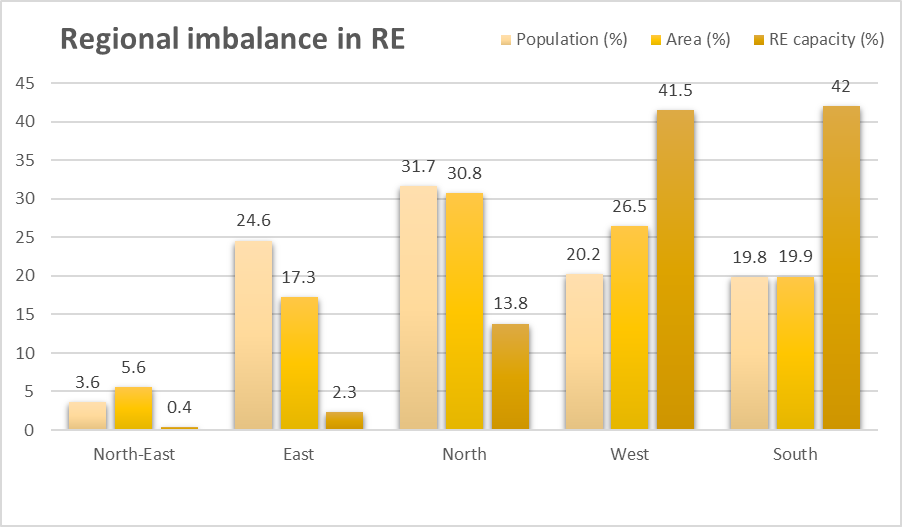
Presently, a similar “price equalisation” policy is being implemented in the renewable energy (RE) sector, which again threatens to create regional disparities in green industrialisation. This time, however, the price equalisation is to the advantage of the ‘resource-rich’ states, which happen to be in western and southern India, and to the disadvantage of the ‘resource-poor’ states, which are in northern and eastern India.

In the last 8.5 years, RE has grown exponentially from 31.7 gigawatts (GW) in 2014 to 114.4 GW in July, 2022. But most plants have come up in three western states (Rajasthan, Gujarat and Maharashtra) and four southern states (Andhra Pradesh, Karnataka, Tamil Nadu and Telangana). These seven states today account for more than 80% of RE in the country. On the other hand, northern and eastern states have lagged behind. For instance, the east and northeast, which account for 28% population and 23% geographical area, have only about 3% RE capacity. So, why this lop-sided growth in the RE sector? 

There are three major factors. The first is the difference in RE potential between regions, the second is the availability of large parcels of land, and the third is the national RE policy. But overall, it is the RE policy that is amplifying the impact of potential and land. Let me explain.

There is a difference in solar and wind potential between states, more in the wind than solar. But this difference is not so high that RE plants, especially solar, cannot be installed in large parts of the country. In India, on average, a solar PV plant can generate 1400-1700 kWh/kWp per year, depending on solar insolation. So, the difference between the so-called solar-rich and poor states is only about 10-20%. But the point to note is that even the lowest solar insolation areas in India can generate 20-25% more electricity than Germany. Yet, Germany has more solar capacity than us. In a nutshell, most of parts of India have good solar potential; some regions have a little higher than others.

As far as land is concerned, it is true that states like Rajasthan and Gujarat have large patches of land where solar plants of hundreds of megawatts can be installed. But land and large artificial reservoirs are also available in north and eastern India. Odisha, Jharkhand and Chhattisgarh have vast wasteland and fallow land to install megawatt-scale plants. Uttar Pradesh and Bihar have massive potential to establish agri-solar. It is our policy to promote large solar plants that have made the land an issue. Otherwise, there are enough land, rooftops and reservoirs for balanced solar growth across the country. This brings me to the all-important factor, the RE policy.

Our RE policy is single-mindedly focused on installing large capacity at the lowest possible cost. The key instrument is the Renewable Purchase Obligation (RPO). Under this, states are required to meet a minimum percentage of their electricity requirement through RE. The RPO target for 2022-23 is 14.5%, which will increase to 43.33% by 2029-30. To meet the RPO targets, inter-state transmission system (ISTS) charges have been waived to allow ‘resource-poor’ states to buy the cheapest RE from anywhere in the country. ISTS charges have been wholly waived till June 2025 and will be progressively eliminated by 2028.

But ISTS waiver, a market distorting subsidy, is now a critical factor in deciding the location of plants. In a hyper-competitive RE market, the waiver, which could be as much as Rs 0.40-0.80/kWh or 15-30% of generation cost from large solar plants, is pushing companies to put up plants in western and southern India. RE-linked manufacturing — solar PV, battery and hydrogen electrolyser plants — are also moving to these states. As a result, an entire ecosystem is slowly getting entrenched in a few western and southern states, which is detrimental to RE development in the rest of the country. It is, therefore, time that we developed a more detailed understanding of the regional implications of the ISTS waiver and other RE subsidies and made necessary corrections quickly.

While installing large RE capacity is an important climate goal, it cannot be at the expense of shared prosperity. We must not allow India’s growth story to suffer by further widening the regional disparities.

Defining the environment sector

The National Industrial Classification 2008 needs to be revised to capture all environment-related activities

The environment sector provides a vast opportunity to create new jobs and build a green economy. For this, the environment sector must become an important economic sector.  

What is the environment sector? How many people work in this sector? How many new jobs are needed to meet environmental challenges like the climate crisis? What is the skill gap and capacity development need of the sector? If we are serious about solving environmental problems, we need answers to these crucial questions. But unfortunately, there are no answers because we do not know the environmental sector. Let me elaborate.

The National Industrial Classification – 2008 (NIC-2008), the latest 5-digit classification system used by the Central Statistical Organisation (CSO) to estimate jobs and economic contribution of various sectors, has categorized all economic activities into 21 Sections, 88 Divisions, 238 Groups, 403 Classes and 1304 Sub-classes. But this vast classification system doesn’t have a Section called ‘Environment Conservation and Protection. The only place where some of the environment-related activities appear is in Section E: Sewerage, waste management and remediation activities. This section lists work related to water and wastewater treatment, material recycling and solid and hazardous waste management. But apart from these, products and services related to air pollution control, soil conservation, biodiversity protection, cleaner production, low carbon development or climate change adaptation do not appear anywhere. Therefore, in our current national statistics, there is no separate information on the economic contribution of the environment sector or the number of people working to conserve and protect the environment, a.k.a, green jobs.

But the question is, why do we need a separate environmental sector category? Aren’t environment-related activities part of all economic activities? For example, aren’t jobs related to industrial pollution control part of different industrial sectors? The answer is yes and no. While environmental activities are part of all economic sectors, we still need to categorize the environment as a separate economic sector for innovation and growth.

The critical element in the growth of any sector is money, human resource and innovation, and all three are interdepended. This interdependency can be virtuous or vicious. In a virtuous relationship, money will attract the best talent, and both money and human resources will lead to innovation. Greater innovation, in turn, will bring more money, and this cycle will continue. In a vicious cycle, the opposite happens. 

The IT sector, which accounts for nearly 8% of the country’s GDP (three times more than the mining sector), is a classic example of a virtuous relationship. This sector continues to grow because it pays good money to get the right talents; the high-quality human resources, in turn, develops new products and services and makes more money, and the cycle continues.

On the other hand, the environment sector is not exactly on the virtuous cycle. I will not say it is on a vicious cycle either, but considering the scale and pace of changes required to solve environmental crises such as climate change, land degradation and water pollution, the sector needs major innovation and growth. This is only possible with large investments and high-quality human resources. But how do you attract investments when you do not know where and how much investments are required? How do you attract talent when you do not know what kind of jobs are needed today and tomorrow? Basically, how can a sector grow when it doesn’t exist formally? Therefore, to develop this critical sector, we need to define it as a formal economic sector by mapping its economic outputs and jobs.

Obviously, the Ministry of Statistics and Programme Implementation (MoSPI) and CSO have a critical role in revising the NIC and developing a new industrial classification system that captures all environment-related activities. But institutions outside the government will also have a significant role to play in building this field. For instance, we at iFOREST have recently mapped the Air Quality Management (AQM) sub-sector, and the results are fascinating. We found that:

  • At least 2.8 lakh organizations,  industries and mines require personnel to monitor, plan, prevent and control air pollution.
  • There are at least 42 different kinds of jobs in AQM. From municipal workers involved in dust control to air quality modelling and forecasting specialists to transport planners, AQM requires personnel with diverse skills. 
  • In totality, an estimated 22 lakh direct and indirect jobs are required to manage air pollution in the country. Most of these jobs are blue-collar jobs such as the operator of pollution control equipment in industries, operator of PUC centres (who checks tailpipes of vehicles) and municipal workers. They are the frontline workers but have never been considered part of the sector and made aware of their vital role in managing air quality.
  • There are tens of thousands of white-collar jobs, but there aren’t enough qualified personnel to take up these jobs. We estimated that the AQM sub-sector can provide at least 50,000 new white-collar jobs, ranging from researchers and analysts to air quality managers in cities and inspectors in pollution control boards.
  • The challenge in the AQM in India is that the people presently working in the sector have not been trained, and a large number of jobs that are required do not exist.

If the AQM sub-sector alone needs hundreds of thousands of people, then think about the potential of the entire environment sector? The bottom line is that we have to view the environment sector as an opportunity to create new jobs and build a green economy. While many of the existing jobs lead to the destruction of the environment, we must start creating jobs to protect the environment. For this, the environment sector must become an important economic sector.

A coal economy to a green economy

Just energy transition’ must Shape net-zero pathways for fossil-fuel-dependent districts.

In the last 18 months, several modelling studies have been published on the costs and benefits of net zero emissions in India. A few days back, another modelling study was published, which projected that India will require an economy-wide investment of $10.1 trillion to achieve its net zero targets by 2070. But this will have significant gains, as it would boost annual GDP by 4.7% by 2036 and create 15 million new jobs by 2047. The benefits are even greater if India reaches net zero by 2050, says the study. In the words of Jayant Sinha, Member of Parliament, like previous modelling studies, this too predicts that “Net Zero is Net Positive” for India.

These reports are important at one level because they give us a macro picture of what it would entail to achieve the net zero target. They also give us the hope that we can address the climate crisis while growing our economy and creating millions of new green jobs. However, these macro-assessments do not tell us about the regional implications or the political economy of this transition. In other words, these reports have minimal relevance for planning a net zero pathway at the district or state levels.

For instance, the costs that these studies account for mainly include the investments required to build the new green industries and infrastructure—renewable energy, hydrogen, green steel, etc. They do not have the costs of closing the existing fossil-fuel based industries and infrastructure—coal mines, power plants, freight corridors, etc. However, at the district level, closing mines and plants are far more important than building the new industries, especially when there is no guarantee that these will come at the same place. In a nutshell, while macro-economic modelling has its value, today, we need studies to understand the costs, benefits and regional implications of achieving the net zero target so that we can plan and achieve a just energy transition. Let me illustrate this with the case of Angul, Odisha.

Over the last two years, my colleagues and I have been studying the coal districts of India to understand what a Just Energy Transition (JET) means and entails for these districts. We studied Ramgarh in Jharkhand, Korba in Chhattisgarh and, last week, we published our report on Angul.

The study of Ramgarh showed that the district has mostly unprofitable old mines, which will close soon. Ramgarh, therefore, needs to quickly start implementing an economic diversification plan to deal with the repercussions of the economic downturn due to the closure of mines. In Korba, India’s top coal-producing district, the reserves are getting exhausted, and most existing

mines and power plants will close between 2040-2050. So, Korba has a little more time than Ramgarh to implement a JET.

Angul, however, tells a very different story. The district produces about 100 million tonnes (MMT) of coal—about 12% of the country’s production. About 168,000 people are employed by coal mining and coal-dependent industries, and over 61% of the district’s GDP is dependent on coal. But coal production will grow three-fold in the next 10 years and peak at 300 MMT by 2033. Other coal-dependent industries, such as steel and aluminium, are also expanding. This growth is possible because Angul produces some of the cheapest coal in the country.

As per the current plans, there is no way that coal production in Angul can be phased out by 2050. If we try to reach net zero in Angul by 2050, then almost all mines will have to forego 30-60% of their reserves, and industrial assets would have to be shuttered at the peak of their economic life. So, how do we plan a net zero pathway for a district where the coal economy is growing exponentially? How do we close the mines and industries, and who will pay for this? How do we create alternative jobs for coal workers? Who will invest in the green economy? These are the questions that matter, and we need answers to these to develop a realistic just transition plan for real people.

Our study shows that it is possible to achieve net zero by 2050 in Angul, but it would require a JET plan spanning over the next three decades and billions of dollars of compensation and investments. It would require what we call the 5 Rs of Just Transition.

* Restructuring of the economy: Angul’s economy will have to diversify through investments in agriculture, forestry and service sectors. Its industries will have to move from a brown economy to a green economy through investments in renewables, hydrogen-based steel and urea, green aluminium, and a circular economy.

* Repurposing of the existing infrastructure: Repurposing mining land and industrial plants will be crucial for economic diversification. For instance, about 33,000 hectares of land in Angul are under coal mines and power plants. These can be used for solar PV, food parks, the development of fisheries and tourism sectors, etc.

Reskilling and skilling of the workforce: Large-scale skilling and reskilling programmes will have to be implemented to develop a skilled workforce for economic diversification.

* Revenue substitution: Currently, coal mines in Angul contribute over Rs 6,000 crore as royalty and cess to the state and the central government. This is projected to increase to Rs 18,000 crore by 2030. Angul’s economic diversification plan must at least substitute the revenues foregone from the coal economy.

* Responsible environmental and social investments: Angul is an economically-backward district and also a critically polluted area. Massive investments would be required for the closure and remediation of mines. Likewise, the district needs investments in social infrastructure—health, education, water, livelihoods etc., to build a sustainable economy.

Overall, Angul’s study shows that if we want to achieve the net zero target, then we must understand its implications at the district and state levels. Without this, big macro-assessments make no sense.

Question of faith : Leverage power of religion to drive a unity of purpose to protect the planet

Faith-based organisations can be strategic actors in supporting environmental action. The climate crisis demands collaboration between countries and communities

We Indians love to speak about our religious and cultural heritage of protecting the environment. And, we do have a vast heritage to boast about. Our sacred texts are full of messages for protecting and conserving the environment.

But are contemporary religious leaders and faith-based organisations (FBOs) promoting environmental protection? How are religious leaders and FBOs responding to crises like global warming and species extinction? How are they informing and engaging their followers on these issues? Last year, my colleagues and I started investigating these questions along the Ganga basin. We wanted to know about the involvement of FBOs on issues such as pollution of the Ganga, waste management, and climate crisis.

We interviewed leaders from all faiths and surveyed about 150 temples, mosques, churches, gurudwaras, and ashrams. We also interacted with close to 40 NGOs, trusts, and associations with religious affiliations. The survey was done in seven cities of the Ganga basin in Uttar Pradesh and Uttarakhand—Rudraprayag, Rishikesh, Haridwar, Kanpur, Lucknow Prayagraj, and Varanasi. But before I discuss the findings, a disclaimer is warranted: This is not an all-India survey, and the findings should not be interpreted as such. A similar study might throw significantly different results in other parts of the country. But, considering that the Ganga is regarded as one of the most sacred rivers, the perception of religious leaders of the Ganga basin provides insights into engaging religious organisations on environmental issues.

So, what did we find? Firstly (and surprisingly), there is near unanimity in how religious leaders view the environment. Leaders of all faiths viewed it mainly in terms of cleanliness and greenery. For them, protecting the environment essentially meant keeping the surroundings clean and planting trees. They could not relate to issues such as air pollution, biodiversity loss, or even river pollution. In fact, we found a glaring lack of awareness on most environmental issues. For example, many religious leaders did not view the throwing of religious offerings into Ganga as a polluting activity.

Second, there is minimal involvement of FBOs in environmental protection. Less than 10% of the respondents reported some level of engagement. These are typically the big religious organisations with a strong institutional base and funding support. However, their focus is limited to tree plantation, organic farming and composting, and, in some cases, water management and minimisation of waste. Only 6% of FBOs were doing some work to protect the Ganga, with most of them being engaged in cleaning the ghats.

One of the key reasons these actors are not engaging in environmental issues is that they do not view it as part of their mission. Instead, they think it is the government’s job. They, therefore, couldn’t visualise any significant role for themselves in environmental protection.

Third, and most worryingly, very few were aware of the climate crisis and its causes. And the few who understood global warming defined it as “an act of God”, “end of the world”, and “human sin”. They were pessimistic about the ability of people to solve this crisis.

However, what is encouraging is that when explained, they were not dismissive of the need of the religious leaders to engage in environmental issues. They also agreed that a mass engagement is necessary, and they can play a role in such mobilisation. But they demanded capacity-building support and resources.

So, should we rope in religious actors and leverage their influence to build engagement of the masses on environmental issues? If yes, then how? It is undeniable that we live in a religious world, and faith is a powerful driver in shaping the behaviour of a large majority of the world’s population. As the world becomes more uncertain due to climate crisis, pandemics, and resource conflict, people will lean more on faith for succour. Therefore, the influence of religious leaders and FBOs will further increase in the future.

For this reason, FBOs should be viewed as strategic actors to propagate the value of environmental protection and conservation. They can influence vast numbers of people, which is amply demonstrated by the likes of Jaggi Vasudev. In the last few years, he reached out to a far greater number of people on environmental issues such as river rejuvenation, tree plantation and soil health than all environmental organisations put together. While one can question Sadhguru’s approach and solutions (and some of his antics), one should not ignore his reach and appeal.

We must, therefore, deliberately engage with religious and spiritual leaders and organisations by devising a comprehensive programme to increase their capacity on environmental issues. This could include inter-faith interactions, demonstration of eco-friendly technologies at religious sites, and knowledge workshops. But most importantly, they must be supported and encouraged to mainstream environmentally-responsible values and behaviour in the devotees.

While religion has shaped human history primarily by dividing people, the climate crisis now demands unprecedented collaboration between countries and communities. For this, we will have to leverage the power of religion to drive a unity of purpose to protect the planet.

Coal consumption in India : We are already late on fair green transition

There is no contradiction between increasing coal consumption in India and implementing a just transition in the coal districts and states.

On March 28, 2022, an extremely important and unstarred question was asked by Priyanka Chaturvedi, member, Rajya Sabha, which was replied to by Pralhad Joshi, Union minister of coal. It is at the heart of the energy transition debate in India. The question is whether India should start planning and implementing a just energy transition now or wait until coal consumption starts declining? It is a fundamental question, and I will quote it verbatim:

Priyanka Chaturvedi: Will the Minister of Coal be pleased to state:

(a) whether Government has prepared any roadmap for districts having a coal-centric economy such as Korba, etc. in light of country’s commitment towards energy transition?

(b) whether in such districts (coal-centric economy) closure of mines and industries will have severe socio-economic consequences, major being unemployment for the unskilled workers?

(c) whether Government has initiated any scalable steps to reduce the dependency of other economic sectors such as agriculture, forestry, manufacturing and service for their growth in these districts? and (d) if so, the details thereof?

Pralhad Joshi: (a) & (b): In India, energy transition away from coal is not happening in foreseeable future. Although there will be push for renewable/non-fossil-based energy, but share of coal in the energy basket is going to remain significant in years ahead. Coal demand in the country is yet to peak. The draft Economic Survey 2021-22 projects coal demand in the range of 1.3-1.5 billion tonnes by 2030, an increase of 63 per cent from the current demand. Thus, as of now there is no scenario of energy transition away from coal affecting any stakeholders involved in coal mining. (c) & (d): Does not arise in view of above. 

The minister’s reply was correct that India’s coal demand is growing, and will continue to grow, at least in this decade. But his response that the energy transition in the country is not affecting any stakeholders involved in coal mining needs further examination.

There should be no doubt that an energy transition, propelled mainly by the Centre’s ambitious renewable energy targets, is underway in the country. These targets have real implications for coal consumption. For example, if the latest targets—installing 500 GW of non-fossil energy capacity and meeting 50% of the country’s electricity requirement from renewables—materialises, then coal consumption in the power sector will peak by 2030 and significantly decline over the next two decades. Modelling studies show that India’s electricity sector can be coal-free by 2050, with little impact on growth or jobs.

But it is important to understand that the need to develop a just transition roadmap for coal-dependent districts and states is tied not just to the national coal demand scenario. It is, in fact, more related to the sub-national situation, as the reality of coal mining in states and districts differs from the national picture. In other words, while coal will continue to meet a significant, but declining, proportion of India’s energy demand in the next two-three decades, in many districts of the country, most coal mines will close much earlier, leading to socio-economic disruptions. This will happen due to two reasons. First, a majority of coal mines in the country are loss-making and on the verge of closure. While these loss-making mines are spread across India, most of them are concentrated in Jharkhand, Chhattisgarh and West Bengal. In Jharkhand, for example, of the 146 mines run by the Central Coalfields Limited (CCL) and Bharat Coking Coal Limited (BCCL), 103 mines are loss-making.

Overall, 75% of Coal India Limited’s (CIL) production and almost all profits come from just 35 large mines; the remaining mines are low-producing and largely unprofitable. These loss-making mines collectively produce less than 10% coal, employ 40-45% of the workforce, and incurred an aggregated loss of Rs 16,000 crores in 2018-19—about the same as the company’s annual net profit. Going ahead, CIL plans to reach 1 billion tonnes of coal production primarily from “50-odd high-yielding mining projects” and close unprofitable mines. This potentially means shutting down 300-odd mines. But all these mines need to be closed with proper closure and socio-economic transition plans. In other words, just transition plans need to be developed urgently for all these loss-making mines and regions to ensure that hundreds of thousands of formal and informal workers and millions of people dependent on these mines are provided timely alternatives.

Second, coal reserves are also getting exhausted in big coal-producing districts. Take the case of Korba, India’s largest coal-producing district. Nearly 95% of Korba’s coal comes from just three large open cast mines, which will exhaust its resources by 2040-45. The rest of the mines are already on the verge of closure. So, in the next 20 years, Korba, which is entirely dependent on coal for jobs and growth, will have to look for alternatives. But Korba is not unique; similar situations exist in many other coal districts. These mining districts will need a just transition plan to avoid sudden economic disruption and social upheaval.

So, there is no contradiction between increasing coal consumption till 2030 and implementing a just transition plan in the coal districts and states. In fact, we are already late in the process. Experiences around the world show that a planned energy transition takes time. For example, Germany’s Ruhr valley started implementing transition in the 1960s and closed its last coal mine in 2018. So, it took six decades for Ruhr to implement a just transition, but the result is for everyone to see. Today, Ruhr is a hub of green industries and service sector jobs.

We must also start planning and implementing a just transition in many Ruhrs in India and not wait for coal consumption to decline. Early planning will help these districts and states to invest in infrastructure and attract businesses, create alternative jobs, prepare the future workforce, and simultaneously substitute and diversify their source of revenue. The choice is in our hands – either we can start planning for this transition and secure a just outcome for everyone, or we can wait and watch till disruptions and chaos start.

The Real Mainstream: IPCC’s climate-speak is all Greek to the masses

The climate watcher has produced nothing for the general public, except for a press release and a set of headlines.

Scientists are good at science but bad at communicating it to the masses. This is precisely why the gap between the scientific understanding of the climate crisis and policy responses widens. The latest Intergovernmental Panel for Climate Change (IPCC) report is a classic example of ineffective communication. Published a few weeks back, it is considered the most comprehensive report on impacts, adaptation and vulnerability, but the presentation leaves much to desire.

The IPCC reports cater to a small set of people. For example, it is 3675 pages long (which very few outside the climate science community would ever read completely) with a 35 page summary. The summary, targeting policymakers, has been written in a complicated way and requires a person with high scientific knowledge to grasp its essence. Besides, IPCC has produced nothing for the general public except for a press release and a set of headlines.

While one can understand the trepidation of the scientific community for generalisation, it is precisely what is needed to get mass support for climate action. Therefore, it is high time that IPCC publishes and disseminates its findings in a way that most can understand and act on. I have attempted to convert the 35-page summary into ten key findings and put it in simple language. I hope that the IPCC would do better than this.

1. The climate crisis is far worse than previously predicted: The impacts on ecology, economy and human well-being are far worse than expected, and adapting to the crisis will be more difficult than anticipated.

2. It is destroying nature: Climate change has already caused substantial damage and increasingly irreversible losses to the biodiversity on land and oceans, including the extinction of hundreds of species. Approximately half of the species assessed globally have shifted polewards or to higher elevations to cope with increasing heat. Further temperature increases will irreversibly damage warm-water coral reefs, coastal wetlands, rainforests, and polar and mountain ecosystems and cause massive extinction of species dependent on these ecosystems.

3. Climate change is harming human health, peace, and wealth:  It has adversely affected physical and mental health. People have died worldwide due to extreme heat, flooding, and other extreme weather events. In addition, the incidence of climate-related food and water-borne and vector-borne diseases has increased. Cardiovascular and respiratory distress have also increased due to wildfire smoke, atmospheric dust, and aeroallergens.

Climate change is also making the poor poorer. For example, outdoor labour productivity, on which the poor depend for income, has reduced due to higher temperatures. Similarly, economic damages from climate change are prominent in agriculture, forestry, fishery, energy, and tourism, which provides the most employment.

Lastly, it is worsening humanitarian crises by driving displacement in all regions. Besides, evidence is emerging that global warming might be contributing to conflicts by creating a scarcity of water and fertile land.

4. India will be affected the worst:  Not every region will get equally impacted. Countries with poverty, governance challenges, limited access to essential services and resources, violent conflict, and high levels of climate-sensitive livelihoods such as smallholder farmers, pastoralists, and fishing communities, will be the worst affected. Approximately 3.3 to 3.6 billion people live in highly vulnerable regions to climate change; a significant proportion of them are in India.

5. Cities are hotspots: Rapidly growing cities of Asia and Africa that house large concentrations of poor people are especially vulnerable. Increasing temperature and poor development practices, like creating concrete jungles and encroachment of forests and water bodies, will increase heatwaves and flooding.

6. We are rapidly approaching the point of no-return: Climate change impacts and risks are becoming increasingly complex and challenging to manage. Multiple climate hazards will coincide, and multiple climatic and non-climatic risks will interact, creating unmanageable situations. Some losses are already irreversible, such as species extinction. Others are approaching the point of no return, such as the impacts on freshwater due to the retreat of glaciers.

7. Mitigation is the best adaptation: With temperatures rising, the inevitable losses will increase. For example, in the coastal ecosystems, the risk of biodiversity loss ranges from moderate and very high by 1.5°C warming but rises to high to very high by 3°C. So, keeping the temperature below 1.5°C by reducing emissions is the best way to save ourselves.

8. Good development practices mean good adaptation: Unsustainable land use, deforestation, biodiversity-loss, and pollution lower the capacities of ecosystems and societies to adapt to climate change. Eliminating unsustainable practices will significantly help adapt to the climate crisis. For instance, enhancing natural water retention in cities by restoring wetlands and rivers, creating no-build zones, etc., will lower flood risk. Similarly, on-farm water management like rainwater harvesting, soil moisture conservation, and efficient irrigation will improve productivity and reduce vulnerability.

9. Leaving nature alone will save us: Safeguarding biodiversity and ecosystems is fundamental to climate-resilient development. Globally, less than 15% of the land, 21% of the freshwater, and 8% of the ocean are protected areas. However, we will have to conserve approximately 30-50% of these areas to maintain the resilience of ecosystem services.

10. Unequivocal political commitment is a must: Implementing climate actions requires considerable upfront investments, while many benefits will only become visible later. To make such investments, unequivocal political commitment and farsighted planning are essential. In addition, new institutional frameworks, policies, and instruments will be required to set clear goals, define responsibilities and obligations, and coordinate amongst various actors.

Besides, governments alone cannot solve this problem; the role of businesses and civil society is equally critical. Raising public awareness and building social movements are essential for greater public and political commitment. Companies will have to play a greater role in reducing emissions and investing in adaptation. The report essentially says if the climate crisis is not a clear and present danger, nothing else is.

The truth about air pollution in Delhi

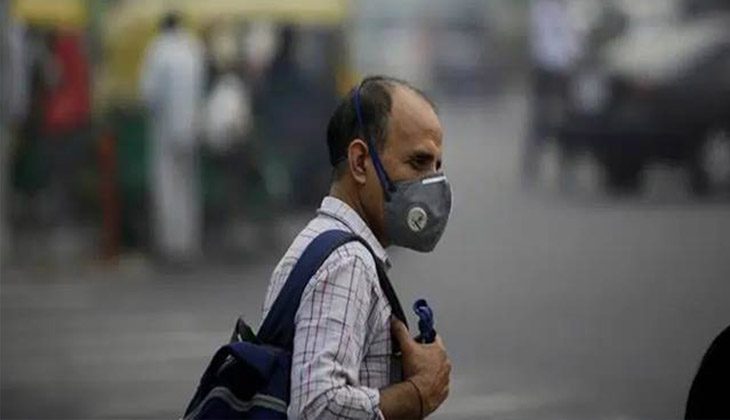
Contrary to the claims made by the Delhi government, air pollution in the city has deteriorated significantly since 2012.

There is an irony being played out in Delhi. While the national capital is reeling under one of its worst spells of air pollution, the Delhi government is bringing out a series of advertisements claiming that the pollution levels are down by 25%.

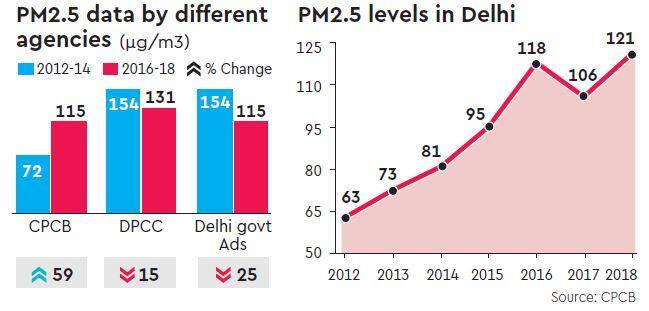
The advertisements mention that the levels of PM 2.5—particulate matter of size less than 2.5 microns—have reduced from 154 microgrammes per cubic meter (µg/m3) during 2012-2014 to 115 µg/m3 during 2016-2018. If this claim is valid, then we are on the right path, and we should continue with the current action plan to control air pollution. If it is not, then we should seriously change track and develop a new blueprint.

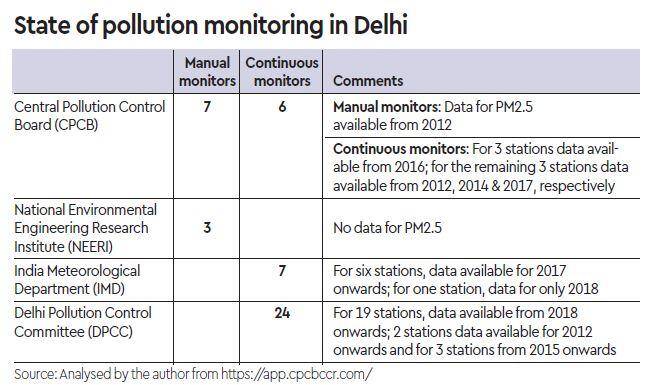
To understand the exact situation of pollution in the city, one has to understand the status of air pollution monitoring. Delhi has the largest number of air quality monitors in the country—47 monitoring stations, to be precise. Out of these, 10 are manual monitors, and 37 are continuous monitors. Four agencies own these monitors—the Central Pollution Control Board (CPCB) has 13 monitors, Delhi Pollution Control Committee (DPCC) has 24, India Meteorological Department (IMD) has 7 monitors, and the National Environmental Engineering Research Institute (NEERI) has 3.

Continuous monitors give pollution readings every 15 minutes, and these are used for calculating the Air Quality Index (AQI). CPCB has developed data validation criteria for these monitors. For example, continuous monitors must be operational for 16 hours in a day for estimating daily pollution levels. Similarly, they must be operational for 80% of the time in a year for determining the annual pollution levels.

In manual monitors, the monitoring is carried out for 24 hours, with a frequency of twice a week. There must be a minimum of 104 readings in a year for estimating annual pollution levels. In India, data from manual monitors are still used to make country-wide comparisons on the status of air pollution. The reason is simple: we have 573 manual stations in 240 cities/towns compared to just 202 continuous monitors in 112 cities/towns. Manual monitors, therefore, are sentinel monitors as they have comparable data for the longest time-frame.

As one can see in the accompanying graphic, continuous monitoring is a recent phenomenon in Delhi. Twenty continuous monitors were installed in 2018, and seven were introduced in 2017. We have data from only four monitors for 2012 onwards. But, there are significant data gaps from these four monitors. For instance, the Dilshad Garden monitoring station had correct data for only 32 days for 2013; the ITO station has data for less than 50% of the time for 2012, 2014, and 2016; and RK Puram has no data for 2013, and 2014. Most researchers have concluded that using data from the continuous monitors to estimate annual pollution levels for the years 2012 to 2016 is statistically wrong. Therefore, one has to rely on manual monitors to establish whether the pollution status has improved or deteriorated since 2012.

The data from manual monitors, published by CPCB, shows that the amount of PM 2.5 has almost doubled between 2012 and 2018—from 63 µg/m3 in 2012 to 121 µg/m3 in 2018. The average PM 2.5 level during 2012-2014 was 72 µg/m3, and during 2016-18, it was 115 µg/m3—an increase of 59%. So, air pollution levels in Delhi have increased significantly, and not reduced. From where, then, has the Delhi government put together data to show a reduction of 25%? Interestingly, there is another set of data put out by DPCC, which is less publicised. This DPCC data shows that the average level of PM 2.5 was 154 µg/m3 during 2012-14, which reduced to 131 µg/m3 during 2016-2018—a reduction of 15%. DPCC data, however, comes with a disclaimer. It clearly states that for the period 2012-2017, the data is based on four continuous monitors, and the 2018 information is based on 26 monitors. As explained above, the data from the four continuous monitors are incomplete. They cannot be the basis for estimating pollution levels during the 2012-2017 period. Even if we had complete data from the four continuous monitors, comparing data of four monitors with that from 26 monitors is highly spurious. It will not stand even the basic statistical scrutiny.

Nevertheless, let’s take the DPCC data with a pinch of salt, and put it together with the CPCB data. We can see, in the accompanying graphic, where the mistake has happened. The Delhi government has taken continuous monitoring data of DPCC for the period 2012-2014 and manual monitoring data of CPCB for the period 2016-2018 to claim that air pollution reduced by 25%. This is cherry-picking, and completely wrong. These types of analyses cannot be the basis for decision-making.

Let me end by saying that I support CM Arvind Kejriwal on stubble burning. He is absolutely right that the spike in pollution post-Diwali is because of stubble burning. One can smell biomass burning in the air, and we need to do something about this urgently. But, he is wrong to claim that his actions have led to a 25% reduction in pollution levels. Instead of putting out wrong information, it is important that his government goes back to the drawing board and develops a new blueprint for saving this historical city from Airpocalypse.

Social media & sharing icons powered by UltimatelySocial