
India’s ACs cool homes and are a hot problem

World Ozone Day is a good reminder of what refrigerants used in millions of air-conditioners do to environment. Hydrofluorocarbons heat up earth even more than CO2

The ozone hole is healing. The layer that shields us from the sun’s deadly ultraviolet rays was severely damaged by chemicals like chlorofluorocarbons (CFCs) and hydrochlorofluorocarbons (HCFCs), once widely used as refrigerants in air-conditioners and refrigerators. Thanks to the Montreal Protocol, these chemicals will be phased out globally by 2030. Scientists now predict that the ozone layer will fully recover by 2066, saving millions of lives from skin cancer.

Yet, as one crisis recedes, another is fast unfolding—this time caused by the new refrigerants that replaced CFCs and HCFCs. The coolants we use today—hydrofluorocarbons (HFCs)—are hundreds of times more potent than carbon dioxide (CO₂) in heating the climate. And in India, we are leaking them recklessly from our room air-conditioners (RACs).

A cooling boom

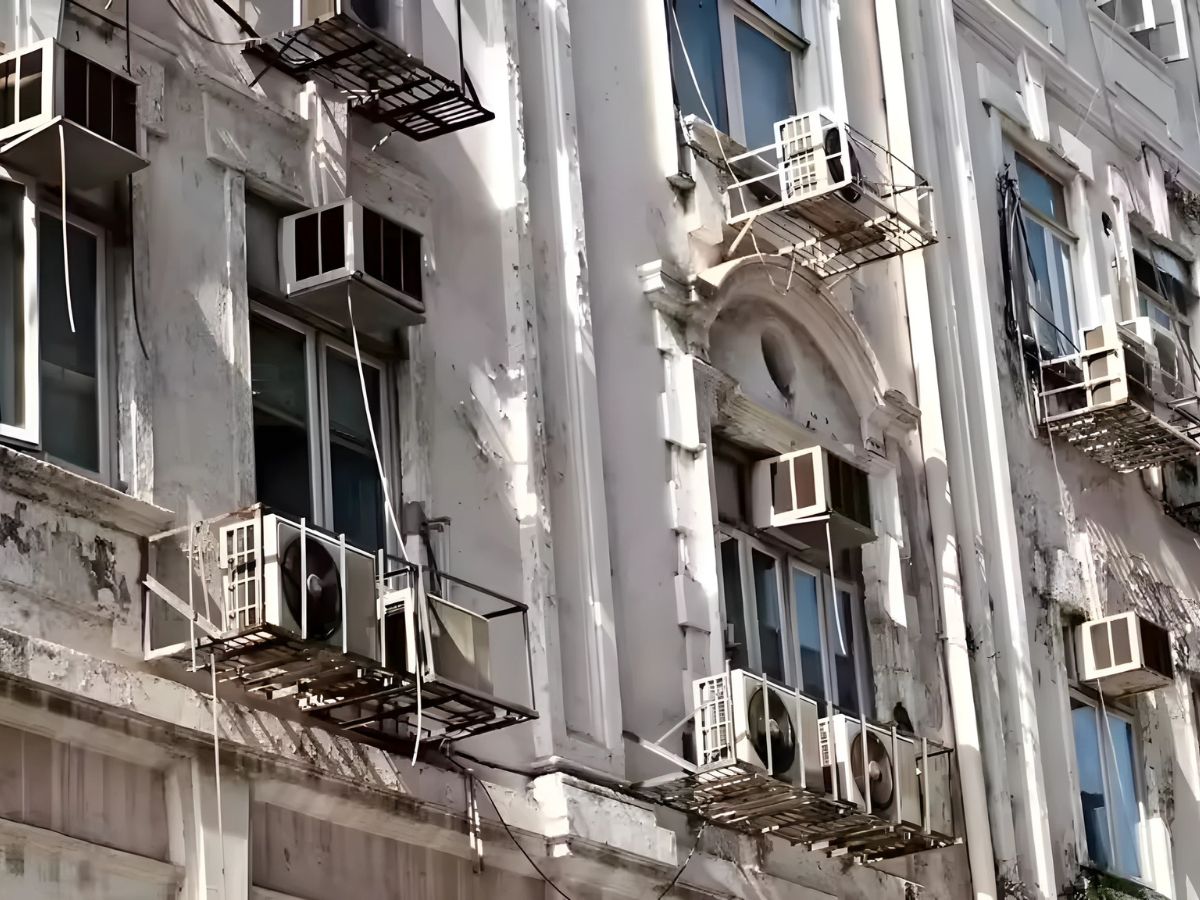
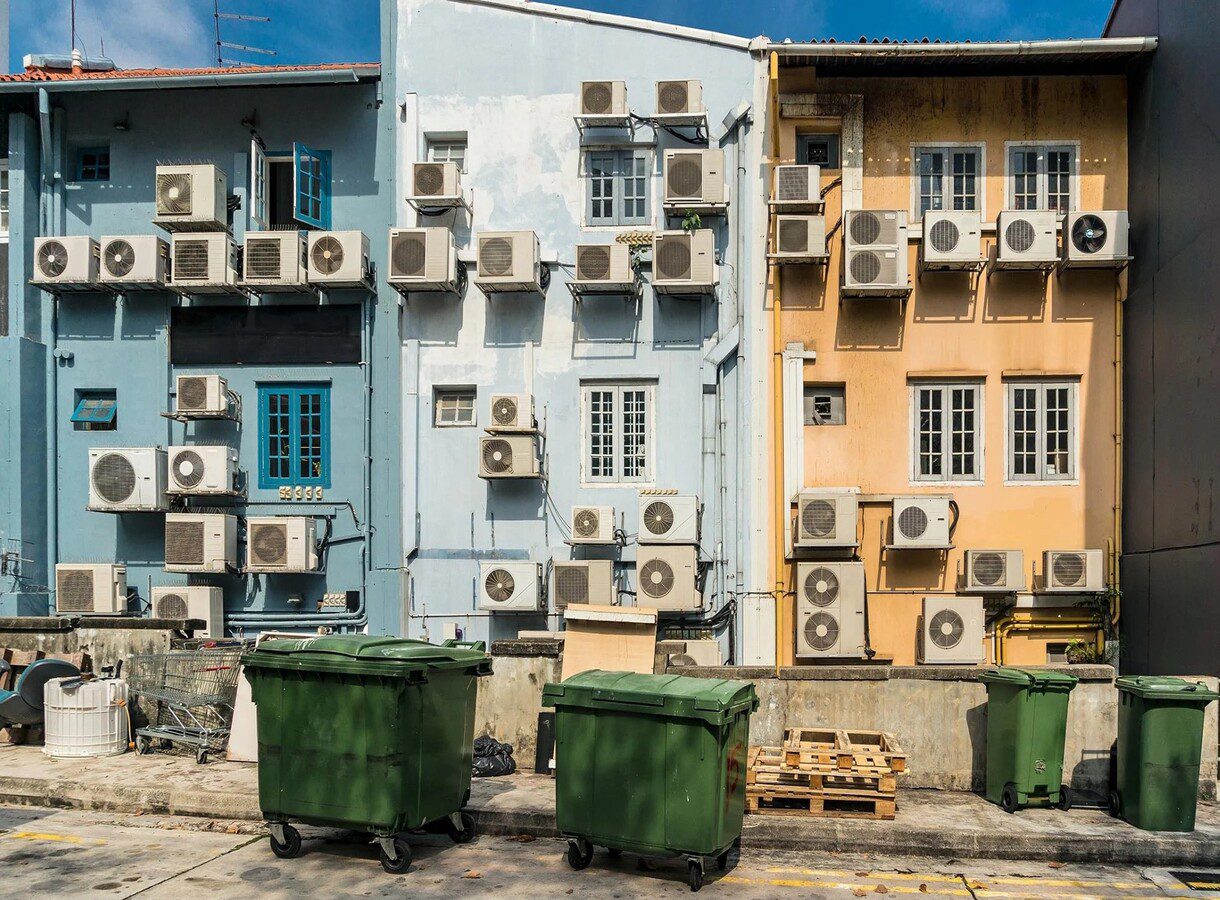
The sale of RACs has been growing at 15–20% annually since 2020. Urbanization, rising incomes, and intensifying heatwaves have turned ACs from a middle-class luxury into a household necessity. India currently has about 70 million RACs. Even with modest annual sales growth of 10%, this number will triple to 245 million by 2035.

But how responsibly are we using and maintaining our ACs? How conscious are we about energy efficiency? How frequently are we refilling refrigerants? And how aware are we of their harmful impacts?

To find answers, my colleagues at iFOREST recently conducted a first-of-its-kind national household survey covering more than 3,100 families from all income groups across seven major cities—Delhi, Mumbai, Kolkata, Chennai, Ahmedabad, Pune, and Jaipur. The results are both fascinating and deeply worrying.

Perception vs. reality

The survey busted some long-held myths. For instance, the perception that most AC-owning households have multiple RACs is incorrect. Nearly 87% of such households own just one AC; only 13% have more than two. This shows that ACs are no longer limited to the wealthy. A large share is now in middle- and lower-income households.

Another myth is that Indians operate their ACs at freezing lows. The survey shows that the most preferred temperature setting across cities is 22–26°C, not the ultra-low levels we often assume. There is therefore little need for the government to mandate thermostat settings.

Encouragingly, Indian consumers are conscious about energy efficiency. Nearly 98% of households own 3-star to 5-star rated appliances, with the 3-star category dominating.

But these positives are overshadowed by one stark reality: the way we service our ACs is damaging for both the climate and consumer pockets.

Servicing equals refrigerant refill

In India, refrigerant leakage and refilling have reached crisis proportions. About 80% of ACs older than five years require refilling annually. Even one-third of newer ACs—less than five years old—are refilled every year. In effect, around 40% of all ACs in India are refilled annually. Ideally, ACs should need a refill only once in five years. In India, it happens every two to three years.

This unnecessary refilling comes at a steep cost. In 2024 alone, India’s ACs consumed 32 million kg of refrigerant. At an average cost of ₹2,200 per refill, households spent about ₹7,000 crore ($0.8 billion). If business continues as usual, the refilling bill will quadruple to nearly ₹27,500 crore ($3.1 billion) by 2035.

The environmental cost is even higher. HFC-32, the most widely used refrigerant in India, is 675 times more potent than CO₂ in trapping heat. In 2024, refrigerant leakage from ACs emitted greenhouse gases (GHGs) equivalent to 52 million tonnes (MT) of CO₂. By 2035, this will rise to 84 MT.

When we add emissions from electricity consumption, the total GHG emissions of India’s ACs in 2024 reached 156 MT—about the same as emissions from all passenger cars in the country. Put simply: the annual GHG emissions from an AC that is refilled every two years is as much as a car. By 2035, the total emissions from ACs are projected to double to 329 MT, making them the single largest GHG-emitting household appliance in India.

Policy without teeth

While India does have policies on refrigerant management, these are half-measures without strong enforcement. The India Cooling Action Plan aims to reduce refrigerant demand by 25–30% by 2037–38, but lacks regulations to back it. Similarly, the amended E-Waste (Management) Rules, 2023, include provisions for environmentally sound disposal of refrigerants from end-of-life ACs at approved facilities, but these are being poorly enforced.

Therefore, currently there are no effective systems to prevent leaks during servicing, no monitoring of refrigerant refills, and no accountability for end-of-life disposal. Unlike plastics or electronic waste, refrigerants do not fall under any meaningful Extended Producer Responsibility (EPR) framework in India.

A solvable crisis

The refrigerant leakage crisis is urgent—but it is solvable. India must establish a comprehensive Lifecycle Refrigerant Management (LRM) regulation covering every stage—from refrigerant filling to servicing to disposal. AC manufacturers should be made responsible under an EPR regime to ensure recovery, recycling, and safe destruction of refrigerants. Such regulations are being implemented by many countries including Canada, Australia, the EU, China and Singapore.

If implemented effectively, LRM could prevent 500–650 MT of GHG emissions between 2025 and 2035—worth $25–33 billion in carbon credits at a moderate price of $50 per tonne. Consumers too would benefit, saving over $10 billion in unnecessary refill costs. This is a win-win solution: lower household expenses, reduced refrigerant wastage, and significant climate gains.

India showed leadership in the fight to protect the ozone layer by phasing out CFCs and HCFCs well before global deadlines. We can lead once again, this time in protecting the climate.

Are ACs Now A Human Right?

Soaring temperatures are here to stay & cooling has become a necessity. But it has to be done smartly. Not via ACs that guzzle electricity & worsen outdoor heat at a low-penetration level

Last Wednesday the automatic weather station sensor at Delhi’s Mungeshpur reported a record high temperature of 52.9°C. Fortunately, the figure has turned out to be incorrect. India Meteorological Department (IMD) has since said the reading suffered from “malfunctioning of the sensor”

But that is no cause for cheer. Delhi has already shattered its temperature record when Narela clocked 49.9°C on May 28. and the respite from a Mungeshpur like high is only temporary. All climate models show that Delhi will likely reach 52.9°C in the next few years due to climate change. our focus, therefore, should be on saving lives and livelihoods from extreme heat, which is projected to become even more severe and prolonged in the coming years.

This is not being alarmist, just realistic. Those who believe that runaway global warming and its consequences, such as rising temperatures and heatwaves, can be managed with a business-as-usual approach are deluding themselves. The fact are so stark that only a climate denier can ignore them.

Double whammy: Heat & humidity 2023 was the second warmest year on record in India, and the past decade (2014-2023) was the warmest ever, In fact, 12 of the 15 warmest years occurred during the recent 15 years (2009-2023). Over the last decade, almost all major cities in India have broken their temperature records.

But it’s not only the temperature that’s the problem. A simultaneous increase in temperature and humidity is what’s becoming the biggest killer. IMD has started measuring and releasing the “Feels Like” or “Real Feel” temperature on a pilot basis this year. This metric combines heat and humidity to measure the actual impact of heat on the human body. A feels like temperature above 45°C is considered dangerous for outdoor activates and vulnerable populations. Above 55°C, conditions become unlivable without air conditioning.

In May, multiple stations in Delhi crossed the Feels Like temperature of 55°C. The situation is alarming in other cities as well. On May 3, in Patna maximum temperature was 40.7°C, but Feels Like temperature was an alarming 57°C. While we have no data on the impact this had on Patna’s residents, it was certainly more than just a “discomfort”.

What we are experiencing is just a trailer. It will get worse in the coming years. Every forecast and new study predicts that heatwaves in the Indian subcontinent will take a huge toll on lives and the economy. So, what should be done about it?

ACs unleash a vicious cycle: An obvious solution might seem to be to install room air conditioners (RACs) everywhere. But installing RACs creates a vicious cycle that further exacerbates global warming and hot extremes.

Currently, less than 10% of households in India own an AC, but this number is growing by 10=15% annually RACs are energy guzzlers. Even a 5-star AC consumes 30 times more electricity than an efficient fan. So, even at low-penetration levels, RACs now account for up to 50% of peak load in major metropolitan areas of India. If we rely on ACs, then by 2050, energy requirement for RACs will see a 20-fold increase at the very least. If this energy is produced from coal, it will lead to higher global warming. RACs also warm the planet by emitting refrigerants, which are far more potent in warming the planet than CO2.

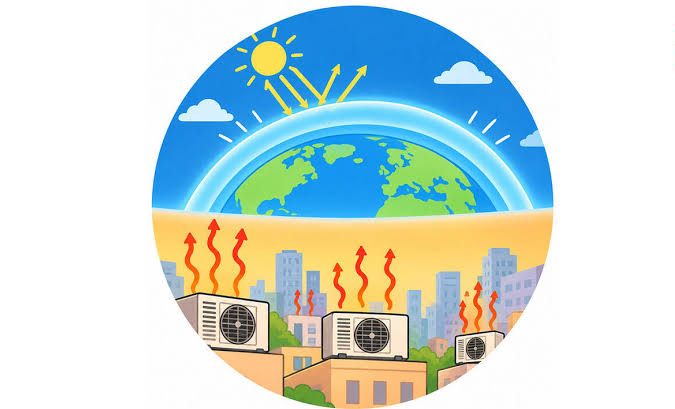
At a local level, RACs exacerbate the urban heat island effect by expelling heat outside and increasing outdoor temperatures. To combat higher outdoor heat, we are installing more ACs unleashing a vicious cycle.

Green cooling agenda: However, with Feels Like temperatures soaring above 45°C across most parts of India, cooling is no longer a luxury. It must be viewed as a fundamental right. The question is how to provide cooling to all without further destroying the planet.

  • First, we must promote measures that do not require active cooling. We must cool our cities by planting trees and rejuvenating water bodies. We should construct ‘cool houses’ using better construction materials and incorporating passive cooling techniques like improved ventilation and shading. Techniques like cool roofs, one of the simplest and most cost effecting ways to cool a building by painting roofs white, can help keep indoor air temperatures lower by as much as 2-4°C compared to traditional roofs. These measures can be implemented by changing building bylaws, urban planning guidlines and construction technologies.
  • Second, We should prioritise centralised cooling projects such as district cooling systems (DCS). These projects supply chilled water to buildings through pipelines, similar to how natural gas is supplied for cooking. The chilled water cools the air inside rooms, just like an RAC. DCS are far more energy-efficient and do not require highly polluting refrigerants. They will also lower cooling costs, making it affordable for most people.
  • Third, We should use only highly efficient RACs. To achieve this, we must revise energy-labelling standards to increase the sales of super-efficient ACs in the country.
  • Finaly, every city must develop an integrated heating and cooling action plan to protect citizens and the economy from severe heat impacts and to provide sustainable cooling solutions for all. It’s time to prepare our cities for a clear and present danger.


Clean air? Target cooking, not cars

Dust aside, biomass burning contributes most to PM2.5-led air pollution countrywide. Households are bigger emitters than farmers. Industry emissions come next

Air pollution is a pervasive issue in India, with the Indo-Gangetic Plain suffering the most severe consequences. The severity of this problem is underscored by recent rankings that place Delhi, Kolkata and Mumbai among the world’s 10 most polluted cities. Mumbai’s air quality, for instance, has steadily deteriorated in the last five years, with its air quality index (AQI) frequently surpassing 200, indicating poor conditions, and sometimes even 300, signifying very poor air quality. This trend raises urgent questions about the root causes of this escalating air pollution and why it remains unmitigated.

Air pollution is a pervasive issue in India, with the Indo-Gangetic Plain (IGP)suffering the most severe Consequences. The severity of this problem is underscored by recent rankings that place Delhi, Kolkata, and Mumbai among the world, ‘s 10 most polluted cities. Mumbai, ‘s air quality for instance, has steadily deteriorated in the last five years, with its air quality index (AQI) Frequently surpassing 200, indicating poor Conditions, and sometimes even 300, signifying very poor air quality, This trend raises urgent questions about the root causes of this escalating air pollutions and why it remains unmitigated.

Colleagues and I  in a comprehensive study put together data From Various Sources to develop an inventory of air pollutants in India, focusing on PM2.5, which are particles less than 2.5 microns in size and a primary concern for the country. High exposure to various PM2.5 is detrimental to health, affecting various bodily systems, particularly the respiratory system and increasing the risk of diseases such as cancer and cardiovascular ailments. 

Our research indicates that India emits approximately 5.2 million tones’ of PM2.5 annually, not accounting for bust form land and construction. Astonishingly,82 0/0 of this comes from biomass burning and industrial activities. 

Biomass burning is the leading cause of PM2.5 emissions in India, with residential fuel and burning of agricultural residue accounting for over half of these emissions. The reason biomass burning contributes such a massive share is that their emissions are unfiltered. Unlike automobiles and industries where some pollution control devices are used, biomass cookstoves and open burning in fields emit all their pollutants unconstrained into the air. 

Some notable sources of biomass-related emissions are:

Cooking | Biomass-firewood, dung cakes -residues and charcoal – is the primary cooking fuel around 500 million people, mainly in rural areas, contributing 38.7 /0 of PM2.5 emissions. Although programmers like PM Ujjwala Yojana (PMUY) have reduced biomass usage, the transition to cleaner fuels must be expedited to significantly cut down on both indoor and outdoor air pollution. 

Heating | Often overlooked, biomass used for heating especially during winters, is a significant pollution source. Two-thirds of Indian households -about 860 million people in rural and urban areas – rely on biomass for heating. Emissions from this source exceed those from the power and transport sectors. so if the Delhi government wants to reduce air pollution during winter. It should ensure there is no burning construction and spraying water on roads. 

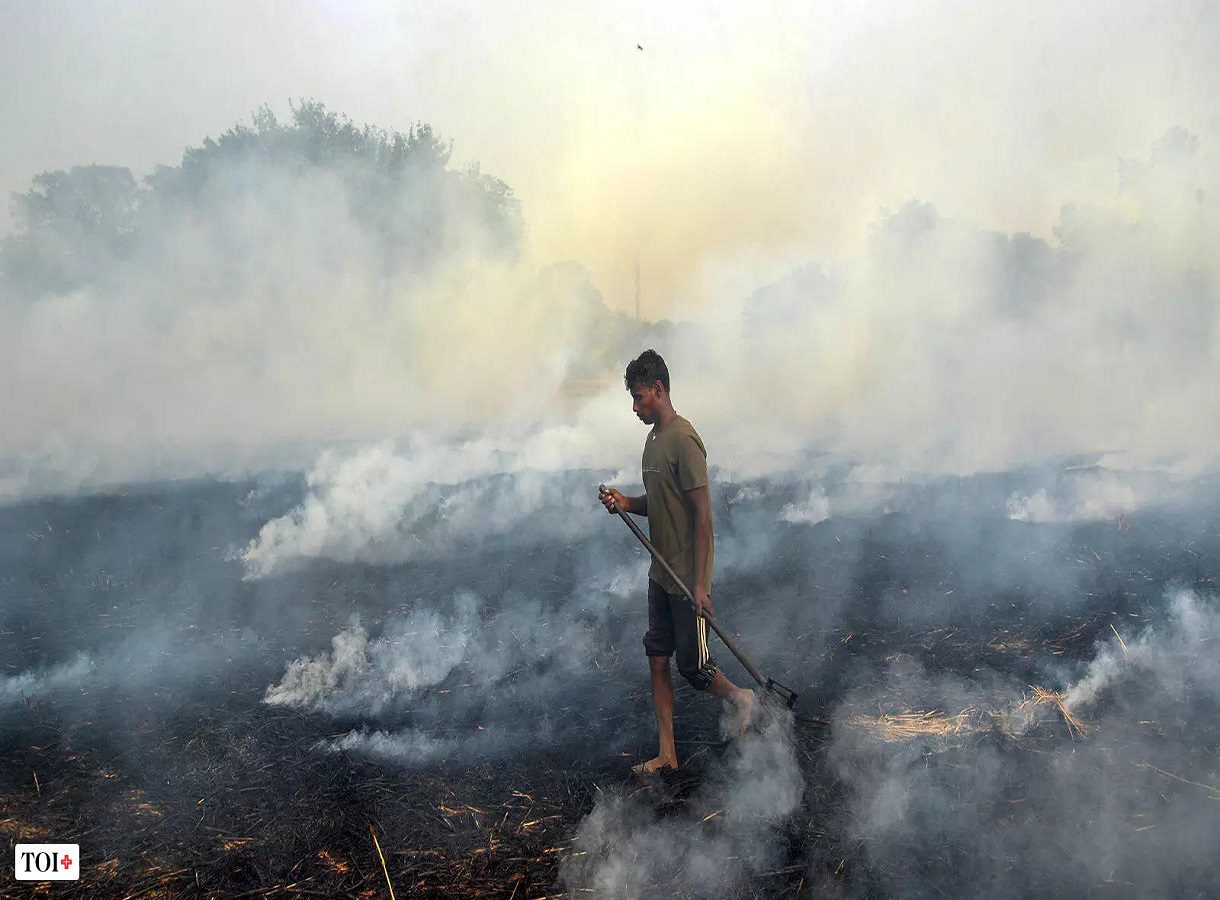
Crop Residue Burundi | This practice Contributed about 7/ of PM2.5 emissions. Equal to the emissions form all of India, s vehicles. About 100 million tones of crop residues are burnt year. Whit a third of this occurred within a 30-day period across Punjab, Haryana. Up and Rajasthan in October and November. This intense burning significantly esca-lates pollution levels in cities like Delhi to hazardous pollution days. 

It is essential to underscore that a bulk of biomass used for heating and crop residue burning takes place during winter. This. along with adverse meteorological conditions in IGP. Pushes the pollution to dangerous IeveI in winter. 

Industry invisible | Industries. often neglected in discussions on air pollution, are the second-largest source of PM2.5, contributing 29% of the emissions and are the leading cause of pollution in cities like Mumbai and Kolkata. While larger industries have adopted adequate pollution controls, countless smaller enterprises have not. Sectors like brick kilns, metal, food processing, and agro-based industries are some of the key ones that need stringent oversight. 

Likewise, the power sector, accounting for 8% of PM2.5, must adhere to emission norms, as about 60% of power plants still fail to meet the strict standards set in 2015. 

Automobile Focus: Vehicles, which have been a focal point of pollution control efforts over the past two decades, contribute only 7% of PM2.5 emissions. While in cities, this number could be a little higher, emissions from biomass. This is precisely why vehicle restriction schemes like odd-even have a minimal impact on improving air quality in cities like Delhi. 

The analysis clearly demonstrates the need for substantial actions to shift households away from biomass fuels for cooking and heating through programmes such as PMUY. Under the Sustainable Development Goals, India has committed to providing clean fuel to every household by 2030; achieving this target would be the biggest action in controlling air pollution. Furthermore, the burning of crop residues must not be tolerated. Both incentives and penalities should be used to eliminate this practice as this will bring the quickest result on air quality. Lastly, there must be a concerted effort to decrease industrial pollution throught rigorous monitoring and enforcement. These strategies must take precedence as they represent the primary sources of air pollution.  

Why India’s hills must stop copying the plains

Hills, stop copying the plains: Joshimath shows we need a radically different growth model for Himalayan states

Joshimath is a symptom, the disease is the uncontrolled growth model. 

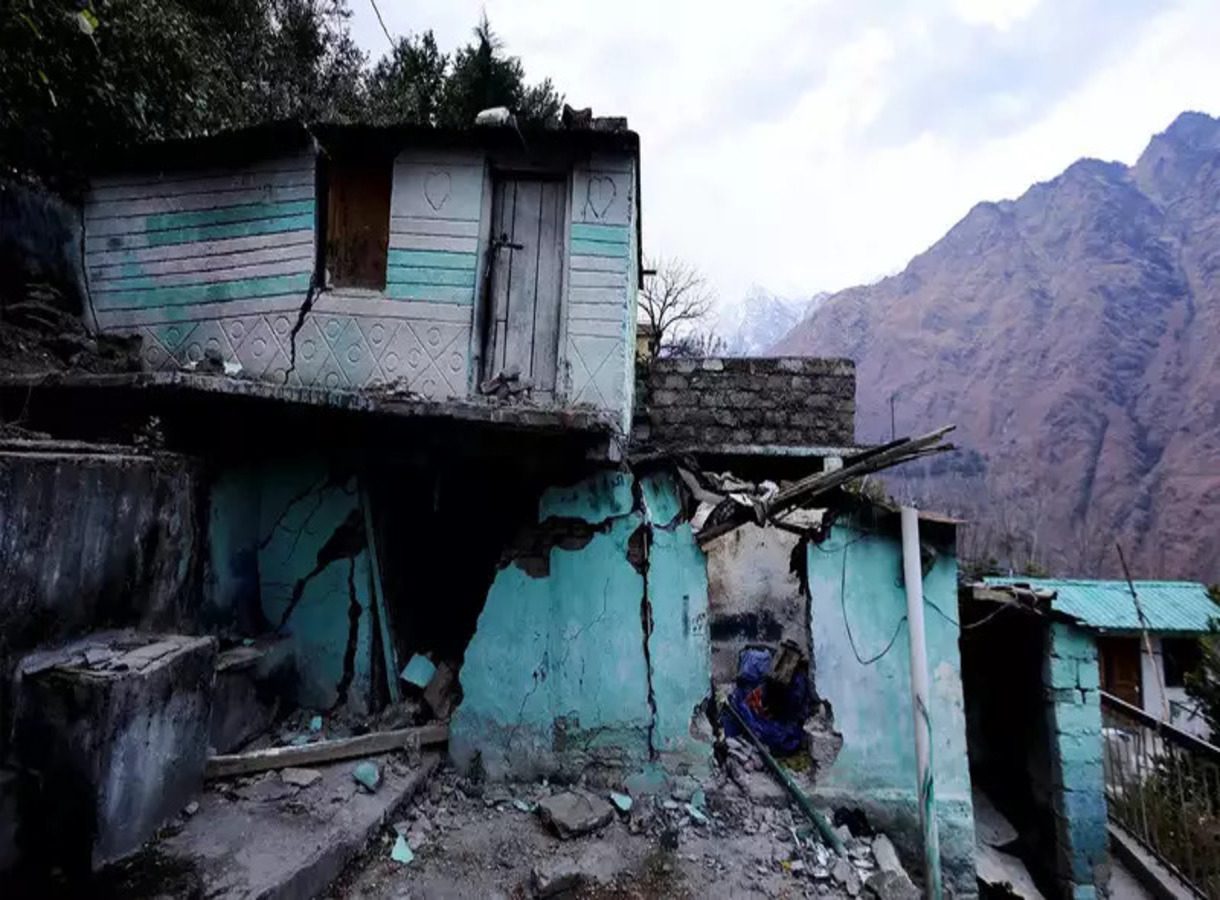
What is unfolding in Joshimath is a tragedy. But this tragedy is not due to climate change; climate change-linked extreme events may have exacerbated the situation, but the sinking of Joshimath is our doing.  

The fact is this disaster is not unexpected; it was foretold. Over 50 years, the sinking of Joshimath has been documented by multiple committees of the Supreme Court and the Union and state governments. They warned against haphazard urbanization, large-scale hydropower development and cutting of hills to widen roads. But time and again, their warnings were ignored. The result is that the fate of Joshimath is sealed. Even with engineering solutions, a part of this historic city will have to be abandoned, and the rest will struggle to survive. So, how have we reached this stage, and how do we prevent many more Joshimath’s in the future?

It is important to understand that Joshimath is a symptom; the disease is the strong push in the Himalayan states to replicate the development model of the plains – big infrastructure projects, wider roads, and high-rise buildings. It is this uncontrolled growth model that is seriously compromising their environmental security.

Destructive growth
Let’s look at the hydroelectric projects (HEPs) in Uttarakhand. The state presently has 39 large and small HEPs with an installed capacity of 3600 MW. In addition, there are 25 HEPs worth 2400 MW capacity under construction. So, in a couple of years, Uttarakhand will have 64 HEPs of 6000 MW capacity.

But what is existing and under construction is just a fraction of what is being planned. There are 180 HEPs of 21200 MW capacity in the pipeline. Many have already obtained environmental clearances from the environment ministry and state agencies. Even if we assume that only half of these projects reach fruition, Uttarakhand will have 150 HEPs, and its hydropower capacity will increase four-fold from the present. This is plainly unsustainable.    

Scientists have warned against building hydropower without comprehensive studies, and government committees have recommended scrapping HEPs. Yet, many projects with questionable feasibility continue to be constructed. Take the case of the Tapovan Vishnugad HEP, which is blamed for the aquifer breach at Joshimath.

Construction of this 520 MW project began nearly 17 years ago and was scheduled to be completed in 2013. But, almost a decade later, the project is still ‘under construction’, and its price tag has more than doubled. Moreover, this project has been damaged by floods twice — in 2013 and 2021. In 2021 floods caused by an unprecedented avalanche, nearly 200 people died, and many were labourers working at the project site. Tapovan Vishnugad exemplifies the risk of large-scale infrastructure development without proper assessment.   

It is well-known that the Himalayas is one of the most unstable mountain ranges and is prone to natural disasters. On top of this, global warming is profoundly impacting the geology and hydrology of the region. Data shows that 90% of earthquakes, most landslides and a large proportion of cloudbursts in India occur there. With massive infrastructure development and more people living in vulnerable areas, the economic and ecological losses are mounting and will continue to grow unless we make fundamental changes in the development paradigm.

Promote the alternate vision of development

The first change is to stop copying the plains. The domain of environmental science tells us that every place has a carrying capacity. Once this capacity is exceeded, ecological destruction ensues. Himalayas have a much lower carrying capacity than plains and thus can sustain much lower human pressure. Therefore, better planning and enforcement are essential to ensure that the carrying capacity is not breached. But unfortunately, the institutions which can ensure this, like the Town and Country Planning (TCP) department and the environment department, are weak and ineffective in hill states. In Uttarakhand, for instance, the TCP department is operating with minimal staff and resources, and the re-organization of the department has not been done since the bifurcation from Uttar Pradesh. Without solid planning and enforcement, the Himalayan states are doomed.

The second is to practice an alternate model of development, an immediate requirement in the tourism sector. It is projected that 250 million tourists will visit these states by 2025; the number was 100 million before the pandemic. This massive growth will exacerbate water scarcity, worsen air quality and lead to forest and land degradation. But there is an alternative to this unsustainable tourism — high-value sustainable tourism. We can follow the example of Bhutan, which has capped the number of travellers by imposing a sustainable development fee of US$200 per day. A part of this fee goes into environmental protection and enhancing livelihood for local residents. A similar sustainable tourism policy is required for our Himalayas too.

Lastly, in this era of climate change, Himalayan states can create a large number of jobs in the environment sector – biodiversity conservation, high-value organic farming, sustainable forestry, glacier and water body protection etc. And they can be incentivized by the rest of the country to do this. This is because they are major water sources that sustain the plains, and their glaciers, forests and biodiversity are essential for the country’s ecological security. While some progress has been made on Payments for ecosystem services, a lot more needs to be done so that these states can develop and prosper without destroying themselves.

Weather shifts in climate talks

Two changes: accepting that biggest polluters will pay poor nations & pressure on China, India to contribute

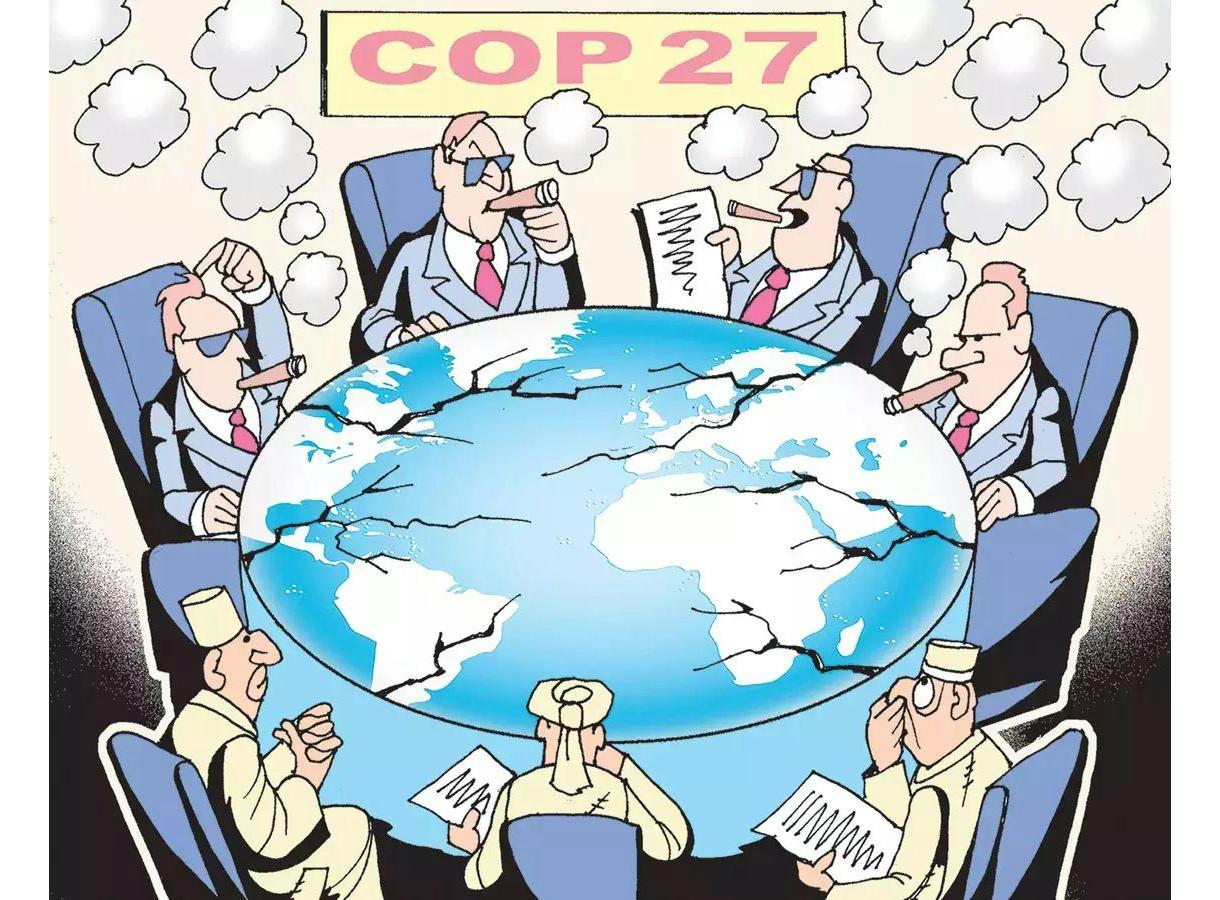
The 27th Conference of Parties (COP27) to the UN Framework Convention on Climate Change (UNFCCC), which wrapped up in the early hours of Sunday at the Egyptian resort town of Sharm El-Sheikh, set things in motion that will have far-reaching implications for the international climate negotiations.

COP27 kicked off with the demand by the developing countries, especially least developed countries (LDCs) and small island nations, to set up a ‘Loss and Damage’ fund to compensate them for climate disasters. These countries, which have contributed the least to global warming, are now suffering annual losses in billions of dollars. For instance, the cost of the recent floods in Pakistan is estimated to be over $46 billion – 13.25% of the country’s GDP.

The loss and damage negotiation was acrimonious, to say the least, with the US entirely against any deal that would expose them to unlimited liability for their historic contribution to greenhouse gas (GHG) emissions. The negotiations also got into the question of who should pay, with small island states demanding that India and China should also contribute to the fund as they are now big GHG emitters.

Structure of compensation fund

Structure of compensation fund In the wee hours of Sunday, countries agreed to set up a new funding window to pay for loss and damage, but with many caveats attached to this fund.

  • The fund will only support countries most vulnerable to climate change.
  • It might not include India.
  • Funding will come from both developed countries and a “mosaic” of sources, including the private sector and philanthropies.

Considering that wealthy countries have never met their financial commitment; one is sceptical of this fund’s ability to help developing countries.  

Nevertheless, it is a big deal that the principle of compensating countries for climate disasters has been recognised. From now on, a certain “liability” will be put on big polluters and they will be under a moral, if not legal, obligation to support vulnerable countries.

Holdouts on oil and gas

It is tragic but a reality that it has taken 30 years for countries to realise that phasing down andultimately phasing out all fossil fuels is the most important factor to limit global warming. And it was India that set in motion the discussion to phase down all fossil fuels.

Last year at Glasgow, while countries agreed to phase down coal power to limit global warming, they kept silent on oil and gas due to pressure from big oil and gas-dependent economies, including the US and EU.  

All the studies indicate that controlling global warming requires action on all fossil fuels, not just coal. This point was forcefully made by India and ultimately supported by nearly 80 countries, including the US and EU. But Russia and Saudi Arabia vehemently opposed the inclusion of oil and gas, and therefore it was not included in the final decision. Nevertheless, Sharm El-Sheikh has set in motion the need to phase out all fossil fuels, and it is a matter of time before this is accepted in a future COP.

  Upending developed vs developing

The negotiations around loss and damage also unravelled the traditional classification of developed and developing countries, as outlined in the 1992 convention. The question of who should pay for loss and damage brought focus to China, the largest current emitter and second-largest historical emitter of GHGs.  

China prefers to be called a developing country in the climate negotiations, which was questioned by many countries. The same applied to newly wealthy countries like Saudi Arabia, South Korea and Singapore.

Developed countries always wanted to upend the classification. At COP27, they got the support of many small island states and LDCs to do so. While the final text has not clearly mentioned the larger role of emerging economies, it is pretty clear that from now on, countries like China will find it challenging to avoid greater responsibility for the climate crisis. There will also be pressure on India to contribute more, as it is traditionally bracketed with China at the UNFCCC.

 Implementation through a just transition

Just transition, the socio-economic impact of phasing down fossil fuels, has emerged as an important agenda at COP27. Mid-way through the COP, a $20 billion deal was struck between Indonesia and G7 countries at the G20 meeting in Bali to phase down coal use in Indonesia in a just manner.

Called Just Energy Transition Partnership (JET-P), a similar deal worth $8.5 billion was signed between South Africa and G7 last year. A JET-P deal was offered to India, which it rightly postponed for future negotiations.

Overall, the outcome of COP27 is not so much in words as it is in the direction the international negotiations are moving in. For India, it is important to recognise these decisive shifts and develop a negotiating strategy that is good for the country and the planet. India did quite well at Sharm El-Sheikh by proposing the phasing down of all fossils, supporting developing countries on loss and damage, and releasing its Long-Term Low Emission Development Strategy. Now is the time for the country to relook at its negotiating position that will advance the development and climate agenda together.

Don’t Delhi and Punjab govts breathe the same air? There is much AAP can do to cut stubble burning and pollution, if it chooses to do so

If some Delhiites believed that the AAP government in Punjab would resolve the national capital’s air pollution woes, they couldn’t have been more wrong. Not only has Arvind Kejriwal, the national convener of AAP and CM of Delhi, refused to take responsibility, he is now blaming all and sundry for the airpocalypse. But the fact is, his party now governs two states that presently contribute two-thirds of the pollution in Delhi-NCR.

Let’s be clear, Delhi is a gas chamber today because of its own pollution and the pollution due to stubble burning, primarily in Punjab. To those who still think that stubble burning is not the leading cause of severe air pollution, they need to only look at the following data:

  • Currently, the contribution of stubble burning to Delhi’s pollution is 34-38%. This number will likely increase to 50% in the coming days if farm fires are not stopped.
  • 91% of all the farm fires from October 1 to November 3 were recorded in Punjab; only 10% were in Haryana and Uttar Pradesh.

So, addressing the issue of stubble burning in Punjab is necessary for controlling air pollution in Delhi during winter. The bottom line is that the AAP government, which has been given an overwhelming mandate by the citizens of Delhi, will have to stop finger-pointing and get serious about mitigating major pollution sources within and outside. Let me point out four major areas that can work to reduce air pollution in the next few years.

Invest in public transport and safe roads: Of the megacities of the world, Delhi has one of the worst public transport infrastructures. Its roads are also one of the most unsafe for walking and cycling. Unfortunately, the AAP government has made little investments on both of these fronts. For instance, Delhi today has fewer buses than it had 10 years back. So, instead of promoting campaigns like ‘Red light on, Gaadi off’, which would have caused more congestion and pollution, it should focus on safe and well-connected public transport and roads.

Green the city: All modelling studies indicate that dust from roads and open spaces causes massive PM10 pollution. But I have never understood why there is a reluctance to grass the sideways and green the open spaces. From Mexico City to Beijing, cities that have significantly improved their air quality have used greening as one of the principal measures to reduce dust.

Reduce pollution from solid fuels: Delhi has to work with other states, especially Punjab, Haryana, UP and Rajasthan, to reduce the biggest source of pollution – open biomass burning and pollution from coal. Biomass burning, primarily for cooking and heating, is a major source of air pollution in Delhi’s airshed. The pollution intensity of open biomass burning is hundreds to thousands of times more than those of vehicles and industries. Similarly, burning coal in industries and thermal power plants is a significant source of pollution.

No city in the world has managed to reduce air pollution by burning massive quantities of solid fuels. For example, Beijing reduced its air pollution by reducing coal consumption in power plants and industries and shifting millions of households to clean cooking fuels in Beijing, Tianjin and Hebei regions.

A no-harm agreement with neighbouring states: The no-harm rule is a widely recognised principle of international law whereby a country is duty-bound to prevent, reduce and control the risk of environmental harm to other countries. The time has come to use this principle domestically.

  • Today, stubble burning in Punjab is causing harm to the health and environment of Delhi, and thus Punjab is breaching the no-harm principle.
  • Until now, the discussions between states have been informal, and solutions have been non-binding.
  • But it is time that a formal agreement is made between the NCR states to stop farm fires and other significant sources of pollution.
  • This inter-state environmental agreement should be a cooperative and binding agreement with measurable results.

For instance, under this agreement, NCR states and the central government could pool resources to help farmers (not pay farmers) eliminate stubble burning. Delhi can take the lead in this as it has close to Rs 1,000 crore sitting idle in its green fund, which it collected as an environment compensation charge from diesel-guzzling trucks entering the capital.

Evidently, there is a lot that the Delhi government can do but chooses not to do. Therefore, it is time for the choked citizens to ask the right question from the AAP government: What is the result of close to eight years of your rule on the air quality of the city?

The risk of playing god in fighting climate change

New disasters can happen if countries decide to unilaterally try technological fixes to global Warming.

With record-breaking heatwaves hitting many parts of the world over the last few months, scientific circles have been hotly debating whether countries should prepare to deploy geoengineering technologies to deal with such climate emergencies. Should these technologies be deployed by an international body or by individual countries?

Geoengineering is an umbrella term for various experimental technologies designed to deliberately alter the climate system to reduce the impacts of global warming. They are slowly but steadily gaining salience and broadly fall under two categories: Solar Radiation modification (SRM) and Carbon Dioxide Removal (CDR) technologies.

How would these technologies cool the planet?

As the name suggests, CDR is about removing carbon from the atmosphere, either by massive deployment of machines to extract CO 2 from the air or by more natural methods like planting trees. On the other hand, SRM technologies, which are attracting the most attention, aim to reduce the amount of solar radiation reaching Earth by reflecting sunlight back into space, thereby reducing surface temperatures. Scientists are proposing to do this by a variety of techniques such as making clouds brighter, thereby reflecting sunlight like a mirror. Or by thinning/ removing the ‘cirrus clouds’ that absorb solar radiations and warm the earth.

Cloud engineering is not new. Countries have been seeding clouds to force more rainfall for years. China has been implementing an extensive cloud seeding programme, with plans to cover more than half of the country by 2025. In India, cloud seeding has been tried in states such as Tamil Nadu, Karnataka and Maharashtra during droughts.

These practices have encouraged scientists to propose cloud engineering of the planet to reduce warming. But these geoengineering technologies are at an ideation stage; the one that has reached the experimentation stage is Stratospheric Aerosol Injection (SAI).

SAI aims to mimic large volcanic eruptions that have a cooling effect on the globe. During large eruptions, millions of tonnes of sulphur particles (called aerosols) are injected into the upper atmosphere, where they reflect back the incoming solar radiations, thereby cooling the planet. For example, the eruption of Mount Pinatubo in the Philippines in 1991 caused global cooling of 0.6.C for the following two years. Scientists are now proposing to send aeroplanes and balloons to the stratosphere to release millions of tonnes of
aerosols to mimic a smaller version of Mount Pinatubo.

Several modelling studies indicate that SAI might reduce some of the worst effects of climate change, such as lowering warming and reducing the frequency of heatwaves and high- intensity storms. Also, the price is so affordable that a few dozen countries can easily deploy this technology unilaterally. But there are risks.

What are the dangers of their use?

SAI’s unintended consequences could include an adverse impact on rainfall, crop production and ocean acidification. Large-scale spraying of aerosols into the atmosphere could also deplete the ozone layer, enlarging the ozone hole. Another big risk is that when the aerosol injection is terminated abruptly this will cause rapid warming, disrupting the water cycle and leading to massive biodiversity loss. Lastly, the impacts will not be limited to national borders. Unilateral use of SAI could lead to significant adverse effects in other
countries, leading to conflicts.

Because of these risks, there is massive opposition to advancing research on SAI. It is also feared that such research would move the focus away from cutting emissions, which is the best way to solve the climate crisis. None of this has deterred countries from investing in the research. Premier universities such as Cambridge and Harvard have set up specialised geoengineering research centres. Research is also picking up in the global South. There are a few geoengineering modelling programmes in India as well.

But a lot more research is required to understand the regional impacts of SAI in our part of the world. In fact, India should take the lead from the global South in developing scientific knowledge on the subject. Similarly, India will have a major role in framing global governance around the use of geoengineering technologies. These technologies have global ramifications and must be governed by an international rules-based system.

While geoengineering is highly risky, countries will deploy it if they fear largescale casualties or economic disruptions due to extreme climatic events. In fact, considering the current trajectory of Earth’s warming, countries will have to make these choices within a decade or two. Therefore, enough research must be done about the safety and effectiveness of these technologies. Likewise, a global governance mechanism must be established to deter the unilateral deployment of these technologies. In the end, it is better to be prepared for the consequences than to be blindsided by a lack of knowledge.

जलवायु परिवर्तन : लक्ष्य तो तय हुए, अब कदम आगे बढ़ाना है

पर्यावरण और स्वास्थ्य के नजरिए से वर्ष 2021 लंबे समय तक याद किया जाएगा। इस साल हमने मानवता का श्रेष्ठ देखा तो सबसे बुरा भी देखा। साल की शुरुआत कोरोना की दूसरी लहर से हुई। हमारे देश का जो स्वास्थ्य ढांचा था, वह चरमरा गया। लोगों को अस्पतालों में बेड नहीं मिल रहे थे, ऑक्सिजन, मेडिकल सप्लाई की कमी थी। लेकिन साल का अंत होते-होते हमने करोड़ों लोगों को वैक्सीन दी। 2021 में जहां लाखों लोग मरे, तो करोड़ों लोगों की जान भी बची, क्योंकि हमने रेकॉर्ड टाइम में वैक्सिनेशन किया। 2021 बताता है कि अगर हम साथ मिलकर तकनीक और विज्ञान का प्रयोग करें तो लोगों की जान बचा सकते हैं, विकास कर सकते हैं।

दिल्ली से ग्लासगो

जहां तक पर्यावरण की बात है, तो 2021 में काफी गंभीर समस्या हमारे सामने खड़ी हुई पर साल का अंत होते-होते हमें एक सुनहरी लकीर भी दिखी, जिस पर देश, सरकार और उद्योगपति साथ में काम करके आगे बढ़ सकते हैं। 2021 में जिस तरह का वायु प्रदूषण हुआ, रेकॉर्ड में वैसा नहीं देखा गया है। 2015 से केंद्रीय प्रदूषण कंट्रोल बोर्ड ने वायु प्रदूषण की ठीक से मॉनिटरिंग शुरू की। साल 2021 में वायु प्रदूषण का लेवल पिछले पांच-छह साल में सबसे अधिक रहा है। रेकॉर्ड दिखाता है कि पिछले चार-पांच सालों में सबसे अधिक पराली हरियाणा और पंजाब में जलाई गई। दिवाली के अगले दिन ही लखनऊ, दिल्ली या गाजियाबाद में वायु प्रदूषण चरम पर पहुंचा। इसी दिसंबर में दिल्ली में वायु प्रदूषण बेहद गंभीर हो गया था।

ऐसे ही जलवायु परिवर्तन के प्रभावों को देखें। इस साल जो अतिवृष्टि हुई, बाढ़ आई, इसका भी रेकॉर्ड बना। नैनीताल में दिन भर में 400 मिलीमीटर की बारिश हुई, बाढ़ आई। चेन्नै तो लगातार डूबा ही हुआ है। साथ ही देश के अलग-अलग हिस्सों में अतिवृष्टि ने हमारे शहरों को रोक दिया। छोटे समय में इतनी अधिक बारिश देखी नहीं गई है। ये साफ दिखाता है कि अतिवृष्टि अभी बढ़ेगी, जिसमें लोगों की मौत बढ़ेगी, आर्थिक दुष्प्रभाव बढ़ेंगे। वहीं इस साल हमने बढ़ती हीट वेव भी खूब देखी।

बात कचरा प्रबंधन की करें तो 2021 में दिखा कि कोविड में जिस तरह से बायो मेडिकल वेस्ट बढ़ा है, उससे हमारे सॉलिड और बायो मेडिकल वेस्ट मैनेजमेंट का ढांचा भी चरमरा गया है। नदियों से जो प्रदूषण कम करना था, उस काम में भी काफी कमी रही। 2021 में यह साफ हो गया है कि हमारी जो गवर्नेंस है, पर्यावरण से संबंधित विभाग हैं, उनमें काफी कमजोरी है। लेकिन 2021 का अंत होते-होते ग्लासगो क्लाइमेट समिट में प्रधानमंत्री मोदी ने ऐलान किया कि भारत 2070 तक कार्बन डाई ऑक्साइड सहित जलवायु परिवर्तन के लिए जिम्मेदार गैसों का उत्सर्जन शून्य पर लेकर आएगा। यह बहुत बड़ा कमिटमेंट है, पर्यावरण के क्षेत्र की सुनहरी रेखा है। साथ ही भारत ने अगले दस साल के टारगेट का भी ऐलान किया, जिसके तहत हम पचास फीसदी एनर्जी अक्षय ऊर्जा से लेंगे। यानी जो बाकी के ऊर्जा स्रोत हैं, मसलन कोयला, तेल या गैस- उसका इस्तेमाल कम करेंगे। अक्षय ऊर्जा स्रोत, जैसे सौर ऊर्जा, वायु ऊर्जा बढ़ाएंगे।

अब सवाल उठता है कि साल 2022 में क्या हो सकता है? एक चीज तो मानकर चलना चाहिए कि जलवायु परिवर्तन का हमारे देश में प्रभाव बढ़ेगा। इसका हमारी अर्थव्यवस्था, खेती और पानी की सप्लाई पर प्रभाव होगा। हमें अब जलवायु परिवर्तन के प्रभावों से निदान के तरीके पर काम करने की जरूरत है। इसके लिए अब सिर्फ केंद्र सरकार को काम करने की जरूरत नहीं है। केंद्र का तो पूरा निर्देशन रहेगा, फंडिंग भी। लेकिन अब राज्य सरकारों को स्थानीय स्तर पर एडॉप्टेशन प्लान लागू करने की जरूरत है। मसलन, अगर अतिवृष्टि होने वाली है तो हमें अच्छे चेतावनी सिस्टम लगाने की जरूरत है ताकि क्षति कम हो। हीट वेव के लिए शहरों में ‘हीट कोड’ बनाने करने की जरूरत है। मतलब, अगर तापमान बहुत तेजी से बढ़े तो लोगों को बता दिया जाए कि वे घर में ही रहें। आउटडोर वर्क कम करके हॉस्पिटल और पानी मुहैया कराया जाए। हमें लोकल गवर्नेंस लेवल पर 2022 से काम करने की जरूरत है। अब तक हमने उस पर बहुत काम नहीं किया है। अब हमें जिला और ब्लॉक लेवल पर काम करना होगा। 2022 में यह काम पूरा नहीं हो पाएगा, लेकिन 2022 में हम शुरुआत कर सकते हैं।

ग्लोबल वॉर्मिंग का भारत पर बुरा असर, आर्थिक विकास दर 30 फीसदी कम

प्रधानमंत्री ने जो ग्लासगो में अक्षय ऊर्जा का जो ऐलान किया, उसके लिए पैसे भी चाहिए होंगे। इस पैसे को लाने के लिए हमें अब उन इंडस्ट्रीज को प्रोमोट करने की जरूरत है, जो हमारे यहां आकर अक्षय ऊर्जा स्रोत लगाएं। यह पहला काम है। इसका दूसरा फायदा यह होगा कि अक्षय ऊर्जा बढ़ेगी तो कोयला कम होगा। पूर्वी और मध्य भारत में झारखंड, ओडिशा, छत्तीसगढ़, और मध्य प्रदेश इसके बड़े आर्थिक स्रोत हैं। तो कोयला धीरे-धीरे ही कम होगा। मगर उससे इन इलाकों पर क्या आर्थिक प्रभाव पड़ेगा, इस पर भी हमें काम करना होगा। 2022 में जो ट्रांजिशन होने वाला है, उस पर भी चर्चा करने की जरूरत है।

एक्शन का 2022
2022 में हमें जलवायु परिवर्तन, एनर्जी ट्रांजिशन, स्थानीय प्रदूषण के गवर्नेंस पर फोकस करना होगा। प्रदूषण कंट्रोल बोर्ड सहित पर्यावरण पर काम करने वाली संस्थाओं को भी मजबूत बनाने की जरूरत है। 2022 का अजेंडा गवर्नेंस रिफॉर्म, स्ट्रेंथनिंग एक्शन का अजेंडा होना चाहिए, क्योंकि जलवायु परिवर्तन के दुष्प्रभाव अपने आप तो कम होने वाले नहीं हैं। यह सब जमीनी स्तर पर होना चाहिए, चाहे वह प्लास्टिक कम करने की बात हो, या कचरा प्रबंधन की। क्योंकि 2021 में हमने देखा है कि बुरा क्या हो सकता है और अच्छा क्या हो सकता है। मेरी यह कामना है कि 2022 में हम अच्छाई पर काम करें, और देश को आगे बढ़ाएं।

Climate: Reality Check

Transition from fossil fuels in India is a matter of politics, communities, federalism & jobs

The latest IPCC report paints a grim picture of the future if the world fails to eliminate the use of fossil fuels over the next three decades. India will be disproportionately impacted by extreme weather events. Therefore, the only question in front of us is how best to plan this transition to secure a just and equitable outcome. Otherwise, chaos and disruptions are a foregone conclusion.

Note here that there is a stark asymmetry in India’s energy map. While 85% of coal production is concentrated in relatively poor eastern and central states of Jharkhand, Odisha, Chhattisgarh, West Bengal and Madhya Pradesh, over 60% of renewable energy potential (and 80% of current capacity) is concentrated in relatively wealthy southern and western states – Gujarat, Maharashtra, Rajasthan, Andhra Pradesh, Karnataka, Tamil Nadu and Telangana.

As India and the rest of the world embark on the most significant energy shift since the invention of steam engines to combat the climate crisis, this disparity raises many questions. For example:

  • How will the energy transition affect inter-state relations? What implications will it have on government revenue, public expenditure and regional inequality?
  • What happens to districts like Dhanbad, Singrauli, Korba, Angul, or Paschim Bardhaman, where coal is the fulcrum of jobs and growth?
  • How will we re-skill and re-employ millions of workers formally and informally employed in fossil fuel-dependent industries like thermal power, steel, cement, refineries, automobile, petrol pumps, or urea fertiliser?

These aren’t hypothetical questions to be debated through a future lens. These are, on the contrary, current concerns that must be addressed immediately, as coal and oil use will have to decline dramatically over the next 2-3 decades to avoid the worst impacts of global warming.

The good news is that this rapid transition is technologically feasible, and the market is now willing and ready to switch to non-fossil alternatives in many industries since they are profitable. Hence, all major Indian companies, from Tata’s to Reliance and Adani’s to Mahindra’s, are putting billions of dollars in renewable energy, battery storage and EVs.

However, if the transition away from coal (and oil) is not well-managed, many of the country’s disadvantaged districts will be pushed even further into poverty. Furthermore, it will have serious ramifications for the political economy in central and eastern India, where coal is firmly embedded in local culture and politics. Their politics can even put a brake on the energy transition itself.

Therefore, the energy transition is more than technological fixes and investments; it is also about workers and communities who will be affected. To get this transition right, we will have to start developing policies and plans for a Just Transition and not merely an energy transition. A well-planned Just Transition will help districts and states dependent on fossil fuels to diversify their economy and secure decent work opportunities for their population.

But what does a Just Transition look like in India? What is it going to entail? To answer, we must first comprehend the nature of the fossil fuel economy as well as the obstacles of phasing it out.

To begin with, the Indian fossil fuel industry, particularly coal, is plagued by the “resource curse” and informal workers. Most coal areas are impoverished and polluted, with more than half of the population suffering from multidimensional poverty. In addition, the informal workforce is approximately four times the formal employees. As a result, a vast majority of workers don’t have employment security.

Secondly, the fossil fuel industry has a large footprint. There are 120 districts in which these businesses play a significant role. Of these, 60 districts account for 95% of coal production, 60% thermal power capacity, and 90% automobile and automobile component manufacturing. Disruptions will occur in these districts early on, perhaps within the next five years, as alternative technologies are already in the market for these sectors.

Thirdly, the industry employs a large number of people, with at least 20 million people working in mines and factories. Automobile, iron and steel, and coal mining are the biggest employers. To put things in perspective, the coal-mining sector in the United States employed 54,000 people in 2019; in India, the figure is over 2.0 million.

Finally, the fossil fuel industries contribute significantly to the exchequer. Taxes on coal, oil and gas contributed 18.8% of the total revenue receipts of the central government and about 8.3% of the state governments in 2019-20. Thus, these taxes are essential for the government’s revenue and spending.

Considering the above, a Just Transition in India will need policy and planning for five key elements (the five R’s):

  • Restructuring of the economy and industries in fossil fuel-dependent districts/ states;
  • Repurposing of land and infrastructure, as these industries hold vast land and assets. For example, coal mines and thermal power plants alone have 0.3 million hectares of land, which can be repurposed to build a new green economy;
  • Reskilling existing and skilling new workforce to avoid job loss and create a new workforce for the green industries;
  • Revenue substitution and investments in Just Transition. This will require progressively moving taxes away from fossils and using fossil taxes like GST compensation cess (formerly coal cess) and District Mineral Foundation funds for Just Transition; and,
  • Responsible social and environmental practices during the transition process to create a better world than today.

Phase-out of fossil fuels is imminent; we have no choice.

How to control air pollution from stubble burning

This is a straightforward article to discuss the real issues concerning stubble burning, including its contribution to pollution in Delhi-NCR, and why the solutions promoted by the government are not working.

Let’s start with the contribution of stubble burning to air pollution in Delhi-NCR. While we can bicker over the numbers, stubble burning is a short duration, highly polluting activity that significantly impacts air quality in October and November. The equation is simple: The 15-20 million tonnes of paddy stubble burnt in Punjab, Haryana, and western Uttar Pradesh, emit PM2.5 that is 4-5 times the annual PM2.5 emissions from all vehicles plying on Delhi roads. Let me repeat: PM2.5 emitted from stubble burning in just 60 days is 4-5 times what all Delhi vehicles emit in the entire year.

The intensity of emissions from stubble burning, therefore, is so high that even if a small fraction of these reaches Delhi, it would cause the city’s air quality to deteriorate significantly. This is precisely what happens during the stubble burning season. Wind coming from the northwest picks up pollutants from Punjab and Haryana and brings them to Delhi, worsening its already polluted air.

The next question is, why do farmers burn paddy stubble? First of all, not all farmers burn it; only about 25% of the paddy residues are burnt in Haryana, and this number goes up to 50-60% in Punjab. So, why do some farmers put their fields to flames while others don’t? There are three primary factors, apart from a few minor ones, that are driving this practice.

The most important factor is the technology used for harvesting. Farmers using Combine Harvester (called Combine) are most likely to burn the stubble, whereas those practising manual harvesting don’t. Combines cut the grainy part of the paddy plant (called spike) and leave about 30 cm of stem intact in the field. The farmer either has to manually cut the stem, use some machine, practice in-situ management, or burn it. Among these, burning is the easiest and most cost effective option.

The next factor is the use of the straw. Farmers who are unable to use or sell straw are burning it. In Punjab and Haryana, basmati paddy is mostly harvested manually because its straw is highly valued as animal fodder. The incidence of burning in basmati fields is, therefore, very low.

On the other hand, non-basmati straw is not used as animal fodder and hence is burnt. But there is a growing demand for non-basmati fodder in Rajasthan and Gujarat, and industries are also buying it for energy and other uses. Farmers who can sell their non-basmati straw do not practise stubble burning. Lastly, small farmers and tenant farmers are more likely to burn the stubble than big farmers, as they have fewer resources and risk appetite for using alternative technologies.

Now, let’s come to solutions promoted by the government. It has adopted a carrot and stick approach. On the one hand, it has banned burning and is imposing fines on farmers; on the other, it provides 50-80% capital subsidy to acquire farm machinery to adopt in-situ crop residue management. Unfortunately, neither is working.

It is vital to understand that the farm machinery the government is subsidising is not primarily designed to stop stubble burning. These machines are meant for zero tillage farming, in which stubble can be kept on the field and recycled in the soil. The zero tillage method has significant ecological benefits, including improvements in soil quality and lower water consumption; reduction in stubble burning is a co-benefit.

But zero tillage farming has two problems. First, it is an entirely new method of agriculture for Indian farmers. They have practised tillage agriculture for centuries, and therefore, moving them to zero tillage will not happen quickly. Second, it has a higher upfront cost. Despite subsidies, farmers incur an extra charge of about Rs 2,500 per acre to use these machines, which most can’t afford.

What, therefore, emerges from the above is that the use of Combines, weak market linkages for non-basmati stubbles and promotion of expensive technologies that require a long time for adoption, are sustaining the practice of stubble burning. What we need is a solution that is scientific, affordable, and culturally adaptable.

The easiest and affordable solution is to modify the Combine Harvester itself. We can redesign the Combine to cut the paddy straw from the plant’s base to remove the stem. The straw can either be sold or used as mulch in zero tillage agriculture. We can even incorporate a baling machine to the Combine to bale the straw, which can then be easily transported and sold.

The good news is that some newer versions of Combine already incorporate these features. I am not going to name companies, but I have seen foreign companies selling, in Haryana, precisely the kind of Combine I have explained above. The question is why Indian companies are not modifying their Combines and why the government is overlooking this simplest of solutions?

Ockham’s razor is a problem solving principle which states that the simplest solution is more likely to be correct than complex ones. This certainly is the case with stubble burning. By promoting complex solutions instead of a simpler one, we have botched up the stubble burning problem.

Social media & sharing icons powered by UltimatelySocial