
Heat pumps can bail out small industries

India has not focused on replacing gas use with more efficient & environment-friendly technology, leading to dependence on a fuel whose supply isn’t always reliable

A WAR IN West Asia has bared a problem ignored for years in India’s energy policy. Small industries in India are close to shutting down if there is any gas (LPG/PNG) supply problem. A heat pump may be a solution that was not planned earlier.

The disruption began when the Strait of Hormuz was effectively shut after attacks on Iran on February 28. This led to one of the biggest supply disruptions in energy markets. India has no significant strategic buffer for natural gas, with supply dependent on continuous imports, while strategic reserves cover only nine-10 days (ministry of petroleum and natural gas), limiting resilience during disruptions.

This situation was not created by small businesses. It developed due to increased dependence on imported gas (LPG/PNG) without building enough alternatives.

Responding to the crisis, the government prioritised the supply of cooking gas for households. This was necessary, but it left commercial and industrial users on their own. Restaurants, bakeries, textile units, and small factories, which together employ more than 100 million people, were left to fend for themselves. Some states responded quickly. Tamil Nadu, for example, supported electric cooking solutions for restaurants, but these are short-term responses and not resilience-building measures. Direct import disruptions and supply prioritisation exposed the Indian MSME sector.

To understand the problem, it is important to see how gas is used in India’s 63 million MSMEs. It is not used primarily for lighting or cooking. It is used to produce heat for industrial processes. This includes bakery ovens, dairy pasteurisers, textile boilers, and rubber curing machines. This type of heat is called process heat, and is the backbone of manufacturing.

According to the Bureau of Energy Efficiency, MSMEs use about 25% of industrial energy in India. A large share of this thermal energy is generated from LPG and natural gas. Most of this demand is for temperatures below 200 degrees Celsius. Sectors like food processing, dairy, textile, dye and pigments, and consumer goods manufacturing operate within this temperature range. This is important because an alternative technology already exists to provide process heat for these temperature needs.

That technology is the industrial heat pump.

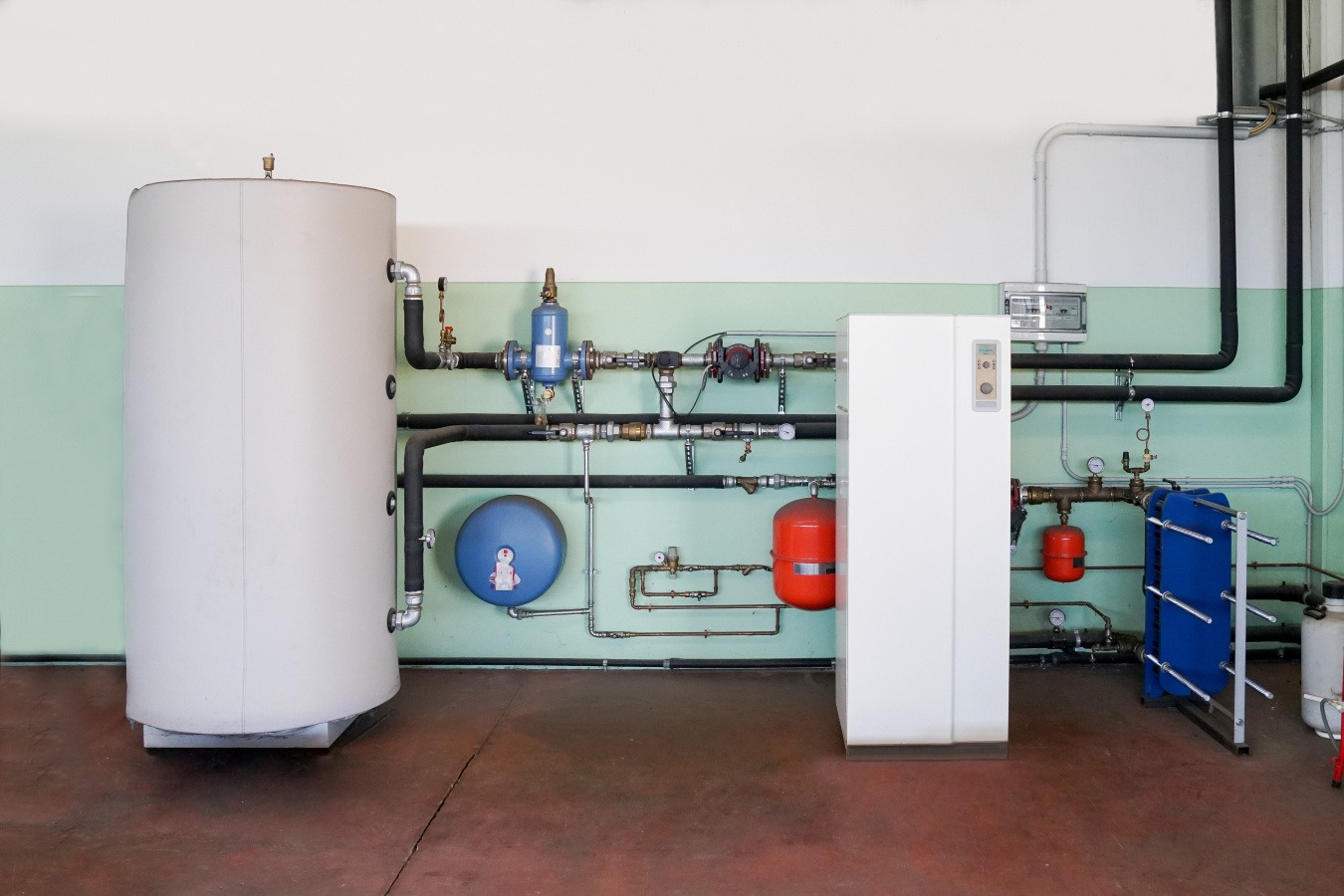
Heat pumps do not burn fuel. They transfer heat from air, ground, or waste sources and provide usable heat using electricity. For every unit of electricity used, they can produce two or more units of heat. This means no combustion, no dependence on imported gas, and less exposure to global supply risks.

This is not a new or experimental technology. Heat pumps are widely used in Europe, Japan, and South Korea in sectors like food processing, textiles, and chemicals. Their adoption increased in Europe after the 2022 gas crisis during the Russia-Ukraine conflict. Countries that had already invested in this technology were able to manage the shocks better.

India has made strong progress in electrification in recent years. There has been major growth in solar and wind capacity, expansion of electric mobility, and plans for green hydrogen. However, industrial process heat, especially for small industries, has not received enough attention. Existing programmes have focused more on improving efficiencies in gas use rather than replacing it with more efficient and environment-friendly technology. As a result, many industries have become dependent on a fuel whose supply is not always reliable. India also plans to increase the share of natural gas in its energy mix from 6.5% to 15% by 2030, but without enough preparations for import-led supply disruptions.

A recent assessment by the International Forum for Environment, Sustainability & Technology (iFOREST) shows that heat pumps are both technologically and economically suitable for many MSME sectors. In sectors like food processing and textiles, the investments can be recovered in a reasonable time, especially when combined with rooftop solar. The major gap in enhanced adoption is not technology or cost. It is a lack of a clear and focused policy framework.

The present situation has shown India’s ignorance of geopolitical supply-chain vulnerabilities in its industrial energy planning

Four steps can help address this. First, there is a need to map gas use at the cluster and process level. This data is currently missing and limits effective planning. Second, a focused Heat Pump Mission for MSMEs should be launched with financial support, access to credit, and technical assistance at the cluster level. Third, while expanding gas connections, industries should also be supported in shifting towards electric alternatives. Every new gas connection should be accompanied by an assessment of electric options. And, fourth, necessary policies should be in place to strengthen domestic heat pump manufacturing.

The Strait of Hormuz will reopen, and gas supply will stabilise. But this moment should be seen as a warning. The present situation has shown India’s ignorance of geopolitical supply-chain vulnerabilities in its industrial energy planning. A bakery owner in Nagpur, a cloud-kitchen owner in Chennai, or a ceramic manufacturer in Morbi should not have to face the impact of a distant conflict. Providing access to local, reliable, profitable, and efficient solutions like heat pumps is not just an ideal policy proposal. It is a practical and necessary step.

From kilns to clean steel: Rethinking India’s sponge iron strategy

The Ministry of Steel (MoS) and Central Pollution Control Board (CPCB) acknowledge the concerns, yet no resolution has emerged, revealing a deeply entrenched policy dilemma.

India’s coal-based sponge iron sector sits at the centre of a structural environmental problem —high-carbon, energy-intensive and deeply polluting. The latest flashpoint before the National Green Tribunal (Application No. 766/2024 filed by Climate Action Forum, an Odisha-based NGO) sharpens the clash between its CO₂ emissions and India’s net-zero ambitions. Backed by studies from TERI, IIT Bombay, CEEW, and McKinsey, the case challenges coal-based rotary kilns and pushes for cleaner alternatives like gas or hydrogen.

The Ministry of Steel (MoS) and Central Pollution Control Board (CPCB) acknowledge the concerns, yet no resolution has emerged, revealing a deeply entrenched policy dilemma. Notably, the plea focuses narrowly on carbon, overlooking the sector’s more immediate crisis: severe air pollution and solid waste.

MoS defends the sector’s economic role — supporting 2,000 MSMEs and ~40% of steel output — arguing a ban risks shortages and import dumping, seriously affecting India’s growth trajectory. CPCB, meanwhile, defers enforcement to states. The core challenge persists: balancing decarbonisation with industrial growth.

Flawed structure

India, the world’s largest sponge iron producer, relies on coal-based rotary kilns to produce sponge iron for steelmaking. Unlike the capital-intensive BF-BOF route, these units are small, decentralised, and clustered near coal and iron ore belts mainly of Chhattisgarh, Odisha, West Bengal, Karnataka and Jharkhand.

Their low entry cost has enabled 300–400 plants to support thousands of MSMEs and meet rising steel demand. But the flaw is structural. These plants use low-quality, unprocessed inputs, driving higher emissions and waste. Smaller units are often inefficient, with weak pollution control. The evidence is unequivocal.

The IIT Kharagpur report, as directed by the NGT, aligns with many other studies — there is broad consensus on both the environmental cost and the need for transition. The numbers are stark. Coal-based sponge iron via the EAF route emits ~4.1 tCO₂/tcs—well above the global average (1.91) and conventional BF-BOF route (2.5). Of the steel sector’s ~240 Mt CO₂ emissions, the secondary sector contributes ~50 Mt, with sponge iron accounting for 60 per cent. Each tonne produced emits 2.5–3.0 tonnes of CO₂, roughly double that of gas-based routes.

The pollution crisis

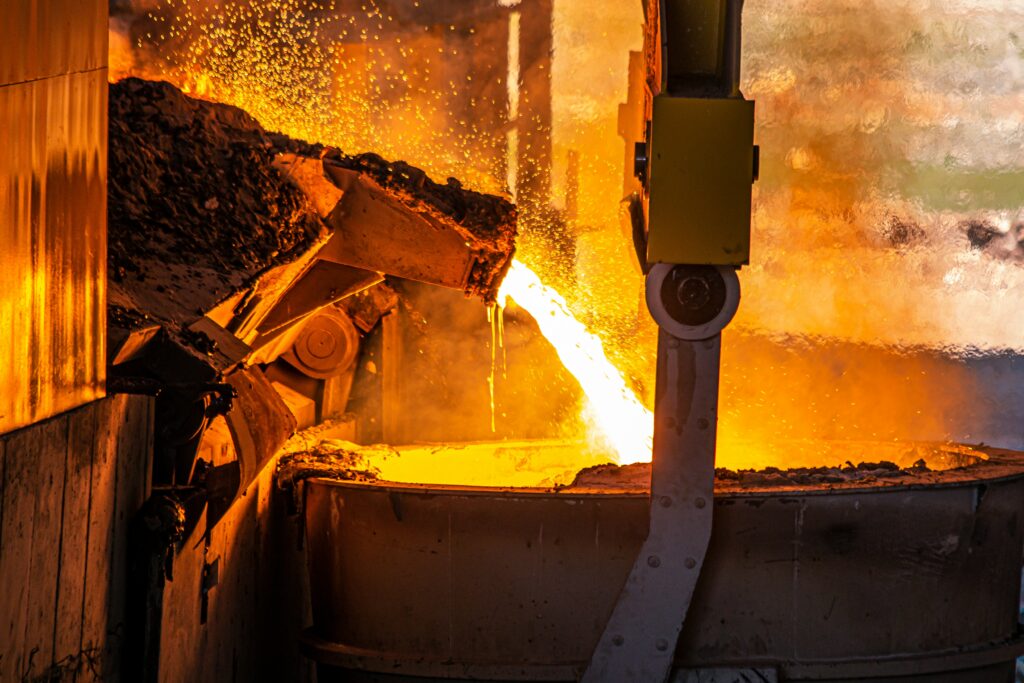
The sector is more notorious for conventional pollution than carbon emissions, yet the NGT plea largely ignores this. Producing one tonne of sponge iron consumes 2.5–3.25 tonnes of raw material, with the rest lost as emissions and waste, chiefly coal char. The handling of iron ore, coal, and limestone drives chronic air pollution in cluster regions, while coal char is often illegally dumped, compounding health risks. Most small plants lack adequate pollution control, safety, and efficiency, resulting in persistent pollution, unsafe operations, and frequent accidents. This has persisted for decades with minimal technological or regulatory push. Ad hoc responses — penalties or shutdowns — have failed. What is needed is a supported strategic transition: treat the sector as a partner, upgrade existing plants, and mandate cleaner technologies for new capacity.

Governance deficit, regulatory failure

There is little dispute: the sector is highly polluting and carbon-intensive, compliance is weak, yet it remains economically attractive and nationally important. Concerns trigger studies, notices, and penalties — but production continues, reflecting a deep governance failure. Despite being the world’s largest sponge iron producer, the industry remains largely unorganised, with poor documentation and weak oversight. Laws exist, but enforcement is misaligned with a fragmented, informal sector. The economics are equally flawed. Low input costs and minimal spending on pollution control and safety make the process appear cheap, while environmental and health costs are externalised.

This is no longer tenable. India may face ₹10–₹15 lakh crore in stranded asset risk if seen with the 2070 net-zero commitment, while the EU-Carbon Border Adjustment Mechanism (CBAM) could penalise exports ranging from 200–600% of profits. Yet new high-emission capacity continues to be approved. The disconnect is stark: law, policy, and practice are moving in different directions.

Roadmap for the sector

Shutting down coal-based sponge iron plants is neither feasible nor desirable. As the MoS notes, the sector underpins steel output, jobs, and growth, using domestic coal and low-grade ore. An immediate ban would be disruptive. But policy must move beyond this binary to a time-bound, financed transition—a distinction long blurred. The path is clear: retrofit existing plants and allow new capacity only with cleaner technologies and best practices. Expansion cannot repeat current inefficiencies. Efficiency gains — processed ore, combustion optimisation, waste heat recovery — offer quick wins; deeper cuts require gasification, renewables, biochar, and CCS. Better pollution control, real-time monitoring, and waste tracking are non-negotiable. This transition must pair incentives with enforcement — green finance, subsidies, and carbon markets alongside stricter norms. The choice is not growth versus environment, but between a managed transition and the unmanaged one underway. The NGT now has a chance to force that shift.

India’s Steel at a Crossroads

Why an indigenous, globally aligned GHG accounting and MRV system is critical for India’s steel transition.

Industrial decarbonisation lies at the heart of the global net zero transition, with iron and steel among the highest priority sectors worldwide. In India, the industry stands at a defining inflection point. As the country advances towards its Net Zero 2070 commitment, steel, one of the most resource, energy, and emissions intensive industries, has moved to the centre of national climate and industrial policy.

In 2023, the sector emitted approximately 240 million tonnes of CO₂, accounting for nearly 12% of India’s total greenhouse gas emissions. With an average emissions intensity of 2.54 tCO₂ per tonne of crude steel, well above the global average of 1.91 tCO₂, India’s production profile reflects its continued reliance on coal-based blast furnace routes and domestically available raw materials.

Industrial decarbonisation lies at the heart of the global net zero transition, with iron and steel among the highest priority sectors worldwide.

Why credible GHG measurement is foundational

Decarbonisation is not only a technological challenge but also a measurement challenge. Emissions that are not measured consistently cannot be managed effectively, priced accurately, financed credibly, or traded competitively. Aligning with global markets and adopting low-carbon steel pathways, whether through greater scrap utilisation, green hydrogen-based direct reduced iron, renewable electricity integration, or carbon capture technologies, must be supported by a transparent and harmonised greenhouse gas accounting framework.

India now has a critical opportunity to develop its own GHG accounting, and Monitoring, Reporting, and Verification (MRV) framework that is accurate, representative of domestic production realities, and interoperable with international systems. Such a framework would ensure that emissions intensity reflects Indian raw materials, technology combinations, and grid conditions rather than relying solely on external assumptions.

How GHG accounting and MRV systems operate

Steel producers globally are required to monitor, account for, and report greenhouse gas emissions using standardised methodologies. These systems define organisational and operational boundaries, classify emissions across Scope 1, Scope 2, and Scope 3, apply emission and conversion factors, and require third-party verification before submission to regulators or market authorities. While carbon dioxide constitutes the bulk of emissions in steelmaking, methane and nitrous oxide are also reported. Differences in system boundaries, treatment of captive power, raw material sourcing, and electricity emission factors can significantly alter reported intensity figures. As a result, accounting design directly influences competitiveness, compliance costs, and trade outcomes.

Global frameworks and India’s structural mismatch

Globally, steel producers rely on frameworks such as the GHG Protocol, World Steel Association guidelines, and the ISO 14404 series, which were largely shaped by Western steelmaking pathways and are closely aligned with the European Union Emissions Trading System. China, the world’s largest steel producer, has developed its own steel-specific GHG accounting and MRV framework aligned with its national emissions trading system. The United States operates a sector-specific system under the United States Environmental Protection Agency Greenhouse Gas Reporting Program.

India, despite being the world’s second largest steel producer, does not yet have a dedicated steel sector specific national GHG accounting framework. This absence creates structural misalignment. International methodologies often rely on emission factors and production assumptions that do not fully reflect Indian realities, including higher ash coal, varied iron ore grades, mixed technology routes, and differing electricity profiles. This is not merely an administrative inconvenience. It can distort carbon intensity calculations and misrepresent the actual performance of Indian producers in global markets.

Multiple reporting obligations and limited harmonisation

Indian steel companies currently operate within a fragmented reporting environment driven by regulatory, trade, and voluntary requirements. These include the Carbon Credit Trading Scheme, the European Union’s Carbon Border Adjustment Mechanism, GHG Protocol reporting, ISO compliance, disclosures aligned with the World Steel Association, Business Responsibility and Sustainability Reporting, and Environmental Product Declarations. Each framework demands separate templates, verification processes, and reporting cycles. Many rely on international emission and conversion factors that do not adequately capture Indian raw materials and operating conditions.

Indian steel companies currently operate within a fragmented reporting environment driven by regulatory, trade, and voluntary requirements.

The lack of harmonisation results in duplication, higher compliance costs, and data inconsistencies. It also places a disproportionate burden on small and medium producers who may lack specialised internal teams to manage complex reporting systems. In the absence of a unified national template, companies are compelled to recalibrate data and methodologies repeatedly to meet different compliance requirements.

Trade pressures and the carbon cost of exports

Trade dynamics have intensified the urgency for reform. From 2026, the European Union’s Carbon Border Adjustment Mechanism could impose a carbon-linked levy of 20 to 35% on certain steel imports, directly tying market access to embedded emissions. In this emerging regime, the credibility of emissions data becomes as important as production efficiency. Early indications already point to pressure on exports to Europe, compelling producers to either accelerate decarbonisation or shift to alternative markets.

Domestically, India’s national carbon market under the Carbon Credit Trading Scheme is expected to begin phased implementation in 2026, introducing formal compliance obligations tied to verified emissions data. In parallel, the Green Steel Certification initiative launched in 2025 seeks to promote lower carbon production. However, limited transparency around accounting templates and MRV procedures has reduced participation, particularly among major producers whose early engagement is essential to anchor the transition.

These overlapping developments demonstrate that credible, comparable, and verifiable emissions data have become prerequisites for competitiveness rather than optional sustainability disclosures.

Transparency as the foundation of credibility

Without standardised and transparent GHG accounting, green steel claims risk being challenged by buyers, regulators, investors, and trade authorities. Credibility in emissions disclosure underpins export access, eligibility for green finance, investor confidence, and fair carbon pricing. High-quality data enables investors to assess transition risks and long-term viability. It also reduces exposure to accusations of greenwashing and mitigates the risk of trade disputes.

Credibility in emissions disclosure underpins export access, eligibility for green finance, investor confidence, and fair carbon pricing.

Transparency further ensures equitable burden sharing. Large integrated producers and smaller secondary steelmakers must operate under consistent rules that recognise differences in scale and technological pathways while maintaining comparability. A unified system reduces uncertainty and fosters trust across the value chain.

A unified framework as a strategic imperative

Recent industry engagement has resulted in the development of a unified GHG accounting template tailored to the Indian iron and steel sector and aligned with international standards. The design integrates plant level data into consolidated company reporting, incorporates India specific emission and conversion factors, and accommodates Scope 3 disclosures while remaining compatible with global requirements. At the same time, India already possesses an MRV backbone under the Carbon Credit Trading Scheme that is broadly aligned with international practice. Building upon this infrastructure would allow for faster implementation and greater coherence.

The objective is not to depart from global norms but to adapt them in a manner that reflects Indian production realities while maintaining international credibility. An indigenous yet globally aligned framework would strengthen export competitiveness, improve policy coherence, and enhance investor confidence.

The Ministry of Steel and the Bureau of Energy Efficiency now face a decisive moment. Supporting decarbonisation requires regulatory clarity, publicly available guidelines, development of India specific emission factors, and alignment between carbon markets, green certification schemes, and trade reporting systems. Large producers must anchor the transition given their scale and investment capacity, while smaller producers require targeted capacity building and institutional support.

In a geopolitical landscape increasingly shaped by carbon border measures and climate linked trade rules, a credible national GHG accounting and MRV framework can serve as a passport for Indian steel in global markets. India’s steel transition will ultimately be defined not only by technological shifts but by the integrity of its data systems and the certainty of its regulatory environment. Establishing a unified and transparent GHG accounting framework is therefore not merely an administrative reform but a strategic imperative for India’s industrial future.

Promising Pathway: PM-KUSUM 2.0 could give a bigger push to agrivoltaics

As India races toward 500 GW of non-fossil capacity by 2030, the central question is no longer whether renewable energy can scale — but whether it can do so sustainably and inclusively. Land is now the decisive bottleneck, with large solar parks increasingly competing with farms for space, water and livelihoods. In this scenario, Agrivoltaics (Agri-PV) offers a way out – co-locating solar panels and crops so land produces both power and food.

Agri-PV uses elevated solar structures that allow farming to continue underneath and between the panels. When properly designed, it can maintain or even enhance crop yields, generate clean electricity, moderate microclimates and diversify farmer income. Globally, countries such as Japan, Germany and France have demonstrated that agri-PV can boost both land productivity and rural earnings. With abundant sunshine and 146 million small land parcels, India should be a natural leader.

The policy base is already in place. Under the Pradhan Mantri Kisan Urja Suraksha Evam Utthaan Mahabhiyan (PM-KUSUM) Component A, farmers can install 0.5-2 MW solar plants and sell power to distribution companies (discoms), with guidelines that implicitly permit agri-PV and mandate continued cultivation on agricultural land. Yet adoption remains limited: of the 10,000 MW sanctioned, only 587 MW has been installed across six states, and just a handful of these projects qualify as agri-PV.

The current iteration of PM-KUSUM will conclude in March 2026, and the government has already signalled the launch of a 2.0 version. This makes it essential to closely examine the performance and limitations of the present phase – particularly its implications for agri-PV – before designing the next.

Who benefits and who does not

The current beneficiaries of KUSUM-A are largely well-capitalised individuals with land near substations, access to collateral and familiarity with solar markets. Small and marginal farmers, the backbone of Indian agriculture, remain effectively excluded. Requirements such as 4 acres per MW, distance-from-substation rules, lack of developer incentives, low tariffs and collateral-based lending have kept participation narrow and inequitable. If agri-PV is to become truly farmer-centric, schemes must support collectives such as farmer producer organisations, with shared infrastructure and tailored financial products.

Finance: The hardest hurdle

Financing remains the biggest roadblock. Nearly three-fourths of KUSUM-A projects are stalled due to loan delays. Despite priority sector lending status of these projects, banks remain cautious because of high collateral requirements and limited familiarity with decentralised solar. Meanwhile, agri-PV raises capital costs by 15–25 per cent. Tariffs of Rs 3-Rs 3.45 per kWh under KUSUM-A are barely viable for small producers grappling with higher capex and longer payback periods. With project costs averaging Rs 40 million per MW and modest net returns after loan servicing, many farmers ultimately opt out. Performance-linked incentives, tariff rationalisation, concessional credit, blended finance and payment guarantees are essential to bridge this viability gap and make agri-PV investible for small and marginal farmers.

Regulatory and institutional barriers

Land-conversion clearances, inconsistent state procedures and limited hand-holding by state implementing agencies and discoms are further slowing down KUSUM-A projects. Institutional capacity varies sharply across states, creating long queues and cost overruns. Recognising agri-PV as an agricultural activity and creating state-level facilitation cells will remove much of this friction.

Technology and knowledge gaps

Dual-use agriculture requires clarity on panel height, spacing, crop choices, irrigation design, shading impacts and operations and maintenance. This knowledge is scarce among smallholders. Large-scale capacity-building, demonstration plots and standardised guidelines, led by agricultural universities and nodal agencies, are essential for achieving meaningful scale.

A rural transformation opportunity

Despite barriers, agri-PV remains one of India’s most promising pathways for aligning clean energy with farmer prosperity. Each megawatt of decentralised solar can generate 24 job years, spur local manufacturing and reduce land conflicts by embedding solar within farms. The approach also supports climate-resilient agriculture and rural income diversification.

To mainstream agri-PV, India must do the following:

  • Provide explicit support to farmer producer organisations (FPOs), cooperatives and rural enterprises to aggregate land, pool risks and negotiate finance collectively.
  • Enable viable tariffs, low-cost credit lines, blended finance and crop-plus-solar insurance products.
  • Embed agri-PV within agricultural, rural development, irrigation, crop diversification and climate-adaptation missions.

हरित उद्योग का केंद्र बन सकता है झारखंड

 राज्य के जमशेदपुर में टाटा स्टील और बोकारो में सेल जैसे बड़े स्टील उद्योग एवं उनसे जुड़े सहायक उद्योग मौजूद हैं. विशाल आकार व मजबूत ढांचे के कारण झारखंड का स्टील क्षेत्र भारत के हरित विनिर्माण लक्ष्यों को आगे बढ़ाने में महत्वपूर्ण भूमिका निभा सकता है.

Clean Energy : झारखंड आज एक बेहद महत्वपूर्ण मोड़ पर खड़ा है. पिछले कई दशकों से यह राज्य देश की कोयला व इस्पात आधारित अर्थव्यवस्था का मजबूत आधार रहा है. अब जब यह देश स्वच्छ ऊर्जा की ओर बढ़ रहा है तथा नेट जीरो अर्थव्यवस्था की योजना बना रहा है, तब अपनी इन्हीं विशेषताओं के कारण झारखंड की भूमिका भविष्य के लिहाज से और भी महत्वपूर्ण हो जाती है.

इस राज्य के पास विशाल खनन भूमि, बेहद मजबूत औद्योगिक ढांचा, स्टील उद्योग और धनबाद, बोकारो, रामगढ़ जैसे जिलों में फैले विराट औद्योगिक कॉरिडोर हैं, जो निश्चित रूप से उसे इस परिवर्तन की दिशा में बढ़ने का बड़ा अवसर प्रदान करते हैं. झारखंड की अर्थव्यवस्था में उद्योग और खनन का योगदान जहां 40 प्रतिशत से अधिक है, वहीं पहले से बड़ी संख्या में कुशल औद्योगिक श्रमिक भी इस राज्य में मौजूद हैं. इसलिए अब सवाल केवल यह नहीं है कि झारखंड परिस्थिति के अनुरूप बदलाव कर सकने में सक्षम है या नहीं, बल्कि अहम सवाल यह है कि आने वाले दिनों में यह बदलाव वह कितनी तेजी आैर सही योजना के साथ कर पाता है.

खनन के लंबे इतिहास के कारण झारखंड के पास इतनी जमीन उपलब्ध है, जितनी इस देश के बहुत कम ही औद्योगिक राज्यों के पास होगी. ऐसे में, राज्य की बंद और गैर-संचालित खानों की 11,000 हेक्टेयर से भी अधिक जमीन को हरित निवेश और यहां की अर्थव्यवस्था को विविध बनाने के लिए इस्तेमाल में लाया जा सकता है. इसके अतिरिक्त, अगले पांच से दस वर्षों में लगभग 27,000 हेक्टेयर जमीन झारखंड को और भी उपलब्ध हो सकती है. यह काम केंद्र सरकार के कोयला मंत्रालय द्वारा तय किये गये वैज्ञानिक खदान बंदी और भूमि पुनः उपयोग के नियमों के तहत किया जा सकता है.

इससे न केवल झारखंड में हरित निवेश आयेगा, बल्कि स्थानीय स्तर पर रोजगार भी पैदा होगा. यह जमीन रेलवे लाइनों, राष्ट्रीय राजमार्गों, बिजली ढांचे और जल स्रोतों के पास स्थित है, जो इसे और भी उपयोगी तथा अनुकूल बनाती है. सही योजना और बेहतर समन्वय के साथ इन क्षेत्रों का इस्तेमाल रिन्यूएबल एनर्जी पार्क, हरित औद्योगिक क्षेत्र, स्वच्छ मैन्युफैक्चरिंग, लॉजिस्टिक्स और मूल्यवर्धित कृषि के लिए किया जा सकता है. इसी तरह धनबाद, बोकारो व रामगढ़ जैसे राज्य के जिले बिखरे हुए खनन क्षेत्रों की जगह एक जुड़े हुए हरित औद्योगिक कॉरिडोर का स्वरूप ले सकते हैं.

राज्य के जमशेदपुर में टाटा स्टील और बोकारो में सेल जैसे बड़े स्टील उद्योग एवं उनसे जुड़े सहायक उद्योग मौजूद हैं. विशाल आकार व मजबूत ढांचे के कारण झारखंड का स्टील क्षेत्र भारत के हरित विनिर्माण लक्ष्यों को आगे बढ़ाने में महत्वपूर्ण भूमिका निभा सकता है. ऊर्जा दक्षता बढ़ाने, स्क्रैप के अधिक उपयोग, हाइड्रोजन के अनुकूल भट्ठियां लगाने और भविष्य में ग्रीन हाइड्रोजन आधारित स्टील उत्पादन के जरिये न केवल प्रदूषण को कम किया जा सकता है, बल्कि इससे व्यापार में बढ़त भी बनी रहेगी.

वर्ष 2050 तक जीवाश्म ईंधन को ग्रीन हाइड्रोजन से बदलना संभव है, खासकर अगर रिन्यूएबल एनर्जी को स्टील प्लांट्स के पास मौजूद खदानों की खाली जमीनों पर विकसित किया जाये. ऐसी को-लोकेशन से जहां बिजली की लागत कम होती है, वहीं विश्वसनीयता बढ़ती है और बदलाव से संबंधित जोखिम भी कम होते हैं. राज्य के आदित्यपुर-जमशेदपुर क्षेत्र में ऑटो व ऑटो-पार्ट्स बनाने वाली कई इकाइयां हैं, जिनमें से लगभग तीन-चौथाई माइक्रो और छोटे उद्यम हैं.

जैसे-जैसे देश इलेक्ट्रिक वाहनों की ओर बढ़ रहा है, वैसे-वैसे यह क्लस्टर इवी पार्ट्स, प्रिसिजन इंजीनियरिंग, हल्के मटेरियल और आधुनिक विनिर्माण में आगे बढ़ सकता है. एमएसएमइ स्पेशल एक्जंपशन बिल, 2025 निरीक्षण को आसान बनाता है और नियमों का पालन सरल करता है. लेकिन, जाहिर है कि इसके साथ-साथ हरित वित्त तक पहुंच, तकनीक उन्नयन, इवी से जुड़े प्रशिक्षण और टाटा मोटर्स जैसी बड़ी कंपनियों से मजबूत जुड़ाव भी आवश्यक है.

झारखंड को एक स्पष्ट जस्ट ट्रांजिशन (जेटी) नीति की भी आवश्यकता है, जो मजबूत संस्थानों, स्थानीय स्तर की योजनाओं और कौशल विकास को बढ़ावा दे. साथ ही, जिला खनिज फाउंडेशन ट्रस्ट (डीएमएफटी) का इस्तेमाल प्रशिक्षण, आजीविका और शिक्षा जैसे जस्ट ट्रांजिशन से जुड़े कार्यों के लिए किया जा सकता है. झारखंड के पास लगभग 17,000 करोड़ रुपये का डीएमएफटी कोष है, जो देश में दूसरा सबसे बड़ा कोष है. धनबाद, बोकारो व रामगढ़ जैसे जिले कोयले के घटते भंडारों के बीच इन संसाधनों का सही इस्तेमाल कर सकते हैं. झारखंड का यह बदलाव उद्योग को छोड़ने नहीं, बल्कि उसे बेहतर बनाने के बारे में है. यह रोजगार के नये अवसर पैदा करने की प्रक्रिया है. भूमि, उद्योग, श्रम और वित्त के बीच सही तालमेल के जरिये ही झारखंड अपनी खनन आधारित विरासत को भविष्य के लिए तैयार विकास के मंच में बदल सकता है. आवश्यकता सिर्फ नीतियों, निवेश और संस्थानों को सही दिशा में मोड़ने की है.

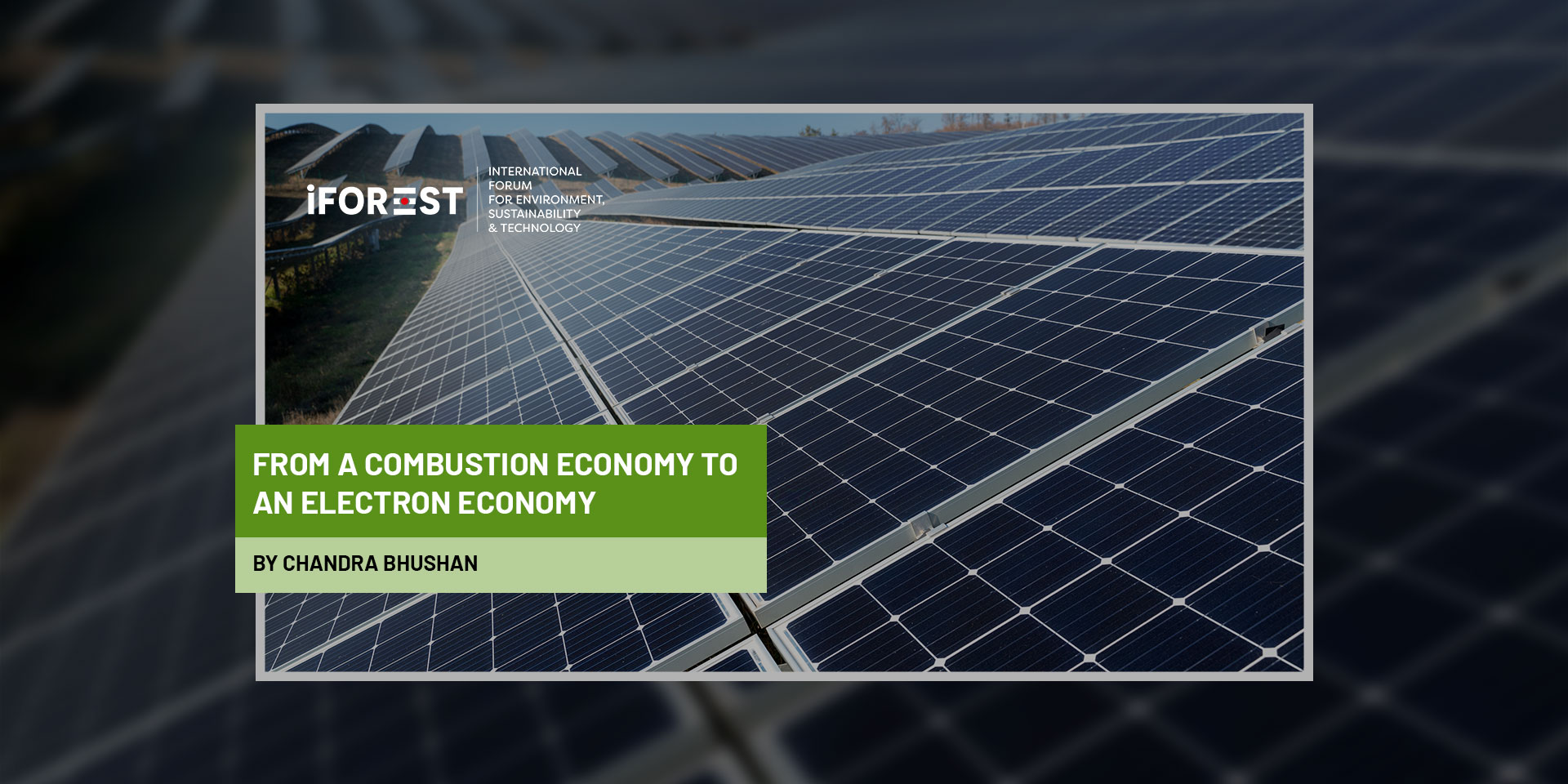
From A Combustion Economy To An Electron Economy

Humanity’s path to becoming the dominant species on earth has been in large part due to our ability to generate and control large amounts of energy beyond what our bodies can produce. The vast majority of this external energy that is used outside of our bodies – historically and even today – has been released through the act of combustion, specifically the burning of biomass, both fossilised as in the case of things like petroleum and coal as well as simply dehydrated as in the case of firewood, dung and so on. It is only in the last 150 years or so that we learnt to control a more efficient and flexible form of energy: electricity. However, even this electricity has been mostly generated through the process of combustion. In the age of man-made global warming, it is important to remember that each act of combustion releases air pollutants like particulate matter that harm our health and carbon or carbon equivalent emissions that contribute to the planet’s heating.

Currently, India’s ‘energy’ sector (cooking fuel, electricity, heat and transport) accounts for 75.6 per cent of carbon and carbon equivalent emissions.[1] These are the by-products of the combustion economy that currently powers our lives and economy. Importantly, this energy is largely imported, putting a question mark on India’s energy security. In 2024-25, 88.3 per cent of crude oil, [2]46.6 per cent of natural gas and 25.8 per cent of coal was imported.[3]  All this while, India’s per capita energy use is 1/10th of countries such as America and less than 1/4th of global average.

Clearly, we need to produce more energy domestically and do so more cleanly than we have managed thus far. If we intend to meet our commitment to being carbon neutral by 2070 and energy independent by 2047, while keeping our economy growing and citizens’ lives improving, we must transition from a combustion economy to an electron economy. We have here the chance to make huge gains by enhancing energy security, reducing pollution and health costs, improving the availability of and access to energy in general and electricity in particular, and mitigating the climate crisis.

The electron economy

In a combustion economy such as what we currently operate in, we use multiple sources and channels to meet our energy needs. We use electricity grids to light and condition our homes, gas pipelines or gas cylinders (or burn biomass) to cook food, gasoline pumps to power our vehicles and a combination of energy sources run our factories. In this economy, electricity plays a relatively minor role. For instance, currently only 21.6 per cent of all the energy consumed in India is in the form of electricity, the remaining 78.4 per cent is direct use of coal, oil, gas and biomass in our factories, vehicles and homes.[4]

In an electron economy, electricity is the prime mover and a majority of energy used is in the form of electricity – lighting, heating and cooling homes, cooking, transport and industry will all be powered by electricity rather than burning fossil fuels. The goal for such an economy is that eventually all electricity is generated directly by renewable sources rather than the much more inefficient combustion of fossil fuel that generates steam, which turns turbines and then produces electricity. This is the only way to reach net zero goal by the middle of the century. According to the Intergovernmental Panel on Climate Change (IPCC), to stay within the critical 1.5 degree Celsius (C) climactic threshold, 70-85 per cent of the world’s electricity must be supplied by renewables by the year 2050. Can India, which meets only 21.6 per cent of its energy requirement through electricity, and 78.4 per cent of this electricity is generated by burning fossil fuels, move to an electron economy by 2050?[5] In other words, how realistic is it for India, where non-fossil sources like renewables, hydropower and nuclear only provide  30.7 per cent of the energy supply, to meet a large majority of its energy needs through non-fossil electricity?[6]

Falling prices

In the past years (2014-15 to 2024-25), renewable power has grown at a compound annual growth rate (CAGR) of 11.0 per cent and has reached 50.0 per cent of the total installed capacity of the power sector.[7] The installed capacity of the non-fossil fuel sources, including renewables, hydro and nuclear, is now 51.6 per cent of the total.[8] There are reasons to believe that this trend would continue, and renewables will become the dominant source of energy in India.

The biggest challenge is that renewable sources of energy cannot be turned on and off the way a coal power plant can be in response to changes in demand. They are produced when conditions are favourable – sunlight and wind are strong and cannot be produced when, for instance, the dam reservoir is empty. Thus, the wholesale adoption of renewables is only viable if adequate energy storage systems are available to store the excess energy during production peaks and disburse it during periods when demand is higher than production. Fortunately for us the cost of renewables has been dropping rapidly in India over the last few years to the point where installing capacity for solar energy is already 35.5 per cent  cheaper than that of coal, historically the cheapest source of electricity.[9] The cost of Indian solar power is now more competitive than in any other nation of the Asia-Pacific; we must capitalise on this advantage. In addition, the cost of battery storage has fallen by 8 per cent year on year. Battery storage cost is projected to drop by 46.7 per cent in the next decade. The results of these cost reductions are already visible. The cost of round-the-clock (RTC) renewable energy has fallen to near US$50 per megawatt hour (MWh). The result: RTC is already competitive with new coal power plant in India.

The final piece of this puzzle is, green hydrogen, produced with renewable electricity,  which can be used for combustion as well as the transfer of electricity with no by-products but water. Its availability is crucial in order to decarbonise the hard-to-abate industries and heavy transport sector. The biggest impediment to its production till now was the high cost of renewable electricity. With falling renewable prices and government incentive programmes, green hydrogen is now becoming a reality. In 2023, the government allocated Rs.19,744 crore to the National Green Hydrogen Mission, targeting 5 Million Metric Tonnes (MMT) of annual capacity of green hydrogen by 2030. [10]

Infrastructure needs

While renewable-plus-storage is increasingly looking more economical than a coal-fired grid, the true benefits of a modern decarbonised electricity system lie in changing the nature of the grid. Renewables-plus-storage is more responsive to peaks in electricity demand than fossil fuel plants. However even where we have this system, the cost savings from this precision and responsiveness are not being fully rewarded by the current grid. To realise these benefits, we need smart grid solutions that allow real-time management of generation and transmission in response to demand.

India’s interest in such solutions has so far been motivated by the need to reduce energy theft and transmission losses. As a result, India has largely prioritised demand-side smart metering, with limited investment in power supply coordination. Investing in an overhaul of the grid not only lays ground for decarbonisation, it makes economic sense in the present. As part of its stimulus package after the 2008 financial crash, the US government invested US$ 3 billion in smart grids. The investment returned US$ 6.8 billion in economic benefits, including 50,000 new jobs and US$ 1 billion in additional government revenue. This is one of the highest ‘multiplier’ effects seen for any kind of government infrastructure investment.

In addition, the transformative potential of renewable-plus-storage is highest in areas, which are currently under-served by the electricity grid. While India has linked nearly all villages to the grid, the cost of grid electricity in many remote areas is often prohibitive. Solar-plus-storage mini-grids have potential to provide cheaper electricity in these remote areas than grid power. This is partly because renewables offer greater variation in scale, allowing them to be adapted to smaller markets. They can also be sited closer to communities, reducing transmission and access costs.

Investing in renewable-plus-storage mini-grids for these under-served communities will bring significant socio-economic returns. It will also drive innovation in the sector more broadly, further reducing the cost of modern power even in over-supplied electricity markets. Finally, it will reduce the emissions generated by burning biomass in these regions, and contribute significantly to the health of women in particular who suffer from inhaling cooking smoke.

Just transition for the coal sector

The more pressing challenge ahead is the phasing down of coal as there are communities and jobs dependent on it. This is why we need an ambitious ‘Just Transition’ policy, which directs investment and support systems into communities transitioning away from coal employment. Since these are often the communities who have been marginalised in India’s development story, just transition is not only a climate policy, but a long overdue economic course correction. If we combine a just transition policy with a clear phasedown schedule, India can be a healthier clean electricity economy by the middle of this century.

In summary, India needs to modernise toward an electron-based economy, and away from burning fuels for light and heat. The technological headwinds in favour of renewable electricity are unmistakable. We need to seize the opportunity to be at the cutting-edge of the coming transformation.

[1] INDIA_BUR-4

[2] Snapshot of India and Oil Gas data, December 2025

[3]Energy Statistics of India, 2025

[4]Energy Statistics of India 2025

[5]Energy Statistics of India, 2025

[6] ICED Dashboard, Niti Aayog

[7] MNRE

[8] MNRE

[9] Coal-to-Solar Generation Swaps for India

[10] National Green Hydrogen Mission


Odisha is creating green jobs faster than it is building skills

Without urgent reskilling, the energy transition risks leaving local workers behind

Walk into any ITI classroom in Angul or Jharsuguda and you will see young men and women training for an economy that no longer exists. Many still aspire to permanent jobs in government departments, thermal plants or large factories. Those jobs are quietly shrinking. The new ones are emerging elsewhere—in solar parks, battery plants, EV workshops, waste-processing units and green hydrogen hubs.

This is the silent churn in Odisha’s labour market. The state is already attracting large investments in renewable energy, electric mobility, green manufacturing and the circular economy. These projects will create thousands of jobs in the coming years. The real question is simple: will these jobs go to local youth?

To answer that, we must be clear about what green jobs actually mean for Odisha. These are not just office jobs in climate organisations. They include the technician installing solar plants, the fitter maintaining energy-efficient machinery, the mechanic repairing EVs, the worker handling batteries safely, and the small entrepreneur running a waste-reuse unit. These are frontline livelihoods—jobs that reduce pollution, save resources and build resilience, while anchoring local economies.

Our recent study shows that Odisha’s near-term green job pipeline is already sizeable. Between 2023 and 2025, ongoing and planned green projects are expected to generate close to one lakh jobs across manufacturing, construction, installation, operations and related services. Renewable energy alone, backed by the state’s solar targets, can create tens of thousands of stable jobs—if local workers are ready.

Looking ahead, green sectors can generate up to 10 lakh jobs by 2030 across 28 value chains, from renewable power and storage to green hydrogen, EVs, batteries, bioenergy and circular economy activities. With a solar target of 7.5 GW by 2030, this is not a marginal shift. It is a structural transformation of Odisha’s economy.

At the same time, the state remains anchored in coal, metals and other carbon-intensive industries. Lakhs of families depend on coal mining, thermal power and allied sectors. As cleaner energy expands, automation deepens and environmental pressures grow, many workers will face uncertainty. Districts such as Talcher, Ib Valley, Jharsuguda, Angul and Sundargarh sit at the edge of two futures: one of planned reskilling and new industries, and another of slow job loss, migration and economic decline.

This is the double challenge Odisha faces—protecting workers and communities tied to the fossil-fuel economy, while preparing its youth for emerging green and low-carbon jobs. This is what a just transition really means.

Odisha does have a wide skilling network: government and private ITIs, polytechnics and hundreds of training centres. Schemes like Sudakshya have increased women’s participation in technical education, and placement-linked programmes have improved outcomes in some trades. But green skilling remains peripheral.

Our survey of 571 students, 30 institutions, 33 employers and 110 workers in the solar and EV sectors reveals a worrying gap. Only 7% of students are enrolled in dedicated green courses. Nearly half are unaware such courses exist. Employers consistently report that recruits lack hands-on exposure, safety training and familiarity with modern tools.

The timing of this gap is particularly dangerous. Between 2023 and 2025 alone, Odisha’s green investment pipeline is expected to generate nearly 98,000 new jobs. Yet under PMKVY 4.0, only 1,778 candidates were trained in green roles across seven districts in 2024–25. This is not a small mismatch. It is a structural breakdown between jobs and skills.

In simple terms, the jobs are arriving faster than workers are being prepared.

Other weaknesses compound the problem. Trainers often lack exposure to new technologies. Labs and workshops are outdated. Coordination across departments—industry, energy, MSMEs, labour and education—is weak. Women’s participation is rising overall, but remains low in fast-growing green sectors such as renewable energy, EVs and green manufacturing.

The consequences are visible. When green industries cannot find job-ready local workers, they hire from outside. Local youth migrate for low-paid work. Industrial districts attract investment but not employment. Growth happens, but it passes people by.

Then there is the invisible workforce—transport workers, loaders, service mechanics, MSME suppliers and informal technicians who support every solar park or EV plant. Most lack certification, social security or access to retraining. If they fall out of the old economy without a bridge into the new one, Odisha will not see a green transition. It will face a social shock.

So what must Odisha do—now and at scale?

First, every large green project must be legally linked to local training. Developers should partner with nearby ITIs, co-train workers before commissioning, and certify skills jointly with the state.

Second, the state must urgently build a supervisory and safety workforce. Short, targeted upskilling can convert existing electricians and mechanics into higher-responsibility roles.

Third, wage insecurity must be addressed. Temporary wage-linked skilling incentives tied to certified green jobs can stabilise the workforce pipeline.

Fourth, awareness must start early. Statewide green career-orientation drives across schools, ITIs and polytechnics can reshape aspirations.

Finally, Odisha needs a live Green Jobs–Skills Dashboard to track investments, training and placements in real time.

Odisha stands at a decisive moment. Green capital is arriving. If the state moves with speed and intent, this transition can deliver local jobs, revived coal districts and dignified work close to home.

If it hesitates, the factories will still come.
Only the workers will not.

The choice is ours.

(Suhail Mir is Programme Lead – Clean Energy at iFOREST)

From Coal Capital to Green Corridor: Dhanbad’s Next Chapter

India’s energy economy is undergoing a transformative shift, balancing its coal-heavy legacy with a growing push toward  renewables. The country’s energy transition reflects both ambition and complexity. In Dhanbad, the “Coal Capital of India,”  mines still fuel industries and livelihoods, even as their environmental costs mount. Nearby, the Damodar Valley  alongside Bokaro, Ramgarh, and Hazaribagh stands as a symbol of early industrial energy development, now evolving to embrace cleaner, sustainable pathways for India’s future growth.

The district contributes over a quarter of Jharkhand’s coal capacity, or 69.5 million tonnes per year. In 2023–24, its 48 operational mines produced 41 million tonnes, almost all from opencast pits. But this dominance is nearing its end. By 2030, two-thirds of mines will shut. Within 25 years, every single mine will face exhaustion or unprofitability. Already, 39 stand abandoned and 10 are closed. Without planning, Dhanbad could soon be left with a landscape of derelict mines and shattered livelihoods.

The stakes are immense. Industry, including mining, manufacturing, electricity and gas, makes up 59 percent of Dhanbad’s economy. A coal-fired power plant, washeries, coke ovens, and countless transport and informal coal activities depend on this resource. Nearly 1.4 lakh workers rely directly on the ecosystem, most informally employed and vulnerable. When half the mines close in just five years, tens of thousands of families risk sudden income loss.

Coal revenues, which currently fund development, are also at risk. Dhanbad has built up ₹3,851 crore in District Mineral Foundation (DMF) funds, used for water supply, healthcare, and education. But as mining declines, inflows will shrink, leaving communities exposed to both economic and social shocks.

Yet within this looming crisis lies opportunity. As mines shut, land will be freed up for redevelopment. Over 27,000 hectares of barren land and at least 6,000 hectares of mining land will become available in the next five years, rising to nearly 10,000 hectares by 2050. Repurposed, these lands can host renewable energy parks, green industries, and agro-forestry enterprises that generate sustainable jobs.

The potential is striking. The Dhanbad Bokaro Ramgarh (DBR) region holds 13.5 GW of solar potential, three times Jharkhand’s 2027 target. This includes ground-mounted, rooftop, and floating solar, with coal belts such as Jharia, Nirsa, Mandu and Chas particularly suited for repurposing. Large reservoirs such as Tenughat, Maithon, and Panchet can support floating solar as well as green hydrogen projects. Combined with existing steel and chemical industries, the DBR belt could pioneer low-carbon steel, green fertilizers, and clean fuels, positioning Jharkhand at the forefront of India’s green industrial revolution.

But transition is not only about industry. It is fundamentally about people. Dhanbad’s workforce is ageing, contractualisation is rising, and 70 percent of workers are informal. Reskilling and social protection must be urgent priorities. Institutions like IIT-ISM and local ITIs can lead training and apprenticeship programs, supported by CSR and private industry. Social infrastructure must also improve. Today, 72 percent of households still cook with coal, burning 40 to 50 kilograms a month. This exposes women and children to serious respiratory diseases. Expanding LPG, PNG, biogas, and electric cooking will transform both health outcomes and gender equity.

A just transition will also require new thinking on institutions and governance. Fragmented efforts will not suffice. Dhanbad’s future is linked to its neighbours. Together, Dhanbad, Bokaro, and Ramgarh hold over 80,000 hectares of barren land and 16,000 hectares of mine land that will be freed up over the next 25 years. With strong connectivity via highways, railways, and upcoming expressways, the DBR belt is well placed to emerge as Jharkhand’s green industrial corridor.

To make this possible, Jharkhand needs a bold state-led approach: a Just Transition Policy to guide economic diversification, skilling, and land repurposing; an integrated DBR Green Growth Plan; and a strong governance mechanism, such as a regional Damodar Valley Transition Authority to coordinate projects across districts. DMF rules should also be revised to allow greater investment in transition priorities such as reskilling, renewable energy, and clean cooking.

The lessons from Dhanbad will resonate far beyond Jharkhand. As India marches toward its net-zero target by 2070, renewable energy will dominate the power mix. But the social and economic costs of phasing down coal must be carefully managed. Dhanbad was built on coal. It can now help build India’s clean energy future if action is swift, inclusive, and forward-looking.

The window is narrow, but the rewards are generational: a stronger economy, cleaner air, healthier communities, and a blueprint for just transition in every coal region of India.

Devrupa Paul is a Programme Lead – Just Transition and Climate at iFOREST.


Who gets to stay cool as India heats up?

On a sweltering afternoon in a dense neighbourhood, a family sits huddled under the monotonous whirl of a worn-out ceiling fan, its blades failing to push away the stifling heat. Just a few blocks away, in a gated community, cool air flows steadily and quietly from highly efficient air-conditioners, keeping the heat firmly outside. 

This is the story of cooling in India. This picture with stark contrast, reflects who gets access to innovation — and who gets left behind. Wealth and awareness allow some to build homes that blend aesthetics with thermal efficiency. They can afford designers who know how to angle windows for cross-ventilation, choose insulation wisely, and layer materials to reflect heat while using energy efficiently. On the other hand, dense informal settlements continue to struggle under corrugated tin or asbestos roofs that trap heat, with roof surfaces often touching 60°C and indoor temperatures going upto 45°C during summer afternoons. Such homes with little insulation and poor ventilation can become unbearable heat traps in Indian cities. 

The rising urban heat in Indian cities is no longer surprising. Summers extend longer, monsoons bring thick humidity, and nights remain stubbornly warm. Yet, millions still lack real solutions. Less than 10% of Indian households own air conditioners, leaving over one billion people susceptible to increasingly frequent and intense heatwaves. They rely on patchwork coping mechanisms like fans and air coolers. In contrast, those with means enjoy homes designed around comfort and efficiency as a standard. 

Thermal efficiency of our built environment 

Currently, building regulations like the Energy Conservation & Sustainable Building Code (ECSBC) and the guidelines under Eco-Niwas Samhita (ENS) exclude most small-plot or informal housing simply because they technically fall below the compliance threshold, compounding the challenge faced by tenants of small homes and packed settlements. Instead, they’re offered band-aid solutions like periodic applications of reflective roof paint with a mere four-year lifespan, or the promise of midday cooling shelters they might only access during extreme days and only if the shelter is within proximity or along their route. These aren’t safety nets; they are reminders of how little priority is placed on ‘thermal comfort for all’. 

Architects and engineers trained in building energy performance also tend to serve the affluent segments. There is little mainstream advocacy or financial incentive for integrating passive cooling into affordable housing projects. Homes in poorer neighborhoods often suffer from their heat retention characteristics, like dark, flat roofs that bake all afternoon, narrow roads trapping hot air, and dense layouts that cut out breeze entirely. 

ECSBC and ENS, though progressive on paper, struggle with enforcement. Municipal authorities lack the technical capacity or political will to ensure compliance, especially in government-sponsored affordable housing units. As a result, thermal efficiency remains aspirational and not systemic. The real victims are the economically weaker sections, amid rising temperatures. 

Temporary solutions not only underscore this imbalance but also highlight the poor aspirations we have set to achieve thermal equity. Providing low-income communities with a coat of reflective paint on their roofs or a few hours of air-conditioning in a city-run cooling shelter might give them some respite. However, these gestures alone don’t solve long-term problems. 

There is a need to expand aspirations and integrate thermal comfort and passive cooling into affordable housing projects. Achieving thermal equity requires widening the scope of building codes like ECSBC and ENS to include smaller plots.  

Notably, the ENS acknowledges that states and local bodies must adapt compliance criteria to local conditions, whether it is based on a minimum connected load or plot area. We require clear, contextual, achievable standards that elevate thermal comfort for all, and not just for large-scale or high-income developments. In 2024, the minimum plot area threshold for ENS compliance was raised from 500 m2 to 3,000 m2, pushing a growing number of housing developments outside the regulatory bracket. 

What needs attention on the policy front? 

  • States and local bodies must set compliance criteria suited to local growth patterns. They should assess real estate trends before fixing thresholds for connected load or plot area, ensuring that most buildings fall under the regulatory ambit.  
  • As per iFOREST’s  IHCAP report, an analysis of Bhubaneswar city’s building approval data of 2023, none of the newly approved residential projects were qualified for compliance under the ENS 2024 criterion of 3000> the ENS 2024 criterion of ≥ 3,000 m². When the ≥ 500 m² threshold was applied, only 1.4% of the city’s new housing stock qualified for compliance, leaving out almost all 
  • For informal settlements, new and achievable standards must be developed, focusing on passive cooling strategies and minimum thermal comfort benchmarks. These should be simple, incremental, and adaptable to local building practices. 
  • Building thermal performance shall be mandated for government housing programmes like the Pradhan Mantri Awas Yojana (PMAY), where the focus has largely been on unit delivery and cost efficiency. Integrating retrofit programmes, subsidised passive upgrades, and technical assistance into such schemes would ensure that thermal comfort becomes a core consideration in affordable housing and slum redevelopment.  
  • Importantly, the PMAY framework already embodies one of the building blocks needed – the Technology Innovation Grant (TIG). Currently designed to support new construction technologies, TIG must also extend explicitly to innovations that improve the thermal efficiency of buildings for low-income groups. 

Energy efficiency of our space cooling systems

While energy-efficient cooling appliances have begun entering the market, their benefits tend to trickle upward. High-efficiency fans, inverter split ACs, and variable refrigerant flow (VRF) systems remain financially inaccessible for most. On the policy end, the story isn’t better. The BEE (Bureau of Energy Efficiency) star-rating program supports efficient appliances; however, many can’t afford the premium. 

Financially, parity demands that efficient technology be affordable. Municipalities and state agencies can enable bulk procurement through agencies like EESL or facilitate access to energy-efficient appliances via collective procurement and financing schemes. Low-interest loans tied to energy savings or pay-as-you-save models can further improve affordability, making efficient cooling accessible even to those living on the margins. If efficiency is only meant for those who can afford better, it becomes a luxury. 

The government can also play a catalytic role in promoting centralised cooling systems. It can identify high-density zones suitable for district cooling, integrate such systems into city master plans, and streamline approvals for pilot projects. Policy support—such as viability gap funding, concessional power tariffs, and public-private partnerships—can help attract private investment. Developing model contracts and technical guidelines at the national level would further reduce risks and enable cities to adopt centralised cooling with confidence. 

It is crucial to prioritise thermally efficient buildings before focusing on energy-efficient appliances. Reducing the demand for cooling by enhancing thermal comfort in homes and offices will make the subsequent use of energy-efficient appliances more effective and manageable. Although this approach may be more challenging initially, it addresses the root cause by lowering space cooling requirements, leading to a sustainable and impactful reform in energy usage. 

Cooling framework that builds in equity  

In September, iFOREST released India’s first city-level Integrated Heat and Cooling Action Plan (IHCAP) tailored for Bhubaneswar to address rising heat stress and cooling demand in an integrated manner. 

Developed in collaboration with the Singapore-ETH Centre (SEC), the IHCAP provides a comprehensive roadmap to tackle the growing challenge of increasing temperatures and humidity, the Urban Heat Island (UHI) effect, and rapidly rising demand for cooling.  

It offers five pillars that hold equity at the heart of it: 

  • Cool the City: Expand urban greening in all wards to meet WHO’s benchmark of 9 m² per person; implement citywide cool roof programmes; restore water bodies; promote green roads, pavements, and undertake traffic decongestion. 
  • Cool Buildings: Revise and implement Odisha Energy Conservation Building Codes for all commercial and institutional buildings over 500 m²; adopt Eco-Niwas Samhita 2024 for residential plots above 225 m². 
  • Sustainable Cooling for All: Roll out white roof programmes in slums; provide incentives for super-efficient fans and 5-star ACs; pilot district cooling systems in commercial and institutional zones. 
  • Enhance Heat Resilience: Strengthen electricity, water, and health infrastructure; establish cooling shelters and shaded, ventilated bus stops. 
  • Adapt to Heat: Revise heat thresholds to include humidity and night-time conditions; introduce spatial heat-risk mapping; pilot parametric insurance for vulnerable workers. 


Conclusion 

Recognising cooling as an essential service is urgent. In a warming world, thermal comfort is no longer optional. It intersects with health, education, and productivity. Children studying in overheated homes, patients recovering in stifling wards, and workers struggling through humid shifts are all casualties of heat that could have been mitigated by design, policy, and care. 

Imagine a future where every corner of our city, regardless of postal code, has homes that breathe, that reflect, that stay cool without guzzling energy. Thermal comfort must not be a reward of wealth but the foundation of our built environment. This isn’t idealism, it’s equity.

Technology does not trickle down by chance. It must trickle down by choice. And it must be the collective choice of policymakers, planners, markets, and citizens to decide whether access to cooling and thermal comfort is a marker of progress or a yardstick of privilege.

Shree Nidhi Gowthaman is a Senior Research Associate at iFOREST.

Electric trucks are coming, but are we ready for the shift? 

The trucking industry is the backbone of India’s economy, transporting over 70% of the country’s freight. But as India pushes toward cleaner mobility, the sector is at a turning point. While electric two-wheelers, three-wheelers, passenger cars, and light commercial vehicles are making inroads, electrifying medium and heavy-duty vehicles (MHDVs) presents a different challenge. These trucks cover long distances, carry heavy loads, and require a well-developed charging and servicing ecosystem—infrastructure that is still in its early stages.

Beyond infrastructure and technology, another critical question looms: How will the shift to electric freight vehicles (EFVs) impact the workforce? A transition of this scale doesn’t just affect vehicles; it affects people—drivers, mechanics, fleet operators, and thousands of workers in manufacturing and logistics.

To gain deeper insight into the workforce impact, iFOREST conducted research with over 400 stakeholders across India, including truck drivers, fleet operators, repair and maintenance workers, automotive component manufacturers (ACMs), and electric truck OEMs. Our work in the medium and heavy-duty freight segment extends our ongoing efforts toward a Just Transition in the automobile sector. Here, we highlight key challenges in ensuring that workers—especially those in informal roles—are not left behind in the shift to greener technology.

The freight industry in India remains highly informal across its entire value chain. Our analysis indicates that in the manufacturing sector, 30% of smaller and medium-sized ACMs, which constitute the majority of enterprises, will need to adapt to changing demand as engine assemblies, transmissions, exhaust systems, and radiator systems become less relevant. Additionally, the survey reveals that informal repair and maintenance technicians, who rely on generational knowledge, have a significant opportunity to transition into high-value EV servicing roles, provided they receive adequate skilling support. Similarly, in the end-of-life stage, battery recycling and sustainable disposal practices will open new avenues of employment for scrapping and recycling workers.

Ensuring a just and inclusive transition is essential to protect thousands of workers from getting impacted. A Just Transition is not just about moving to cleaner technology but about ensuring that workers dependent on traditional industries are not abandoned in the process.

The skilling gap: Who gets left behind?

This transition will erase some jobs (engine and transmission technicians), transform others through reskilling, and create entirely new roles (EV charging operators and high-voltage specialists). But with the sector’s deep informality, the question remains: Who will take responsibility for reskilling a workforce that doesn’t even exist on formal records? Without intervention, thousands risk losing their livelihoods simply due to a lack of relevant skills.

Our study shows that the traditional ICE medium and heavy-duty vehicle (MHDV) sector currently supports around 529 distinct job roles across manufacturing, service and repair, dealership, transport logistics and warehouse management, and end-of-life management. As diesel trucks are phased out, 64 roles will evolve or merge into new positions, and 93 will require structured reskilling. For instance, diesel mechanics can become EV powertrain specialists, and fuel station attendants can transition into charging station operators. The transition won’t just replace jobs; it will also create 71 entirely new roles, from battery recycling specialists to high-voltage system technicians—expanding the total job pool to 536. The biggest shake-up will hit manufacturing, where engine assembly jobs disappear in favor of EV powertrain and battery integration. Repair and logistics workers must adapt to software-driven diagnostics and digital fleet management, while end-of-life management will demand expertise in battery recycling and hazardous waste handling.

The problem isn’t just that old jobs are disappearing—it’s that new jobs require a higher skill level.

A closer examination of the National Skills Qualification Framework (NSQF) levels shows that emerging job roles require higher NSQF levels, whereas many obsolete jobs fall within lower NSQF levels. Workers who relied on hands-on experience now need formal education and certifications—resources they often lack.  Another major roadblock is that most skilling programs require basic education, excluding many informal workers despite their industry expertise. They cannot enroll in training courses that would help them move into new jobs. Without targeted interventions, these workers risk being left behind, widening inequalities in the evolving job market.

Leaving no one behind

During my research, a Noida-based truck driver working for IX Energy Pvt Ltd., a technology company building electric transport solutions, said, “I drove a diesel truck for 10 years, trained by my ustaad. When my boss bought an electric truck, I had no choice but to learn. After just a week of in-house training, I was driving comfortably. Since my job now requires advanced operations like digital literacy diagnosing issues is easier than before. My pay went up from ₹ 20,000 to ₹ 32,000 plus benefits”.

Skilling is not just about preserving jobs—it’s key to ensuring electrification meets its sustainability goals. Meenu Sarawgi, Executive Vice President & Chief at ASDC, pointed out, “Even for diesel trucks, skilling courses are almost non-existent—people assume learning on the job is enough. Poor training harms vehicle efficiency. As electrification brings new opportunities, we must do it right from the start. Training workers in EV technology is the only way to achieve the efficiency these vehicles promise.”

A Just Transition is not a choice; it is a necessity. If structured skilling programs are not implemented, the very people who have kept India’s freight sector running for decades risk being left behind. The responsibility lies with OEMs, policymakers, and industry leaders to ensure this transition prioritizes people, not just technology. If done right, electrification can open new doors while protecting livelihoods—but without action, it could deepen inequalities rather than bridge them.

The road ahead is electric, but it must also be just.

This study was undertaken in collaboration with C40 Cities and The Climate Pledge as part of the Laneshift programme.


Samreen Dhingra is a senior research associate at iFOREST


Social media & sharing icons powered by UltimatelySocial