

Why India is gaining trees and losing forests

How to read biennial forest surveys? The best way is decadal data produced by same methods

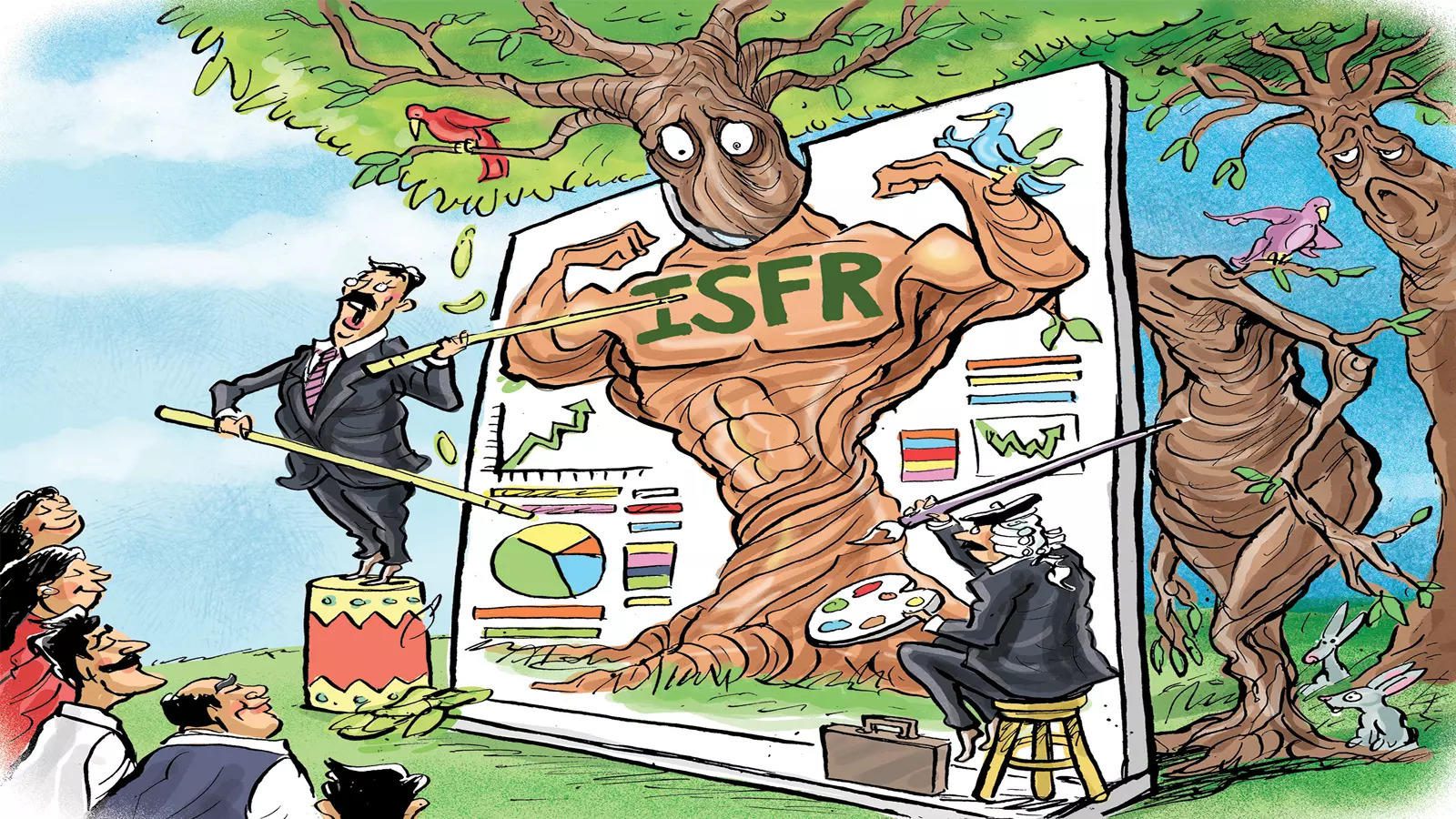
India State of Forest Reports (ISFRs) are published every two years. And, every ISFR shows an increase in the forest cover compared to the previous one. ISFR 2021, released last week, too shows an increase of 1,540 sq kms of forest area – an area slightly more than that of Delhi – compared to ISFR 2019.

But is this biennial good news the correct way to assess the state of our forests? Can we evaluate the health of our forest, and how government policies have affected it, in such a short time? The answer is no. We need at least a decade to judge whether forests have improved or deteriorated. So instead of getting into the quagmire of biannual assessment, let’s check how India’s forest has fared on a decadal scale.

ISFRs, despite their many shortcomings, contain a vast amount of data on growing stocks (the total volume of all trees), carbon stock (total amount of carbon stored in the forest), forest cover etc. Though all data is not available for all years, there is enough to enable a coherent analysis of the health of our forests. But before we make any comparison, it is necessary to understand the technology used for the forest assessment and its implications on numbers.

The assessment of forests is done using satellites along with ground-truthing. Over time, satellite technology has improved vastly, and so has the technology to produce ISFRs. Since 2001, high-resolution satellite data and digital interpretation have been used for ISFRs. This technology is so sophisticated that it can capture tree cover on even 1 hectare of land.

Before 2001, the satellites had lower resolution and could catch tree cover only on a large piece of land. So, to get a correct picture of the state of the forest, the comparison should only be made with data generated by similar technology. Fortunately, we have comparable data for the past two decades, viz, ISFR 2001 onwards, to make a decadal-scale assessment.

Forest cover: ISFR 2021 recorded the total forest cover in the country as 7,13,789 sq kms, ie, 21.71% of the country’s geographical area. Out of this, dense forests (considered as good forest) are 4,06,669 sq kms and open forests (deemed to be degraded forests) 3,07,120 sq kms. In comparison, ISFR 2001 recorded the total forest cover as 6,75,538 sq kms, ie, 19.5% of the geographical area. An area of 4,16,809 sq kms had dense forest cover, and 2,58,729 sq kms was open forests.

In the last 20 years, therefore, the country’s forest cover has increased by 38,251 sq kms – an area equal to the size of Kerala. But, during this period, dense forests have reduced by 10,140 sq kms (similar to the area of Tripura), and open forests have increased by 48,391 sq kms (equal to the size of Punjab). So, while the total forest cover has grown, they have increased mainly in the degraded forest category; good quality forests have reduced.

Recorded forest area: RFA are lands recorded as forests in government records and are managed by the forest departments. ISFRs have data on forest cover inside RFA and outside since 2011, and it reveals the following:

  • RFA in the country is 7,75,288 sq kms or 23.58% of the country’s geographical area. But the forest cover exists only on 5,16,630 sq kms. That is, only two-thirds of the forest area under government control have forests on them. There is little data on what exists on the remaining one-third – an area equal to the size of UP
  • In the last 10 years, forest cover inside RFA has reduced by 14,071 sq kms, while it has increased by 35,779 sq kms outside. So, forest cover is expanding on private land (mainly as plantation) and decreasing in forests managed by the government

Volume of all trees: Growing stocks in forests have reduced from 4,781.4 million cubic metres (cu-m) in 2003 to 4,388.15 million cu-m in 2021 – a decline of 8% in the last two decades. This indicates a significant degradation of the forest.

Overall, contrary to the impression given by the ISFRs, it is pretty clear that the health of our forests has declined significantly in the last two decades. The increase in forest cover shown in subsequent ISFRs is mainly due to the growth in plantations on private land. Forest areas, on the other hand, have lost large tracts of rich biodiverse forests and have experienced significant degradation. All in all, there is little to cheer about India’s forests.

The question then is, how do we restore our degraded forests, preserve biodiversity and wildlife, meet the livelihood demands of 300 million people living in and around forests and fulfil our pledge to mitigate climate change?

It is clear that the current forest administration, which the British created to exploit forest resources, cannot solve the myriad of challenges facing our forests. Most researchers are now convinced that India needs an entirely new paradigm of forest management in which forest-dependent communities will have a significant role in forest management, with the forest department as a facilitator and enabler.

There is enough evidence to show that such a shift has yielded impressive results in many countries. Currently, over 500 million hectares of forests in the world (1.5 times India’s area) are under some form of community control.

Forest departments in these countries have reversed their roles from being owners and regulators of forests to becoming facilitators in community-managed forests. Our forest administration, too, will have to shed its colonial hangover to enable India’s forests to flourish.

The writer is CEO of the International Forum for Environment, Sustainability and Technology (iFOREST)

Good COP, bad COP

Glasgow wasn’t a washout. But on coal, India gained little & let China get away.

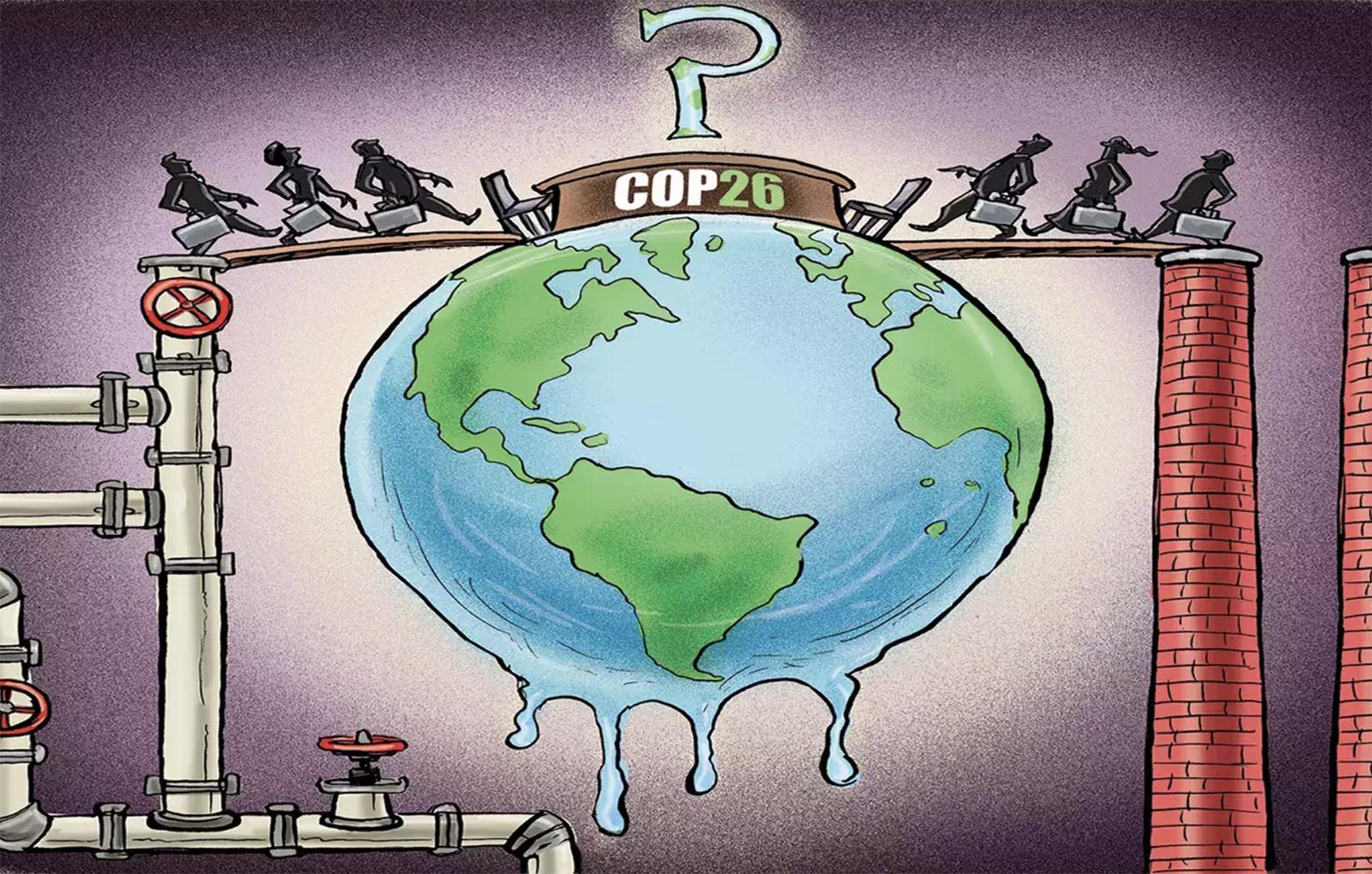
Climate change conferences follow a pattern: They never end on time; they make incremental progress, and there is always a last-minute drama that captures the headlines, drowning the overall assessment of the meeting. COP26 in Glasgow followed the pattern to a tee, though with a little more drama than some of the previous meetings.

Over the next few days, we will read headlines (mainly from Western media) screaming murder on how India weakened the outcome of COP26 by forcing a last-minute amendment that diluted the language on ending coal power. We will also read headlines from India defending this amendment. But in these headlines, consequential decisions made by this COP would be lost. First, though, let’s look at the coal controversy.
In the conference’s closing minutes, a dramatic process to change one paragraph of the final text unfolded, which was started by China, ended by India and decried by many countries. The paragraph relates to the phasing out of coal power. In the final version of the text, “phase-out” of coal power was mentioned.

China was the first to ‘mildly’ object to this paragraph. Then India proposed a new version of the paragraph that replaced “phase-out” with “phase-down” to describe what needs to happen to coal use in power generation. While India’s proposal was accepted, several countries, mainly Europeans and small vulnerable countries, objected to this change, including how it was done. Though the change in the word itself is a non-issue, how India got this done is certainly something that needs introspection.

Phase-down means progressively reducing the use of coal, whereas phase-out means altogether eliminating its use over a period of time. Thus, a country will have to first phase down its coal use and ultimately phase it out. So, phase-out is the end of phase-down. By changing the word to phase-down, India accepted that coal power must be reduced but did not agree to completely end it.

Now, this differentiation would be significant if there was a deadline to do so. But nowhere in the text is a timeline mentioned. In fact, Germany, the poster child of coal phase-out, is planning to end coal power by 2038 – two decades in the future. So, this fight over phase-out and phase-down is immaterial without a deadline, at least for this decade. And, the way renewable plus storage technology is developing, it is inevitable that India will not instal new coal power post-2030.

So, the question is what India gained by forcing this change? In my view, the answer is nothing. This change has no material bearing on India’s energy future or its development trajectory. However, by projecting itself as a coal champion and forcing the modification at the last moment, India’s image has undoubtedly taken a hit.

What is even more galling is that China, which consumes 50% of the world’s coal and had initiated the demand to change the paragraph, sat pretty while we exposed ourselves to the scorn of Western media. And, this has been the problem of India’s negotiating strategy at climate meets. We pick up fights where there is none.

At COP26, we should have exposed the double standards of developed countries on oil and gas, and fought for the finance and technology needed to meet the ambitious target announced by Prime Minister Narendra Modi at the beginning of the conference. But we did little of these and wasted our energy on issues that are good for rabble-rousing. India has to decide what it wants. I am not sure that we have really thought through the end game.
Coming back to the decisions taken at COP, it is clear that many of them will shape how the world will develop in the future.

  • First, there is a tacit acceptance that the temperature goal must be 1.5°C and not between 1.5°C and 2.0°C as per the Paris Agreement. This is good for India’s poor, who will be most hit by higher temperatures.
  • Second, all the major economies have now announced a net-zero target. If all the net-zero commitments are met, we are on course to limit warming to 1.8°C-1.9°C. This means that we must now devise processes and mechanisms to hold countries accountable for their net-zero pledges.
  • Third, the rulebook of the Paris Agreement has been wrapped-up. After six years of haggling, a deal was finally struck on the market mechanism rules. These rules are stricter than the previous one and will allow countries like India to gain by selling carbon credits and bringing new technologies.
  • Fourth, while developed countries have wriggled out of making any future commitment on climate finance, there are enough provisions in the final decision to hold them accountable for delivering $100 billion in the near term and developing a road map for enhanced long-term climate finance.
  • Fifth, both adaptation and loss and damage have received much more attention than before. As a result, developed countries have agreed to double the adaptation finance and were forced to start a dialogue process for financing loss and damage.
  • Finally, the need to ensure just transitions while phasing down fossil fuels has received due recognition in the final decision. Accordingly, the decision includes providing finance and technology support to developing countries for the just transition.

Overall, while the Glasgow climate conference has not delivered everything, it has provided enough to keep the hope alive for meeting the 1.5°C climate goal. As far as India is concerned, it has decided to decarbonise its economy and pursue green development by announcing a net-zero target for 2070 and an ambitious 2030 target. We must now develop a negotiating strategy to facilitate and get financial and technological support for these targets.

The writer is CEO, International Forum for Environment, Sustainability and Technology (iFOREST)

How India can meet its Glasgow promise: From reforming discoms to recruiting skilled energy managers, the list of reforms is formidable

From reforming discoms to recruiting skilled energy managers, the list of reforms is formidable.

On the first day of the Glasgow climate conference – COP26 – the biggest announcement came from India. Ending speculations on whether India ‘will’ or ‘can’ make a net-zero pledge, Prime Minister Narendra Modi announced that the country will reach net-zero emissions by 2070. He also announced four major nearer-term targets exhibiting India’s will and ambition on climate action.

The targets, all of which are to be met by 2030, include an installed renewable energy capacity of 500 GW (up from 450 GW target); meeting 50% of the electricity requirement through renewable sources; reducing total projected cumulative carbon emissions by 1 billion tonnes between 2020 and 2030; and reducing the carbon intensity of GDP by 45% from 2005 levels (up from the 33-35% target).

So how ambitious are these new targets?
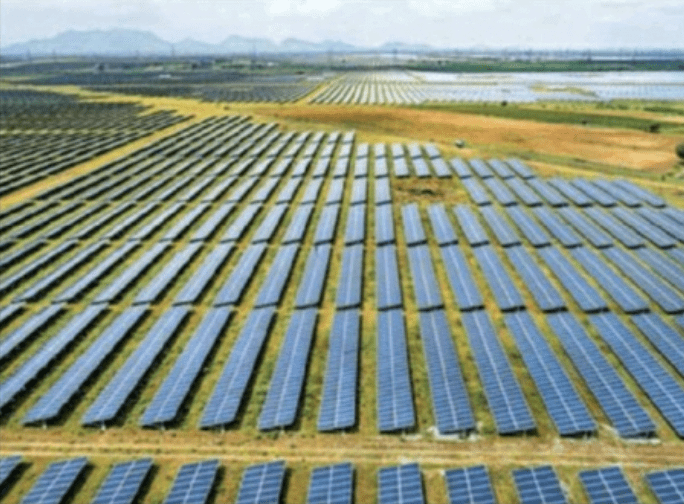
India’s renewable energy targets mean that coal power will peak before 2030, when about 70% of India’s electricity installations will be renewable-based, battery and smart grid will dominate the market. This would be one of the most rapid decarbonisations of electricity sector anywhere in the world.
India’s net-zero target is equally ambitious, but few more details are required to understand what it means. There is confusion on whether the target is for all greenhouse gases (GHGs) or only for carbon dioxide (CO 2). If it is for all GHGs, then India’s target is compliant with 1.5°C warming. If it is only for CO 2, it is 2.0°C compliant. However, even if only for CO 2, it is still a strong signal to decarbonise the economy. As zero-carbon technologies become more accessible, India will update this target to attract massive global investments.

What domestic reforms do they demand?
In nutshell, these announcements have put India in a leadership role on climate mitigation action. The question now is, what are some of the major steps that must be taken domestically to steer the course of action in the coming years? There are three ‘make or break’ factors for realising India’s ambitious targets.

  • Firstly, if 500 GW of power-generation capacity must be achieved, India must create an enabling environment for attracting global investments. Reforming the distribution companies (discoms) is most important to create that environment.
  • Secondly, for meeting 50% of electricity supply through renewables, India’s grid infrastructure will have to be strengthened and battery storage capacity will have to be massively increased. Investing in smart grid and battery infrastructure is crucial for this.
  • Third, a huge skilled workforce will be required to run the new electricity infrastructure. This means investments must start in reskilling of existing and skilling of new workforce to meet the future requirements.
  • Finally, all of these changes in the energy and industrial systems must be paralleled by a plan of just transition, to ensure that we do not carry forward the legacy of unequal development challenges of the coal era, into the new era of renewable energy and a greener economy.

In fact, while energy transition has been a hot topic on the policy and business front, just transition has not got the due attention. However, as coal power will peak before 2030, it is time for India to start policy deliberations, develop plans for, and consider investing in it. And this is why it is crucial.

Could renewables mean unequal development?
India’s energy geography will change because of massive investments in renewables. Today’s coal-producing states will not be renewable superpowers. The renewable energy will be generated in western and southern states.
Therefore, as the share of non-fossil fuel energy grows, the coal regions can spiral into a poverty trap, which many of the districts here are already saddled with. There can also be huge social instability triggered by job losses and uncertainty of income opportunities. An estimated 20 million plus workers will be impacted countrywide by the transition. In fact, the disproportionately high number of informal workers in our key economic sectors such as coal mining, transportation, steel, cement etc adds to the challenge. But all this can be avoided through a well-planned and well-managed just transition over the next decades.
Planning a ‘just’ energy transition will be a smart move by the government to further a development agenda that benefits all. We have the next 30 years to complete the transition, but the process must start now.

The writer is Director, India Just Transition Centre, International Forum for Environment, Sustainability & Technology (iFOREST)

COP26: Let us move from climate crisis to climate collaboration

Glasgow will not solve the climate crisis but it can fast-track global climate collaboration.

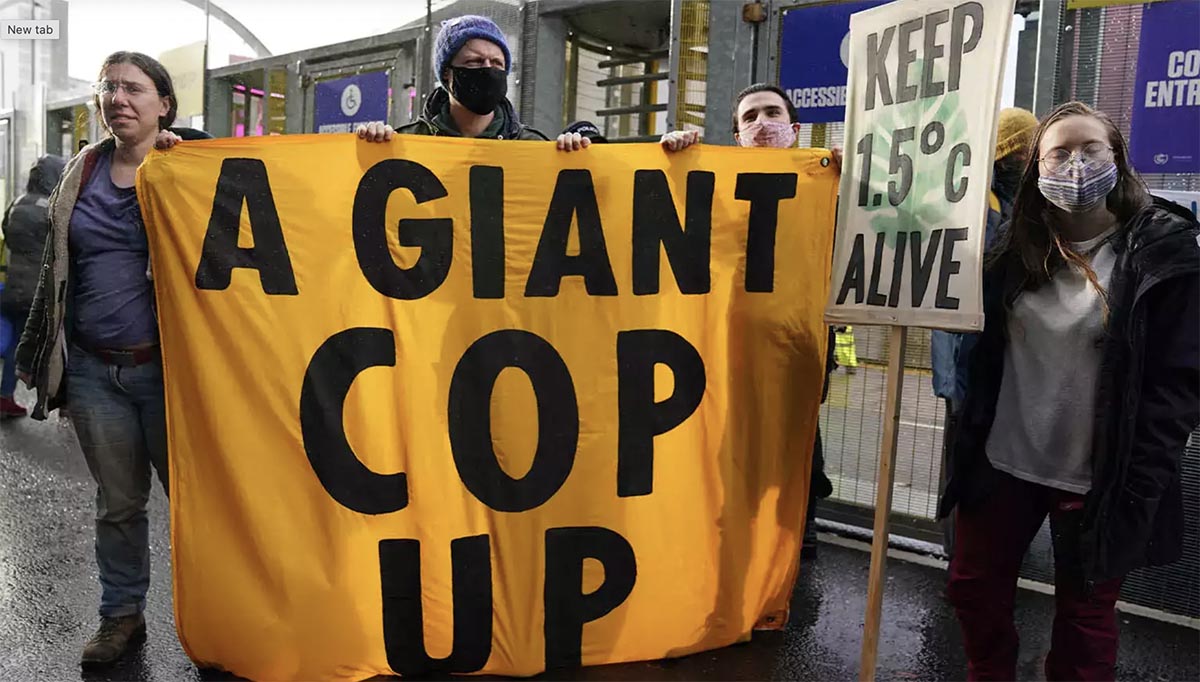
A great hype has been created around the 26th Conference of Parties (COP26) at Glasgow. John Kerry, the US climate czar, has called this meeting the world’s “last best chance” to avoid climate hara-kiri. Similar sentiment has been expressed by UN Secretary-General Antonio Guterres. More than 100 world leaders will attend this climate gala, including Prime Minister Narendra Modi and President Joe Biden.

This is not the first time such hype has been created around climate summits. I can list at least three (two of which I attended) – Kyoto in 1997, Copenhagen in 2009 and Paris in 2015 – where the noise was deafening, but the outcome was muted. Unfortunately, Glasgow COP is heading in the same direction.

Over the last few months, a long list of demands has been put forth by various governments. The UK is pushing for a treaty to “consign coal power to history”, the US wants a net-zero deal, the Association of Small Island States (AOSIS) has demanded a 1.5°C declaration. Least Developing Countries (LDCs) want climate polluters to pay them billions of dollars for loss and damage, and Like-Minded Developing Countries (LMDCs) want $100 billion climate finance and carbon space. Unfortunately, most of these demands will not be met because the groundwork has not been done to achieve them.

Take the case of coal power phase-out. The UK is pushing to end coal power by 2030 in developed countries and by 2040 in the rest of the world. But it has failed to get support from most coal-consuming countries, especially the top two consumers, India and China.
The reason is simple: Unlike developed countries that depend on gas for electricity, coal provides 70% of India’s and 62% of China’s electricity production. While phasing out of coal power is essential to combat the climate crisis, so is gas power. Countries are not convinced that prioritising one over the other is the right way to move ahead. Also, there has not been any discussion on how this coal transition will happen and who will pay for the closure of coal mines and power plants.

As a sizeable population depends on coal for livelihood in countries like India, huge investments are required to transition coal regions to non-coal economies. But, there has not been any discussion on global cooperation on coal transition. So, without discussing the nut-bolts, expecting a coal power treaty is unrealistic.

Likewise, there are disagreements on loss and damage. Developing countries are now facing a new reality – the destruction unleashed by the climate crisis is taking lives, destroying assets and infrastructure, and costing vast amounts of money in relief and reconstruction. They are demanding that the big polluters compensate them for the losses. But the developed countries have refused to negotiate any responsibility for climate-induced losses. This issue is going to be a significant sticking point at Glasgow and may derail the negotiations.
Similar disagreements exist on all major proposals. So, what should we realistically expect from Glasgow?

COP26 is taking place in the background of a vast trust deficit that emerged between countries during the Trump regime; the vaccine apartheid and the unilateral withdrawal of the US from Afghanistan have further eroded the credibility of developed countries. Hence, the pretence of the developed countries that everything is hunky-dory is misplaced. Therefore, their attempt to forge an alliance on issues like net zero is destined to become high-sounding declarations that are ritually announced at all COPs.

But the Glasgow meeting can achieve some important outcomes, the most important being the rule book for the Paris Agreement. Over the last six years, countries have struggled to finish the rule book and operationalise the Agreement in its entirety, mainly due to disagreements over the design of the carbon market. Theoretically, the carbon market can enhance mitigation, reduce cost and transfer real resources to developing countries for decarbonisation. At Glasgow, negotiators must set robust rules to eliminate past loopholes and ensure the carbon market works for the planet.

Glasgow is also an opportunity to kick-start the process of confidence-building to bring back the global collaboration on track. Both developed and developing countries must cross the aisles, understand each other’s concerns, and announce confidence-building measures.
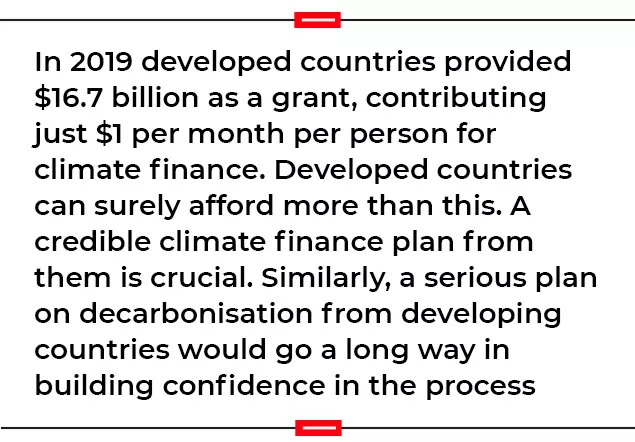
Developed countries can put out a new plan for climate finance that is ambitious and credible. A recent report on climate finance road map shows how little money is being given by them. For example, in 2019, developed countries provided $16.7 billion as a grant. This means that every person in developed countries contributed just $1 per month for climate finance. Developed countries can surely afford more than this. A credible climate finance plan from them is, therefore, crucial.

Similarly, developing countries need to discuss their decarbonisation plans because there is no carbon space to emit. Even if developed countries reach net zero by 2030 (which is unlikely), developing countries will still have to start reducing emissions very soon. So, a serious plan on decarbonisation from developing countries would go a long way in building confidence in the process.
#TelltheTruth is a popular hashtag for COP26. It exemplifies the frustration of young climate campaigners with the negotiation process. At COP26, leaders must tell the truth. Dishonesty and falsehood are the reason why the three decades of climate negotiations have achieved little.

The writer is CEO, International Forum for Environment, Sustainability and Technology (iFOREST)

Social media & sharing icons powered by UltimatelySocial