
Clean up Indian Railways: It must match its climate credentials with sound pollution and waste management

Railways fascinate me. Professionally, I advocate for a massive expansion of rail networks to address the air pollution and climate crisis. Rail transport is not only highly energy efficient compared to road and air transport, it can also completely shift to renewable energy. It will, therefore, play a significant role in reducing emissions from the transport sector. The Indian Railways has recognised this potential and has set a target to achieve net zero carbon emission by 2030, the most ambitious climate target set in the country.

Personally, I love long train journeys. Travelling on the Coromandel Express from Howrah to Chennai, Netravati Express from Mangalore to Mumbai (when it ran on metre gauge), and the Rajdhani from Delhi to Mumbai and Kolkata are some of my favourite travel memories. But during all these times, like most people, I took for granted the noise, the open toilets (now stinking bio-toilets), and the waste along the tracks and stations. But as Indian Railways is expanding, modernising and privatising, environmental issues we overlooked in the past mustn’t be ignored anymore.

Indian Railways is big in every aspect; it runs the fourth largest railway system globally and carries 8 billion passengers and more than a billion tonnes of freight a year. These numbers are projected to increase by 50% over the next 10 years. As it’s already one of the largest consumers of water and energy and generator of waste, its environmental footprint will increase significantly in a business as usual scenario. While Indian Railways has made significant progress in energy efficiency, renewable energy and cleanliness, there are grave concerns of water and noise pollution and waste management.

Let’s first start with the law. For a long time, Railways had taken the view that the country’s key environmental laws – the Water, the Air, and the Hazardous Waste Act – do not apply to its operations. Therefore, no railway station took permits from the pollution control boards (PCBs) or complied with the regulations. A recent National Green Tribunal judgment has categorically rejected this stand and has directed the Railways to abide by the laws. However, the Railways is still reluctant to comply, and most stations are still operating without consent from PCBs.

The situation’s no different with railway sidings/ goods sheds, a major source of air pollution. The majority of these sidings are operated by private companies, but many are working without consent. Reports by the Comptroller and Auditor General and the Central Pollution Control Board (CPCB) have confirmed poor air pollution management at these establishments.

Poor handling of wastewater has also been identified as a significant concern by the CPCB. Since most stations have not installed Effluent Treatment Plants (ETPs), effluents generated from cleaning trains and stations are discharged into municipal drainages or low lying areas. The situation is the same with Sewage Treatment Plants (STPs).

Every day about 5,000-6,000 tonnes of fecal matter is generated from toilets in the trains and on stations. This is equivalent to the fecal waste generated in a large metro city. While 95% of trains have installed bio-toilets, they are “no better than septic tanks” and the water discharged no better than raw sewage. In the absence of STPs at most stations, the sewage is discharged untreated. In a country where hotels with more than 20 rooms are being directed to install STPs, Railways’ failure to install ETPs and STPs is discriminatory, so say the least.

Noise pollution is an even more problematic issue. More noise is considered useful in the railway establishment for accident prevention. There are strict instructions to honk at all gates, turns and at the time of entry and exit from a station. During the night, train drivers are instructed to honk to ensure they’re alert and not sleeping. Though accidents are a real problem because of encroachments and unfenced railway tracks, continuing with the current strategy is counterproductive because of enormous health implications.

High noise levels lead to poor learning, aggression, hypertension and cardiovascular disease. For millions of citizens living near railway stations and tracks, the railways’ current position is an untenable proposition. Indian Railways will have to find a solution that balances imperatives of accident prevention and noise control.

On waste management, Indian Railways has made some progress. It runs ‘Swachh Rail Abhiyan’ for improving cleanliness and waste management. While there’s no doubt that cleanliness has improved significantly, and some of our railway stations match global standards, the same cannot be said about solid waste.

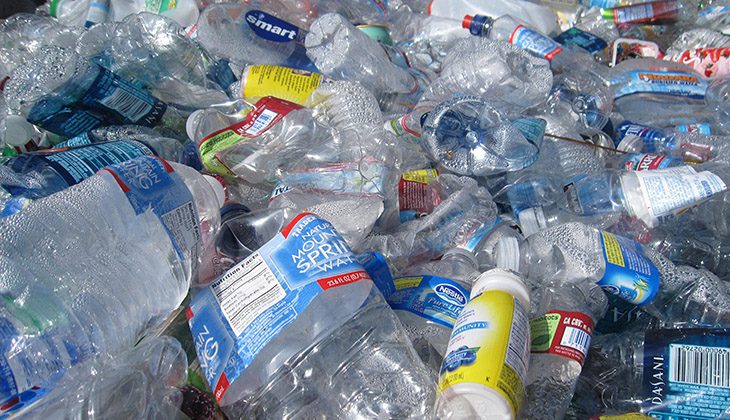
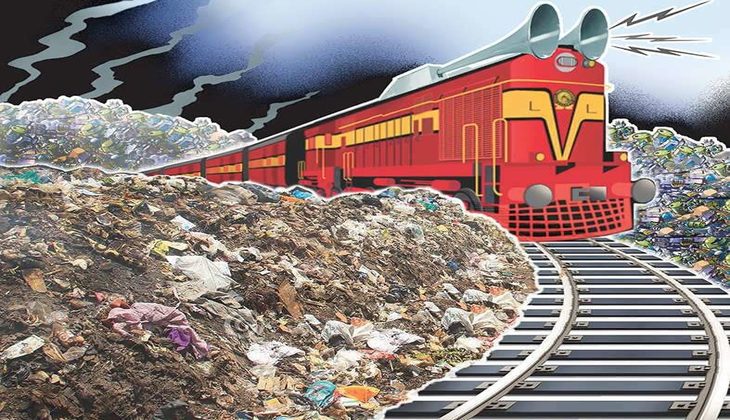
Indian Railways seems to have an ‘out of sight, out of mind’ approach while dealing with solid wastes. Wastes are collected mainly in unsegregated form and disposed of along with the municipal wastes or burnt or dumped near the track. In fact, the Railways has not even enforced the single use plastic rules of various states, including the national ban on polythene bags. Overall, while Indian Railways is doing a lot on energy issues (because it also makes good economic sense), the same cannot be said about pollution or waste.

The fundamental problem seems to be a sense of ‘exceptionalism’. Railways have historically operated independently of the civil administration. It doesn’t follow many of the laws applicable to a similar service industry like the airline industry. It’s time these anomalies are corrected. Indian Railways should comply with environmental laws and work with civil authorities to solve pollution and waste issues. Its low energy footprint must be matched with sound environmental management.

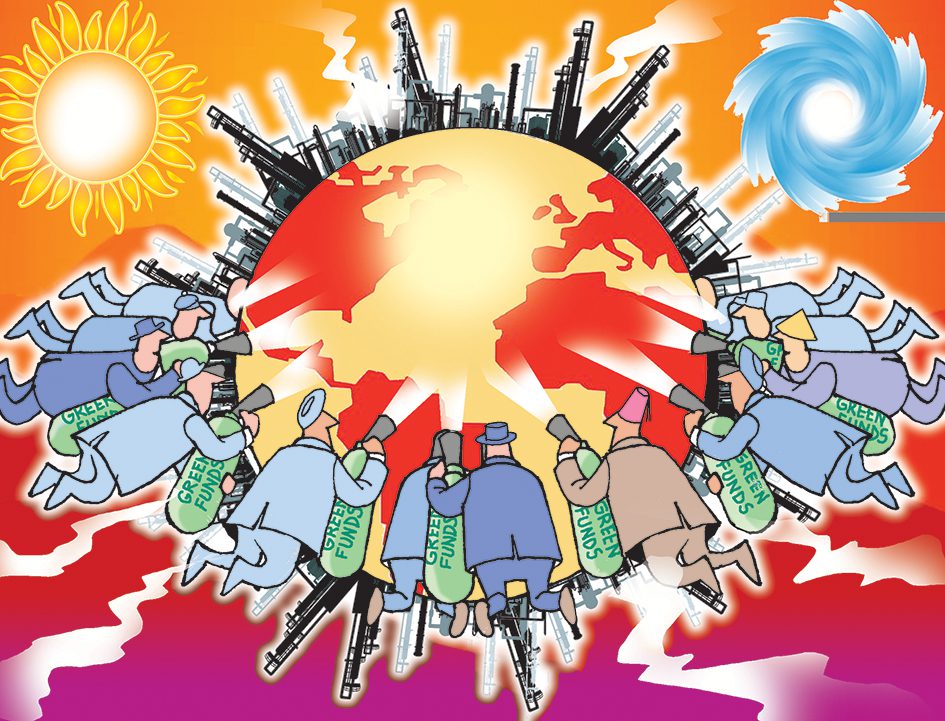
India’s Arctic policy must push Western countries to give up double standards

‘We need to act for the Amazon and act for our planet,’ said Canadian Prime Minister Justin Trudeau when fires ravaged the Amazon rainforest in August 2019. He was joined by many Western countries in preaching the virtues of protecting the ‘global common’ for combating climate change.

But the Western world’s concern for the global commons seems to limit itself, so far, to the sensitive ecosystems in the southern hemisphere. Thus, there is an international treaty to protect the Antarctic, which puts an indefinite ban on mining and hydrocarbon extraction. Furthermore, there is a long-standing demand, pushed by the G7 countries, for an international treaty to protect the tropical forests because they are the most biodiverse regions and ‘Lungs of Earth’.

However, when it comes to the northern hemisphere ecosystems, the same countries reject any international intervention. The Arctic is a classic case of this double standard. In 2008, the five coastal states of the Arctic Ocean (United States, Russia, Canada, Norway and Denmark) vowed to block any “new comprehensive international legal regime to govern the Arctic Ocean” in the Ilulissat Declaration.

The Arctic is essential for the stability of the earth’s climate, arguably even more than the Antarctic. Its sea ice helps moderate the global climate. In turn, it is also very sensitive to changes in climate. Consequently, the Arctic is warming more rapidly than the global average, and its sea ice has decreased dramatically since the late 1970s.

The warming of the Arctic is also speeding the melting of the Greenland ice sheet. Recent studies indicate that Greenland’s ice is melting on average seven times faster today than in the 1990s. Therefore, the changes in the Arctic have massive ramifications on sea level rise, aquatic ecosystems, and weather patterns across the world, including the monsoon.

But the sea ice melting has also opened up the fabled Northwest Passage, significantly shortening the route between the Atlantic and Pacific Oceans. In addition, Arctic seabed is now accessible for oil and gas extraction and deep-sea mining. As an estimated 40% of current global oil and gas reserves are in this region, there is a scramble over shipping lanes and resources, especially between the Arctic states. But other countries are also staking claim over the region’s resources, especially China.

India is an observer at the Arctic Council and has recently released a draft Arctic policy. Regrettably, the draft policy lacks objectivity. It is an ‘all-of-the-above’ policy with contradictory goals. On the one hand, the policy envisions India’s role in exploring and exploiting hydrocarbon and encourages investments by Indian companies. On the other hand, it also expresses deep concerns regarding the impacts on the country due to the changes in the Arctic, including on the monsoon, and proposes a slew of research activities. In conclusion, the draft terms the Arctic as ‘the common heritage of mankind’ and calls for ‘sustainable, responsible and transparent’ human activity.

But ‘sustainable, responsible and transparent’ exploitation of the Arctic is an oxymoron. It is impossible to take out oil and gas, burn them, and still keep global warming under check, or open the international shipping lane and expect the ocean to remain pristine. The irony is that the world’s wealthiest people, living in the already wealthy Arctic states, will gain the most by exploiting the resources. However, the costs will be borne by the world’s poorest, living in the coastal areas of the global South.

If India wants to be a serious player in the Arctic, then its policy must address this irony and the double standards of the Arctic states. It is important to realise that we made a mistake by becoming an observer in the Arctic Council, thereby accepting the Arctic states’ sovereign right over the Arctic ocean. We will repeat the error if we join them in exploiting the Arctic.

The bottom line is that India will not gain economically but is likely to lose massively due to coastal flooding, monsoon disruptions and changes in the ocean systems. Therefore, India’s Arctic policy should push for an international legal mechanism, similar to the Antarctic treaty, and save the Arctic’s pristine ecosystem and earth’s climate. In this endeavour, it might find allies in the Biden administration, which has just cancelled the Arctic Refuge oil programme and Keystone pipeline.

Paris agreement isn’t enough: Climate crisis is too important to be left to governments alone. Private sector too must pitch in

The world is not only suffering because of Covid and economic distress. It’s also reeling due to climate disasters. The year 2020 is likely to be one of the three warmest years on record, and 2011-20 will be the warmest decade on record. 2020 has witnessed increasing wildfires, new extreme temperatures on land, sea and especially in the Arctic, a record number of hurricanes in the Atlantic.

But these extremes have not deterred countries from investing in fossil fuels. In 2020, G20 countries have committed over $230 billion in fossil fuel industry to revive the economy, compared to $150 billion in clean energy. The US, UK, Canada, Russia and India are pursuing major expansions in fossil fuel supply.

Therefore, despite a 7% decline in CO2 emissions due to the economic slowdown in 2020, the current policies of the countries have put the planet on a 3.2°C temperature increase trajectory. The ‘Emission Gap Report 2020’, recently released by the UN Environment Programme, finds that the G20 nations, who account for 80% of global greenhouse gas (GHG) emissions, are collectively not on track to meet their modest Paris Agreement commitments and countries like Australia, the US and Canada are falling short of their targets.

So, why is it that five years after the “historic” Paris Agreement was signed, the global efforts to fight climate change are in tatters? And, how can we turn the tide and galvanise global action?

The Paris Agreement is a voluntary agreement in which countries are free to choose their climate targets, called nationally determined contributions (NDCs). Countries are also supposed to self-differentiate based on their responsibility for causing climate change and their capability to mitigate it. Hence, developed countries are expected to take up higher emission cuts than developing countries. But if a rich country doesn’t commit to a higher target, no one can question or demand a revision.

Besides, if a country fails to meet its NDCs, there is no penalty. The only obligation is to submit reports regarding the actions countries are taking to meet their commitments. The Paris Agreement is, therefore, based on goodwill and moral persuasion. The assumption is that goodwill will prevail, countries will enhance their targets, and collective action would meet climate goals.

But herein lies the mismatch. Since the beginning, countries have viewed climate negotiations as an economic and not as an environmental negotiation. So, instead of cooperation, competition is the foundation of these negotiations. Worse still, the negotiations are viewed as a zero sum game.

For instance, Donald Trump believes that reducing emissions will hurt the US economy and benefit China, so he walked out of the Paris Agreement; George Bush did the same with the Kyoto Protocol. China, too, believes in this viewpoint, and despite being the world’s largest polluter, its NDCs are woefully inadequate and compliant with 4°C warming.

The fact is every country is looking out for its own narrow interest. They, therefore, are committing to do as little as possible. This is the Achilles heel of the Paris Agreement. This is the reason why the Agreement will not be able to limit warming below 2°C.

Therefore, the world would make a big mistake by putting all its efforts into the Paris Agreement to meet the climate goals, as pushed by a large section of climate activists post the victory of Joe Biden in the US presidential elections. We need a radically different strategy to stimulate actions from the government, private sector and civil society to put the world on track to the 1.5°C goal.

Thirty years ago, when the UN Framework Convention on Climate Change  (UNFCCC) was being negotiated, we lived in a very different world – where economic growth was intrinsically linked to fossil fuel consumption and carbon emissions. Countries had to increase emissions to grow and, therefore, they had to compete to stake claim over the remaining carbon budget.

But this argument is slowly vanishing. In many sectors, including the most crucial energy sector, economic growth and emission reduction can go hand-in-hand. This is because the costs of renewable energy, batteries, super-efficient appliances, and smart grids are falling so rapidly that they are already cost-competitive or will become competitive very soon with fossil fuel technologies. So, the reason for countries to compete with each other for carbon space is becoming immaterial every passing day. If countries cooperate, the cost of cleaner technologies can be reduced faster, which will benefit everyone.

But this cooperation cannot happen only at one global platform and treaty – UNFCCC and the Paris Agreement. We will need multiple multilateral, regional, and sectoral platforms to drive transformation. In fact, climate action will have to be made part of every existing and new platform and treaty as a distributed global effort.

Similarly, the climate crisis is too important to be left to governments alone. We need concrete actions from citizens (especially the wealthiest 1% who account for more than twice the emissions of the poorest 50%) and the private sector to reduce emissions.

Today, more than two-thirds of the richest 100 entities on the planet are corporations, not governments. And, just 100 companies have been responsible for 71% of the global emissions since 1988, the year Intergovernmental Panel on Climate Change (IPCC) was established. Corporations, therefore, are the problem, but they are also the solution. They have the resources to decarbonise, and they must be held accountable if they fail to do so.

Five years since the Paris Agreement, we are at an inflection point. Delay and prevarication is not an option; the world needs a bold vision and leadership to turn the tide.

Energy transition and Just Transition must go hand in hand – as coal mines become rapidly unprofitable

The writing is on the wall. A few days back, Coal India Limited (CIL), the world’s biggest coal producer and India’s largest CO2 emitter, announced its plans to become a ‘net-zero energy company’ by 2023-24. The company plans to install 3,000 MW of solar power to meet all its electricity demand, which will also reduce its power expenses. The foray into solar is part of CIL’s diversification plans to shift from a coal company to an energy company.

NTPC Limited, India’s largest coal-based power company, has won a bid this week to install 470 MW solar power at Rs 2.01/kWh. This tariff is 40% below the cost of existing coal power in India and less than half the price of new coal-fired power. NTPC has set up a separate renewable energy subsidiary – NTPC Renewable Energy – to build its green energy portfolio.

When the biggest coal mining and coal power companies see their future in renewable energy, it is time for the policy makers to start planning for coal phase-down and Just Transition of coal mining districts.

Just Transition was included in the Paris Climate Agreement in 2015 to ensure that the workers and communities dependent on fossil fuels like coal do not suffer due to the closing of mines and power plants to meet the climate change goals. India has so far not engaged nationally or internationally on coal phase-out and Just Transition because of the country’s high dependence on coal for energy security and industrial growth. But the situation is changing rapidly, and coal mines are being shut down in an unplanned fashion due to various factors, including unprofitability.

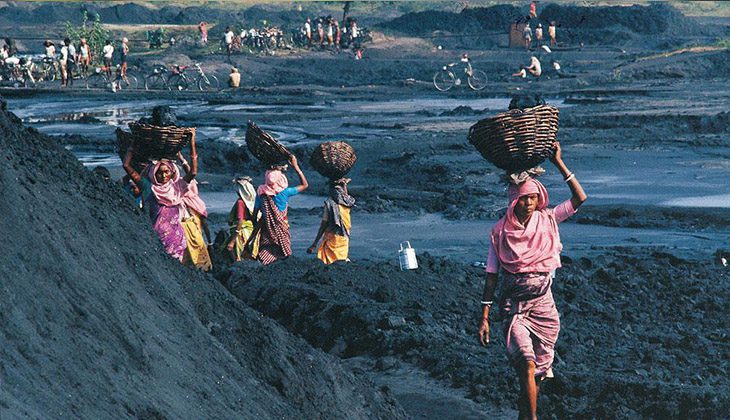
In Jharkhand, 50% of mines are closed, and half of the operational mines are unprofitable. Most of the mines have been shut down without proper mine closure and plans for the mining areas’ socio-economic transition. The situation at the district level is even more ominous. In Bokaro, 16 of the 25 mines are already closed, and six of the nine operational mines will exhaust their reserves in the next 10 years. In Jamtara (made famous by the Netflix series of the same name), all five mines are closed. In Ramgarh, a top coal-producing district, 50% of mines are shut, and two-thirds of the operational mines are unprofitable. The situation becomes alarming when one considers the economic dependence of these districts on coal.

Take the case of Ramgarh. Coal mining and coal-dependent industries contribute about 40% of the district’s GDP. Furthermore, one-fourth of the households depend directly on the coal industry for income, mostly informal workers. Therefore, the unplanned closing of mines has real implications on the lives and livelihoods of workers and local communities. The irony is these districts suffered ‘resource curse’ and environmental degradation due to coal mining and are now suffering economically because of its unplanned closure.

But this need not be the case. Experiences worldwide show that Just Transition can be a win-win for the environment and the economy if planned and managed well. A similar effort can be made in India to close coal mines over the next two-three decades and transition coal-dependent districts to a non-coal economy. The good news is that opportunities exist for such a transition planning to start immediately.

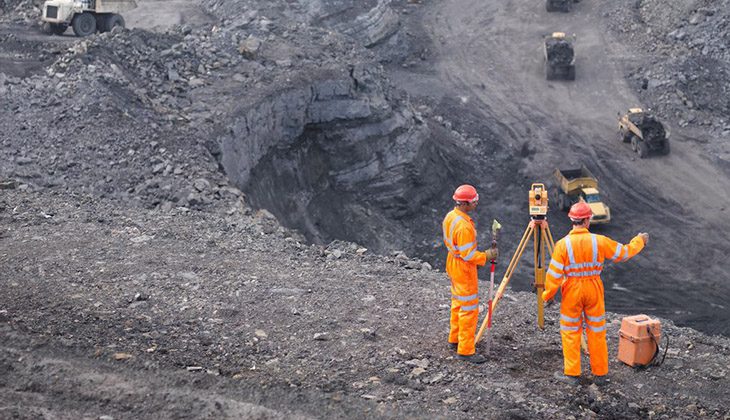
About 70% of CIL’s mines are loss-making. Many of these mines are losing more than Rs 1,000 per tonne of coal production (coal price in India is about Rs 3,000 per tonne). These mines (more than 170 in numbers) produce less than 10% of coal, employ about 40-45% of CIL’s workforce and incur an aggregate loss of Rs 16,000 crore per year – about the same as the annual profits of the company. CIL can close these unprofitable mines and use the additional profits to implement Just Transition in these mining areas. Coal cess, which collects about Rs 38,000 crore per year and is used for GST compensation till 2022, can also be used for the socio-economic transition of these mining areas.

All the above can only happen if we accept the inevitability of coal phase-out and put in place a Just Transition policy and planning framework. Just Transition is imperative for India. If we do not start planning for a post-coal future now, our coal-dependent regions and industries will face major disruptions in the coming years.

Rebuilding a sustainable economy post Covid


The global economy is in recession, and it is predicted to be more destructive than the Great Depression of 1929 and the Global Financial Crisis (GFC) of 2007. India too has been hit hard – tens of millions have lost their jobs, and the economy is projected to shrink by 4-9% in 2020-21. The last time the Indian economy contracted by more than 5% was in 1979 when the entire country was devastated by a once in a century drought (and some regions with floods).

Both Morarji Desai’s and Charan Singh’s governments fell, and we had mid-term elections which brought Indira Gandhi back into power. The fallout of this political upheaval was the founding of the Bharatiya Janata Party in early 1980, which successfully challenged the Congress and came to power within two decades. I believe that the India in which we live in today was in many ways created in 1979. The question is: What kind of India will the 2020 economic recession create? And, can we steer the ‘new’ India towards a more just, equitable and sustainable society?

A defining feature of the current economic crisis is the unprecedented fiscal and monetary stimulus packages being rolled out by the governments to provide relief and revive the economy. According to the International Monetary Fund, the total stimulus package for G20 countries averaged 12.1% of GDP – many times more than GFC. India too has announced a stimulus package worth 10% of GDP (though there are opposing views on this number). A quick analysis of the stimulus packages shows that they are primarily targeted to revive the current economy; hardly any country has thought about the long-term transition.

In India too, the focus is on the existing ‘brown economy’ and shovel-ready projects. The attention on the immediate crisis has also relegated climate and environmental concerns to the background. This is evident in the increasing plastic pollution and investments in the fossil fuel industry. Regulatory changes in the environment and labour sectors have also been proposed for the ‘ease of doing business’. While there is nothing wrong in short-term stimulus packages to keep the current economy alive, they must not be environmentally destructive. On the other hand, we also have to ensure that the long-term economic recovery takes into account the social and environmental crisis the world is facing today.

In other words, we must differentiate between a short-term stimulus to jumpstart an economy and a longer-term strategy to transition to a sustainable society. While the former mostly requires fiscal and monetary support, the latter requires long-term investments and serious pricing and policy reforms. The current economic crisis offers us a once in a lifetime opportunity to roll out a long-term strategy along with stimulus packages in core sectors:

  • Make agriculture sustainable: Agriculture accounts for 50% land, 85% water, uses a massive amount of chemicals and provides low-income livelihood to 50% of the population. Agriculture is central to building a sustainable society.
  • Transform the energy sector: We are at a cusp of change in the energy sector. With stimulus and R&D, we can build a new energy architecture based on renewable electricity, battery storage, smart grids and hydrogen fuel for industries.
  • Build resilient infrastructure: Massive amount of money will be spent by the government to build roads, airports, buildings etc as part of the stimulus package. We must make them ‘green’. Instead of roads, we should prioritise railways; instead of concrete jungles, we must build sustainable cities.
  • Invest in nature: Reversing deforestation and desertification and enhancing soil, wetlands and forests will build resilience against climate change and also provide massive livelihood opportunities.
  • Support local and small businesses: For jobs, sustainability and resilience of the supply chain, local small businesses are going to be the key. Government policies must support the development of efficient and green small businesses.
  • Invest in social capital and governance: None of the above would be possible without an educated and healthy society and good governance.

If we consider the experience of the past, then the economic recovery is going to be a long haul. The New Deal enacted by Franklin Roosevelt to respond to the Great Depression lasted for seven years (1933-39). Rebuilding in India will also need time and money. We must spend these rethinking about the type of economy and social system we need and want in the future.

Over regulation will not solve plastic waste problems


An oft-repeated saying in India is that our environmental laws are good, but their implementation is poor. I have always disagreed with this simply because the primary reason for a law’s poor implementation lies in its flawed design. Most environmental laws in India are designed using a top-down approach, with an inadequate understanding of ground realities, leading to failed implementation. The recent draft guidelines published by the Ministry of Environment, Forest & Climate Change (MoEF&CC) on Extended Producers Responsibility (EPR) for plastic wastes is a classic example of this approach.

EPR is a ‘polluter pays’ principle under which producers and users of plastics, especially plastic packaging, have to take back plastic waste and recycle or dispose of them in an environmentally sound manner. The first regulation on EPR was enacted almost a decade back in the Plastic Waste (Management & Handling) Rules, 2011. The rules directed municipal authorities to set up plastic waste collection centres with financial support from the producers. The problem was that EPR was vaguely defined and the municipalities were not capacitated to implement the rules. This law was repealed within five years.

The Plastic Waste Management Rules, 2016 replaced the 2011 law. It introduced a slew of provisions for everyone in the plastics supply chain. Under EPR provisions, companies were directed to work out their own arrangements for collecting plastic waste and achieve 100% collection within two and a half years of enactment of the rules. Four years later, we are in 2020, and no company has fulfilled its EPR obligations. The new draft guidelines intend to amend this very situation.

It’s crucial to understand why companies have failed to meet their EPR obligations time and again. The main reason seems to be a combination of ambiguous laws, high regulatory burden, and inadequate time for implementation. For instance, under the 2016 rules, companies were asked to develop their modalities without any proper guidance. Some companies hired third party organisations called Producers Responsibility Organisations (PROs) to collect and dispose of wastes on their behalf. But, this was a colossal failure due to lack of formal coordination between PROs and municipalities.

Likewise, the regulatory burden was very high. Companies selling their products in multiple states had to register themselves in each state and meet state-wise EPR obligations. This became a logistic and accounting nightmare as companies now had to account for every kilogramme of plastic packaging sold through dealers/ sub-dealers in different states and collect back the same amount. Alongside this, the timeframe of two and a half years was just too short a window for companies to enact an EPR-compliant system.

It seems that MoEF&CC hasn’t learned from past failures – the 2020 draft guideline is prescriptive, top-down, and onerous. It proposes to register every producer/ brand owner/ importer, even those using a small amount of plastic for packaging their products. Similarly, it hopes to trace and account for every kilogramme of waste, through a system of multiple certifications and third party audits, using blockchain technology.

To compensate for the vagueness in 2011 and 2016 rules, the draft guidelines have allowed all possible EPR models without deciding which one is best suited for Indian conditions. Additionally, it has proposed a maze of licensing procedures, authorities, and committees at the Centre and in states to implement the law. In a nutshell, the draft EPR guidelines, if enacted, will likely again fail in implementation because it has ignored ground realities and put a high regulatory burden on companies.

If 20 years of plastic waste legislation has taught us anything – the first law was enacted in 1999 to ban (the still widely available) thin polythene bags – it’s that regulations and penalties are not sufficient to manage plastic waste; we need to transform the market and municipal services to solve this problem. Without strengthening and improving city waste management, we cannot hope to manage plastics. Moreover, the best way to reduce plastic waste is to find an alternative to plastics. An EPR policy that doesn’t recognise the need to decrease the use of plastics or create a straightforward, accessible model to support municipalities is bound to fail.

India is too poor to afford coal


As part of the stimulus package to revive the economy, the Union government has announced a slew of measures to boost production and reduce imports of coal. It has liberalised the sector, curtailed the monopoly of Coal India Limited (CIL), and has announced an investment of Rs 50,000 crore for coal transportation infrastructure. All this has been done to double coal production in the next four years – from 730 million tonnes in 2019-20 to 1.5 billion tonnes in 2023-24. The question is: Can India afford such a massive increase in coal consumption?

Till three years back, coal was the cheapest source of electricity. Then in May 2017, the solar power tariff nosedived to Rs 2.62/kWh – 20% lower than the coal based power tariff of NTPC – and changed the energy market forever. Since then the coal power prices have kept increasing because of the increase in coal mining and transportation costs, while the costs of renewable and energy storage systems have continued reducing on the back of global and local innovations.

Just three weeks back, the Solar Energy Corporation of India awarded a project to ReNew Power to supply 400 MW of renewable energy, round the clock, at a tariff of Rs 2.90/kWh. Very few, if any, new coal power plants can compete with this tariff. In fact, the business case to install a new coal power plant is fast vanishing with such steep reduction in the prices of renewables with storage.

The business case entirely erodes if one includes health and environmental costs. Coal is the single largest source of air pollution and CO2 emissions in India. About half of all the CO2 emissions come from burning coal, and coal power plants account for 60% of particulate and 50% of sulphur dioxide emissions of the entire industrial sector. Deaths and diseases due to air pollution cost India a GDP loss of more than 5% and coal-related pollution constitutes a significant proportion of this. If we add carbon price and pollution cost to coal, then we should be shutting down even the existing power plants.

The private sector understands these risks and has practically stopped investing in coal power. According to a report published jointly by Global Energy Monitor, Sierra Club and others, a staggering 47,400 MW worth of coal power projects, mainly of the private sector, was scrapped in India in 2019. The private sector, instead, is now investing in renewable energy. In 2019, more than two-thirds of all the new power plants constructed in India were based on renewables, with the bulk of investments coming from the private sector and FDIs. The question, therefore, is why in the face of an overwhelming case against coal, the government is still promoting it?

The reason seems to be twofold: One, coal is viewed as the foundation of energy security and self-reliance (Atmanirbhar Bharat); and two, it is considered as a shovel-ready venture to revive the economy in parts of central and eastern India (about 25 districts) that are primarily dependent on coal for growth and employment. While these reasons can be justified as short-term expediency, they would become a liability very soon.

We need to understand that the investments made today will lock our economy to expensive coal for the next 20-30 years. This will limit our scope of innovation and reduce the pace of transition to clean and cheap renewable energy. We will, therefore, be paying a high cost of energy even when much more affordable options would be available. Can India, which already has one of the highest costs of energy in the world, afford this?

As far as coal mining areas are concerned, they have been suffering from ‘resource curse’ for decades. Most coal districts are polluted and poor with some of the worst human development indicators.

More coal mining will perpetuate the status quo. The need, therefore, is of economic diversification and a ‘just transition’ plan for these districts to reduce their dependence on coal.

If Covid-19 pandemic has taught us anything, it is that our current economic system is akin to ‘sawing-off the branch on which we are sitting’. By investing in coal, we will exacerbate climate change, increase air pollution and make energy more expensive in the future. We need an Atmanirbhar Bharat, but atmanirbharta (self-reliance) must also be affordable and sustainable.

Social media & sharing icons powered by UltimatelySocial