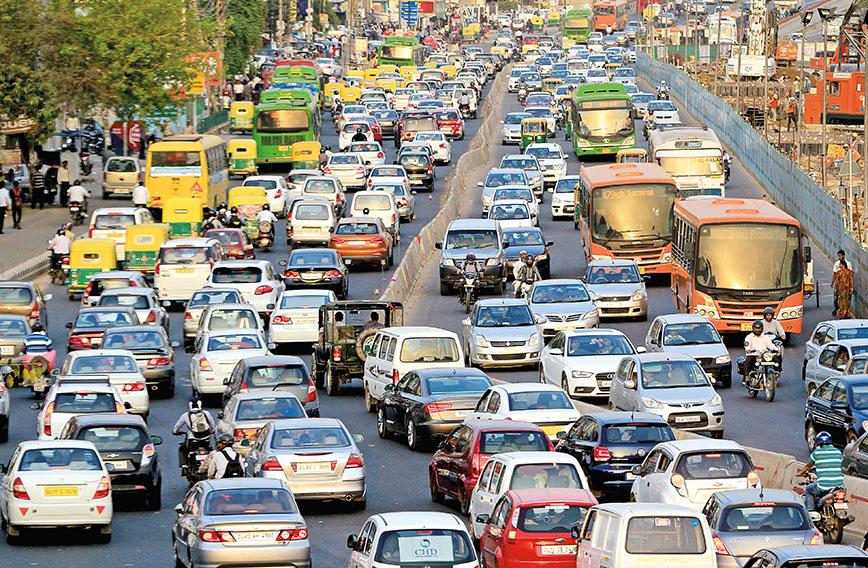


Delhi’s bad air: Govt has to get down to serious work

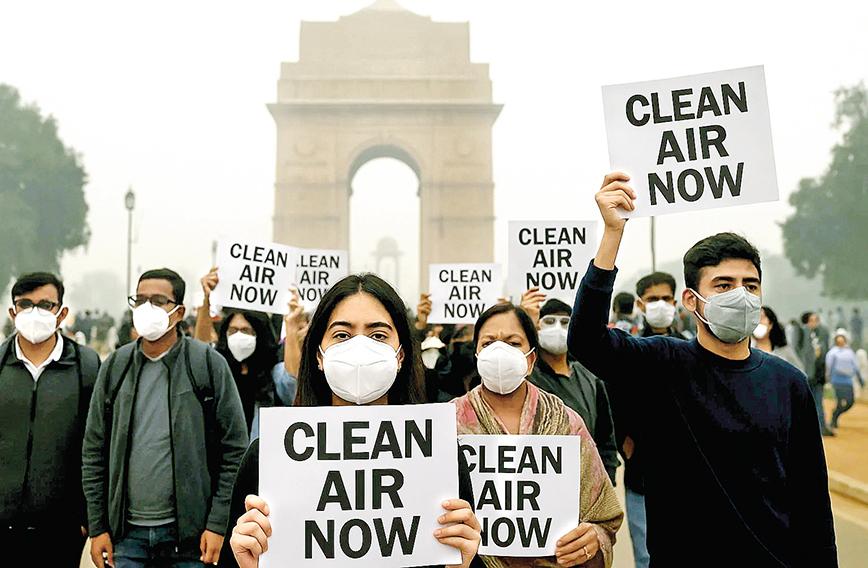
For more than a decade, Delhi has experimented with various pollution control measures — the ‘odd-even scheme’, smog towers, water cannon, tree plantation, the Graded Response Action Plan or GRAP, (which restricts industry, construction, and vehicular activity during winter), and now cloud seeding. Despite these efforts, the city continues to suffer. The root cause is simple: these reactive measures do not address the core pollution problem.
Delhi, which constitutes only 2.7 percent of the National Capital Region (NCR), sits at the heart of one of the most urbanized, industrialized, and agricultural regions in the world. Consequently, its air is heavily influenced by pollution from neighbouring districts. Studies reveal that only 30 to 50 percent of Delhi’s air pollution originates within the city, while the remaining 50 to 70 percent comes from outside. This means that a regional approach is essential to reduce air pollution in the city.
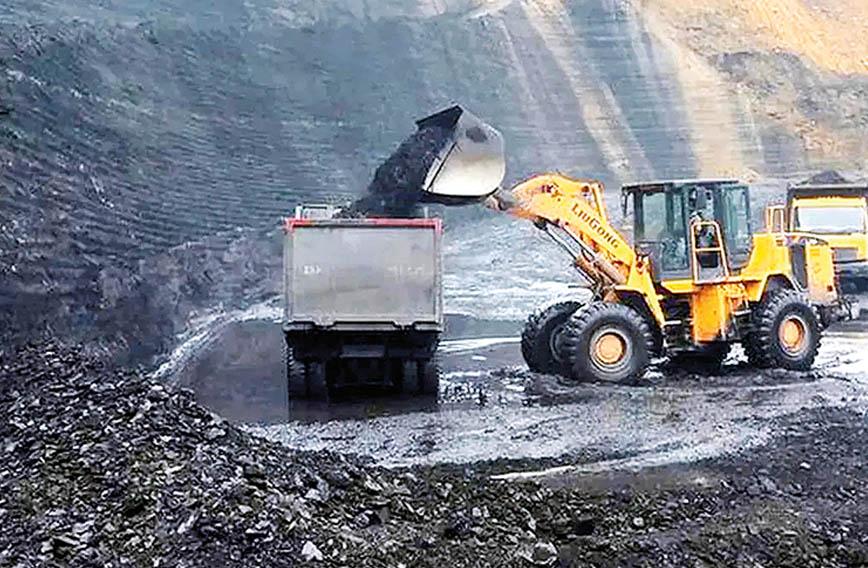
Further, the main sources of pollution in Delhi-NCR are the use of biomass for cooking, heating, and in micro and small industries, along with the burning of agricultural residue in surrounding states. These activities contribute over 50 percent of total PM2.5 pollution. Another 30 percent comes from industries and power plants that rely on coal and other fossil fuels. In other words, more than 80 percent of PM2.5 pollution in Delhi-NCR results from solid fuels — particularly biomass and coal burning — with vehicles contributing about 10 percent. This estimate does not include dust from roads, construction sites, and barren land, which are also significant sources of particulate pollution.

If Delhi is serious about improving air quality, it must stop relying on ineffective, superficial solutions. These quick fixes do more harm than good by hurting the economy without tackling the root cause. The real solution lies in collaboration between the Central government and the states — Delhi, Haryana, Punjab, Uttar Pradesh and Rajasthan — to confront pollution at its source. This collaborative effort can be operationalized through a new governance framework and institution to implement a coordinated clean air action plan. This would require all states to relinquish some powers for the common good. Here’s how this can be achieved:

POLLUTION CONTROL ZONE
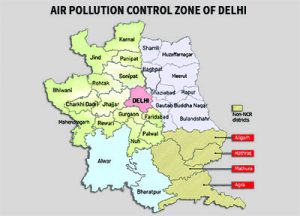
The Central government should declare Delhi and its surrounding areas an Air Pollution Control Zone. Within this zone, all air pollution-related measures should be implemented in a coordinated manner. Ideally, the zone should cover the entire airshed, spanning a 300-km radius around Delhi. However, considering the existing institutional set-up, this zone could include Delhi-NCR and four additional districts in Uttar Pradesh — Aligarh, Hathras, Mathura and Agra. This would encompass an area within a radius of about 150 km, with a population of around 80 million. Although this excludes key agricultural areas in Punjab and Haryana where stubble burning is rampant, that issue can be addressed through dedicated programmes aimed at eliminating crop residue burning.

EMPOWERED AGENCY
To oversee and implement a coordinated clean air action plan, a new empowered agency should be established. This agency should include representatives from both the Central and state governments at the decision-making level. To ensure adequate authority, it should be headed by a senior secretary-level serving officer of the Central government. The agency should have district offices, its own technical and administrative staff, and act as the nodal agency for air pollution control in the zone — superseding other Central and state agencies.
Similar agencies exist elsewhere, such as the California Air Resources Board, established in 1967 to tackle severe pollution in cities like Los Angeles. China has also created the Beijing-Tianjin-Hebei Regional Coordination Council to reduce pollution levels in Beijing. While India’s Central government has set up the Commission for Air Quality Management (CAQM) in the National Capital Region and adjoining areas, it has not been very effective because it lacks resources, authority, and a proactive action plan.

REAL ACTION PLAN
Delhi’s air quality — and India’s overall — cannot improve without a rapid transition to clean energy, along with a credible plan to reduce agricultural residue burning and control dust. The plan should consist of high-impact strategies that can significantly improve air quality within the next five years. Sample the following:

PM UJJWALA 3.0
The study we have done at iFOREST shows that the Pradhan Mantri Ujjwala Yojana has been the most impactful air pollution intervention in the past decade. Expanding access to clean cooking fuel across Delhi-NCR could reduce PM2.5 levels by 25 percent. Achieving this would require a new phase — PM Ujjwala 3.0 — to transition households to LPG or electricity for cooking. Research indicates that a 75 percent subsidy is necessary to enable exclusive LPG use in low-income households, costing about `5,000 to `6,000 per household annually — similar to the PM Kisan Samman Nidhi. In Delhi-NCR, this would cost around `6,000 crore to `7,000 crore per year, a fraction of the annual healthcare costs associated with air pollution-related diseases. This would be a profoundly pro-poor and pro-women initiative, especially considering that nearly 600,000 Indians — primarily women — die prematurely each year from indoor air pollution.

CLEAN HEATING FUEL
Across India, over 90 percent of households rely on biomass and solid fuels for heating during winter, contributing to severe pollution spikes in December and January. One of China’s pivotal air quality initiatives was a national clean heating fuel policy. While developing a similar long-term plan is essential, in the short term the Delhi government could ensure that only electricity is used for winter heating and enforce a strict ban on open burning. This approach would yield swift improvements in Delhi’s air quality.

END STUBBLE-BURNING
A major contributor to pollution spikes in October and November is stubble-burning. Curbing this practice would significantly reduce the occurrence of severe pollution episodes. Both short- and long-term strategies are required.

In the long term, agriculture in Punjab, Haryana and parts of UP must transition from intensive rice-wheat farming to diversified cropping systems. In the short term, technology and incentives can play a key role. The simplest technological solution is to modify or mandate combine harvesters that cut closer to the ground — like manual harvesting — and attach balers to collect residue. The residue can then be sold to industries.

Governments can launch an entrepreneurship-cum-market scheme to promote residue collection, processing, and sale. An incentive of `1,000 per acre, coupled with penalties such as fines or exclusion from government schemes for farmers who continue burning residue would be effective. This scheme would cost approximately `2,500 crore annually.

ENERGY TRANSITION IN INDUSTRY
Power plants and industry account for roughly one-third of annual PM2.5 emissions in Delhi-NCR. Reducing these emissions requires both technological upgrades and stricter enforcement. A scheme encouraging MSMEs to adopt cleaner fuel sources — especially electric boilers and furnaces — could significantly curb emissions. For larger industries, stricter compliance with pollution norms is essential. Shutting down older thermal power plants and enforcing the 2015 emission standards (still not fully implemented) will be critical.

TRANSITION TO EVs
Scaling up electric vehicles is crucial for reducing urban air pollution. Initially, the focus should be on transitioning two- and three-wheelers and buses, since these are already economically viable. Achieving 100 percent electrification of new two- and three-wheeler sales by 2030, and converting all new buses to electric in Delhi-NCR, would significantly reduce vehicle emissions. Setting a 30 to 50 percent electrification target for cars and other vehicles would further accelerate the transition to cleaner urban transport.

GREEN BELTS
Dust pollution from within Delhi and neighbouring areas, compounded by seasonal dust from the Thar desert, has a major impact on air quality. Creating a green belt around Delhi would serve as a natural barrier against incoming dust. Additionally, increasing green cover within the city — especially roadside and open-space greening — is essential to control local dust pollution.

STRENGTHEN MUNICIPALITIES
Local pollution sources — such as road dust, construction activities, open burning, traffic congestion, and poor waste management — are best managed by municipalities. Municipalities must be held accountable for addressing these issues year-round, not just during peak pollution seasons. Strengthening the National Clean Air Programme (NCAP) to support municipal efforts will be key to achieving sustainable air quality improvements.

If we implement these measures, air pollution can be reduced by 50 to 60 percent within five years. However, this will not be easy. We will need to work with millions of households to adopt clean cooking and heating fuels, millions of farmers to stop stubble burning, hundreds of thousands of industries to reduce emissions, and vehicle owners to shift to EVs.

There are no quick fixes to improving air quality. Systemic changes are essential if we are to breathe clean air. Everywhere in the world, environmental progress has come from systemic, scientific, accountable, and long-term solutions — not quick-fixes. Delhi must learn this lesson.

Chandra Bhushan is one of India’s foremost public policy experts and the Founder-CEO of the International Forum for Environment, Sustainability & Technology (iFOREST)


Defunct DVC’s bright future

MOST of us know the Damodar Valley either from school textbooks or from its portrayal in films like Kala Patthar and Gangs of Wasseypur. Yet the valley is far more than what is captured in books or on screen. Spanning the coal-rich districts of Jharkhand and West Bengal, the Damodar Valley — often called India’s Ruhr Valley — has powered the nation’s growth since Independence. Coal from Jharia and Raniganj fuelled India’s rise, while the steel plants of Durgapur and Bokaro and the fertilizer factories of Sindri became the celebrated “temples of modern India.” The valley was an engine of national ambition.

Today, that engine is sputtering. The region stands as a stark paradox: rich in coal and industrial infrastructure, yet choking on the very resources that once made it prosperous. The air is thick with pollution, the rivers run contaminated, and the economic model that once promised secure employment is now creating a landscape of uncertainty. The mines that built modern India are becoming its tombstones. The imperative is clear: the Damodar Valley must urgently transition from a coal-based past or risk terminal decline.

The evidence of this decline is everywhere. In Dhanbad, the coal capital of India, nearly half the mines are abandoned or non-operational. By 2030, a staggering 80 percent of the mines will cease operations due to exhausted reserves or unprofitability. This narrative is echoed across the valley. For example, coal production in the Raniganj coalfield in West Bengal has plateaued at about 40-50 million tonnes per year and is likely to decline rapidly. Once the nation’s largest coal producer, the Damodar basin has now slipped to third place, overtaken by coalfields in Odisha and Chhattisgarh.

The downstream industries are faring no better. Jharkhand, despite sitting on mountains of coal, is paradoxically a net importer of electricity. Ageing thermal power plants at Patratu, Bokaro, Bandel and Kolaghat have shut down. Overall, less than 5 percent of India’s thermal power capacity remains in the valley. Even the Damodar Valley Corporation’s (DVC) multipurpose dams, designed for flood control, irrigation and hydropower, are silting up: their power generation is minimal and flood control capabilities increasingly compromised. Parts of West Bengal now flood annually due to diminished water-holding capacity in dams such as Maithon, Panchet, Konar and Tilaiya.

But this is not just an economic crisis; it is a human one. Over 200,000 workers — the very people who dug the coal and manned the plants — now face the spectre of job losses. The region’s workforce participation rate is already a worryingly low 30 percent. Without a viable alternative, we are staring at a social and economic vacuum of immense proportions.

Yet, within this crisis lies an unprecedented opportunity. The same assets that defined the valley’s industrial age can be repurposed to build its green future. A recent assessment by my colleagues reveals that the districts of Dhanbad, Bokaro and Ramgarh (DBR) — the core of the valley — have the potential to become a major green industrial corridor.

Consider the resources. The region has over 100,000 hectares of barren and mining-ravaged land. Under the intense sun of eastern India, this land is not a scar but an asset — a potential site for solar farms capable of generating up to 10 gigawatts (GW) of clean power by 2030, far exceeding Jharkhand’s 2027 target of 4 GW. The reservoirs at Maithon, Panchet and Tenughat can host floating solar projects and form the foundation for a green hydrogen industry. With India pushing for hydrogen-based steelmaking and fertilizer production, DBR — with its existing steel and fertilizer plants and water infrastructure — is uniquely positioned to become a hub for green hydrogen, green steel, and green fertilizer. In addition, repurposing closed mines into solar farms, industrial parks, or even tourism sites can drive local employment and economic diversification, creating lakhs of new, sustainable jobs.

The infrastructure is already in place: robust connectivity via national highways and railways, and proximity to the upcoming Amritsar–Kolkata Industrial Corridor. Most important, the region has a young, resilient workforce eager for new opportunities.

To realize this potential, however, a deliberate and just strategy is essential. First, the Central government must partner with the states to create a new blueprint for the Damodar Valley, transforming it from a traditional coal economy into a vanguard of green development. A dedicated Green Growth Plan for the DBR region should be the starting point. In addition, the DVC itself must diversify into a green energy company.

Most critically, this transition must be just. The workers and communities who built the coal economy must not be left behind. This requires massive investment in skilling, social protection, and enterprise development. The Jharkhand government, in particular, must pioneer a Just Transition Policy to ensure that the shift to a green economy is equitable and inclusive.

History offers a powerful parallel. Germany’s Ruhr Valley faced an identical crisis with the decline of coal. It chose a path of proactive transformation, investing in technology, education and culture. Its last coal mine closed in 2018, but today, former industrial sites are vibrant museums, universities, and green spaces. The Ruhr transformed a monoculture economy into a diversified, resilient hub.

The Damodar Valley now stands at the same crossroads. It has given its energy, its environment, and its labour to build the nation. But it must now confront the dual realities of depleting coal reserves and the global shift toward clean energy. The Ruhr teaches us that transformation cannot be left to chance — it requires foresight, planning, and investment. If India acts decisively, the Damodar Valley can avoid decline and instead lead the green transition in eastern India

Delhi’s old car muddle

The Delhi government has taken a U-turn from its initiative to deny fuel and impound diesel vehicles older than 10 years and petrol vehicles older than 15 years, largely due to public backlash. The Commission for Air Quality Management (CAQM), which had given this direction, has now decided to postpone this action to November.

But I’m somewhat amused by this entire episode. I am amused by the sudden public outrage over this directive as many seem to believe this is a new crackdown. But here’s the fact: these vehicles were banned in Delhi nearly seven years ago, on October 30, 2018, when the Delhi government began enforcing a Supreme Court-backed order that prohibits such vehicles not just from operating, but even from being parked or being present in the city. The latest directive was merely an attempt to enforce an old order using a new method.

In fact, law-abiding citizens have been selling their older vehicles ever since the 2018 law. Take my case. I sold my well-maintained 10-year-old Bharat Stage IV diesel car — barely run for 100,000 km — in 2022. It went to a tour operator in Punjab at a bargain price so generous that he still sends me Diwali sweets. I didn’t want to part with the car, but the law left me no choice. And I wasn’t alone. Over the past seven years, lakhs of Delhiites have sold their vehicles to comply with the ban. Of course, the majority of these vehicles have not gone to scrapyards as intended; instead, they’ve been relocated to other parts of the country, polluting their environments instead.

So, why has the Delhi government decided to enforce the refuelling restriction now, seven years after banning these vehicles? More specifically, why has the CAQM issued this direction at this moment? Do they have data showing that the original ban has been ineffective? The answer is no. The fact is, the entire air quality action plan being enforced by the Delhi government and agencies like CAQM is bereft of data. There is no evidence showing the impact of the vehicle ban on air quality — or even tracking the enforcement of the ban itself.

Take the case of enforcement. There is no formal vehicle deregistration system in Delhi. Even when vehicles are scrapped, they remain technically “registered” with the Regional Transport Office (RTO). Owners are expected to voluntarily deregister their vehicles — a process so tedious that few attempt it. This bureaucratic blind spot means the government has no reliable data on how many vehicles remain on Delhi’s roads, let alone how much pollution they continue to cause. And that’s the crux of the issue — an absence of governance systems to enforce or evaluate its actions.

The CAQM’s decision to block fuel sales, therefore, is not driven by scientific insight or robust data. Delhi has spent years creating the illusion of action without building the capacity to measure impact. Despite the relentless headlines on Delhi’s air pollution, there is no data showing whether banning vehicles or halting construction during winter has improved air quality. We’re acting in a blindfolded manner, hoping that symbolic policies will solve real problems.

And that brings us to the real question: does banning 10-year-old diesel and 15-year-old petrol vehicles help? The honest answer: not much.

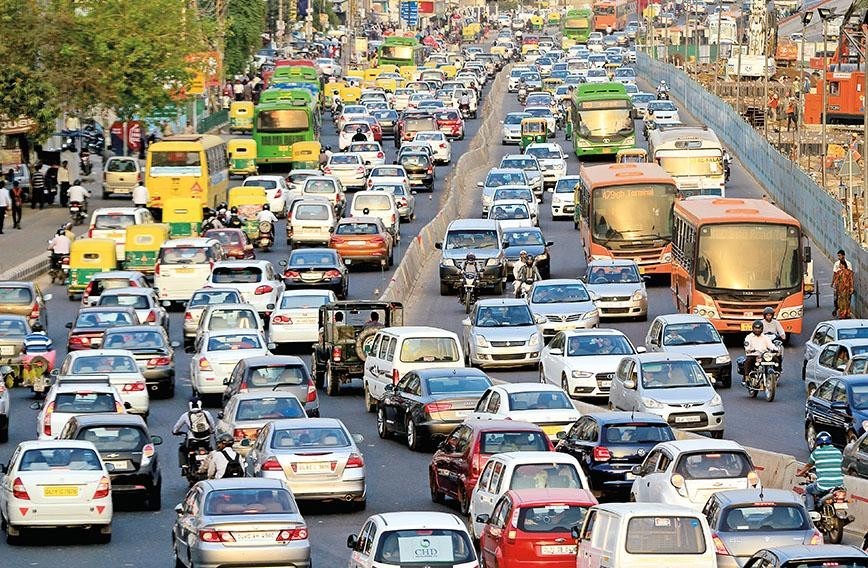
Vehicles contribute less than 10 percent of Delhi’s PM 2.5 emissions. Of that, the majority comes from two- and three-wheelers. But we know that banning two-wheelers is a political hot potato and therefore difficult to enforce. That means cars — which contribute less than 5 percent to Delhi’s PM 2.5 problem — are the main focus of the ban. The impact of banning cars on air quality, therefore, will be minimal.

This is exactly why the much-hyped odd-even vehicle rationing scheme failed. It ignored the science of air pollution and tried to project political will through traffic gimmicks. Banning cars based on age and denying them fuel is another version of the same performative theatre.

In fact, these policies will do more harm than good to the environment. They prematurely dispose vehicles, pushing people to buy new ones, thereby boosting automobile sales and adding more vehicles to the road. In addition, every new vehicle carries a hidden environmental cost in terms of emissions from raw materials, manufacturing, and logistics.

Rather than fixing arbitrary age limits, a sensible vehicle retirement policy would be based on fitness. Around the world, vehicles are allowed to operate as long as they pass periodic fitness checks, including emissions testing. A 15-year-old car that is well maintained and meets pollution standards is less harmful than a new one, if we consider the environmental impact of a vehicle’s full lifecycle.

But the problem is that India lacks the necessary infrastructure to make this happen. There’s no robust inspection and certification (I&C) system, no reliable pollution testing, and no systematic registration-deregistration process for vehicles. Nor do we have an effective network of End-of-Life Vehicle collection and recycling centres. If we’re serious about reducing vehicular pollution, we must invest in a credible and modern vehicle lifecycle management system.

Let me be very clear: banning polluting vehicles is a good idea. Old, polluting vehicles must be phased out. But they must be banned through a structured, evidence-based, and environmentally sound policy regime — not ad hoc decisions. In the absence of systems, such bans serve more as virtue signalling than pollution control. The air will not get cleaner because you made life harder for a few car owners. It will get cleaner when you treat clean air not as a slogan, but as a regional economy-wide problem — one that needs a long-term plan, and scientific and institutional investment. 


Social media & sharing icons powered by UltimatelySocial