Weather shifts in climate talks

Two changes: accepting that biggest polluters will pay poor nations & pressure on China, India to contribute

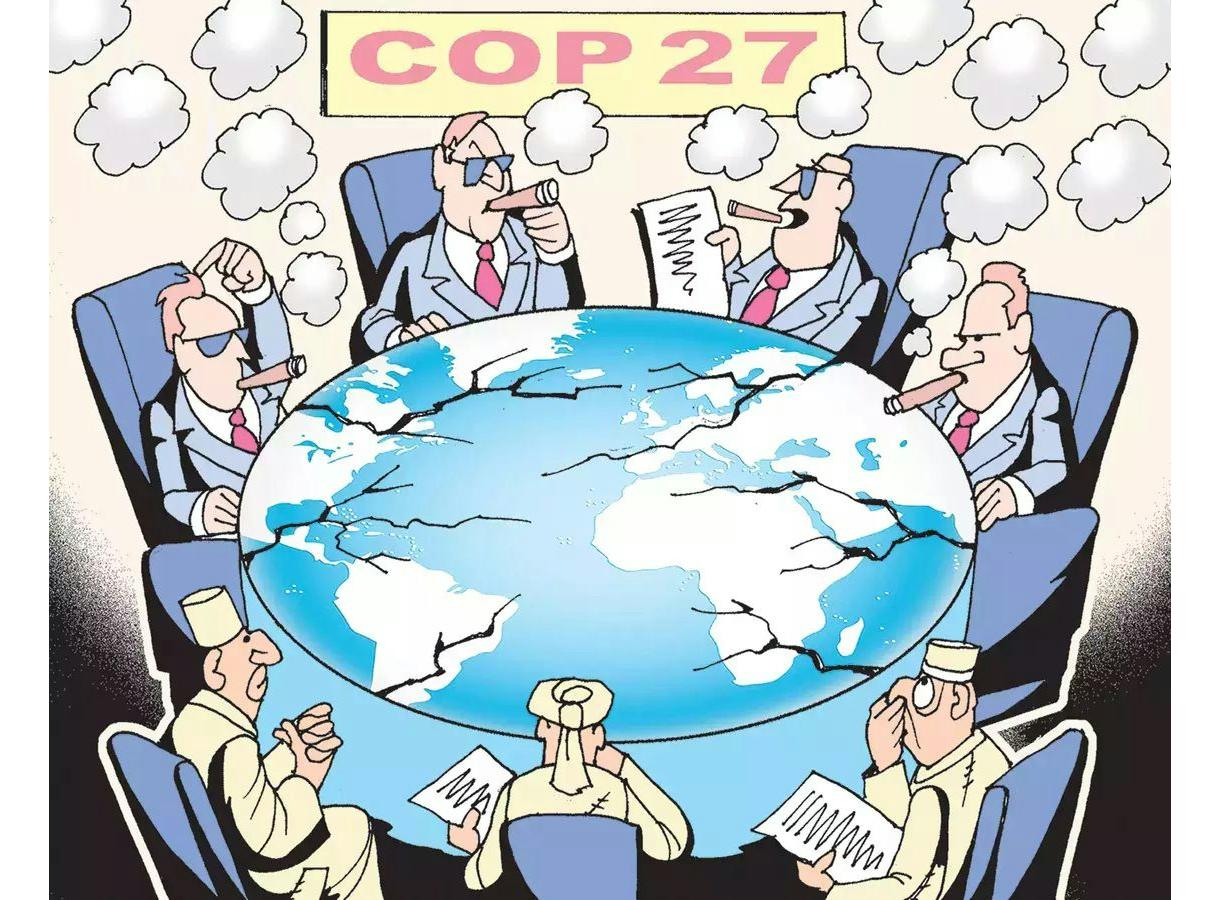
The 27th Conference of Parties (COP27) to the UN Framework Convention on Climate Change (UNFCCC), which wrapped up in the early hours of Sunday at the Egyptian resort town of Sharm El-Sheikh, set things in motion that will have far-reaching implications for the international climate negotiations.

COP27 kicked off with the demand by the developing countries, especially least developed countries (LDCs) and small island nations, to set up a ‘Loss and Damage’ fund to compensate them for climate disasters. These countries, which have contributed the least to global warming, are now suffering annual losses in billions of dollars. For instance, the cost of the recent floods in Pakistan is estimated to be over $46 billion – 13.25% of the country’s GDP.

The loss and damage negotiation was acrimonious, to say the least, with the US entirely against any deal that would expose them to unlimited liability for their historic contribution to greenhouse gas (GHG) emissions. The negotiations also got into the question of who should pay, with small island states demanding that India and China should also contribute to the fund as they are now big GHG emitters.

Structure of compensation fund

Structure of compensation fund In the wee hours of Sunday, countries agreed to set up a new funding window to pay for loss and damage, but with many caveats attached to this fund.

  • The fund will only support countries most vulnerable to climate change.
  • It might not include India.
  • Funding will come from both developed countries and a “mosaic” of sources, including the private sector and philanthropies.

Considering that wealthy countries have never met their financial commitment; one is sceptical of this fund’s ability to help developing countries.  

Nevertheless, it is a big deal that the principle of compensating countries for climate disasters has been recognised. From now on, a certain “liability” will be put on big polluters and they will be under a moral, if not legal, obligation to support vulnerable countries.

Holdouts on oil and gas

It is tragic but a reality that it has taken 30 years for countries to realise that phasing down andultimately phasing out all fossil fuels is the most important factor to limit global warming. And it was India that set in motion the discussion to phase down all fossil fuels.

Last year at Glasgow, while countries agreed to phase down coal power to limit global warming, they kept silent on oil and gas due to pressure from big oil and gas-dependent economies, including the US and EU.  

All the studies indicate that controlling global warming requires action on all fossil fuels, not just coal. This point was forcefully made by India and ultimately supported by nearly 80 countries, including the US and EU. But Russia and Saudi Arabia vehemently opposed the inclusion of oil and gas, and therefore it was not included in the final decision. Nevertheless, Sharm El-Sheikh has set in motion the need to phase out all fossil fuels, and it is a matter of time before this is accepted in a future COP.

  Upending developed vs developing

The negotiations around loss and damage also unravelled the traditional classification of developed and developing countries, as outlined in the 1992 convention. The question of who should pay for loss and damage brought focus to China, the largest current emitter and second-largest historical emitter of GHGs.  

China prefers to be called a developing country in the climate negotiations, which was questioned by many countries. The same applied to newly wealthy countries like Saudi Arabia, South Korea and Singapore.

Developed countries always wanted to upend the classification. At COP27, they got the support of many small island states and LDCs to do so. While the final text has not clearly mentioned the larger role of emerging economies, it is pretty clear that from now on, countries like China will find it challenging to avoid greater responsibility for the climate crisis. There will also be pressure on India to contribute more, as it is traditionally bracketed with China at the UNFCCC.

 Implementation through a just transition

Just transition, the socio-economic impact of phasing down fossil fuels, has emerged as an important agenda at COP27. Mid-way through the COP, a $20 billion deal was struck between Indonesia and G7 countries at the G20 meeting in Bali to phase down coal use in Indonesia in a just manner.

Called Just Energy Transition Partnership (JET-P), a similar deal worth $8.5 billion was signed between South Africa and G7 last year. A JET-P deal was offered to India, which it rightly postponed for future negotiations.

Overall, the outcome of COP27 is not so much in words as it is in the direction the international negotiations are moving in. For India, it is important to recognise these decisive shifts and develop a negotiating strategy that is good for the country and the planet. India did quite well at Sharm El-Sheikh by proposing the phasing down of all fossils, supporting developing countries on loss and damage, and releasing its Long-Term Low Emission Development Strategy. Now is the time for the country to relook at its negotiating position that will advance the development and climate agenda together.

Don’t Delhi and Punjab govts breathe the same air? There is much AAP can do to cut stubble burning and pollution, if it chooses to do so

If some Delhiites believed that the AAP government in Punjab would resolve the national capital’s air pollution woes, they couldn’t have been more wrong. Not only has Arvind Kejriwal, the national convener of AAP and CM of Delhi, refused to take responsibility, he is now blaming all and sundry for the airpocalypse. But the fact is, his party now governs two states that presently contribute two-thirds of the pollution in Delhi-NCR.

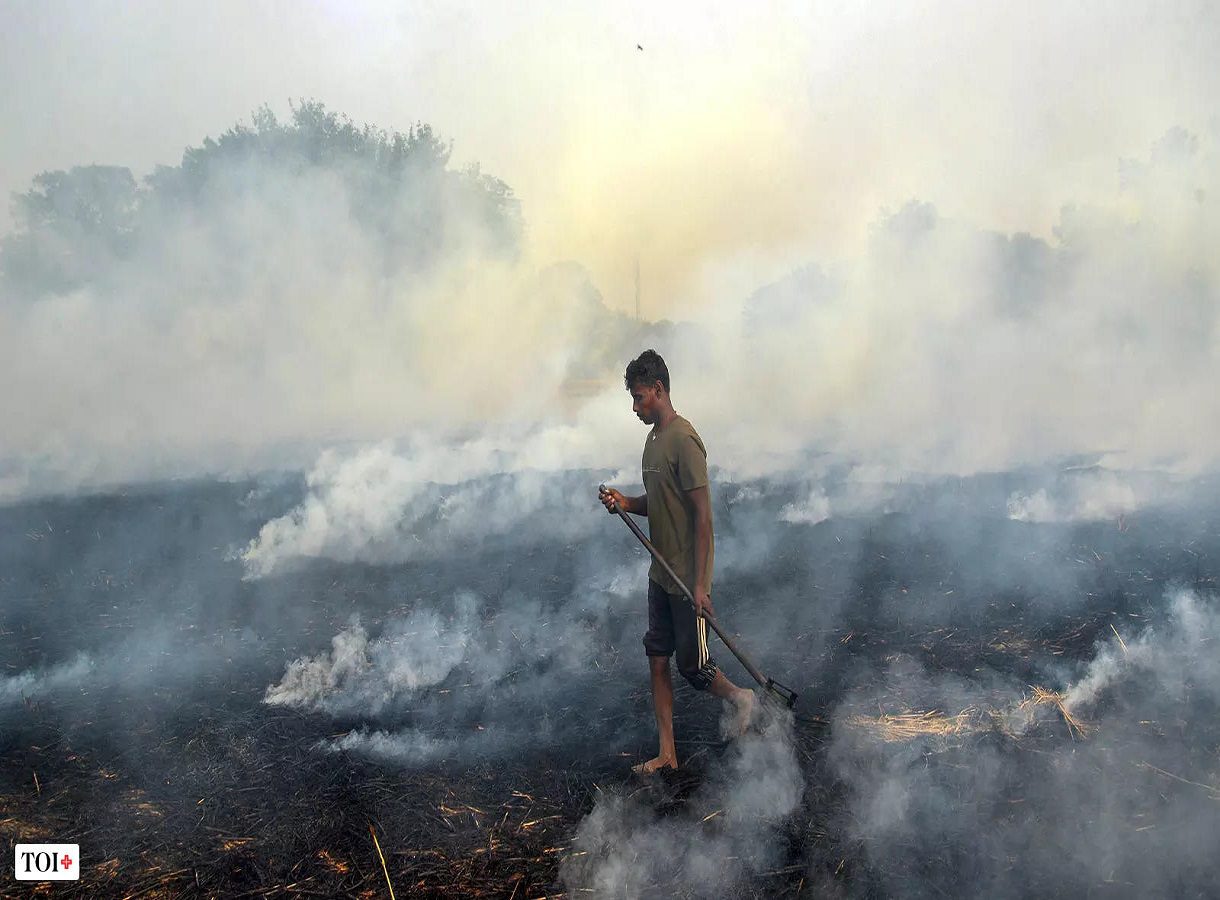
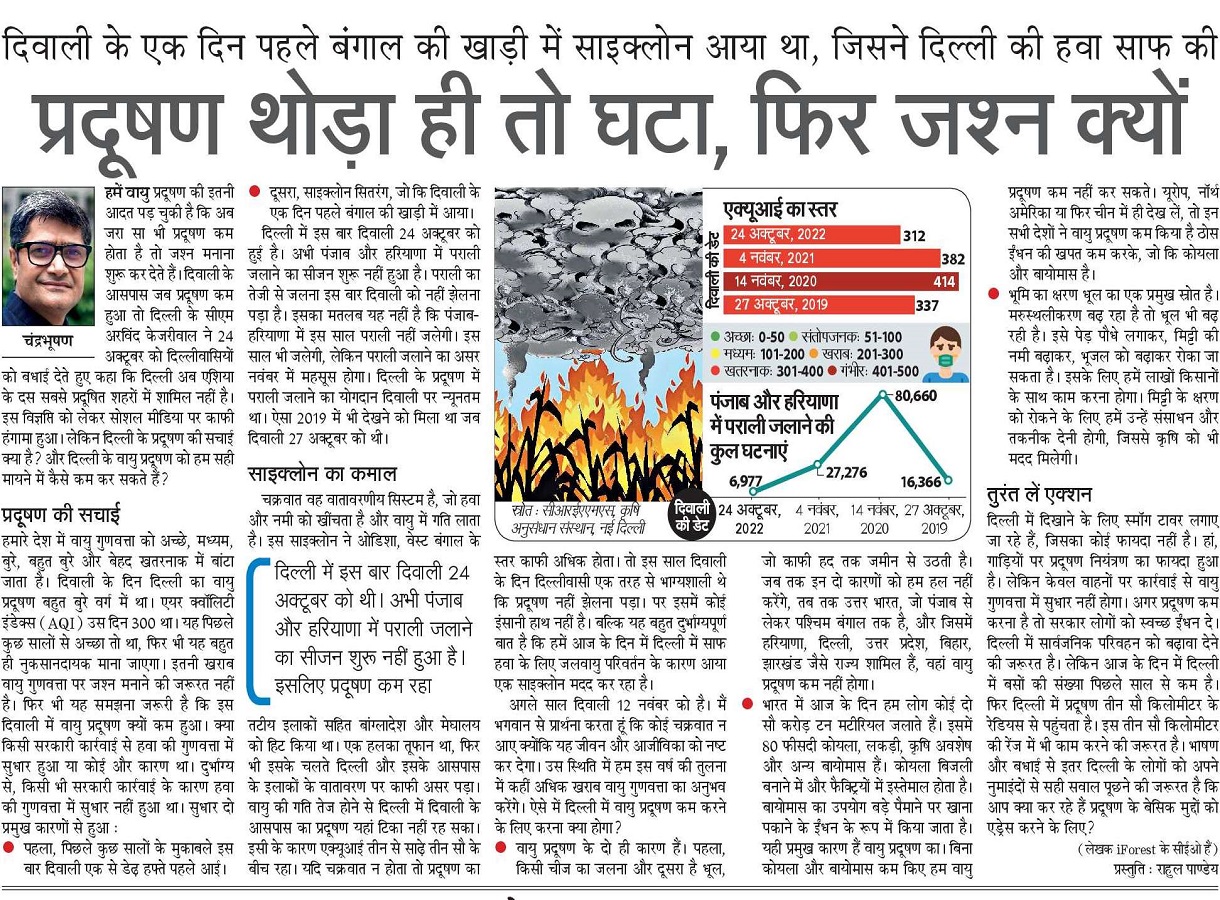
Let’s be clear, Delhi is a gas chamber today because of its own pollution and the pollution due to stubble burning, primarily in Punjab. To those who still think that stubble burning is not the leading cause of severe air pollution, they need to only look at the following data:

  • Currently, the contribution of stubble burning to Delhi’s pollution is 34-38%. This number will likely increase to 50% in the coming days if farm fires are not stopped.
  • 91% of all the farm fires from October 1 to November 3 were recorded in Punjab; only 10% were in Haryana and Uttar Pradesh.

So, addressing the issue of stubble burning in Punjab is necessary for controlling air pollution in Delhi during winter. The bottom line is that the AAP government, which has been given an overwhelming mandate by the citizens of Delhi, will have to stop finger-pointing and get serious about mitigating major pollution sources within and outside. Let me point out four major areas that can work to reduce air pollution in the next few years.

Invest in public transport and safe roads: Of the megacities of the world, Delhi has one of the worst public transport infrastructures. Its roads are also one of the most unsafe for walking and cycling. Unfortunately, the AAP government has made little investments on both of these fronts. For instance, Delhi today has fewer buses than it had 10 years back. So, instead of promoting campaigns like ‘Red light on, Gaadi off’, which would have caused more congestion and pollution, it should focus on safe and well-connected public transport and roads.

Green the city: All modelling studies indicate that dust from roads and open spaces causes massive PM10 pollution. But I have never understood why there is a reluctance to grass the sideways and green the open spaces. From Mexico City to Beijing, cities that have significantly improved their air quality have used greening as one of the principal measures to reduce dust.

Reduce pollution from solid fuels: Delhi has to work with other states, especially Punjab, Haryana, UP and Rajasthan, to reduce the biggest source of pollution – open biomass burning and pollution from coal. Biomass burning, primarily for cooking and heating, is a major source of air pollution in Delhi’s airshed. The pollution intensity of open biomass burning is hundreds to thousands of times more than those of vehicles and industries. Similarly, burning coal in industries and thermal power plants is a significant source of pollution.

No city in the world has managed to reduce air pollution by burning massive quantities of solid fuels. For example, Beijing reduced its air pollution by reducing coal consumption in power plants and industries and shifting millions of households to clean cooking fuels in Beijing, Tianjin and Hebei regions.

A no-harm agreement with neighbouring states: The no-harm rule is a widely recognised principle of international law whereby a country is duty-bound to prevent, reduce and control the risk of environmental harm to other countries. The time has come to use this principle domestically.

  • Today, stubble burning in Punjab is causing harm to the health and environment of Delhi, and thus Punjab is breaching the no-harm principle.
  • Until now, the discussions between states have been informal, and solutions have been non-binding.
  • But it is time that a formal agreement is made between the NCR states to stop farm fires and other significant sources of pollution.
  • This inter-state environmental agreement should be a cooperative and binding agreement with measurable results.

For instance, under this agreement, NCR states and the central government could pool resources to help farmers (not pay farmers) eliminate stubble burning. Delhi can take the lead in this as it has close to Rs 1,000 crore sitting idle in its green fund, which it collected as an environment compensation charge from diesel-guzzling trucks entering the capital.

Evidently, there is a lot that the Delhi government can do but chooses not to do. Therefore, it is time for the choked citizens to ask the right question from the AAP government: What is the result of close to eight years of your rule on the air quality of the city?

India’s Renewables Disparity

‘Price-equalisation’ policies, mirroring some pre-liberalisation schemes, are distorting spatial distribution of renewable energy generation

Even a good policy with the best intentions can have unintended and adverse consequences. The Freight Equalization Scheme (FES) was one such policy meant to promote balanced industrial development throughout the country but ended up impeding the industrialisation of the mineral-rich eastern states. From 1956, consumers across the country got iron, steel, cement, and fertilisers at the same price, as the transportation was cross-subsidised. There was also a price control on coal, which ensured its availability at a fairly uniform price. This price equalisation deprived the mineral-rich states of their natural advantage of setting up downstream processing industries in the automotive, engineering, and energy sectors. As a result, industries developed in a few coastal states with large markets, such as Maharashtra, Gujarat, and Tamil Nadu, but states like West Bengal, Jharkhand, Odisha, Madhya Pradesh, and Chhattisgarh suffered. Consider this statistic: in 1950, West Bengal and Bihar accounted for 92% of all iron and steel production and 48% of all manufacturing output in engineering-related industries; in 1992, when FES was repealed, their share in engineering-related sectors was in the single digits.

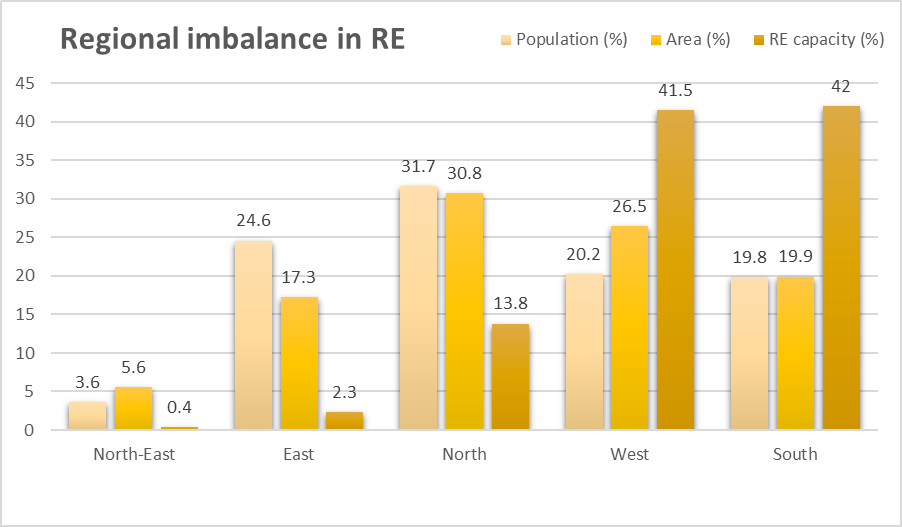
Presently, a similar “price equalisation” policy is being implemented in the renewable energy (RE) sector, which again threatens to create regional disparities in green industrialisation. This time, however, the price equalisation is to the advantage of the ‘resource-rich’ states, which happen to be in western and southern India, and to the disadvantage of the ‘resource-poor’ states, which are in northern and eastern India.

In the last 8.5 years, RE has grown exponentially from 31.7 gigawatts (GW) in 2014 to 114.4 GW in July, 2022. But most plants have come up in three western states (Rajasthan, Gujarat and Maharashtra) and four southern states (Andhra Pradesh, Karnataka, Tamil Nadu and Telangana). These seven states today account for more than 80% of RE in the country. On the other hand, northern and eastern states have lagged behind. For instance, the east and northeast, which account for 28% population and 23% geographical area, have only about 3% RE capacity. So, why this lop-sided growth in the RE sector? 

There are three major factors. The first is the difference in RE potential between regions, the second is the availability of large parcels of land, and the third is the national RE policy. But overall, it is the RE policy that is amplifying the impact of potential and land. Let me explain.

There is a difference in solar and wind potential between states, more in the wind than solar. But this difference is not so high that RE plants, especially solar, cannot be installed in large parts of the country. In India, on average, a solar PV plant can generate 1400-1700 kWh/kWp per year, depending on solar insolation. So, the difference between the so-called solar-rich and poor states is only about 10-20%. But the point to note is that even the lowest solar insolation areas in India can generate 20-25% more electricity than Germany. Yet, Germany has more solar capacity than us. In a nutshell, most of parts of India have good solar potential; some regions have a little higher than others.

As far as land is concerned, it is true that states like Rajasthan and Gujarat have large patches of land where solar plants of hundreds of megawatts can be installed. But land and large artificial reservoirs are also available in north and eastern India. Odisha, Jharkhand and Chhattisgarh have vast wasteland and fallow land to install megawatt-scale plants. Uttar Pradesh and Bihar have massive potential to establish agri-solar. It is our policy to promote large solar plants that have made the land an issue. Otherwise, there are enough land, rooftops and reservoirs for balanced solar growth across the country. This brings me to the all-important factor, the RE policy.

Our RE policy is single-mindedly focused on installing large capacity at the lowest possible cost. The key instrument is the Renewable Purchase Obligation (RPO). Under this, states are required to meet a minimum percentage of their electricity requirement through RE. The RPO target for 2022-23 is 14.5%, which will increase to 43.33% by 2029-30. To meet the RPO targets, inter-state transmission system (ISTS) charges have been waived to allow ‘resource-poor’ states to buy the cheapest RE from anywhere in the country. ISTS charges have been wholly waived till June 2025 and will be progressively eliminated by 2028.

But ISTS waiver, a market distorting subsidy, is now a critical factor in deciding the location of plants. In a hyper-competitive RE market, the waiver, which could be as much as Rs 0.40-0.80/kWh or 15-30% of generation cost from large solar plants, is pushing companies to put up plants in western and southern India. RE-linked manufacturing — solar PV, battery and hydrogen electrolyser plants — are also moving to these states. As a result, an entire ecosystem is slowly getting entrenched in a few western and southern states, which is detrimental to RE development in the rest of the country. It is, therefore, time that we developed a more detailed understanding of the regional implications of the ISTS waiver and other RE subsidies and made necessary corrections quickly.

While installing large RE capacity is an important climate goal, it cannot be at the expense of shared prosperity. We must not allow India’s growth story to suffer by further widening the regional disparities.

Defining the environment sector

The National Industrial Classification 2008 needs to be revised to capture all environment-related activities

The environment sector provides a vast opportunity to create new jobs and build a green economy. For this, the environment sector must become an important economic sector.  

What is the environment sector? How many people work in this sector? How many new jobs are needed to meet environmental challenges like the climate crisis? What is the skill gap and capacity development need of the sector? If we are serious about solving environmental problems, we need answers to these crucial questions. But unfortunately, there are no answers because we do not know the environmental sector. Let me elaborate.

The National Industrial Classification – 2008 (NIC-2008), the latest 5-digit classification system used by the Central Statistical Organisation (CSO) to estimate jobs and economic contribution of various sectors, has categorized all economic activities into 21 Sections, 88 Divisions, 238 Groups, 403 Classes and 1304 Sub-classes. But this vast classification system doesn’t have a Section called ‘Environment Conservation and Protection. The only place where some of the environment-related activities appear is in Section E: Sewerage, waste management and remediation activities. This section lists work related to water and wastewater treatment, material recycling and solid and hazardous waste management. But apart from these, products and services related to air pollution control, soil conservation, biodiversity protection, cleaner production, low carbon development or climate change adaptation do not appear anywhere. Therefore, in our current national statistics, there is no separate information on the economic contribution of the environment sector or the number of people working to conserve and protect the environment, a.k.a, green jobs.

But the question is, why do we need a separate environmental sector category? Aren’t environment-related activities part of all economic activities? For example, aren’t jobs related to industrial pollution control part of different industrial sectors? The answer is yes and no. While environmental activities are part of all economic sectors, we still need to categorize the environment as a separate economic sector for innovation and growth.

The critical element in the growth of any sector is money, human resource and innovation, and all three are interdepended. This interdependency can be virtuous or vicious. In a virtuous relationship, money will attract the best talent, and both money and human resources will lead to innovation. Greater innovation, in turn, will bring more money, and this cycle will continue. In a vicious cycle, the opposite happens. 

The IT sector, which accounts for nearly 8% of the country’s GDP (three times more than the mining sector), is a classic example of a virtuous relationship. This sector continues to grow because it pays good money to get the right talents; the high-quality human resources, in turn, develops new products and services and makes more money, and the cycle continues.

On the other hand, the environment sector is not exactly on the virtuous cycle. I will not say it is on a vicious cycle either, but considering the scale and pace of changes required to solve environmental crises such as climate change, land degradation and water pollution, the sector needs major innovation and growth. This is only possible with large investments and high-quality human resources. But how do you attract investments when you do not know where and how much investments are required? How do you attract talent when you do not know what kind of jobs are needed today and tomorrow? Basically, how can a sector grow when it doesn’t exist formally? Therefore, to develop this critical sector, we need to define it as a formal economic sector by mapping its economic outputs and jobs.

Obviously, the Ministry of Statistics and Programme Implementation (MoSPI) and CSO have a critical role in revising the NIC and developing a new industrial classification system that captures all environment-related activities. But institutions outside the government will also have a significant role to play in building this field. For instance, we at iFOREST have recently mapped the Air Quality Management (AQM) sub-sector, and the results are fascinating. We found that:

  • At least 2.8 lakh organizations,  industries and mines require personnel to monitor, plan, prevent and control air pollution.
  • There are at least 42 different kinds of jobs in AQM. From municipal workers involved in dust control to air quality modelling and forecasting specialists to transport planners, AQM requires personnel with diverse skills. 
  • In totality, an estimated 22 lakh direct and indirect jobs are required to manage air pollution in the country. Most of these jobs are blue-collar jobs such as the operator of pollution control equipment in industries, operator of PUC centres (who checks tailpipes of vehicles) and municipal workers. They are the frontline workers but have never been considered part of the sector and made aware of their vital role in managing air quality.
  • There are tens of thousands of white-collar jobs, but there aren’t enough qualified personnel to take up these jobs. We estimated that the AQM sub-sector can provide at least 50,000 new white-collar jobs, ranging from researchers and analysts to air quality managers in cities and inspectors in pollution control boards.
  • The challenge in the AQM in India is that the people presently working in the sector have not been trained, and a large number of jobs that are required do not exist.

If the AQM sub-sector alone needs hundreds of thousands of people, then think about the potential of the entire environment sector? The bottom line is that we have to view the environment sector as an opportunity to create new jobs and build a green economy. While many of the existing jobs lead to the destruction of the environment, we must start creating jobs to protect the environment. For this, the environment sector must become an important economic sector.

Energy transition crucial

Odisha is known for coal. It is the second biggest coal-producing state, and by 2030, it will be the country’s top coal-producing state. So naturally, Odisha’s electricity production is heavily reliant on coal. Presently, more than 90% of electricity comes from coal-based power plants; renewable energy (RE) sources like solar, wind, and biomass play a minimal role.

Low Renewable Energy Potential in Odisha is a Myth That Needs to Be Discarded.

In 2016, Odisha announced a policy to promote RE in the state. The policy had a modest target of installing 2,750 megawatts (MW) of RE capacity by 2022. But, as of March, 2022, only 617 MW has been installed, which is less than 25% of the target. In comparison, during 2016-2022, the country’s RE capacity more than doubled from 46,580 MW to 109,885 MW. Today, Odisha’s share in the country’s RE capacity is just 0.55%.

But due to low RE installation, Odisha has to buy renewable power from other states to meet its mandatory renewable purchase obligations (RPOs). RPOs are an essential policy tool introduced by the central government to increase the installation of RE in the country. Under this, all states are required to meet a minimum amount of their electricity requirement through RE. Odisha’s RPO target for 2022-23 stands at 14.5%, which is set to increase to 43.33% by 2029-30. So, in 2029-30, close to 45% of electricity demand in Odisha has to be met from renewable sources. Now Odisha has a choice: buy RE from states like Rajasthan, Gujarat, and Tamil Nadu or install 30,000 MW of RE in the state to meet its 2029-30 RPO targets and simultaneously build a vibrant clean energy industry. I believe the choice is obvious: Odisha will gain immensely by installing RE within the state.

I say this because Odisha has the opportunity and obligation to promote RE. The opportunity is that the RE sector can support the next phase of green industrialisation in the state, creating new employment opportunities, as well as boosting economic activity and income in rural communities. The obligation is because Odisha has one of the highest carbon dioxide (CO2) emissions per capita. It is also one of the most climate vulnerable states, with extreme weather events like cyclones, heatwaves, floods and droughts taking a significant toll on the lives, livelihoods and the economy every year. The energy transition is, therefore, crucial for the state.

So far, investments in the state’s RE sector have remained tepid due to many institutional and commercial challenges. This needs to be addressed by the government through innovative policy measures and stronger incentives under the new RE policy, which is set to be released this year.

But before we address the policy challenges, removing a misconception that has pulled down RE development in the state is important. The misconception is that the state doesn’t have RE potential. This misconception has been created because of the poor estimation of RE potential by different agencies. For example, till today, a detailed study on the wind energy potential in Odisha, a coastal state, has not been undertaken. The solar potential has also not been estimated based on thumb rules. Our initial estimation is that Odisha’s RE potential is at least five times what is being projected by the Ministry of New and Renewable Energy (MNRE).

Take the example of solar power. According to MNRE, Odisha only has 26,000 MW of solar potential. But this estimate has ignored the significant potential of manmade water bodies (where floating solar power can be installed) and large mining wasteland. We estimate that just on water bodies and mining wasteland, 20,000 MW solar plants can be installed. Large RE capacities can also be installed in urban and rural areas through distributed renewable energy plants like rooftop solar plants. Odisha can also prioritise agro-solar farming, given the significant share of mono-cropped agriculture land and fallow land in the state. This will not only increase the state’s RE capacity, it will also enhance income levels for the rural poor. So, low RE potential in Odisha is a myth that needs to be discarded.

As far as policy challenges are concerned, there are many. The foremost is streamlining and building the state’s institutional capacity for RE promotion and adoption. Presently, Orissa Renewable Energy Development Agency, Engineer-in-Chief and Green Energy Development Corporation of Odisha Ltd. have been made nodal agencies for different RE technologies, which often leads to confusion and delays at the implementation stage. A single empowered nodal agency at the forefront of RE promotion in Odisha can help fast-track deployment through proactive measures.

The other aspect is to avoid copying the model being implemented in states like Rajasthan and Gujarat, which are installing ultra-mega solar plants on large tracts of land. Instead, Odisha’s new RE policy should focus on developing smaller plants by making farmers and landowners true partners in RE development. Technologies like agri-solar, rooftop solar, floating solar, pumped hydro stations, and green hydrogen should be prioritised. The policy should also focus on supporting and ensuring RE installations by industries with captive power plants, which also have to meet RPO targets.

At a time when the country is steadily cruising along a green technology pathway with clear targets and roadmaps for renewable energy, storage, hydrogen, electric vehicles, Odisha cannot miss the opportunity to build a new clean energy economy. Overall, Odisha should develop the new RE policy for 2022-30 in such a way that it is recognised as a serious destination for RE investments.


A coal economy to a green economy

Just energy transition’ must Shape net-zero pathways for fossil-fuel-dependent districts.

In the last 18 months, several modelling studies have been published on the costs and benefits of net zero emissions in India. A few days back, another modelling study was published, which projected that India will require an economy-wide investment of $10.1 trillion to achieve its net zero targets by 2070. But this will have significant gains, as it would boost annual GDP by 4.7% by 2036 and create 15 million new jobs by 2047. The benefits are even greater if India reaches net zero by 2050, says the study. In the words of Jayant Sinha, Member of Parliament, like previous modelling studies, this too predicts that “Net Zero is Net Positive” for India.

These reports are important at one level because they give us a macro picture of what it would entail to achieve the net zero target. They also give us the hope that we can address the climate crisis while growing our economy and creating millions of new green jobs. However, these macro-assessments do not tell us about the regional implications or the political economy of this transition. In other words, these reports have minimal relevance for planning a net zero pathway at the district or state levels.

For instance, the costs that these studies account for mainly include the investments required to build the new green industries and infrastructure—renewable energy, hydrogen, green steel, etc. They do not have the costs of closing the existing fossil-fuel based industries and infrastructure—coal mines, power plants, freight corridors, etc. However, at the district level, closing mines and plants are far more important than building the new industries, especially when there is no guarantee that these will come at the same place. In a nutshell, while macro-economic modelling has its value, today, we need studies to understand the costs, benefits and regional implications of achieving the net zero target so that we can plan and achieve a just energy transition. Let me illustrate this with the case of Angul, Odisha.

Over the last two years, my colleagues and I have been studying the coal districts of India to understand what a Just Energy Transition (JET) means and entails for these districts. We studied Ramgarh in Jharkhand, Korba in Chhattisgarh and, last week, we published our report on Angul.

The study of Ramgarh showed that the district has mostly unprofitable old mines, which will close soon. Ramgarh, therefore, needs to quickly start implementing an economic diversification plan to deal with the repercussions of the economic downturn due to the closure of mines. In Korba, India’s top coal-producing district, the reserves are getting exhausted, and most existing

mines and power plants will close between 2040-2050. So, Korba has a little more time than Ramgarh to implement a JET.

Angul, however, tells a very different story. The district produces about 100 million tonnes (MMT) of coal—about 12% of the country’s production. About 168,000 people are employed by coal mining and coal-dependent industries, and over 61% of the district’s GDP is dependent on coal. But coal production will grow three-fold in the next 10 years and peak at 300 MMT by 2033. Other coal-dependent industries, such as steel and aluminium, are also expanding. This growth is possible because Angul produces some of the cheapest coal in the country.

As per the current plans, there is no way that coal production in Angul can be phased out by 2050. If we try to reach net zero in Angul by 2050, then almost all mines will have to forego 30-60% of their reserves, and industrial assets would have to be shuttered at the peak of their economic life. So, how do we plan a net zero pathway for a district where the coal economy is growing exponentially? How do we close the mines and industries, and who will pay for this? How do we create alternative jobs for coal workers? Who will invest in the green economy? These are the questions that matter, and we need answers to these to develop a realistic just transition plan for real people.

Our study shows that it is possible to achieve net zero by 2050 in Angul, but it would require a JET plan spanning over the next three decades and billions of dollars of compensation and investments. It would require what we call the 5 Rs of Just Transition.

* Restructuring of the economy: Angul’s economy will have to diversify through investments in agriculture, forestry and service sectors. Its industries will have to move from a brown economy to a green economy through investments in renewables, hydrogen-based steel and urea, green aluminium, and a circular economy.

* Repurposing of the existing infrastructure: Repurposing mining land and industrial plants will be crucial for economic diversification. For instance, about 33,000 hectares of land in Angul are under coal mines and power plants. These can be used for solar PV, food parks, the development of fisheries and tourism sectors, etc.

Reskilling and skilling of the workforce: Large-scale skilling and reskilling programmes will have to be implemented to develop a skilled workforce for economic diversification.

* Revenue substitution: Currently, coal mines in Angul contribute over Rs 6,000 crore as royalty and cess to the state and the central government. This is projected to increase to Rs 18,000 crore by 2030. Angul’s economic diversification plan must at least substitute the revenues foregone from the coal economy.

* Responsible environmental and social investments: Angul is an economically-backward district and also a critically polluted area. Massive investments would be required for the closure and remediation of mines. Likewise, the district needs investments in social infrastructure—health, education, water, livelihoods etc., to build a sustainable economy.

Overall, Angul’s study shows that if we want to achieve the net zero target, then we must understand its implications at the district and state levels. Without this, big macro-assessments make no sense.

पर्यावरण पर कैसा है हमारा रिपोर्ट कार्ड !

पर्यावरण पर कैसा है हमारा रिपोर्ट कार्ड, जानें मौजूदा कानूनों और संस्थानों में सुधार क्यों है जरूरी |

साल 2022 पर्यावरण के लिए एक महत्वपूर्ण वर्ष है। संयोग से, आजादी के 25 साल पूरे होने के हफ्तेभर बाद, लोकसभा ने वन्यजीव (संरक्षण) विधेयक, 1972 पारित किया, जो स्वतंत्र भारत का पहला पर्यावरण कानून था। इसके अलावा, 1972 में National Committee for Environmental Planning and Coordination (NCEPC) की भी स्थापना की गई, जिसने बाद में पर्यावरण मंत्रालय की शक्ल ली। 1972 में ही स्टॉकहोम में मानव पर्यावरण पर संयुक्त राष्ट्र सम्मेलन में इंदिरा गांधी ने अपना प्रसिद्ध भाषण दिया था। उनके संबोधन में एक पंक्ति – गरीबी सबसे बड़ा प्रदूषक है – पर्यावरणविदों की एक पीढ़ी का मूलमंत्र बन गई और आज भी देश-विदेश में पर्यावरणीय मुद्दों पर इसकी चर्चा की जाती है। इस समय, जब हमें आजादी के अमृत महोत्सव के साथ-साथ संस्थागत पर्यावरणवाद की स्वर्ण जयंती मनानी चाहिए, तो यह देखना महत्वपूर्ण है कि हम कहां हैं और किस दिशा में आगे बढ़ रहे हैं।

हमने पर्यावरण के मोर्चे पर महत्वपूर्ण प्रगति की है, लेकिन हम काफी मुद्दों पर असफल भी रहे हैं। मैं तीन उल्लेखनीय सफलताओं और संबंधित बाधाओं का यहां जिक्र करूंगा, जो पिछले 50 वर्षों की पर्यावरणीय यात्रा को दिखाती हैं।

  • पहली सफलता यह है कि पर्यावरण संरक्षण की भावना आज ‘मुख्यधारा’ की भावना है। आज हर कोई पर्यावरण की रक्षा और जलवायु संकट को हल करने की आवश्यकता पर सहमत है। हाल ही में ऊर्जा मंत्री आर के सिंह ने संसद को बताया कि जलवायु परिवर्तन और उत्सर्जन कम करने के मुद्दे पर देश में एकमत है, जो विकसित देशों में भी नहीं है। आज राष्ट्रपति, प्रधानमंत्री, विपक्ष के नेता, सभी पर्यावरण और जलवायु परिवर्तन के समाधान के मुद्दे पर जोर देते हैं। इसका श्रेय सभी सरकारी और गैर-सरकारी संगठनों को जाना चाहिए, जिन्होंने पर्यावरण के प्रति जागरूकता बढ़ाने के लिए कड़ी मेहनत की है।
  • दिक्कत यह है कि भावना और अभ्यास में बहुत बड़ा अंतर है। अभ्यास बदल रहे हैं, लेकिन काफी धीरे। इसके मुख्य कारण हैं संस्थागत बाधाएं और सामाजिक जड़ता।
  • दूसरी सफलता यह है कि हमने पर्यावरण के हर पहलू से निपटने के लिए एक व्यापक कानूनी और संस्थागत ढांचा विकसित किया है, चाहे वह वन हो, वन्य जीवन हो, प्रदूषण हो या पानी और जमीन का संरक्षण हो।
  •  यहां समस्या यह है कि हमारे कानूनों और उनके कार्यान्वयन में व्यापक अंतर है। आज देश में कानून को आसानी से तोड़ा जाता है। फैक्ट्रियां प्रदूषित पानी और गैस बिना डर के पर्यावरण में उत्सर्जित करती हैं। म्यूनिसिपैलिटी कचरे का समाधान कानून के तहत नहीं कर रही है और लोग भी अपना कानूनी दायित्व नहीं निभा रहे। इसका मुख्य कारण खराब तरीके से बनाए गए कानून और कमजोर संस्थान हैं।
  • तीसरी सफलता सबसे महत्वपूर्ण है और इस तथ्य पर गर्व भी किया जा सकता है कि हम अपने वन क्षेत्र को बढ़ाने और वन्य जीवों की रक्षा करने में काफी हद तक सफल रहे हैं। आज हमारे देश में जंगलों का क्षेत्रफल 50 साल में सबसे अधिक है। इसी तरह बाघों की संख्या भी आजादी के बाद सबसे अधिक है। असल में, आज भारत इकलौता ऐसा देश है जो बाघों को बचाने में सफल रहा है।
  • लेकिन यही चीज हम अपने शहर, गांव, कृषि क्षेत्र, नदियों और समंदर के बारे में नहीं कह सकते। वायु प्रदूषण में तो हमें विश्व का सबसे प्रदूषित देश माना जाता है। इसी तरह नदियों की भी हालत काफी खराब है। इनके तीन कारण हैं- बढ़ती आबादी, लगातार बढ़ती खपत और सिकुड़ते प्राकृतिक संसाधन। पिछले 50 वर्षों में, हमारी जनसंख्या में डेढ़ गुना (80 करोड़) और जीडीपी में 13.5 गुना वृद्धि हुई है। दूसरी ओर, हमारी प्रति व्यक्ति कृषि योग्य भूमि और मीठे पानी के संसाधन 60% तक सिकुड़ गए। हमारे उत्पादन और उपभोग प्रणालियों में मूलभूत परिवर्तन के बिना, भूमि, वायु और जल की क्षति जारी रहेगी, जिसके स्वास्थ्य और अर्थव्यवस्था के लिए गंभीर परिणाम होंगे।

संक्षेप में कहें तो पिछले 50 वर्षों का अनुभव हमें आधे-अधूरे प्रयासों और टुकड़ों-टुकड़ों के समाधान से बचना सिखाता है। यह आज और भी महत्वपूर्ण है क्योंकि हमारी चुनौतियां कहीं अधिक जटिल और अस्तित्वपरक हैं। हमें न केवल पारंपरिक मुद्दों (भूमि, जल और वायु) से निपटना है, बल्कि जलवायु संकट की चुनौती का भी सामना करना है। इस दोहरी चुनौती को हल करने के लिए पर्यावरण शासन के एक नए प्रतिमान की आवश्यकता है तो मैं इसके लिए अजेंडा प्रस्तावित करता हूं।

  • सबसे पहले हमें मौजूदा कानूनों और संस्थानों में सुधार करना चाहिए और उन्हें भविष्य के लिए तैयार करना चाहिए। सभी प्रमुख पर्यावरण कानून 70 और 80 के दशक में बनाए गए थे। जलवायु संकट के आलोक में उनकी समीक्षा की जरूरत है।
  •  दूसरा, हमें जंगलों और वन्यजीवों की सुरक्षा को और भी मजबूत करने की जरूरत है। वर्तमान में, भारत का केवल 5% ही संरक्षित है। हमें सभी इकोसिस्टम को बचाने की जरूरत है – जंगलों, घास के मैदानों, महासागरों, नदियों और रेगिस्तानों की रक्षा करके संरक्षित क्षेत्र को बढ़ाने की जरूरत है।
  •  तीसरा, हमें स्थानीय प्रशासन को मजबूत करना चाहिए और जमीनी स्तर के समाधानों को बढ़ावा देना चाहिए।
  •  चौथा, हमारे पास अक्षय ऊर्जा, सर्कुलर अर्थव्यवस्था और प्रकृति-आधारित समाधानों के आधार पर सबसे उन्नत अर्थव्यवस्था बनाने का अवसर है। इससे रोजगार सृजित होंगे, पर्यावरण की रक्षा होगी और जलवायु संकट को कम करने में मदद मिलेगी।

अंत में, हमें जमीनी स्तर पर कार्रवाई के लिए सामाजिक आंदोलनों की आवश्यकता है। इतिहास बताता है कि बड़े सामाजिक लक्ष्यों को प्राप्त करने के लिए एक जन आंदोलन आवश्यक होता है। हम व्यक्तिगत जिम्मेदारी और सामूहिक जिम्मेदारी के बिना 21वीं सदी की पर्यावरणीय चुनौतियों का सामना नहीं कर सकते।

No piecemeal solutions, please!

The year 2022 is important. It not only marks the 75th anniversary of India’s independence, but it also marks the 50 years of institutional environmentalism in India. Coincidently, a week after we celebrated 25 years of Independence, the Lok Sabha Sabhapassed the Wildlife (Protection) Bill, 1972, making it the fi rst environmentallegislation in Independent India.

The sentiment for environmental protection is now ‘mainstreamed’

Moreover, in 1972, the National Committee for Environmental Planning and Coordination(NCEPC), the predecessor of the environment ministry, was also established. And it was in1972 that Indira Gandhi gave her famous speech at the United Nations Conference on theHuman Environment in Stockholm. A line in her address – poverty is the greatest polluter –became the leitmotif of a generation of environmentalists and continues to dominate theenvironmental discourse in the country. At this juncture, when we should be celebrating thegolden jubilee of institutional environmentalism alongside the Azadi Ka Amrit Mahotsav, itis important to look back and see where we are and in which direction we are moving.

To start with, we have made signifi cant progress on the environmental front, but we havealso had serious setbacks. I will list three notable successes and corresponding roadblocksthat typify the journey of the last 50 years.

First, the sentiment for environmental protection is now ‘mainstreamed’. Today everyoneagrees about the need to protect the environment and solve the climate crisis. But the intentis not translating into sustainable practices due to the lack of capacity, institutionalroadblocks and social inertia.

Second, we have developed a comprehensive legal and institutional framework to deal withevery aspect of the environment – forest, wildlife, pollution, waste management, andresource conservation. But there is a wide gap between the laws and their implementationdue to the top-down approach and weak institutions.

Third, we can take pride in the fact that we have been able to increase our forest cover andprotect wildlife to a large extent. However, the same cannot be said about the humanenvironment. Our cities, villages, farmlands, waterbodies, and airshed are all undertremendous stress due to growing population, ever-increasing consumption, and ashrinking natural resource endowment.

In the last 50 years, our population has increased by 2.5 times (by 80 crores) and GDP by 13.5times. On the other hand, our per capita arable land and freshwater resources have shrunkby 60%. Without fundamental changes in our production and consumption systems, thedegradation of land, air and water would continue, with severe consequences on health andthe economy.

In a nutshell, the experience of the past fi ve decades teaches us to avoid half-hearted effortsand piecemeal solutions. This is even more important today because our challenges are farmore complex and existential. We not only have to deal with traditional issues (land, waterand air) but also the climate crisis. Solving this dual challenge requires a new paradigm ofenvironmental governance. So let me propose a fi ve-point agenda for the same.

First, we must revamp existing laws and institutions and make them future-ready. All themajor environmental legislations were enacted in the 1970s and 1980s, and they need aserious relook in the light of the climate crisis.

Second, we need to build on our success in protecting the wilderness by increasingprotected areas by giving greater stake to the local communities. Currently, only about 5%of India is protected. This number needs to increase by protecting all ecosystems— forests,grasslands, oceans, rivers, and deserts.

Third, we should strengthen local government and promote bottom-up solutions.
Fourth, we have the opportunity to build the most advanced economy based on renewables, circular economy and nature-based solutions. This will create job, protect the environment and help mitigate the climate crisis.

Lastly, we need social movements for grassroots action. History shows that a massmovement is essential to achieve larger societal goals. We cannot meet the environmentalchallenges of the 21st century without individual responsibility and collective efforts.

Is the Environmental Performance Index really faulty?

While the methodology has issues, this is an opportunity for India to study where it stands

Last month, India protested against its ranking on the Environmental Performance Index (EPI) of 2022, prepared by researchers at the Yale and Columbia Universities in the U.S. The report measures 40 performance indicators across 11 categories to measure the “state of sustainability around the world.” India was ranked last (180) with low scores across a range of indicators. The Indian Government as well as environment experts have pointed to the faulty methodology of the index that skews the results in favour of the Global North. Chandra Bhushan, Sharad Lele and Anant Sudarshan discuss the report in a conversation moderated by Sonikka Loganathan. Edited excerpts:

What are the issues with the methodology?

Chandra Bhushan: Rating by its very nature is a subjective exercise. But a good rating is one that tries to reduce subjectivity, normalises all indicators, and then develops consensus around the subjective issues. The first step is to remove subjectivity as much as possible. Every rating will end up comparing apples with oranges, if you don’t normalise the indicators. So, the second step is to normalise indicators. Third, if there is subjectivity, you get experts to generate consensus around it. All three have not been done.

But this was a peer-reviewed study…

Chandra Bhushan: I’m not sure what kind of peer review was done because, if you look at the indicators, even a person with basic knowledge of ratings would tell you that the indicators have not been normalised.

Can you give us an example of where this lack of normalisation has impacted India’s rank in a category?

Chandra Bhushan: EPI has used tree cover loss as an indicator to rate deforestation in a country. Eritrea is the best country [as per the ranking]. The total dense forest cover in Eritrea is only about 50 hectares, which is similar to forest cover in one part of Lutyens’ Delhi. How do you compare absolute tree cover loss of a country with 50 ha dense forest with, say, India with millions of ha of dense forest and a tree cover loss of 1 lakh ha?

Is a rating the right way to be measuring environmental progress? What do you think of the government’s response?

Sharad Lele: There is a difference between an index and a ranking. Indices themselves have very limited value, even if you make them absolute, because they collapse the hugely complex issue of environment into one number. But relative ranking is just useless. For example, you could have all countries between seven and nine out of 10. Some country will still end up at 180 because it is at 7.0 whereas others are 7.1 and above. What does that tell you about environment performance? Nothing.

Now the government, instead of responding and quibbling about details, could have used this occasion to call for a meeting of people within the country who follow these issues, to ask questions about where we are, and put out maybe our own performance index, in a much more nuanced manner that tells us something about where we are with respect to, say, five or 10 years ago

Anant Sudarshan: The EPI has a large data set with a huge amount of information on a whole range of indicators. This is more than just an exercise of coming up with one number— it’s a data collection exercise on a whole range of indicators. Certainly, it would be nice if something similar were produced by our Government. Nevertheless, if you look at every single one of the indicators you’ll find that India does quite badly on most. This shouldn’t come as a surprise to most environmentalists. The point of a rating like this is that it puts together a lot of data and it reminds us that things are not going well on a wide range of environmental outcomes in India.

Chandra Bhushan: But Anant, I also want us to understand how this rating was released and what message it gave out. Its message was: if you are big, if you are middle income or a poor country, if you are in Asia or Africa, you are bad environmentally. But if you are a rich country, you consume a lot, but your local environment is clean, you are the best in the world. I don’t think that’s right. If you want to solve environmental problems, consumption is what you attack. While recognising that India has problems, I am not willing to accept that the Western world is the paragon of environmental performance in the world.

Sharad Lele: Ideally, in an EPI, you would look at outcomes. But in reality, you have very limited data on actual outcomes, so you start using proxies like actions taken towards those outcomes. The main indicator of climate change performance is whether the atmospheric carbon dioxide concentration is increasing or decreasing. We all know it is increasing. The world is doing terribly on climate change. How do you allocate this global performance index on climate change, or this outcome variable, to different countries? You would see who are the biggest polluters, and, on a per capita basis, it’s the Global North. When you have a global outcome such as climate change, you have to first determine who is responsible for doing what and ask what have you done towards meeting that responsibility. Otherwise a country such as the USA gets high marks for reducing emissions from 18 to 16 tCO2/e/capita/year while the global South, which is sitting at 2-3-4 tCO2e/capita/year and increasing emissions marginally gets minus marks.

Similarly, if biodiversity is construed to be a global common good, and if a country has wiped out its biodiversity, why should it be getting higher marks because it then added one more protected area?

Speaking of biodiversity, how is Brazil ranked much higher than India, despite rampant deforestation in the Amazon rainforest?

Sharad Lele: If you want to measure biodiversity performance, you would see how the biodiversity was last year and whether it has changed this year. Then you would ask whether there are flagship species that you could use as an indicator. Instead, the entire focus of the EPI is on habitat. With some combination of percentage and absolute values, you have the West doing well and South Asia doing badly. There’s a real problem because habitat is being measured in terms of what percentage of the country is under protection. Brazil could be doing well because it’s a big country with a relatively low population density. A significant percentage of Brazil is under protected area. But in a densely populated country like India, you are not going to be able to put a high proportion of area under strict protection.

India puts out the State of Forest report. But the definition of a forest is ever-changing, which is why India has seen an increase in forest cover, as per those reports. Can you contextualise this issue?

Sharad Lele: You used the word forest cover. The EPI uses the word tree cover. Therein lies the story of how India itself is playing around with this issue. We have not asked why we care about forest cover. There are different answers to this, but if you focus on the carbon sequestration benefits of forests, you wouldn’t care whether it is palm or eucalyptus or a natural species which is endemic to India, because it’s all carbon. On the other hand, if you care about biodiversity, you would want to look at forests as an association of species which are part of this landscape and not just a random species planted for the sake of making the place look green. So, why we care about forest cover determines what we measure. To take another angle, if you are a local person who is dependent on forest for livelihood, you would prefer an open canopy forest, and may be trimming the trees to get firewood without cutting down the whole tree. In that case, you would see very little tree crown cover, which is what the Forest Survey of India measures through satellites. So, when the EPI looks at tree cover, they are falling into the same trap. Should they look at tree cover or should they look at forest cover, which means natural forests? In the Indian context, this matters because natural forest cover has gone down, while plantations have increased, revealing the fault lines in this issue.

One solution we’ve seen grow in popularity is tree planting. Is this actually effective?

Chandra Bhushan: Planting trees has become like atoning your environmental sin. This is a very dangerous solution to the kind of environmental problems we have, because we are forgetting the role of different ecosystems.

Anant Sudarshan: One thing that is dangerous is letting only the government define the metrics it will use to measure success without independent scientific scrutiny. In India, we’ve had this massive increase in what is called forest cover, which is all driven by plantations, while natural forests are dropping. In this indicator, EPI is using tree cover loss from satellite data, so India is doing better on this than it should by some metrics. But at least it’s a data point that’s being independently collected and that’s similar across countries. The criticism of Brazil for tree cover loss and the praise of the Indian government for “forest gain” are really talking about two very different things. One is the rainforest disappearing there and one is plantations being added here. I think that’s a place where an independent index helps, because if we can agree on the indicators, we can get an objective basis of measurement.

Sharad Lele: There is a funny contradiction here. When it came to biodiversity, because you couldn’t measure the outcome very well, you put a lot of emphasis on process and said protected areas is the way to get to biodiversity conservation. When it comes to ecosystem services it is also well acknowledged that local community involvement and people’s rights is actually a better way to achieve sustainable enhancement of ecosystem services of all these areas. So how come there is no measure on how much have you decentralised rights over trees or forests, in local communities? If you took that as an indicator, we would be a real laggard in spite of having the Forest Rights Act of 2006.

India ranked 179 in air quality. How do we solve this?

Anant Sudarshan: We have failed to control air pollution so far. This is where these indices are useful. It’s not useful to compare India with London, but you could compare India with other countries at the same income level and the same population density, and there are many countries that are doing better. So, once we notice this we can ask, why are we doing worse? A large part of it is regulation. Ultimately air pollution is the sort of problem that gets solved through economy-wide regulation.

Chandra Bhushan: I agree that there is a regulatory problem with air pollution in India, but there is also a fundamental problem with the economy. No country in the world has been able to solve air pollution without getting rid of biomass or solid fuel. India combusts around 2.2 billion tonnes of material, of which 1.6 billion tonnes are coal and biomass. Biomass is a problem of poverty and coal is the problem of energy access. The way India will reduce its air pollution is also the way it will solve its climate challenge. The fundamental reason why India will not be able to resolve a lot of its air pollution challenge is because of our energy mix. For example, tomorrow, if all the vehicles in India move to electric vehicles, we will be able to reduce our air pollution, cumulatively, by 20%, but 80% problem will not be solved.

In preparation for the upcoming COP 27, what should India be doing, especially since we’ve seen an increased coal production target?

Chandra Bhushan: The Russia-Ukraine crisis could have been an opportunity for all of us to start investing massively in renewable energy. But fossil fuel companies have used this short-term deficit in energy supply as an opportunity to open new fossil fuel establishments. In India, fossil fuel consumption is going to increase in the short term. If we are smart, we will try and peak coal as quickly as possible. That would be our roadmap.

Anant Sudarshan is South Asia Director of the Energy Policy Institute at the University of Chicago; Sharachchandra Lele is Distinguished Fellow in Environmental Policy and Governance at ATREE, Bengaluru, and Professor at IISER, Pune and SNU, Delhi; Chandra Bhushan is President and CEO of the International Forum for Environment, Sustainability and Technology (iFOREST)


Social media & sharing icons powered by UltimatelySocial