
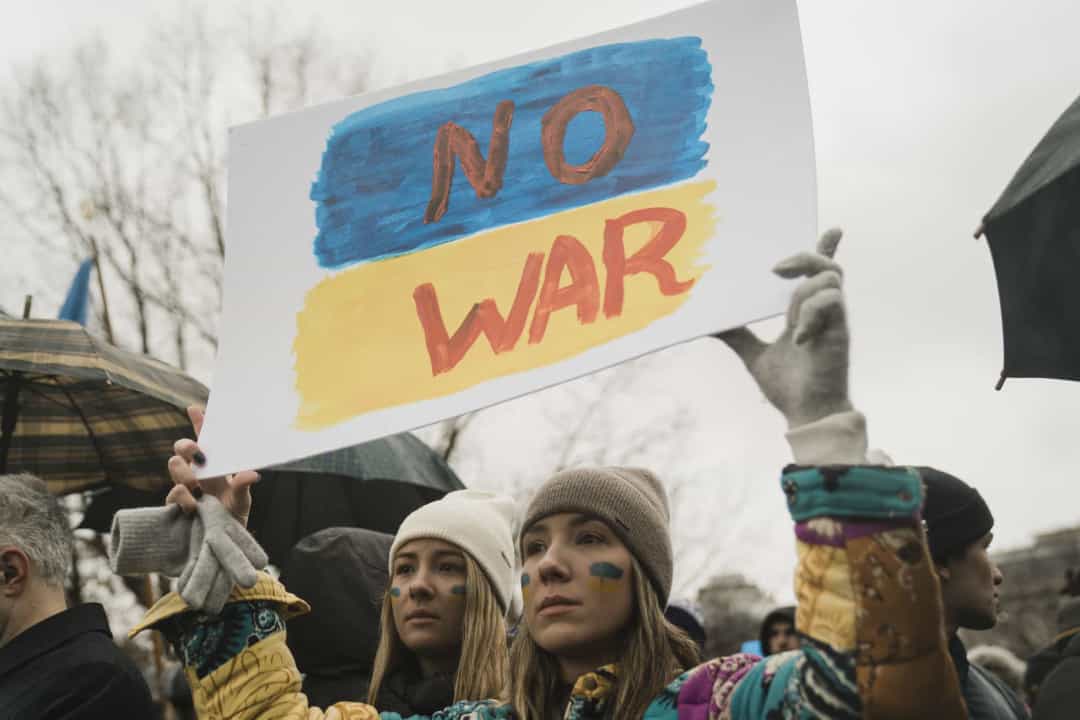
Ukraine war is terrible news for the fight against climate change

Another arms race will divert resources Another arms race will divert resources from poverty, pandemic and environment crisis.

In response to Russia’s invasion of Ukraine, Tesla CEO Elon Musk recently called on the US to increase its domestic oil and gas production to cut-off imports from Russia.

While new oil and gas wells in the US might not negatively impact Tesla, Musk’s call has undoubtedly given an impetus to oil and gas interests. After all, who could be the best ambassador of fossil fuels in present times than a self-professed climate champion like Musk?

Derailing green commitments

Since the Paris Agreement, there has been much domestic and international pressure on developed countries to reduce fossil fuel production and consumption to combat the climate crisis. While some European countries have put a moratorium on new mines and wells, others have announced targets to end fossil fuels. For example, Germany is phasing out coal by 2038, Denmark has ended all new oil and gas exploration in the North Sea, and Ireland and Spain have banned new oil and gas wells. US President Joe Biden has also promised to end new drilling on federal land. However, the Russian aggression has given fossil fuel interests an excuse to demand a reversal of these policies.

But responding to their demand will be highly detrimental for climate action. According to the International Energy Agency, to meet net zero emissions by 2050, exploitation and development of new oil and gas fields must stop immediately. Moreover, opening new coal mines and oil and gas wells in Europe and the US will mean that these countries, historically the largest climate polluters, will not be able to decarbonise their economies fast enough to meet the 1.5°C goal. This, in turn, will prompt other major fossil fuel producers like Saudi Arabia to shelve their oil and gas phase-down plans; countries like India and China will also curb their climate ambition.

Therefore, the Russia-Ukraine conflict will potentially delay the implementation of the Paris Agreement by a few years by postponing the decarbonisation plans of countries. Most worryingly, it could completely derail the momentum on climate actions by exacerbating global discord and shifting government expenditures to defence.

Another arms race in the making

The world already spends too much money on defence. According to Janes – an open-source defence intelligence agency – the global defence spending rose by 1.9% in 2020 and reached $1.93 trillion. In fact, the current annual global defence budget is sufficient to meet half of the clean energy investments required to reach net zero emissions by 2050. But there are clear indications that the present crisis will boost spending on arms and ammunition in 2022 and beyond.
Germany has tripled its defence budget to $160 billion in the wake of the Russian invasion and will raise it to 2% of GDP by 2024. The other non-US Nato members are also likely to ramp up their spending to 2% of GDP, collectively increasing their defence spending by $100 billion annually. Ironically, $100 billion is what developed countries had promised developing countries as climate finance but have struggled to fulfil it.
The US, which alone accounts for about 40% of worldwide defence spending, will also hike its budget. To counter the US, China has already announced an increase in spending by 7.1% this year. To counter China, Japan plans record spending in 2022, and India’s 2022-23 defence budget ($70.2 billion) is almost 10% above the initial allocation in 2021-22. Therefore, we are most likely entering a new phase of the arms race, which will disrupt all developmental and environmental plans that the world ought to be focussing on.

We sink or swim together

The wars of the 21st century have far-greater ramifications than previous ones. In a highly interconnected and interdependent world, a regional conflict like Russia-Ukraine might jeopardise the global collective action on the climate crisis, which we only have 10 years to solve. It could delay the world’s recovery from Covid by hindering the vaccination drive for 40% of the global population who are not yet fully vaccinated.

We, therefore, can’t afford wars and another global arms race. Hence, it’s in the interest of all to ensure that conflicts are resolved by peaceful means. It’s no more a fanciful idea to push for a global moratorium on defence spending so that we can redirect resources to address real and urgent problems facing the world.
 

The Real Mainstream: IPCC’s climate-speak is all Greek to the masses

The climate watcher has produced nothing for the general public, except for a press release and a set of headlines.

Scientists are good at science but bad at communicating it to the masses. This is precisely why the gap between the scientific understanding of the climate crisis and policy responses widens. The latest Intergovernmental Panel for Climate Change (IPCC) report is a classic example of ineffective communication. Published a few weeks back, it is considered the most comprehensive report on impacts, adaptation and vulnerability, but the presentation leaves much to desire.

The IPCC reports cater to a small set of people. For example, it is 3675 pages long (which very few outside the climate science community would ever read completely) with a 35 page summary. The summary, targeting policymakers, has been written in a complicated way and requires a person with high scientific knowledge to grasp its essence. Besides, IPCC has produced nothing for the general public except for a press release and a set of headlines.

While one can understand the trepidation of the scientific community for generalisation, it is precisely what is needed to get mass support for climate action. Therefore, it is high time that IPCC publishes and disseminates its findings in a way that most can understand and act on. I have attempted to convert the 35-page summary into ten key findings and put it in simple language. I hope that the IPCC would do better than this.

1. The climate crisis is far worse than previously predicted: The impacts on ecology, economy and human well-being are far worse than expected, and adapting to the crisis will be more difficult than anticipated.

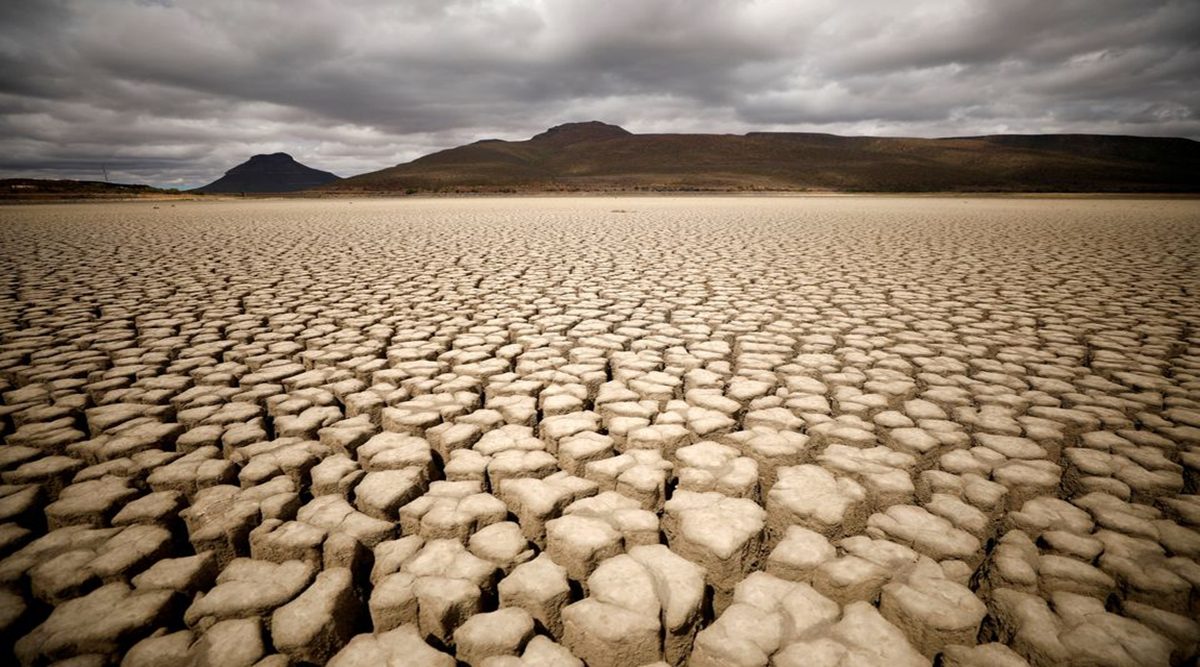
2. It is destroying nature: Climate change has already caused substantial damage and increasingly irreversible losses to the biodiversity on land and oceans, including the extinction of hundreds of species. Approximately half of the species assessed globally have shifted polewards or to higher elevations to cope with increasing heat. Further temperature increases will irreversibly damage warm-water coral reefs, coastal wetlands, rainforests, and polar and mountain ecosystems and cause massive extinction of species dependent on these ecosystems.

3. Climate change is harming human health, peace, and wealth:  It has adversely affected physical and mental health. People have died worldwide due to extreme heat, flooding, and other extreme weather events. In addition, the incidence of climate-related food and water-borne and vector-borne diseases has increased. Cardiovascular and respiratory distress have also increased due to wildfire smoke, atmospheric dust, and aeroallergens.

Climate change is also making the poor poorer. For example, outdoor labour productivity, on which the poor depend for income, has reduced due to higher temperatures. Similarly, economic damages from climate change are prominent in agriculture, forestry, fishery, energy, and tourism, which provides the most employment.

Lastly, it is worsening humanitarian crises by driving displacement in all regions. Besides, evidence is emerging that global warming might be contributing to conflicts by creating a scarcity of water and fertile land.

4. India will be affected the worst:  Not every region will get equally impacted. Countries with poverty, governance challenges, limited access to essential services and resources, violent conflict, and high levels of climate-sensitive livelihoods such as smallholder farmers, pastoralists, and fishing communities, will be the worst affected. Approximately 3.3 to 3.6 billion people live in highly vulnerable regions to climate change; a significant proportion of them are in India.

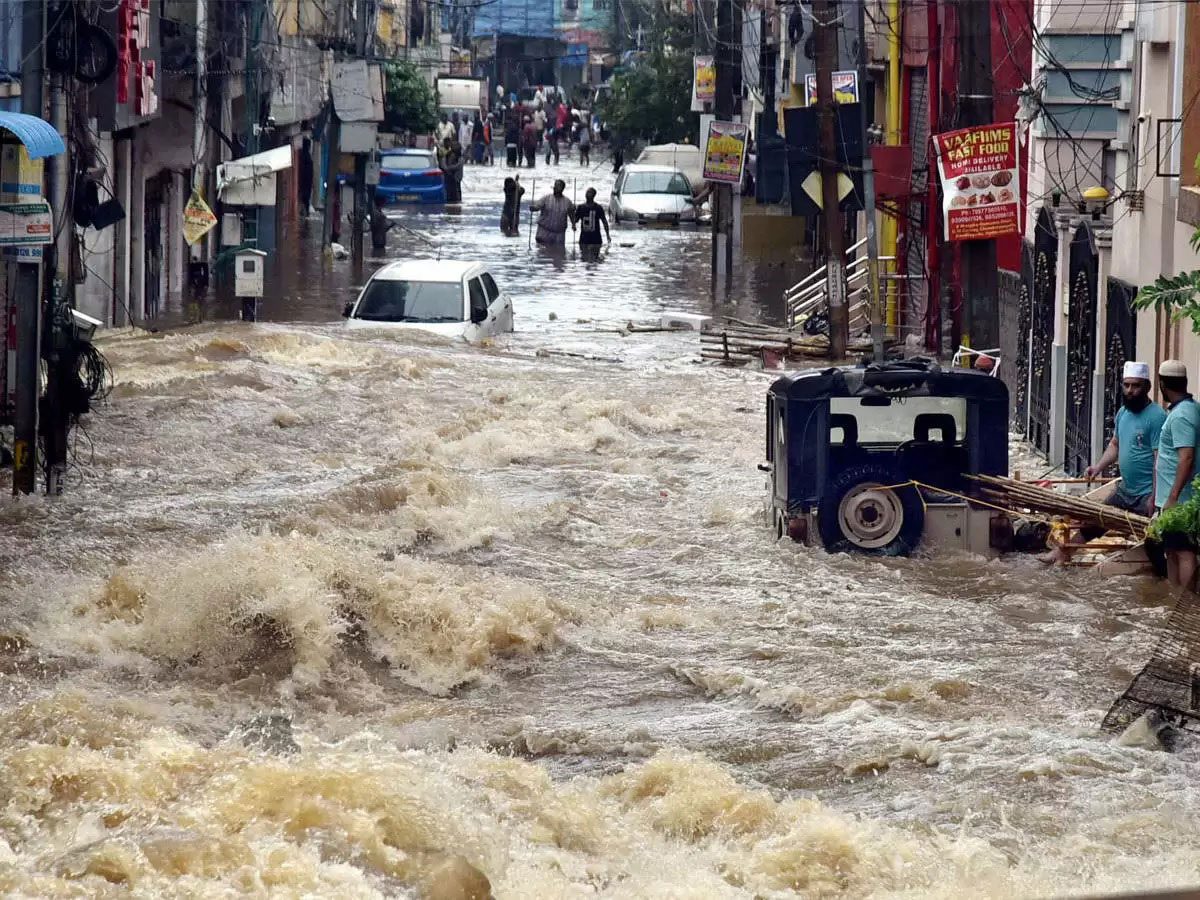
5. Cities are hotspots: Rapidly growing cities of Asia and Africa that house large concentrations of poor people are especially vulnerable. Increasing temperature and poor development practices, like creating concrete jungles and encroachment of forests and water bodies, will increase heatwaves and flooding.

6. We are rapidly approaching the point of no-return: Climate change impacts and risks are becoming increasingly complex and challenging to manage. Multiple climate hazards will coincide, and multiple climatic and non-climatic risks will interact, creating unmanageable situations. Some losses are already irreversible, such as species extinction. Others are approaching the point of no return, such as the impacts on freshwater due to the retreat of glaciers.

7. Mitigation is the best adaptation: With temperatures rising, the inevitable losses will increase. For example, in the coastal ecosystems, the risk of biodiversity loss ranges from moderate and very high by 1.5°C warming but rises to high to very high by 3°C. So, keeping the temperature below 1.5°C by reducing emissions is the best way to save ourselves.

8. Good development practices mean good adaptation: Unsustainable land use, deforestation, biodiversity-loss, and pollution lower the capacities of ecosystems and societies to adapt to climate change. Eliminating unsustainable practices will significantly help adapt to the climate crisis. For instance, enhancing natural water retention in cities by restoring wetlands and rivers, creating no-build zones, etc., will lower flood risk. Similarly, on-farm water management like rainwater harvesting, soil moisture conservation, and efficient irrigation will improve productivity and reduce vulnerability.

9. Leaving nature alone will save us: Safeguarding biodiversity and ecosystems is fundamental to climate-resilient development. Globally, less than 15% of the land, 21% of the freshwater, and 8% of the ocean are protected areas. However, we will have to conserve approximately 30-50% of these areas to maintain the resilience of ecosystem services.

10. Unequivocal political commitment is a must: Implementing climate actions requires considerable upfront investments, while many benefits will only become visible later. To make such investments, unequivocal political commitment and farsighted planning are essential. In addition, new institutional frameworks, policies, and instruments will be required to set clear goals, define responsibilities and obligations, and coordinate amongst various actors.

Besides, governments alone cannot solve this problem; the role of businesses and civil society is equally critical. Raising public awareness and building social movements are essential for greater public and political commitment. Companies will have to play a greater role in reducing emissions and investing in adaptation. The report essentially says if the climate crisis is not a clear and present danger, nothing else is.

हीटवेव और बाढ़ झेलने को तैयार रहें शहर

इंटरगवर्नमेंटल पैनल ऑन क्लाइमेट चेंज (आईपीसीसी) सन 1988 में इसलिए बना, ताकि वह समय-समय पर जलवायु परिवर्तन के बारे में दुनिया के शीर्ष नेताओं को साइंटिफिक नजरिया दे सके। पिछले 34 सालों में आईपीसीसी ने पांच रिपोर्ट जारी की हैं और अब वह छठी रिपोर्ट पब्लिश कर रहा है। इस रिपोर्ट का दूसरा हिस्सा कुछ दिन पहले आया है, जिसकी इन दिनों काफी चर्चा हो रही है। चर्चा इसलिए क्योंकि इसे जलवायु परिवर्तन के प्रभावों और अनुकूलन पर सबसे व्यापक रिपोर्ट माना जा रहा है। इस लेख में हम इस रिपोर्ट से निकली दस जरूरी चीजों पर चर्चा करेंगे।

यह कैसा विकास
आईपीसीसी की छठी रिपोर्ट का पहला निष्कर्ष यह है कि जलवायु परिवर्तन का प्रभाव पिछली पांच रिपोर्टों में बताई चेतावनियों से कहीं ज्यादा है और संकट के अनुकूल हो पाना हमारी सोच से भी अधिक कठिन होगा। दूसरी खोज यह है कि जलवायु परिवर्तन अब प्रकृति का विनाश कर रहा है। जमीन या समुद्र में जो जीव-जंतु या पेड़-पौधे हैं, उन्हें इतना ज्यादा नुकसान हो चुका है कि कहीं-कहीं तो इसकी भरपाई ही नहीं हो सकती। सैकड़ों विलुप्त जीव-जंतु अब कभी वापस नहीं आएंगे। रिपोर्ट कहती है कि अगर तापमान 1.5 डिग्री से ज्यादा बढ़ा तो ऐसी चीजें होंगी, जिन्हें हम सैकड़ों सालों में भी ठीक नहीं कर पाएंगे। समुद्र में मूंगों की चट्टानें खराब हो जाएंगी। सुंदरवन जैसी जगहें बर्बाद हो जाएंगी। हमारे नॉर्थ-ईस्ट और वेस्टर्न घाट पर जो वर्षा वन हैं, वे तबाह हो जाएंगे। हिमालय के ग्लेशियर और इको सिस्टम ऐसे खराब होंगे कि फिर कभी रिकवर नहीं कर पाएंगे।

तीसरा निष्कर्ष यह है कि जलवायु परिवर्तन अब इंसानों की सेहत, शांति और संपदा पर प्रभाव डाल रहा है। इसने दुनिया भर में लोगों के शारीरिक और कुछ क्षेत्रों में मानसिक स्वास्थ्य पर प्रतिकूल प्रभाव डाला है। जल जनित और वेक्टर जनित रोगों की घटनाओं में वृद्धि हुई है। हृदय और सांस की बीमारियां भी बढ़ गई हैं। अत्यधिक गर्मी, बाढ़ और अन्य चरम मौसम की घटनाओं के कारण दुनिया भर में लोगों की मौतें हो रही हैं। जलवायु परिवर्तन गरीब को और गरीब बना रहा है। घर के बाहर मेहनत-मजदूरी करना गरीब की जीविका है। भीषण गर्मी ने उनके काम के घंटे घटा दिए हैं, जो आगे और भी कम होंगे और उसी हिसाब से उनकी आय घटती जाएगी। इसी तरह, जलवायु परिवर्तन से सबसे ज्यादा आर्थिक नुकसान कृषि, वानिकी, मत्स्य पालन, ऊर्जा और पर्यटन में होगा, जो गरीबों को सबसे अधिक रोजगार देता है। इसके साथ ही जलवायु परिवर्तन सभी क्षेत्रों में विस्थापन को बढ़ावा देकर मानवीय संकट को बढ़ा रहा है। धीरे-धीरे ऐसे सबूत सामने आ रहे हैं कि ग्लोबल वॉर्मिंग पानी और उपजाऊ भूमि जैसे संसाधनों की कमी पैदा करके संघर्षों में इजाफा कर सकती है।

चौथा निष्कर्ष है कि इससे भारत जैसे देश सबसे बुरी तरह प्रभावित होंगे। जलवायु परिवर्तन का प्रभाव हर जगह समान नहीं होगा। सबसे ज्यादा प्रभाव वहां होगा, जहां गरीबी और शासन की चुनौतियां हैं, छोटे किसान ज्यादा हैं, लोगों की आवश्यक सेवाओं और संसाधनों तक पहुंच कम है। रिपोर्ट कहती है कि विश्व के 330 से 360 करोड़ लोग जलवायु परिवर्तन से अत्यधिक प्रभावित क्षेत्रों में रहते हैं। भारत को लेकर अलग से इसमें कोई आंकड़ा नहीं दिया गया है, लेकिन साफ दिख रहा है कि भारत सबसे बुरी तरह से प्रभावित है।

रिपोर्ट का पांचवां बिंदु यह है कि अफ्रीका और एशिया में तेजी से विकसित होते शहरों में हीटवेव और बाढ़ की समस्या बढ़ेगी, पीने के पानी की कमी होगी। छठी खोज यह है कि अब हम वहां पहुंच रहे हैं, जहां से वापसी मुश्किल है। अब जलवायु परिवर्तन इतना जटिल हो चुका है कि उसे सही कर पाना कठिन होता जा रहा है। जलवायु से जुड़े कई खतरे एक साथ आएंगे। कई जलवायु और गैर-जलवायु जोखिम आपस में क्रिया-प्रतिक्रिया करेंगे, जिससे असहनीय स्थिति पैदा होगी। उदाहरण के लिए, भारत के विभिन्न हिस्सों में बाढ़, सूखा, जंगल की आग और गर्मी की लहरें जैसी स्थिति एक साथ आ सकती हैं, जो जटिल समस्याएं पैदा करेंगी।

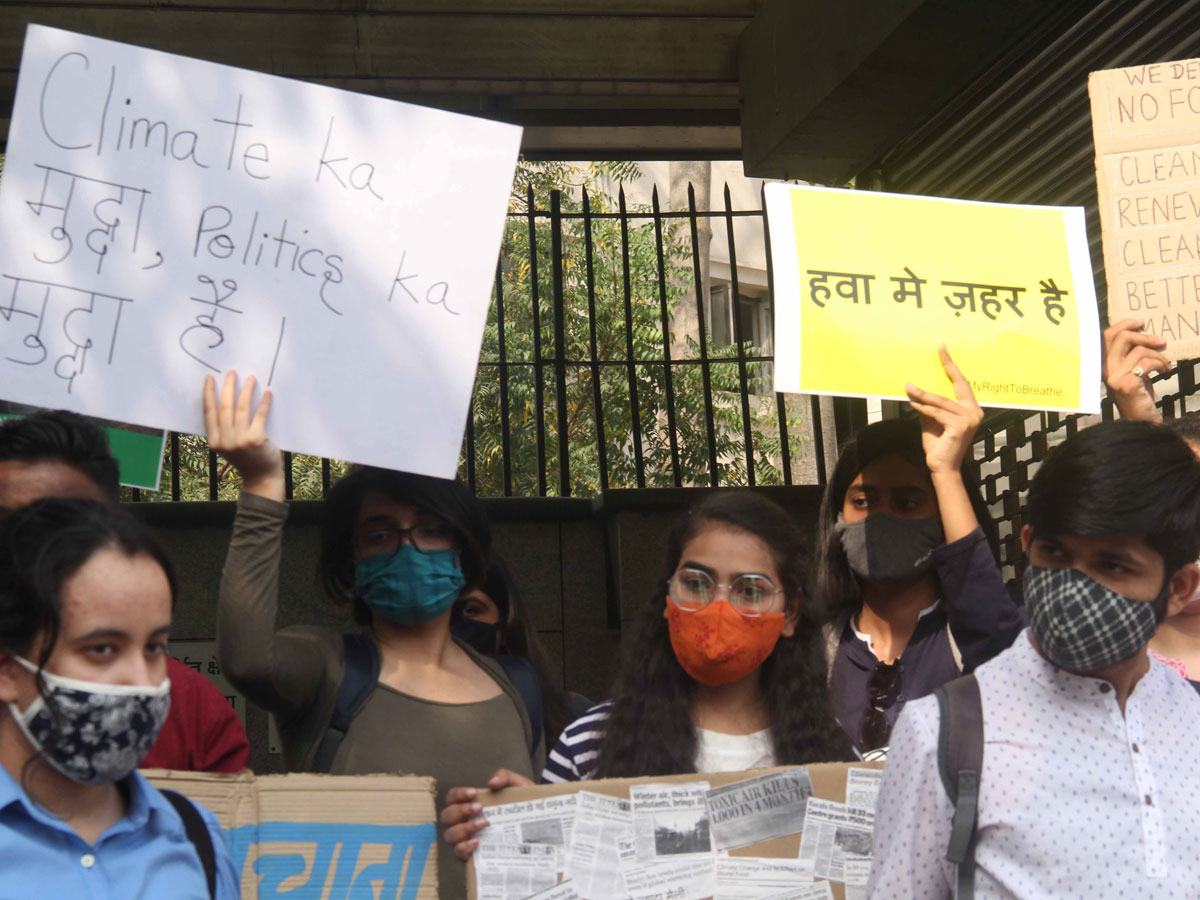
जलवायु परिवर्तन को लेकर प्रदर्शन करते छात्र (फाइल फोटो)

सातवां यह कि ग्रीन हाउस गैसों को कम करना ही बेहतर रास्ता है। क्योंकि तापमान अगर डेढ़ डिग्री तक बढ़ा, तो फिर जो कुछ भी सामने आएगा, उसे हम मैनेज नहीं कर पाएंगे। आठवां निष्कर्ष अच्छी विकास प्रथाओं के बारे में है। रिपोर्ट का कहना है कि मुश्किल इसलिए भी आ रही है क्योंकि हमारी नीतियां और उनका क्रियान्वयन टिकाऊ नहीं है। जितना चाहते हैं, जमीन घेर लेते हैं, पानी या कोयला निकाल लेते हैं, जंगल काट डालते हैं। प्रदूषण अलग बढ़ा रहे हैं। इसकी जगह हमें अच्छी विकास प्रथाएं लागू करनी होंगी। जैसे कि शहर में बाढ़ कम करनी है तो शहर के ताल-तलैया और नदियां पुनर्जीवित करिए। शहर में ऐसी जगहें हों, जहां कोई निर्माण ना हो। गांवों में भी सूखा कम करना है तो वर्षा जल संचयन और मिट्टी की नमी सहेजनी होगी।

नौंवी और इस रिपोर्ट की सबसे महत्वपूर्ण बात यह है कि अब आप प्रकृति को अकेला छोड़ दीजिए, इसी में आपकी भलाई है। अभी विश्व में हम लगभग 15 फीसदी जमीन, 21 फीसदी मीठे पानी के स्रोत और 8 फीसदी समुद्र संरक्षण करते हैं। रिपोर्ट का कहना है कि बचने के लिए अब हमें 30 से 50 फीसदी जमीन, फ्रेश वॉटर और समुद्र को छोड़ देना पड़ेगा। एक समय भारत में भी नो गो एरिया की बात हो रही थी कि वहां इंसान नहीं घुसेगा। अब ऐसे ही इलाके और बढ़ाने होंगे।

सब जुड़ेंगे, तभी बचेंगे
दसवां और आखिरी बिंदु यह है बिना राजनीतिक इच्छाशक्ति के हम इस समस्या को हल नहीं कर सकते। अब किंतु-परंतु या सवाल का समय नहीं है। नए कानून बनाने पड़ेंगे, नई नीतियां भी, ताकि सब मिलजुल कर काम कर सकें। कंपनियों और सिविल सोसायटी का बहुत बड़ा रोल होगा, क्योंकि अब ये सिर्फ सरकारों के बस की बात नहीं। सब लोग जुड़ेंगे, तभी जलवायु परिवर्तन के प्रभाव कुछ कम हो सकते हैं।

Social media & sharing icons powered by UltimatelySocial