Oct 15, 2026
 5 min read
Building a Skilled Workforce for a Viksit Odisha through a Green Jobs and Skilling Mission in Odisha
Odisha is at an important juncture in its economic transformation. The state has set an ambitious vision: becoming a $500-billion economy by 2036 and a $1.5-trillion economy by 2047, while creating more than one crore jobs. Achieving this will require more than attracting investment. Odisha must also ensure that its people have the skills to participate in, and benefit from, the new economy that this investment will create.
That change is already taking shape.
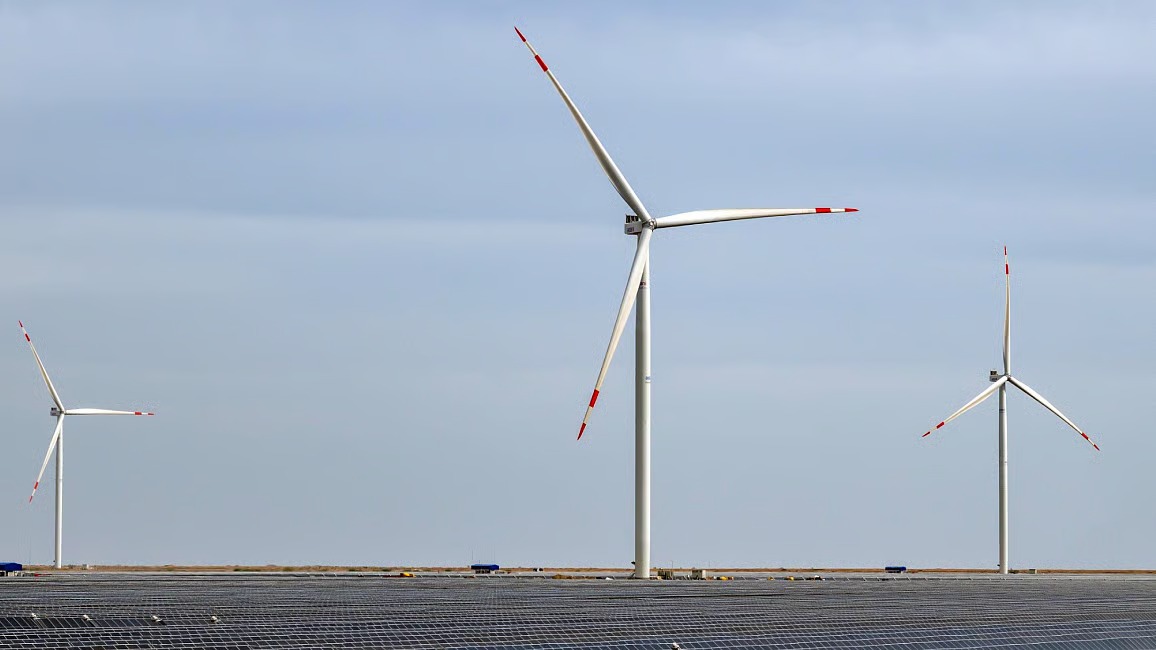
Renewable energy, green hydrogen, batteries, the circular economy and other green sectors are opening new avenues for employment and entrepreneurship. Odisha’s announced renewable energy targets, nearly 11 GW by 2030, alone could support around 30,000 jobs by 2030, with employment expected to nearly double by 2035. The state’s approved green investment pipeline could generate another 48,500 or more jobs over the next five to ten years. These are conservative estimates, largely capturing operations and maintenance jobs. The employment opportunity will be considerably larger once manufacturing, construction, logistics and services across these value chains are included.
The opportunity is not limited to energy. Nature-based solutions and the bioeconomy, including agroforestry, sustainable forest management and mangrove restoration, could generate around five lakh jobs over the next decade if developed at scale. Environmental services such as waste management, water management, air-pollution management and environmental monitoring will also grow with industrialisation, urbanisation and stronger environmental regulation.
But green growth will not simply create new occupations. It will also change existing ones.
Industries are adopting cleaner technologies, automation and more resource-efficient production processes. As a result, many existing jobs will require new competencies even when the underlying occupation remains the same. This makes workforce preparedness central to Odisha’s economic strategy. Skilling can no longer be viewed only as a social-sector intervention. It is an economic imperative.
The economic logic is straightforward. Skilling is an investment multiplier: capital translates into local wages, local enterprises and local tax revenue only when a trained workforce is available to absorb it. If the required skills are not available locally, employers may have to bring in workers from elsewhere, reducing the share of new economic value captured within the state.
Two workforce priorities
Odisha therefore needs to pursue two workforce strategies at the same time: upgrading the skills of its existing workforce and building new technical capabilities among those entering the labour market.
The first is largely a transition challenge, not a retraining challenge.
iFOREST’s assessment found that around 89% of the coal-mining roles assessed, including technical and operational roles, have high transferability to metal and critical-mineral mining. The gaps are primarily related to mine type, safety requirements and certification. Similarly, more than 75% of the technical and operational thermal-power roles assessed showed moderate-to-high transferability to renewable energy and green hydrogen.
The implication is important. Odisha does not need to replace its existing industrial workforce. It needs to identify transferable skills and provide targeted bridge training, certification and exposure to new technologies. The same principle can apply to emerging activities such as agroforestry, forest restoration and waste management, where training can be combined with market linkages and enterprise support.
The second priority is preparing young people for occupations that did not exist, or were much smaller, in the past. Here, the challenge is more fundamental. Only about 3.3% of Odisha’s working-age population has technical education and 3% has formal vocational training. Among youth, more than 95% do not have a technical qualification.
This gap cannot be addressed through short-term training alone. Technical and vocational capabilities must be built progressively through schools, higher and technical education, apprenticeships and workplace learning.
Build on Odisha’s Existing Skilling System through a Green Jobs and Skilling Mission
The good news is that Odisha does not need to build a new skilling system. It already has a substantial delivery network of ITIs, polytechnics, PMKVY centres, Jan Shikshan Sansthans, apprenticeship establishments and the World Skill Center. What is needed is to stregthen and better coordinate this existing system around the skills demanded by a growing green economy.
The two clusters Odisha has identified for industry-anchored ITI modernisation under PM-SETU provide an important platform for this shift. These hubs can anchor high-value green training, while the wider ITI and polytechnic network can function as spokes, taking training closer to workers and young people.
Infrastructure alone, however, will not be enough. Odisha needs a mechanism that brings together government departments, training institutions and industry to identify emerging skill demand, align training provision, mobilise finance and track employment outcomes. An Odisha Green Jobs and Skilling Mission, anchored within the existing Skill Development and Technical Education architecture, with an Apex body chaired by the Chief Secretary, can provide this coordination.
The Mission should work through the existing system rather than create a parallel one. At the state level, it can align departments and industry around sectoral workforce priorities; at the district level, it can identify local demand and connect employers with training institutions. It can also align existing state and central schemes, and development finance around clear sector- and district-level targets.
The focus must ultimately shift from inputs to outcomes. Enrolment and completion will remain important, but placement, wages, retention, career progression and entrepreneurship should increasingly define success.
Odisha has the institutions, infrastructure and growing investment pipeline to build a strong green workforce. What is needed now is a coordinated mission to ensure that the state’s green economic transformation creates opportunities for its people.