 Published in
  Aug 22, 2026
  6 min read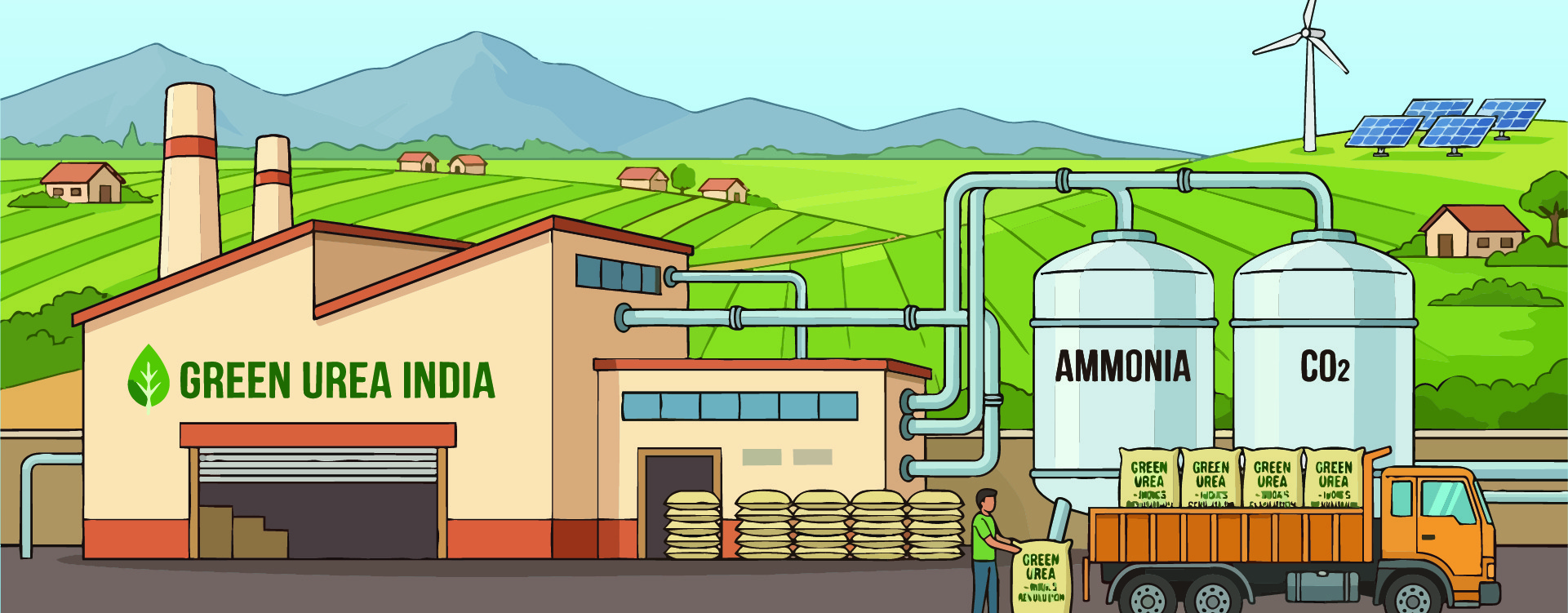
India could soon produce urea using little more than water, air, and sunlight
Urea is the fertiliser Indian farmers rely on most. While its widespread misuse has contributed to soil infertility and to air and water pollution, it is equally true that without urea, India would struggle to sustain food production for a population of 1.45 billion and growing. India therefore needs to do two things simultaneously: optimise urea use in its fields and ensure that farmers get it without disruption.
A few months ago, that supply was severely disrupted by the US-Iran war. Since more than 80% of the urea India uses is either made from imported natural gas or bought directly from other countries, the shock was severe. The price of imported urea doubled to Rs 90,000-95,000 a tonne, and suppliers were reluctant to ship to India. Prices have since halved and supplies have been restored, but the calm is deceptive. The fuse lit in West Asia will keep sparking, and with it the price of natural gas — and of the urea — on which Indian agriculture depends. The lesson is clear: India must learn to produce urea without depending on imported natural gas.
Made from air and water
For years, making urea without natural gas seemed like alchemy. That alchemy now has a name: green urea — fertiliser made, quite literally, from air and water. This is how it is produced: Renewable electricity from solar and wind is used to split water into hydrogen and oxygen. The hydrogen is combined with nitrogen drawn directly from the air (remember 70% of air is nitrogen) to make green ammonia. The ammonia is then reacted with carbon dioxide (CO2) captured from the flue gas of factories that would otherwise release it into the atmosphere and warm the planet. The result is urea made without fossil fuels.
Policy complementarity
Green urea, long dismissed as too expensive to be practical, is now within reach because of two developments.
The first is that green ammonia has become much cheaper. The National Green Hydrogen Mission, launched in 2023 to make India a global hub for green hydrogen and ammonia, has driven down prices through competitive bidding. Green ammonia is now available at about Rs 50-60 a kg — the tipping point at which green urea becomes competitive with urea made from natural gas.
The second is the availability of CO2. Here lies an irony: the gas whose billions of tonnes of annual emissions are the chief cause of global warming is also the hardest input for a urea maker to secure affordably, because urea synthesis needs concentrated, high-purity CO2. Two government policies — neither designed with urea in mind — have changed the scenario.
One is the regulation to clean up thermal power. In 2015, the environment ministry directed power plants to install air pollution-control equipment, called flue-gas desulphurisation, to curb sulphur dioxide emissions. Scrubbing flue gas off from sulphur also makes the CO2 in it far cheaper to capture. Power plants that installed these units to comply with a pollution rule are now among the country’s largest potential CO2 suppliers — and can earn from selling what they once vented.
The other is the ethanol programme. India’s drive to blend petrol with ethanol to cut oil imports has quietly become its cheapest source of CO2. Ethanol plants release roughly a tonne of high-purity CO2 for every tonne of ethanol — exactly the grade urea synthesis needs — and the technology to capture it is already in wide use in India. At current ethanol production capacity, at least 10 million tonnes of CO2 could be diverted to urea-making every year — enough to produce 13.5 million tonnes of green urea, more than India currently imports. A programme meant to cut oil imports is now providing feedstock that can cut urea and gas imports as well.
The beauty of green urea is that it does not need the few giant, integrated plants that dominate the industry today. It can be made in smaller merchant factories that buy green ammonia and CO2 from nearby suppliers and combine them in a urea-synthesis unit. Smaller, local plants can produce urea close to where it is consumed, spread economic opportunity across the country, and create jobs in smaller towns. They would also shrink the massive freight bill — running into thousands of crores every year — that the government foots to move urea from ports and large plants to distant districts.
The windfall
The economics now make sense, and the government has noticed. The ministry of chemicals and fertilisers has recently issued an expression of interest inviting companies to set up green urea plants. With cheap green ammonia and CO2, green urea can be produced today for under Rs 45,000 a tonne — comparable to the cost of imported urea, but without the stress of import disruptions. By 2030, as clean energy becomes cheaper still, the price is expected to fall below Rs 40,000 a tonne — cheaper even than urea made domestically from natural gas. Economic modelling by my colleagues shows that if India installs five million tonnes of green urea capacity by 2030 to replace imports, it will save about Rs 1.5 lakh crore over 20 years.
Global fertiliser majors have understood this economics and are investing in green ammonia and urea because they see the future in it. Yara of Norway, the world’s largest ammonia trader, for example, is aggressively developing partnerships for green ammonia in Saudi Arabia and India. When the industry’s most hard-nosed players start locking in green supplies, the direction is not hard to read.
The prize of the green urea transition, therefore, is considerable. In a single move, India can cut its urea imports, reduce its natural gas imports, save billions of dollars through import substitution, insulate its farmers from wars fought far away, and create thousands of new jobs. That is what Atmanirbhar Bharat looks like in practice. What is needed now is to convert favourable economics into installed capacity. The technology is proven, the inputs are at hand, and the economics have turned. The only question is how quickly India chooses to act