
 Published in
  Aug 20, 2026
  5 min read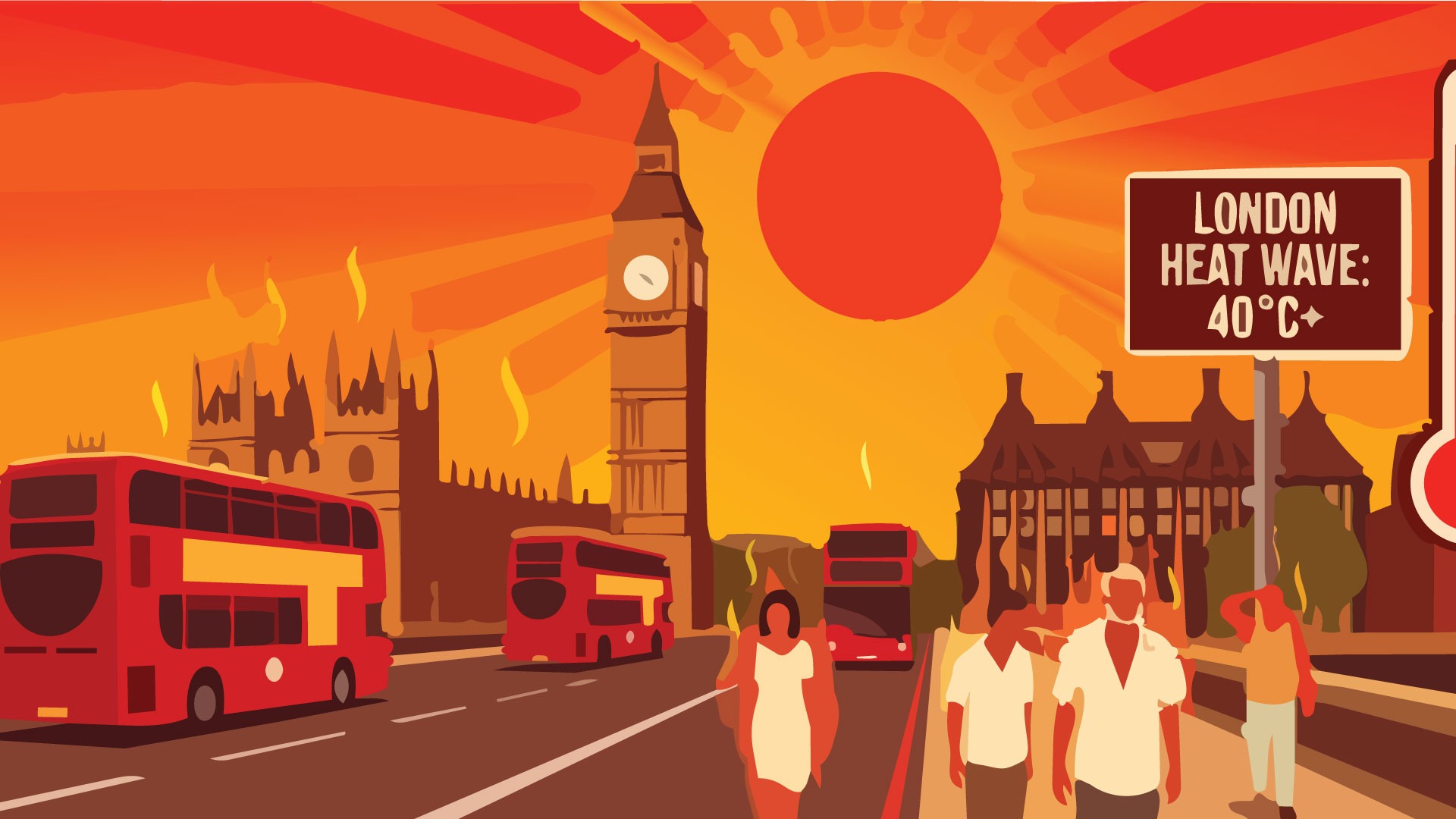
If even FIFA World Cup was forced to pause for heat, the myth that developed nations can manage climate change is over. They should recommit to deep emission cuts, transfer finances & tech to developing world.
William Nordhaus was the poster child of the “global warming isn’t so bad” camp in the 1990s — precisely when the world was negotiating the UN Framework Convention on Climate Change (UNFCCC) and the Kyoto Protocol. His much-cited 1991 paper, ‘To Slow or Not to Slow’, projected that a 3°C rise in global temperature would shave barely 0.25% off US income. His later work went further, predicting gains for cold developed regions — lower heating bills, longer growing seasons, better farming in the US, Canada, Russia and Europe — while poor tropical countries bore the losses.
His DICE model, the first to link economy and climate, produced cost-benefit arithmetic under which letting substantial warming happen looked economically rational, because cutting emissions cost more than the discounted future damages. He was awarded the 2018 Nobel Prize in Economics for climate-economy work.
But Nordhaus was not alone. Thomas Gale Moore, a senior fellow at the Hoover Institution and a member of Ronald Reagan’s Council of Economic Advisers, argued that a warmer climate would bring net gains to cold northern countries. Nigel Lawson, a former Chancellor of the Exchequer of the UK, wrote An Appeal to Reason: A Cool Look at Global Warming, contending that warming’s costs were modest relative to expected economic growth and that carbon-reduction policies were politically unrealistic and economically damaging. Bjorn Lomborg, author of The Skeptical Environmentalist, still insists that global warming should not be a priority, because money spent cutting emissions hurts the poor.
While such voices are few compared with the pro-climate constituencies of the developed world, they have been disproportionately influential. They persuaded a critical mass of political and business leaders that global warming was essentially a problem of hot and humid developing countries; that colder developed countries might even benefit from modest warming; and that, in any case, the rich world had the money and tech to adapt to whatever came.
This school of thought has led to a slow breakdown of the international climate compact. Developed countries have reneged on their promises on emission cuts, finance and technology, while developing countries have struggled to move to a low-carbon trajectory.
Today, under the celebrated Paris Agreement, everything is voluntary and every country is on its own. Relations between developed and developing countries have soured to the point that, when last year’s climate conference in Belém could not agree on a roadmap away from fossil fuels, willing countries chose to pursue it outside the UN convention altogether.
But how wrong the likes of Nordhaus have proved to be. Global average temperature has risen by only about 1.5°C, and that has been enough to transform summers in the Northern Hemisphere. Temperatures once considered exceptional — near 40°C — are becoming the norm. Prolonged droughts, destructive wildfires and shrinking rivers are no longer freak events but recurring features of the European summer. Last year — the most destructive fire season in its recorded history — the European Union lost over one million hectares to wildfires, an area the size of Tripura and nearly double the historical average. And 2026 is tracking worse: over 450,000 hectares had already burned by end-July, well ahead of last year’s pace, including the largest fire Spain has ever recorded.
North America tells the same story. Canada has lost some 3.7 mn hectares this year — nearly the size of Kerala — and the United States about 2.4 mn hectares, larger than Mizoram, with the season’s peak still ahead.
The northern summer has changed so much that the two football World Cups hosted by the US, 32 years apart, were played under effectively different rules. In 1994, teams played two 45-minute halves. At the 2026 World Cup, every match carried two mandatory three-minute cooling breaks, one in each half — converting the game into four quarters — for fear of heat exhaustion. Project that trend 30 years forward: will outdoor sport in summer be possible at all in the US?
Yet the perception that “we can manage” — or even profit — still shapes the rich world’s diplomacy. The negotiations among Arctic Circle countries — scrambling to carve up the melting region’s oil, natural gas and rare minerals — are a clear example of this mindset.
But the economics that justified this complacency is now collapsing. Recent research by economists Adrien Bilal and Diego Kanzig finds that every additional 1°C of warming lowers world GDP by over 20% in the long run — damages many times larger than earlier estimates and borne by rich temperate countries as much as poor tropical ones. Against this, the cost of decarbonising the global economy is a small fraction of GDP. The bill the developed world will pay for solving the crisis is far smaller than the bill it will pay for an unchecked one — a truth its burning forests and drying rivers are already delivering.
So, it is still not too late. What is required is for developed countries to shed the short-sightedness that has shaped three decades of climate diplomacy and accept that greater capability means greater responsibility. That means deep emission cuts and serious adaptation investment at home — and finance and technology for developing countries, so that they too can pole-vault to greener technologies instead of repeating the fossil-fuelled path. Lives, economies and ecosystems everywhere are now in the line of fire; no one is safe from this planetary crisis.
The developed world would do well to remember an old village truth: when the whole village is on fire, wisdom lies in everyone coming together to save the village, rather than each person trying to save only their own house.