 Published in
  Mar 31, 2026
  7 min read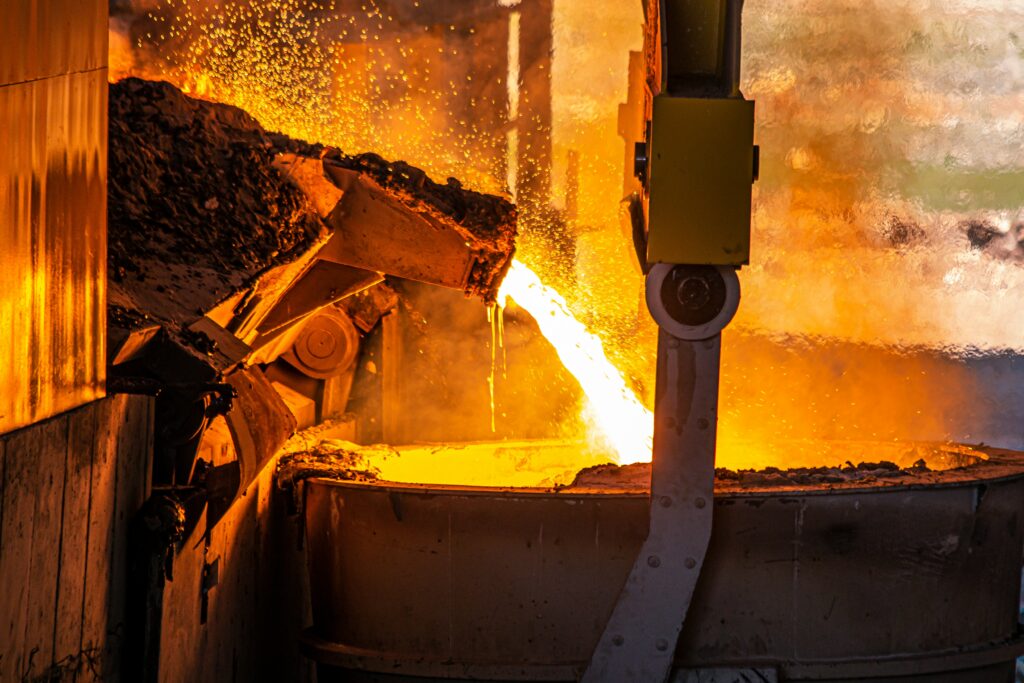
Why an indigenous, globally aligned GHG accounting and MRV system is critical for India’s steel transition.
Industrial decarbonisation lies at the heart of the global net zero transition, with iron and steel among the highest priority sectors worldwide. In India, the industry stands at a defining inflection point. As the country advances towards its Net Zero 2070 commitment, steel, one of the most resource, energy, and emissions intensive industries, has moved to the centre of national climate and industrial policy.
In 2023, the sector emitted approximately 240 million tonnes of CO₂, accounting for nearly 12% of India’s total greenhouse gas emissions. With an average emissions intensity of 2.54 tCO₂ per tonne of crude steel, well above the global average of 1.91 tCO₂, India’s production profile reflects its continued reliance on coal-based blast furnace routes and domestically available raw materials.
Industrial decarbonisation lies at the heart of the global net zero transition, with iron and steel among the highest priority sectors worldwide.
Why credible GHG measurement is foundational
Decarbonisation is not only a technological challenge but also a measurement challenge. Emissions that are not measured consistently cannot be managed effectively, priced accurately, financed credibly, or traded competitively. Aligning with global markets and adopting low-carbon steel pathways, whether through greater scrap utilisation, green hydrogen-based direct reduced iron, renewable electricity integration, or carbon capture technologies, must be supported by a transparent and harmonised greenhouse gas accounting framework.
India now has a critical opportunity to develop its own GHG accounting, and Monitoring, Reporting, and Verification (MRV) framework that is accurate, representative of domestic production realities, and interoperable with international systems. Such a framework would ensure that emissions intensity reflects Indian raw materials, technology combinations, and grid conditions rather than relying solely on external assumptions.
How GHG accounting and MRV systems operate
Steel producers globally are required to monitor, account for, and report greenhouse gas emissions using standardised methodologies. These systems define organisational and operational boundaries, classify emissions across Scope 1, Scope 2, and Scope 3, apply emission and conversion factors, and require third-party verification before submission to regulators or market authorities. While carbon dioxide constitutes the bulk of emissions in steelmaking, methane and nitrous oxide are also reported. Differences in system boundaries, treatment of captive power, raw material sourcing, and electricity emission factors can significantly alter reported intensity figures. As a result, accounting design directly influences competitiveness, compliance costs, and trade outcomes.
Global frameworks and India’s structural mismatch
Globally, steel producers rely on frameworks such as the GHG Protocol, World Steel Association guidelines, and the ISO 14404 series, which were largely shaped by Western steelmaking pathways and are closely aligned with the European Union Emissions Trading System. China, the world’s largest steel producer, has developed its own steel-specific GHG accounting and MRV framework aligned with its national emissions trading system. The United States operates a sector-specific system under the United States Environmental Protection Agency Greenhouse Gas Reporting Program.
India, despite being the world’s second largest steel producer, does not yet have a dedicated steel sector specific national GHG accounting framework. This absence creates structural misalignment. International methodologies often rely on emission factors and production assumptions that do not fully reflect Indian realities, including higher ash coal, varied iron ore grades, mixed technology routes, and differing electricity profiles. This is not merely an administrative inconvenience. It can distort carbon intensity calculations and misrepresent the actual performance of Indian producers in global markets.
Multiple reporting obligations and limited harmonisation
Indian steel companies currently operate within a fragmented reporting environment driven by regulatory, trade, and voluntary requirements. These include the Carbon Credit Trading Scheme, the European Union’s Carbon Border Adjustment Mechanism, GHG Protocol reporting, ISO compliance, disclosures aligned with the World Steel Association, Business Responsibility and Sustainability Reporting, and Environmental Product Declarations. Each framework demands separate templates, verification processes, and reporting cycles. Many rely on international emission and conversion factors that do not adequately capture Indian raw materials and operating conditions.
Indian steel companies currently operate within a fragmented reporting environment driven by regulatory, trade, and voluntary requirements.
The lack of harmonisation results in duplication, higher compliance costs, and data inconsistencies. It also places a disproportionate burden on small and medium producers who may lack specialised internal teams to manage complex reporting systems. In the absence of a unified national template, companies are compelled to recalibrate data and methodologies repeatedly to meet different compliance requirements.
Trade pressures and the carbon cost of exports
Trade dynamics have intensified the urgency for reform. From 2026, the European Union’s Carbon Border Adjustment Mechanism could impose a carbon-linked levy of 20 to 35% on certain steel imports, directly tying market access to embedded emissions. In this emerging regime, the credibility of emissions data becomes as important as production efficiency. Early indications already point to pressure on exports to Europe, compelling producers to either accelerate decarbonisation or shift to alternative markets.
Domestically, India’s national carbon market under the Carbon Credit Trading Scheme is expected to begin phased implementation in 2026, introducing formal compliance obligations tied to verified emissions data. In parallel, the Green Steel Certification initiative launched in 2025 seeks to promote lower carbon production. However, limited transparency around accounting templates and MRV procedures has reduced participation, particularly among major producers whose early engagement is essential to anchor the transition.
These overlapping developments demonstrate that credible, comparable, and verifiable emissions data have become prerequisites for competitiveness rather than optional sustainability disclosures.
Transparency as the foundation of credibility
Without standardised and transparent GHG accounting, green steel claims risk being challenged by buyers, regulators, investors, and trade authorities. Credibility in emissions disclosure underpins export access, eligibility for green finance, investor confidence, and fair carbon pricing. High-quality data enables investors to assess transition risks and long-term viability. It also reduces exposure to accusations of greenwashing and mitigates the risk of trade disputes.
Credibility in emissions disclosure underpins export access, eligibility for green finance, investor confidence, and fair carbon pricing.
Transparency further ensures equitable burden sharing. Large integrated producers and smaller secondary steelmakers must operate under consistent rules that recognise differences in scale and technological pathways while maintaining comparability. A unified system reduces uncertainty and fosters trust across the value chain.
A unified framework as a strategic imperative
Recent industry engagement has resulted in the development of a unified GHG accounting template tailored to the Indian iron and steel sector and aligned with international standards. The design integrates plant level data into consolidated company reporting, incorporates India specific emission and conversion factors, and accommodates Scope 3 disclosures while remaining compatible with global requirements. At the same time, India already possesses an MRV backbone under the Carbon Credit Trading Scheme that is broadly aligned with international practice. Building upon this infrastructure would allow for faster implementation and greater coherence.
The objective is not to depart from global norms but to adapt them in a manner that reflects Indian production realities while maintaining international credibility. An indigenous yet globally aligned framework would strengthen export competitiveness, improve policy coherence, and enhance investor confidence.
The Ministry of Steel and the Bureau of Energy Efficiency now face a decisive moment. Supporting decarbonisation requires regulatory clarity, publicly available guidelines, development of India specific emission factors, and alignment between carbon markets, green certification schemes, and trade reporting systems. Large producers must anchor the transition given their scale and investment capacity, while smaller producers require targeted capacity building and institutional support.
In a geopolitical landscape increasingly shaped by carbon border measures and climate linked trade rules, a credible national GHG accounting and MRV framework can serve as a passport for Indian steel in global markets. India’s steel transition will ultimately be defined not only by technological shifts but by the integrity of its data systems and the certainty of its regulatory environment. Establishing a unified and transparent GHG accounting framework is therefore not merely an administrative reform but a strategic imperative for India’s industrial future.