
 Published in
  Dec 19, 2025
  5 min read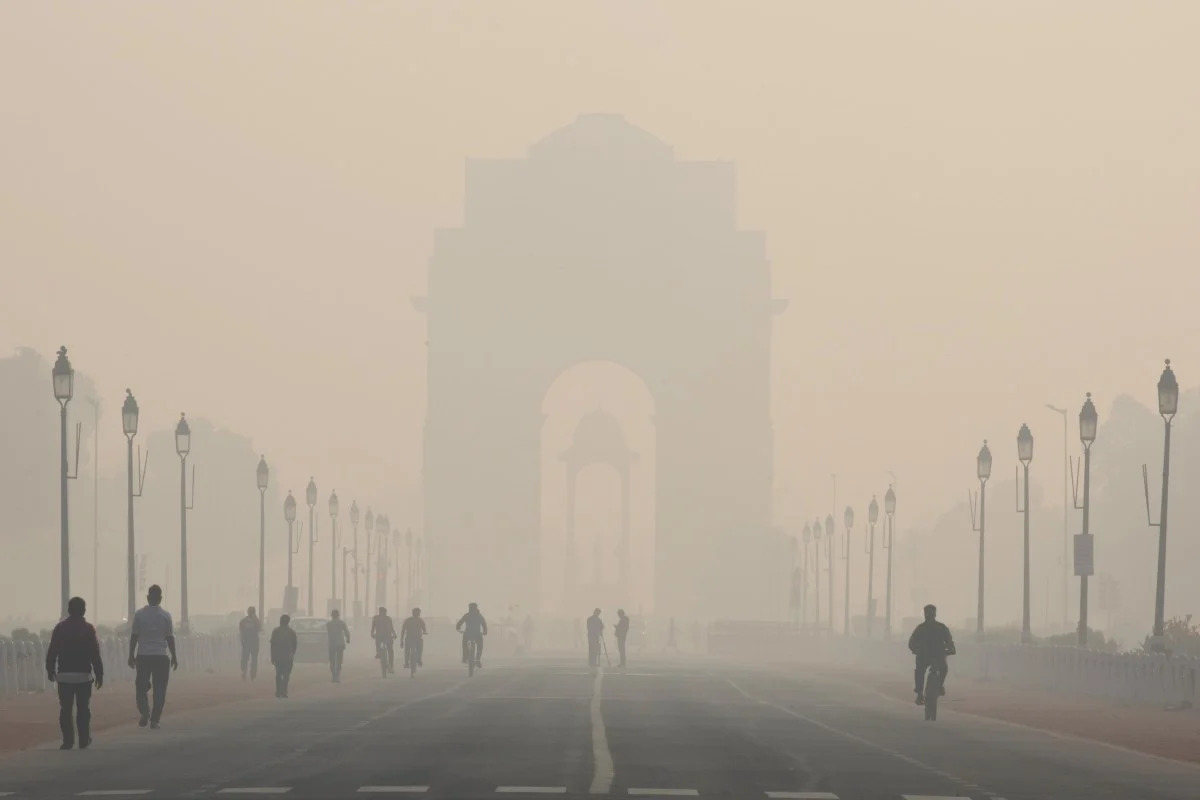
Yes, China massively reduced urban air pollution. Some of its strategies are worth studying. But an authoritarian govt can implement changes a democracy can’t. And India can’t spend as much as China did. We need our own solution
There is a Hindi idiom – chutki lena – that loosely translates as teasing, trolling, mocking or putting someone down. Social media today is full of people taking chutki over air pollution in Delhi. The recent tweet by Chinese Embassy spokesperson, offering a “step-by-step guide” on how Beijing tackled air pollution, falls into this category. It is unsolicited, overly generic and not helpful regardless that the Chinese capital on Thursday suffered a rare smog (AQI climbed to 214) after years of pollution clean-up efforts.
Researchers in India, including myself, have followed Beijing’s air quality journey closely for years. We have studied the “Beijing model”, examined its successes and understood its limitations. One must first recognise a basic reality about information coming out of China:it is tightly controlled and never complete.While general descriptions of actions taken and headline pollution reductions are widely available, crucial information is missing.
Data on regulatory enforcement, economic costs, public expenditure, private sector liabilities, worker displacement, compensation and social costs are largely absent. Without this information, simply lifting the Beijing model and superimposing it on Delhi is neither feasible nor responsible.
That said, there is no denying Beijing has achieved remarkable improvements in air quality in a relatively short period. India can – and should – learn from their experience. But learning does not mean copying. We must clearly distinguish between what can be replicated, what cannot, and what is unique to India and therefore requires additional solutions beyond anything Beijing did.
What to learn from Beijing
Value of a regional action plan. The Beijing-Tianjin- Hebei (BTH) regional framework enabled coordinated action across an airshed, leading to significant emission reductions. However, it is important to understand the administrative simplicity behind it.
BTH region covers about 2.2L sq km under two centrally administered municipalities Beijing and Tianjin – and a single province, Hebei, with 11 cities. Coordinatingaction across this region, while challenging, was administratively manageable.
Replicating this approach for Delhi is far more complex. A meaningful regional plan for Delhi would need to cover areas within a 150km radius, spanning six states (Delhi, Punjab, Haryana, UP, Madhya Pradesh and Rajasthan), urban local bodies and cantonment areas. Delhi is governed by three authorities – Centre, state and municipal corporations, cantonment aside. So, we’ll require an entirely new administrative and governance model to make regional action work.
Public transport and vehicle electrification are other areas where Beijing offers important lessons. Many measures Beijingadopted-stricter emission standards, cleaner fuels, and scrapping old vehicles-are also being attempted in Delhi, but with limited success.
A key difference is that Beijing actively curtailed the growth of private vehicles; Delhi has not. But like Beijing, we need to build world-class public transport across all of NCR. Similarly, rapid electrification of transport is essential.
In many ways, Beijing’s air pollution crisis helped catalyse China’s rise as the world leader in electric vehicles. China converted an environmental crisis into an economic opportunity; India should aim to do the same.
Reduction of coal use and strict regulation of power plants and industries is another critical lesson. While Delhi has shut down its thermal power plants and shifted many industries to the outskirts, coal use within the broader airshed remains substantial. Beijing not only reduced coal consumption by nearly 90% but also enforced extremely stringent emission standards. For example, the particulate matter standard for coal power plants in China is 10 mg/m³ or lower; in India, the standard is 30-100 mg/m³-3 to 10 times higher.
China’s SO2 standard is 35 mg/m³, whereas in India even relaxed limits of 100-600 mg/m³ were exempted for nearly 75% of coal-based power plants. Without enforcing strict pollution norms, meaningful air quality improvement is impossible. This is one of Beijing’s clearest lessons.
What won’t work here
Shutting down or relocating more than 3,000 heavy industries, as Beijing did, would effectively de-industrialise the entire region. Such an approach would be economically disastrous, socially destabilising and politically untenable in India.
Then there is the question of cost. While exact figures are unavailable, it is clear that Beijing spent billions of dollars to clean its air. That scale of expenditure is simply not feasible for India. Any clean air plan for Delhi must work within the country’s fiscal constraints.
Finally, Delhi faces challenges Beijing never had to confront. The most prominent is stubble burning. Beijing’s air quality was not affected by seasonal agricultural fires in the way Delhi’s is. Any serious clean air plan for Delhi must directly address this problem. Similarly, clean cooking fuel was never an issue for Beijing.
China transitioned most households to gas by the early 2000s and launched a Clean Heating policy in 2013 to move residential heating away from biomass and coal. In contrast, biomass use for cooking and heating remains a major source of pollution in Delhi-NCR and must be tackled head-on. Lastly, the Delhi airshed also faces a major challenge from pollution generated by lakhs of informal micro and small enterprises – from jaggery and confectionery makers to small metalworkers and many others. These enterprises must be supported to shift to clean fuels.
In sum, while Delhi can and should learn from Beijing-andfrom other cities around the world-itmust develop its own clean-air strategy and make it work in Indian conditions. From a researcher’s perspective, it is clear Delhi’s air pollution challenge is far more complex than Beijing’s ever was. Social media chutki may earn likes and retweets, but cleaning Delhi’s air requires far more than a step-by-step guide.