


Our Ruhr Valley Needs Reinvention

Spanning the coal-rich districts of Jharkhand and West Bengal, Damodar Valley (DV)-India’s ‘Ruhr Valley’-has powered the country’s growth since Independence. Coal from Jharia and Raniganj has fuelled India’s rise while steel plants of Durgapur and Bokaro, and fertiliser factories of Sindri became ‘temples of modern India’.

Today, the region stands as a stark paradox: rich in coal and industrial infrastructure, yet choking on resources that once made it prosperous. The air is thick with pollution, rivers flow contaminated and the economic model that once promised eternal employment is now creating a landscape of uncertainty. The imperative is clear: DV must urgently transition from a coal-based past, or risk terminal decline. Evidence of the coming decline is everywhere:

► In Dhanbad, India’s ‘coal capital’, nearly half the mines are abandoned or non-operational. By 2030, 80% of its mines will cease operations due to exhausted reserves or unprofitability. This story echoes across the Valley. Coal production in West Bengal’s Raniganj has plateaued at about 40-50 MT per year. Once the country’s largest coal producer, the Damodar basin has now fallen to third place, overtaken by coalfields in Odisha and Chhattisgarh.

► Downstream industries are faring no better. Jharkhand, sitting on mountains of coal, is ironically, a net importer of electricity. Ageing thermal power plants at Patratu, Bokaro, Bandel and Kolaghat have shut down. Overall, less than 5% of India’s thermal power capacity remains here. Even Damodar Valley Corporation (DVC)’s multi-purpose dams, designed for flood control, irrigation and hydropower, are silting up. Their power generation is minimal, and their flood-control capabilities are increasingly compromised.

But this is not just an economic crisis. It’s a human one. Over 2 lakh workers face the spectre of job losses. The region’s workforce participation rate is 30%. Without a viable alternative, the region is staring at a socioeconomic vacuum of immense proportions.

Yet, within this crisis lies an unprecedented opportunity. The same assets that defined the valley’s industrial age can be repurposed to build its green future. An August 2025 iFOREST Assessment, ‘Transforming India’s Coal Capital’, reveals that Dhanbad, Bokaro and Ramgarh (DBR)—the core of the valley—have the potential to become a major green industrial corridor.

The region has over 1 lakh ha of barren and mining-ravaged land, a potential site for solar farms capable of generating up to 10 GW of clean power by 2030. Reservoirs at Maithon, Panchet, and Tenughat can host floating solar projects and become the foundation for a green hydrogen industry.

With India pushing for hydrogen-based steelmaking and fertiliser production, DBR—with its existing steel and fertiliser plants and water infra—is uniquely positioned to become a hub for green hydrogen, green steel and green fertiliser. Also, repurposed coal mines into solar farms, industrial parks, or even as carbon sinks can drive local employment and economic diversification.

Infrastructure is already in place: robust connectivity via national highways and railways, and proximity to upcoming Amritsar-Kolkata Industrial Corridor. Most importantly, the region has a young, resilient workforce. To realise this potential, however, a good strategy is essential.

► Plan green GoI must partner with states to create a new blueprint for DV, transforming it from a traditional coal economy into a vanguard of green development. A dedicated Green Growth Plan for the DBR region should be the starting point. In addition, DVC must diversify into a green energy company.

► Just transition Workers and communities who built the coal economy must not be left behind. This requires investment in skilling, social protection and enterprise development. Jharkhand must prepare a ‘just transition policy’ to ensure that the move to a green economy is equitable and inclusive. Germany’s Ruhr Valley faced an identical crisis with the decline of coal. It chose a path of proactive transformation, investing in tech, education and culture. Its last coal mine closed in 2018. But today, former industrial sites are vibrant museums, universities and green spaces.

The valley now stands at the same crossroads. It has given its energy, environment and labour to build India. But it must now face the dual realities of depleting coal reserves and global shift toward clean energy. Ruhr teaches us that transformation cannot be left to chance. It requires foresight, planning and investment. If India acts decisively, Damodar Valley can avoid decline. Instead, it can lead the green transition in eastern India.
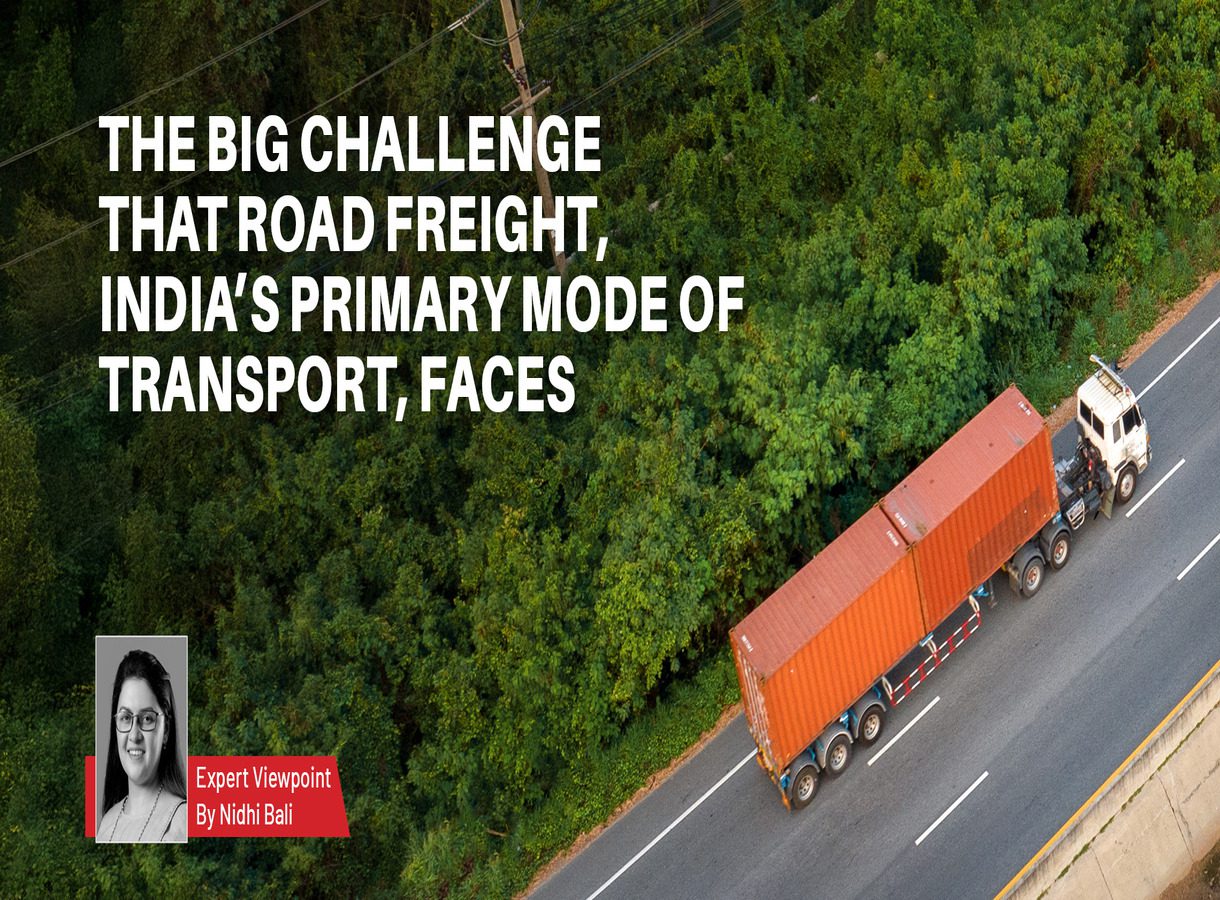

The big challenge that road freight, India’s primary mode of transport, faces

Freight is essential to India’s growth, targeting a $30 trillion economy by 2047. Modernising freight, especially through EVs and ZE-MHDVs, can slash emissions and costs. However, small fleet operators face high adaptation costs, and marginalized communities risk displacement. A just, inclusive approach is vital for a sustainable, equitable transition, ensuring all benefit.

Freight is key to India’s growth, and crucial for trade, supply chains and jobs. As India aims for a $30 tn economy by 2047, modernising freight can cut costs, boost SMEs and drive expansion. But India’s primary mode of transport – road freight – faces a challenge. It accounts for 71% of the total freight volume, and is also responsible for 90% of the sector’s carbon emissions.

At the same time, clogged infrastructure is straining India’s road transport network, driving up logistics costs that are now 14% of GDP. PM Gati Shakti and other logistics policy initiatives aim at multimodal integration and reducing dependence on road freight through dedicated freight corridors, rail electrification and service offerings like roll-on, roll-off (RoRo).

The shift to EVs, especially zero-emission medium- and heavy-duty trucks (ZE-MHDVs), could transform road freight. With Tesla slated to enter India, we are already seeing a broader acceptance of EVs, boosting domestic manufacturing of batteries and components, and large-scale development of EV infrastructure. This shift could reduce emissions, lower costs and improve air quality, while advancing sustainability goals. But decarbonising freight must also consider justice, equity and inclusion – no just the environment. Electrification and ZE tech hold promise, but a just transition faces hurdles.

Costs of adopting electric trucks, for example, are high, and small fleet operators – who make up a substantial portion of the market – are particularly vulnerable. Higher upfront and operational costs for e-trucks, coupled with a lack of total cost of ownership parity for medium-duty trucks, threaten to leave small operators behind.

India’s informal auto component makers and low-skilled manufacturing workers, often from marginalised communities, risk being displaced as the demand for traditional vehicle parts diminishes.

Inadequate charging infra, congestion-led delays, unreliable grid capacity and poor road conditions exacerbate operational challenges for ZE trucks. For vulnerable groups such as women, LGBTQIA+ individuals and marginalised communities, unsafe work environments and exclusion from tech training programmes further compound the difficulties of adapting to a digitised, electrified freight system.

Informal truck scrapping and battery recycling pose health and environmental risks. By 2044, over 50 lakh trucks will need scrapping, adding to the e-waste burden.

Despite these challenges, the transition to ZETs offers substantial opportunities

Reduce harmful emissions, improving urban air quality and health outcomes.

Retrofitting existing diesel trucks with electric powertrains could extend their lifespan by up to 10 years, providing a more cost-effective alternative to purchasing new vehicles. This approach can help small businesses and fleet operators.

Cost of ownership for e-trucks is expected to be lower than that of diesel counterparts by 2030, particularly for larger vehicles. Lower fuel and maintenance costs, alongside falling prices of EV components, will make the electrification of freight more affordable, especially with the support of policies like the PM E-DRIVE initiative and the PLI scheme.

Targeted training programmes can open career opportunities for women and marginalised groups. Empowering these groups through skill development in e-truck maintenance, AI-based route optimisation and digital literacy will not only improve their economic opportunities but also foster a more inclusive workforce.

Improving working conditions for truck drivers through better ergonomics, safety protocols and reduced working hours will help address some of the sector’s most pressing issues, making the profession more aspirational and sustainable.

The path forward requires a comprehensive, just and inclusive framework to guide the transition to green freight in India – a framework built around multiple outcomes:

  • Greening, including green manufacturing, circular economy practices, retrofitting, and greening of warehousing and logistics.
  • Improving freight mobility by ensuring robust infra is available in hinterlands, innovations are accessible to small operators and SMEs, and multimodal integration is achieved for ZETs.
  • Ensuring equity and diversity so as not to leave vulnerable societal segments behind.
  • Enhancing the resilience of the sector to adapt to changing technologies while protecting worker rights.

India’s freight sector is at a crossroads, and the decision to decarbonise trucking is not just a technological shift but a chance to reimagine the future of green logistics and the economy. The transition to ZETs holds the potential to reduce emissions, lower logistics costs in the long term and create a more inclusive workforce.

However, to unlock these benefits, GoI, businesses and civil society must work together to ensure that the transition is just and equitable for everyone – from citizens, shippers, small freight operators and logistics service providers, to small component manufacturers and the entire workforce.

A balanced, multimodal approach can drive both economic growth and decarbonisation. Urban congestion may require innovations like underground freight transport and optimised ZET use. With integration, fairness and sustainability, India can build a freight system that fuels its ambitions while uplifting all citizens.

Social media & sharing icons powered by UltimatelySocial